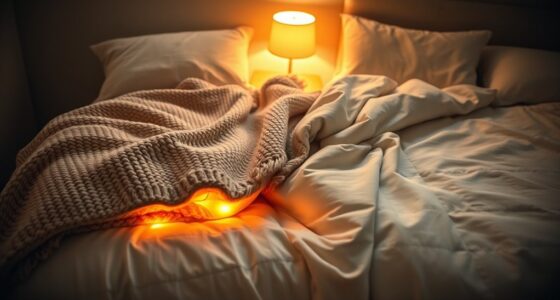
Sleeping with a dim night light can subtly affect your sleep by impacting melatonin production and your circadian rhythm. Bright lights tend to suppress melatonin more, delaying sleep and causing disruptions, but dim, warm-colored lights are less likely to interfere. If you keep the light low and turn it off after falling asleep, you may limit potential disturbances. To understand how different lighting choices influence your sleep, keep exploring the details ahead.

Get health and wellness essentials delivered free — and shop member deals
- Fast, free delivery on millions of items
- Access to Prime Big Deal Days deals on October 6–7
- Prime Video, Amazon Music and more included
Key Takeaways
- Dim night lights are less likely to significantly suppress melatonin compared to bright lights.
- Using warm-colored, low-intensity lights minimizes potential disruption to sleep patterns.
- Turning off the night light after falling asleep can help preserve sleep quality.
- Individual sensitivity varies; some people tolerate dim lights without sleep interference.
- Balancing security needs with minimal light exposure can reduce the risk of sleep disruption.

Many people find that sleeping with a night light helps them feel more secure and reduces nighttime anxiety. However, you might wonder if that small glow could be messing with your sleep patterns. The answer depends on how your body’s internal clock, known as your circadian rhythm, responds to light during the night. Your circadian rhythm regulates your sleep-wake cycle, signaling when it’s time to sleep and when it’s time to wake. Light exposure during the night can interfere with this natural cycle, especially if it’s bright enough to cause melatonin suppression. Melatonin is a hormone your body produces to promote sleep, and its levels typically rise in the evening to help you feel sleepy. When you’re exposed to light, even dim light from a night light, it can send signals to your brain that it’s still daytime, leading to reduced melatonin production.
If your night light is very bright, it’s more likely to disrupt your circadian rhythm by suppressing melatonin. This suppression can delay the onset of sleep, making it harder to fall asleep or causing fragmented sleep throughout the night. Over time, consistent melatonin suppression can lead to poorer sleep quality, leaving you feeling tired and less alert during the day. Conversely, if your night light is very dim, it may not substantially impact melatonin levels. Many people find that a low-intensity light doesn’t interfere with their sleep, especially if it helps reduce anxiety or fear of the dark. In such cases, the benefits of feeling secure may outweigh the minor risk of circadian disruption.
Additionally, understanding light sensitivity and how different types of light affect your sleep can help you make informed choices about night lighting. Your individual sensitivity to light plays a role as well. Some people’s circadian rhythms are more susceptible to light exposure, while others can tolerate dim light without much disruption. If you notice difficulty falling asleep, waking up frequently, or feeling unrested, you might want to contemplate whether your night light is contributing to these issues. Using a dim, warm-colored night light, or turning it off once you’re in bed, can help minimize melatonin suppression while still providing comfort. Ultimately, understanding how your body responds to light at night can help you strike a balance between feeling secure and maintaining healthy sleep patterns.
As an affiliate, we earn on qualifying purchases.
Frequently Asked Questions
Does the Type of Night Light Affect Sleep Quality?
Yes, the type of night light affects your sleep quality. You should consider light color and brightness levels, as blue or white lights can disrupt your melatonin production and make it harder to fall asleep. Opt for dimmer lights with warmer tones, like amber or red, to create a calming environment. Adjust brightness levels to the lowest comfortable setting, helping you sleep better without sacrificing safety or comfort.
How Does Blue Light From Night Lights Impact Melatonin?
Blue light from night lights can markedly impact your sleep by suppressing melatonin production. When exposed to blue light, your body reduces melatonin, the hormone that signals it’s time to sleep. This suppression makes it harder for you to fall asleep and can disrupt your overall sleep quality. To protect your sleep, consider using night lights with warmer, dimmer hues that emit less blue light.
Can Using a Night Light Help Children With Sleep Issues?
Think of a night light as a gentle lighthouse guiding your child safely through the stormy seas of bedtime. Using one can help create a calming sleep environment, easing fears and making bedtime routines smoother. It provides enough light for comfort without disrupting sleep patterns. Just make sure it’s dim and used consistently, helping your child feel secure and settle into a peaceful sleep routine.
Are There Any Health Risks Associated With Long-Term Use of Night Lights?
Long-term use of night lights generally poses minimal health risks, but it’s wise to monitor for potential issues. Continuous exposure to light during sleep can affect your circadian rhythm and melatonin production, possibly leading to sleep disturbances or other health effects over time. To minimize risks, use dim, warm-colored lights and limit their use, especially during deep sleep stages, ensuring your sleep quality remains ideal and your health stays protected.
What Are the Best Night Light Features to Minimize Sleep Disruption?
Think of a gentle moonbeam illuminating your room; the best night light mimics this softness. Choose one with adjustable brightness levels so you can set a dim glow that won’t interfere with your sleep. Opt for a warm color temperature, like amber or soft yellow, which helps prevent melatonin suppression. These features guarantee you get enough light to see without disrupting your natural sleep cycle.
night light with adjustable brightness
As an affiliate, we earn on qualifying purchases.
As an affiliate, we earn on qualifying purchases.
Conclusion
So, maybe it’s no surprise that a tiny night light might be messing with your sleep—after all, you probably started using it during a restless night, and now it’s become part of your nightly routine. It’s funny how something so small can have a big impact, isn’t it? Next time you reach for that dim glow, just remember, sometimes the smallest changes can make the biggest difference for your sleep quality.
As an affiliate, we earn on qualifying purchases.
As an affiliate, we earn on qualifying purchases.
Fall Picks
fall essentials
As an affiliate, we earn on qualifying purchases.