
Sleep paralysis happens when you temporarily can’t move or speak as you shift between sleep and wakefulness, often accompanied by vivid hallucinations and sensations of pressure, which can feel frightening. It results from disruptions in sleep cycles, especially REM sleep, and triggers include stress, irregular schedules, or poor sleep habits. Understanding these causes and symptoms can help you manage episodes better. Keep exploring to discover effective strategies and what you can do to prevent this unsettling phenomenon.
Key Takeaways
- Sleep paralysis is a temporary inability to move or speak during sleep transitions, often accompanied by vivid hallucinations.
- It occurs when the brain wakes during REM sleep but muscle paralysis remains active.
- Common symptoms include visual or auditory hallucinations, chest pressure, and feelings of dread.
- Disruptions in sleep patterns, stress, and poor sleep hygiene increase the risk of episodes.
- Maintaining regular sleep routines and managing stress can help prevent sleep paralysis.
What Is Sleep Paralysis?
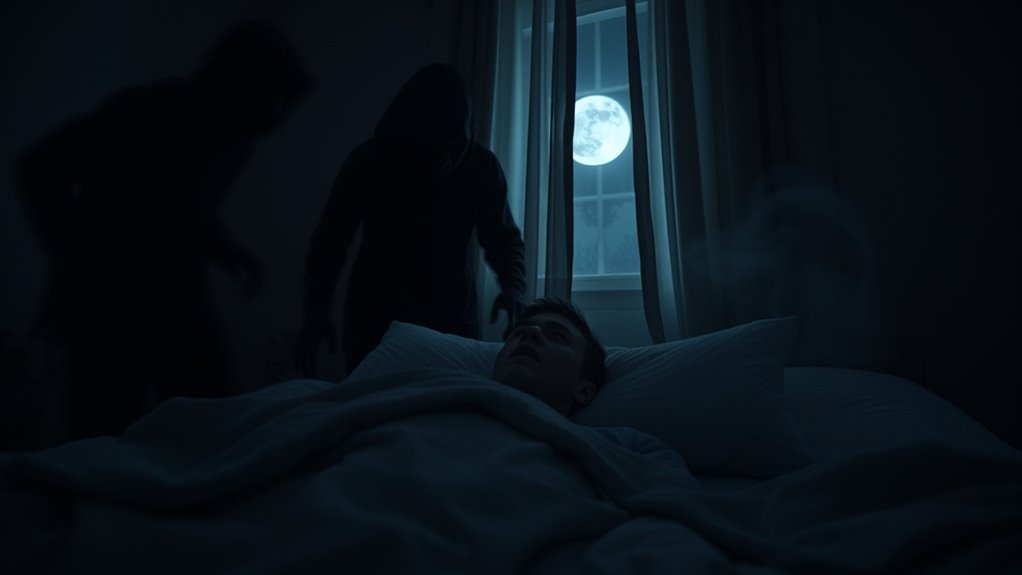
Sleep paralysis is a temporary condition where you find yourself unable to move or speak while falling asleep or waking up. During these episodes, you might notice vivid dream symbolism blending into reality, making the experience even more unsettling. This phenomenon occurs because your body is caught between the sleep cycle stages, specifically REM sleep, when muscle atonia naturally happens to prevent acting out dreams. Typically, your mind awakens before this muscle paralysis ends, leaving you trapped in a state of paralysis and heightened awareness. Understanding that sleep paralysis is linked to disruptions in the sleep cycle can help ease fears. It’s a harmless phenomenon, though frightening, that reveals the complex connection between your dreams, consciousness, and bodily functions. Additionally, contrast ratio plays a role in visual perception, similar to how sleep cycles impact awareness during episodes of paralysis. Recognizing the sleep cycle stages involved can provide reassurance and help reduce anxiety associated with these episodes. Awareness of the neurophysiological mechanisms underlying sleep paralysis can further demystify the experience and promote better sleep health. For example, fluctuations in neurotransmitter levels during sleep may influence the likelihood of experiencing paralysis episodes. Moreover, understanding the disruptions in sleep architecture can aid in developing strategies to prevent or manage these episodes effectively.
The Science Behind Sleep Paralysis

Your brain shifts between sleep stages, and sometimes this process doesn’t go smoothly. During REM sleep, your body is normally kept immobile, but disruptions can cause you to feel paralyzed while awake. These interruptions in sleep cycles are key to understanding why sleep paralysis happens. Additionally, factors such as sleep cycle disruptions can increase the likelihood of experiencing this phenomenon. Maintaining healthy sleep habits and understanding sleep stages can help reduce the chances of experiencing sleep paralysis sleep regulation techniques. Recognizing the importance of proper sleep hygiene can further support stable sleep cycles and minimize episodes of paralysis. Understanding how sleep stages function can also help you identify patterns that might contribute to these episodes and improve your overall sleep quality.
Brain Sleep Transition
The shift between wakefulness and sleep involves complex changes in brain activity that can sometimes become disrupted, leading to sleep paralysis. During this progression, your brain moves through different stages of the sleep cycle, each marked by distinct patterns of activity. When these patterns don’t synchronize properly, it can cause a temporary mismatch between your mind and body. For example, as you fall asleep or wake up, certain areas of your brain may still be active while others enter sleep mode. This disrupted brain activity can trap you in a state where your muscles remain temporarily paralyzed, even though your consciousness is alert. Understanding how these brain transitions work helps explain why sleep paralysis occurs during specific moments in your sleep cycle. Additionally, variations in brain activity, such as those seen in brain sleep transition, can influence the likelihood of experiencing sleep paralysis. These transitions involve intricate neural mechanisms that regulate the balance between different sleep stages, and disruptions in these mechanisms can increase vulnerability to sleep paralysis episodes. Recognizing the role of neurochemical changes during these transitions can also shed light on potential triggers and mitigation strategies. Furthermore, studies indicate that brainwave patterns during sleep are crucial in maintaining proper sleep architecture. Further research into sleep cycle regulation may provide deeper insights into preventing or managing this unsettling phenomenon.
REM Sleep Disruption
During the shift into REM sleep, the brain undergoes specific changes that are essential for dreaming and muscle relaxation. When REM sleep becomes disrupted, you might experience sleep paralysis because your brain isn’t fully aligned with your body’s muscle atonia. Poor sleep hygiene can trigger this disruption, leading to irregular sleep patterns and increasing your chances of REM interference. Dream analysis can reveal patterns linked to stress or anxiety that contribute to these disturbances. When your REM cycles are interrupted or improperly regulated, it can cause vivid dreams or nightmares accompanied by paralysis. Ensuring good sleep hygiene—like sticking to a consistent schedule and creating a calming bedtime routine—helps maintain healthy REM sleep, reducing the risk of REM sleep disruption and sleep paralysis episodes. Additionally, adaptive lighting and circadian support through smart home technology can promote better sleep patterns and help prevent disturbances that lead to sleep paralysis. Maintaining proper sleep environment is also crucial in supporting uninterrupted REM cycles and minimizing the likelihood of sleep paralysis episodes. Research indicates that sleep hygiene practices significantly influence the stability of REM sleep and overall sleep quality. Furthermore, understanding the existential and psychological factors involved can help address underlying stressors that may contribute to sleep disturbances.
Common Triggers and Risk Factors

What factors increase your chances of experiencing sleep paralysis? Stress, irregular sleep schedules, and sleep environment play significant roles. For example, a disruptive sleep setting—light, noise, or uncomfortable bedding—can trigger episodes. Medication side effects, especially sedatives or antidepressants, may also raise your risk. Sleep deprivation or sudden changes in sleep routines further contribute. Additionally, underlying sleep disorders such as narcolepsy can influence susceptibility. Here’s a quick overview:
| Factor | Description | Impact |
|---|---|---|
| Medication Side Effects | Certain meds interfere with sleep cycles | Heighten vulnerability to sleep paralysis |
| Sleep Environment | Poor conditions disrupt restful sleep | Increase likelihood of episodes |
| Sleep Schedule Disruption | Irregular sleep times | Elevate risk of REM sleep issues |
| Stress & Anxiety | Heightened emotional states | Trigger episodes or make them worse |
| Sleep Architecture | Changes in sleep stages affecting REM cycles | Can significantly influence susceptibility |
| Circadian Rhythms | Disruptions in internal biological clocks | Further increase the chances of episodes |
| Sleep Hygiene | Poor sleep habits and routines can disturb the natural sleep cycle | Worsen the likelihood of experiencing sleep paralysis |
Recognizing the Symptoms and Hallucinations

When you experience sleep paralysis, you might notice vivid hallucinations like shadowy figures or strange sounds. You could also feel physical sensations such as pressure on your chest or a sense of floating. Recognizing these symptoms helps you understand what’s happening and differentiate sleep paralysis from other issues. Additionally, understanding supernatural phenomena can help contextualize some of these experiences within cultural or paranormal frameworks. Being aware of the role micro influencers play in shaping perceptions of these phenomena can provide insight into how such experiences are portrayed and understood in popular culture.
Common Hallucination Types
Have you ever experienced vivid, unsettling visions while unable to move? These are common hallucination types during sleep paralysis. You might see shadowy figures or strange faces that seem to loom over you, often mistaken for lucid dreaming but more frightening. Some hallucinations resemble a night terror, filled with intense fear and vivid imagery. You could feel a heavy presence or sense of dread, even if nothing is there. These experiences can blur the line between reality and nightmare, making it hard to tell what’s real. Recognizing these hallucinations helps you understand that they’re a normal part of sleep paralysis, not a sign of something more serious. Knowing what to expect can ease your fear and help you manage the experience better.
Physical Sensation Experiences
During sleep paralysis, your body often reacts with intense physical sensations that can be both startling and confusing. You might feel a heavy pressure on your chest or a sensation of floating, which can mimic the experience of lucid dreaming but with a distressing twist. These sensations are often heightened if your sleep hygiene isn’t ideal, making episodes more vivid. You may also experience tingling or a feeling of electric shocks, heightening your alertness and fear. Recognizing these physical responses helps differentiate sleep paralysis from other conditions. Staying mindful of your sleep habits and creating a calming pre-sleep routine can reduce the intensity of these sensations. Understanding that these physical experiences are common can also lessen your anxiety during episodes.
Recognizing Sleep Paralysis
Recognizing sleep paralysis involves paying attention to specific symptoms and hallucinations that set it apart from other conditions. You might experience a sense of pressure, inability to move, or vivid dream symbolism that blurs the line between wakefulness and sleep. Hallucinations during these episodes often feel real and can be frightening, influenced by cultural beliefs about spirits or supernatural entities. To identify it, look for these signs:
- Feeling a heavy weight or pressure on your chest
- Seeing shadowy figures or entities that seem to loom nearby
- Hearing unexplained noises or whispers
- Experiencing a disconnect from your surroundings, as if caught between dreams and reality
Understanding these symptoms helps you recognize sleep paralysis and its connection to cultural beliefs shaping your perception of the experience.
How to Cope During an Episode

When you find yourself caught in a sleep paralysis episode, the key is to stay calm and focus on controlling your breathing. Use breathing techniques like slow, deep breaths to help reduce panic and restore a sense of control. Concentrate on inhaling and exhaling steadily, which can calm your nervous system. Mental grounding is also essential; try to remind yourself that the episode is temporary and will pass. Focus on small, manageable thoughts or sensations, like feeling the texture of your sheets or the sound of your breath. Avoid panicking or fighting the paralysis, as it often intensifies fear. Instead, stay present and patient, trusting that your body will eventually regain control. With practice, these strategies can make episodes less frightening.
Tips to Prevent Sleep Paralysis

Practicing good sleep habits can substantially reduce the likelihood of experiencing sleep paralysis. Prioritize sleep hygiene by establishing a consistent sleep schedule, creating a calm, dark environment, and avoiding screens before bed. Managing stress is equally important, as high stress levels can trigger episodes. Incorporate relaxation techniques such as deep breathing or meditation to ease your mind. Remember these tips:
Good sleep habits and stress management can help prevent sleep paralysis episodes.
- Maintain a regular sleep routine to regulate your circadian rhythm
- Keep your sleeping space cool, dark, and quiet for better sleep quality
- Practice stress management strategies daily, like meditation or journaling
- Limit caffeine and alcohol intake, especially close to bedtime
When to Seek Medical Advice

If sleep paralysis episodes become frequent, severe, or disrupt your daily life, it’s important to consult a healthcare professional. Persistent episodes could indicate an underlying sleep disorder that needs diagnosis and treatment. Sleep paralysis can also impact your mental health, leading to anxiety or fear about sleeping. If you notice that your episodes are worsening or occurring alongside other symptoms like loud snoring, excessive daytime sleepiness, or mood changes, seek medical advice promptly. A healthcare provider can evaluate your overall sleep health and determine if conditions like narcolepsy, sleep apnea, or other sleep disorders are contributing factors. Addressing these issues early can improve your quality of life and reduce the psychological stress associated with sleep paralysis.
Frequently Asked Questions
Can Sleep Paralysis Occur Multiple Times in One Night?
Yes, sleep paralysis can happen multiple times in one night. During sleep episodes, your brain may enter REM sleep repeatedly, and dream interference can trigger recurring episodes. These episodes often occur during shifts between wakefulness and sleep or upon waking. If you experience frequent sleep paralysis, maintaining a consistent sleep schedule and reducing stress might help lessen their frequency and duration.
Is Sleep Paralysis Linked to Mental Health Conditions?
Think of sleep paralysis as a shadow cast by your mental health. Yes, it’s linked to mental health impact, especially if you struggle with anxiety disorders. When your mind is overwhelmed, it can make these terrifying episodes more frequent and intense. Anxiety fuels the darkness, turning sleep paralysis into a haunting experience. Addressing your mental health can bring light, easing the grip of this unsettling phenomenon.
Are There Specific Sleep Positions That Increase Risk?
Your sleep posture and sleep environment can influence the risk of sleep paralysis. Sleeping on your back, in a cluttered or uncomfortable environment, may increase the likelihood of experiencing episodes. To reduce the risk, try sleeping on your side or stomach and guarantee your sleep environment is quiet, dark, and comfortable. Maintaining a consistent sleep routine and managing stress also help minimize sleep paralysis episodes.
How Long Does a Typical Sleep Paralysis Episode Last?
A typical sleep paralysis episode lasts usually between a few seconds to a couple of minutes. During this time, your dream duration can feel much longer due to the intense dream imagery, and paralysis severity can be quite high, making you feel helpless. You might notice that the episode ends as quickly as it begins, often when your body finally shift into regular sleep or wakefulness.
Can Medication Help Eliminate Sleep Paralysis Episodes?
Can medication help eliminate sleep paralysis episodes? While medication effectiveness varies, it might reduce the frequency or intensity for some people, acting as a shield against fear. However, it’s not a guaranteed fix. Exploring alternative treatments like improving sleep habits, reducing stress, and therapy can be equally powerful. Think of medication as a tool, but a holistic approach often provides the best long-term relief from sleep paralysis.
Conclusion
Don’t dread the dread of sleep paralysis. By understanding its triggers and practicing simple strategies, you can diminish distress and defend against disturbing episodes. Recognize the signs, stay calm, and create a calming sleep routine. Remember, you’re not alone—support is available. With awareness and effort, you can conquer this creepy, confusing condition and reclaim peaceful, restful nights. Don’t let sleep paralysis scare you—stand strong, stay informed, and sleep soundly once more.