
Nocturia causes you to wake up at night to urinate due to factors like drinking too much fluid before bed, urinary tract issues, or hormonal changes. Age, health conditions like diabetes or sleep apnea, and bladder overactivity also play a role. You can reduce it by limiting fluids in the evening, improving your sleep environment, and managing underlying health issues. To discover more effective ways to stay asleep through the night, continue exploring helpful strategies.
Key Takeaways
- Nocturia often results from excess urine production at night due to factors like fluid intake, hormonal changes, or underlying health issues.
- Managing evening fluid intake and avoiding dehydration can help reduce nighttime urination frequency.
- Sleep environment improvements, such as maintaining a cool, dark, and quiet bedroom, support better sleep and decrease nocturnal trips.
- Addressing underlying conditions like bladder overactivity, sleep disorders, or hormonal imbalances can significantly reduce nocturia episodes.
- Lifestyle adjustments, including bladder training and relaxation techniques, are effective strategies to limit nighttime bathroom visits.
Understanding Nocturia: A Closer Look at Nighttime Bathroom Trips

Understanding nocturia means recognizing why you wake up during the night to urinate. It often involves issues with your urinary tract, which controls urine storage and release. When your body produces more urine at night than usual, it’s called nocturnal polyuria. This condition causes you to wake up repeatedly, disrupting your sleep. Factors like fluid intake before bedtime, hormonal changes, or underlying health conditions can lead to increased urine production at night. Your urinary tract’s ability to hold urine may also contribute if it’s weakened or irritated. Recognizing these aspects helps you understand that nocturia isn’t just about needing to pee but could be linked to your body’s regulation of urine production and storage during the night, signaling underlying health issues that may need attention.
Common Causes Behind Waking Up to Urinate
You might wake up to pee due to drinking too much fluid before bed, which increases your nighttime urine production. An overactive bladder can also cause frequent urges to urinate even if your bladder isn’t full. Additionally, sleep disorders like insomnia or sleep apnea can disrupt your sleep cycle and lead to waking up to urinate. Understanding the importance of air purifier maintenance in maintaining a healthy sleeping environment can also be relevant when optimizing your sleeping environment for better rest. Proper air quality can reduce allergens and irritants that may contribute to sleep disturbances, indirectly affecting nocturia. Ensuring your air purifier functions correctly can help minimize airborne irritants that might exacerbate sleep issues and nocturia. Regular ventilation considerations are essential for maintaining optimal indoor air conditions and supporting overall sleep health.
Excess Fluid Intake
Consuming large amounts of fluids, especially close to bedtime, can considerably increase the likelihood of waking up to urinate during the night. To reduce nocturia, consider implementing a fluid restriction and following a hydration schedule. Limiting fluid intake in the evening helps your bladder hold more urine overnight, improving sleep quality. Establishing a hydration schedule ensures you stay properly hydrated during the day without overdoing it at night. Here’s a simple guide:
| Time of Day | Recommended Action |
|---|---|
| Afternoon | Drink fluids as usual |
| Evening | Limit fluids 1-2 hours before bed |
| Night | Avoid drinking after bedtime |
Adjusting your fluid intake can make a significant difference in how often you wake up to pee. Additionally, choosing high-quality heat pumps can help maintain a comfortable indoor environment, potentially reducing the need for additional nighttime heating or cooling that might disrupt sleep. Incorporating sound therapy techniques can also promote relaxation, making it easier to stay asleep throughout the night. Implementing firearm payment processors with robust security measures can also ensure safe transactions if you are managing donations or purchases related to health initiatives.
Overactive Bladder
An overactive bladder is a common reason for waking up multiple times during the night to urinate, even when fluid intake is controlled. It occurs when your bladder’s signals become overly sensitive, causing a sudden urge to urinate. To manage this, bladder training can help by gradually increasing the time between bathroom visits, teaching your bladder to hold urine longer. Urge suppression techniques, like distraction or relaxation exercises, can also reduce the urgency you feel. Consistent practice helps your bladder become less reactive, decreasing nighttime trips. Additionally, understanding the emotional regulation aspects of BPD can help address underlying stress that may contribute to bladder sensitivity. If overactive bladder persists, consult a healthcare professional for personalized strategies. Addressing this condition can markedly improve your sleep quality and reduce nocturia caused by an overactive bladder. Emerging research suggests that neuroplasticity may play a role in retraining bladder control, offering new avenues for treatment. Furthermore, advancements in AI cybersecurity jobs are enhancing the safety of health data, which is crucial for personalized treatment plans. Some studies indicate that pelvic floor exercises can also significantly help reduce symptoms of overactive bladder. In addition, exploring behavioral therapies may provide further relief by addressing underlying behavioral factors contributing to bladder overactivity.
Sleep Disorders
Sleep disorders, such as insomnia or sleep apnea, can substantially disrupt your sleep cycle and lead to waking up to urinate. These conditions often cause fragmented sleep, making you more aware of the need to urinate during the night. Sleep apnea, in particular, can trigger bedwetting issues and increase nocturnal polyuria, where your body produces excess urine while you sleep. This cycle can worsen nighttime awakenings and create a pattern of frequent bathroom trips. If you suspect a sleep disorder is behind your nocturia, addressing the underlying issue can help reduce nighttime urination. Managing sleep disorders not only improves sleep quality but also helps regulate urine production, making it easier to sleep through the night without interruptions. As a Best Vacuum Expert, I can tell you that proper cleaning and air filtration in your bedroom may also improve sleep quality and overall health.
The Role of Lifestyle Choices and Habits

Your habits around fluid intake and sleep environment can considerably impact how often you wake to urinate. Drinking large amounts of fluids close to bedtime or having a disruptive sleep setting makes you more likely to wake up during the night. Adjusting these habits may help reduce nocturia and improve your overall sleep quality. Incorporating sleep-friendly environments into your bedroom, such as maintaining a comfortable temperature and minimizing noise, can further support restful sleep and reduce nighttime awakenings. Utilizing smart home technology to regulate lighting and sound levels can create a more conducive sleep environment and promote uninterrupted rest. Paying attention to bedroom environment factors can make a significant difference in reducing nighttime trips to the bathroom. Additionally, ensuring your home energy setup supports a comfortable and safe sleeping space—such as proper lighting and climate control—can enhance your sleep quality and help manage nocturia.
Hydration Timing and Intake
How you manage your fluid intake throughout the day can considerably influence nocturia. Hydration timing and fluid consumption habits play a vital role in reducing nighttime bathroom trips. To minimize disruptions, try to limit large fluid intake in the evening, especially within two hours of bedtime. Spread your hydration evenly during the day to stay well-hydrated without overdoing it at night. Use this table to guide your fluid habits:
| Time of Day | Hydration Goal | Tips |
|---|---|---|
| Morning | Drink plenty, stay hydrated | Include water with meals |
| Afternoon | Moderate intake | Avoid caffeine and alcohol |
| Evening (pre-bed) | Limit fluids | Switch to small sips |
| Night | No fluids if possible | Use the bathroom before bed |
| Overall | Balance hydration | Listen to your body’s signals |
Adjusting your hydration timing can help you sleep longer and reduce nocturia. Being mindful of your overall water consumption can further support healthier sleep patterns. Incorporating hydration habits that align with your body’s needs can make a significant difference in managing nocturia effectively. Additionally, understanding the importance of glycolic acid for skin and scalp health can contribute to overall wellness, subtly supporting your sleep quality by reducing discomfort or skin issues that might disturb rest. Proper hydration management is also linked to maintaining bladder health, which is crucial in reducing nighttime trips to the bathroom.
Sleep Environment Optimization
Optimizing your sleep environment can greatly reduce nocturia by promoting restful sleep and minimizing disruptions. Focus on creating a calm, comfortable space that encourages deep rest. Keep your bedroom cool, dark, and quiet to support quality sleep. Bedroom lighting plays a vital role; switch to dim, warm lights in the evening and avoid bright screens before bed. Consider blackout curtains or an eye mask to block out external light sources that can interfere with sleep cycles. Reducing light exposure helps regulate your circadian rhythm and lowers the likelihood of waking during the night. Using smart lighting controls can help automate these adjustments to optimize your sleep environment more effectively. A well-designed sleep environment not only promotes uninterrupted sleep but also diminishes the need to wake up to pee, making your nights more restful and less interrupted.
Medical Conditions That May Contribute to Nocturia
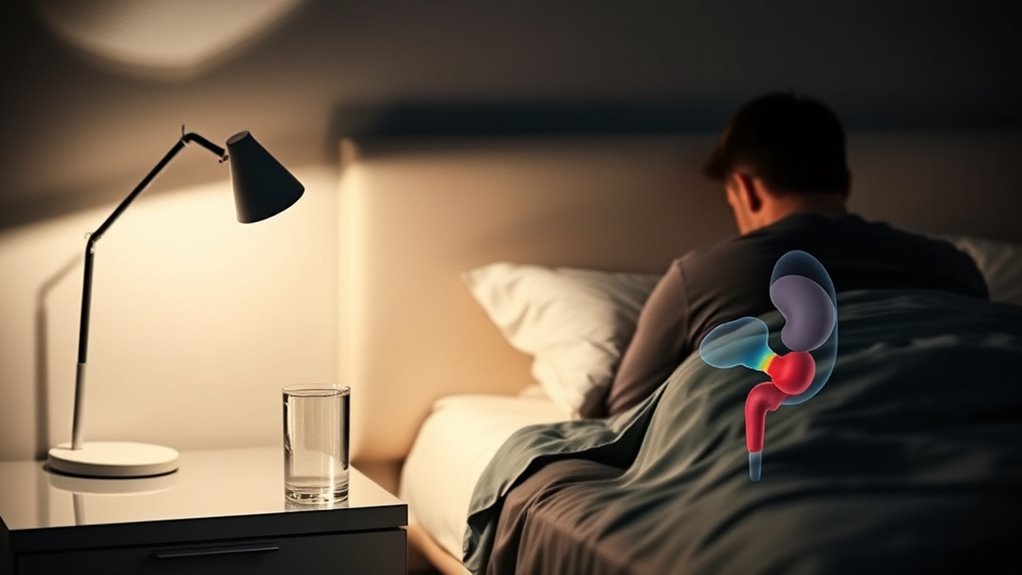
Several medical conditions can cause or worsen nocturia, disrupting your sleep. Urinary tract infections or issues can lead to increased urgency and frequent trips to the bathroom at night. Hormonal imbalance, especially involving antidiuretic hormone (ADH), affects how your kidneys manage fluid, causing you to produce more urine after dark. Conditions like diabetes, heart failure, and kidney problems also contribute by altering fluid balance or increasing urine production. Recognizing these underlying issues is essential for effective treatment. If you suspect a medical condition is behind your nocturia, consult your healthcare provider for proper diagnosis and management. Addressing these conditions can markedly reduce nighttime bathroom trips and improve your sleep quality.
How Age Affects Your Nighttime Urination Patterns

As you age, changes in your body can considerably influence your nighttime urination patterns. Geriatric health often involves urinary changes that lead to increased nocturia. As your kidneys become less efficient, they produce more urine at night, prompting more bathroom trips. Additionally, the bladder’s capacity decreases with age, making it easier to feel the need to urinate frequently. Hormonal shifts can also affect fluid balance, leading to increased urine production overnight. These factors combined mean you’re more likely to wake up multiple times to pee as you grow older. Understanding these natural changes can help you better manage your nighttime urination and improve sleep quality, even as your body undergoes these age-related adjustments.
Tips for Managing Fluid Intake Before Bedtime
To reduce nighttime trips to the bathroom, it’s important to manage your fluid intake in the hours before bed. Limit how much you drink in the evening to avoid a full bladder during the night. Consider setting a cut-off time, such as two hours before sleep, for fluid restriction. Incorporate herbal remedies like chamomile or valerian tea earlier in the evening, but avoid drinking them right before bed. Also, be mindful of alcohol and caffeine, which can increase urine production.
- Drink smaller amounts of fluids gradually in the evening
- Avoid caffeine and alcohol close to bedtime
- Use herbal remedies to promote relaxation without increasing urination
- Stick to your fluid restriction plan consistently
Strategies to Improve Sleep Quality Despite Nocturia
Even if nocturia disrupts your sleep, there are effective strategies you can use to improve your overall sleep quality. Establishing a consistent bedtime routine helps signal your body that it’s time to wind down, making falling asleep easier despite nighttime awakenings. Focus on maintaining good sleep hygiene by keeping your bedroom cool, dark, and quiet, which can promote deeper sleep. Avoid screens and stimulants before bed, as they can interfere with your sleep cycle. Practice relaxation techniques like deep breathing or gentle stretching to reduce stress. While you may still wake up to pee, these habits can help you fall back asleep faster and enjoy more restorative rest, minimizing the impact of nocturia on your overall sleep quality.
When to Seek Medical Advice for Persistent Symptoms

Persistent nocturia warrants medical attention when it notably disrupts your sleep, causes daytime fatigue, or is accompanied by other symptoms like pain, blood in urine, or urinary urgency. If these issues persist despite making dietary adjustments and managing hydration, it’s time to consult a healthcare professional. Early evaluation can identify underlying causes such as infections, bladder issues, or hormonal imbalances. Don’t ignore ongoing symptoms, especially if they worsen or interfere with daily activities. Your doctor may recommend tests or treatments tailored to your condition. Remember, timely medical advice can improve your quality of life and prevent complications. Seek help if lifestyle changes don’t alleviate your nocturia or if you notice additional symptoms that concern you.
Innovative Treatments and Future Perspectives
Advancements in research are paving the way for innovative treatments that could transform how nocturia is managed. Scientists are exploring genetic factors that influence bladder function and hormonal regulation that impacts urine production at night. These insights could lead to personalized therapies targeting specific biological pathways. Future treatments may include gene-based interventions or hormonal modulators to better control nighttime urination. Here’s a glimpse of potential strategies:
| Approach | Focus |
|---|---|
| Genetic therapies | Targeting genes affecting bladder and kidney function |
| Hormonal regulation | Modulating antidiuretic hormone levels |
| Novel medications | Developing drugs to adjust urine production |
| Device-based treatments | Using implants or sensors for real-time management |
Frequently Asked Questions
Can Nocturia Be a Sign of Underlying Heart Problems?
Yes, nocturia can signal underlying heart problems like heart failure or arrhythmia. If your heart isn’t pumping efficiently, fluid builds up and shifts when you lie down, causing increased urine production at night. You should see a doctor if you notice frequent nighttime trips, especially if accompanied by symptoms like shortness of breath or swelling, to rule out or address possible heart issues.
Are There Natural Remedies to Reduce Nighttime Urination?
Yes, you can try natural remedies to reduce nighttime urination. Drinking herbal teas like chamomile or peppermint before bed can help relax your bladder. Acupuncture benefits may also improve bladder control and reduce nocturia. Additionally, limiting fluid intake a few hours before sleep and avoiding caffeine or alcohol can make a difference. These approaches can support your goal of fewer nighttime bathroom trips naturally.
How Does Sleep Apnea Relate to Nocturia?
Think of sleep apnea as a storm disrupting your peaceful night. Its breathing difficulties cause frequent sleep disruptions, which can increase your need to pee at night. When your oxygen levels drop, your body signals for more wakefulness, often leading to nocturia. Addressing sleep apnea with proper treatment helps restore calm, reducing nighttime awakenings and the urge to pee, so you can enjoy undisturbed, restful sleep.
Can Dietary Supplements Help Manage Nocturia Symptoms?
Dietary supplements can help manage nocturia symptoms by supporting your bladder health and reducing nighttime urges. Supplements like pumpkin seed extract, saw palmetto, and magnesium may improve bladder function and relax muscles, easing your need to wake up frequently. However, always talk to your healthcare provider before adding supplements to guarantee they’re safe for you and won’t interfere with any medications you’re taking.
Is Nocturia Linked to Mental Health or Stress Levels?
Did you know that studies show nearly 30% of adults with nocturia also experience mental health issues? You might find that stress impacts your sleep, making you wake up more to pee. The mental health connection is real, as anxiety and stress can increase urinary frequency. Managing stress through relaxation techniques could help reduce nocturia episodes, improving both your sleep and overall well-being.
Conclusion
Did you know that nearly 50% of adults over 50 experience nocturia? If you’re waking up multiple times each night to pee, it can disrupt your sleep and impact your health. By understanding the causes and making simple lifestyle tweaks, you can reduce those trips to the bathroom. Don’t ignore persistent symptoms—seeking medical advice can lead to effective treatments, helping you enjoy better sleep and overall well-being.