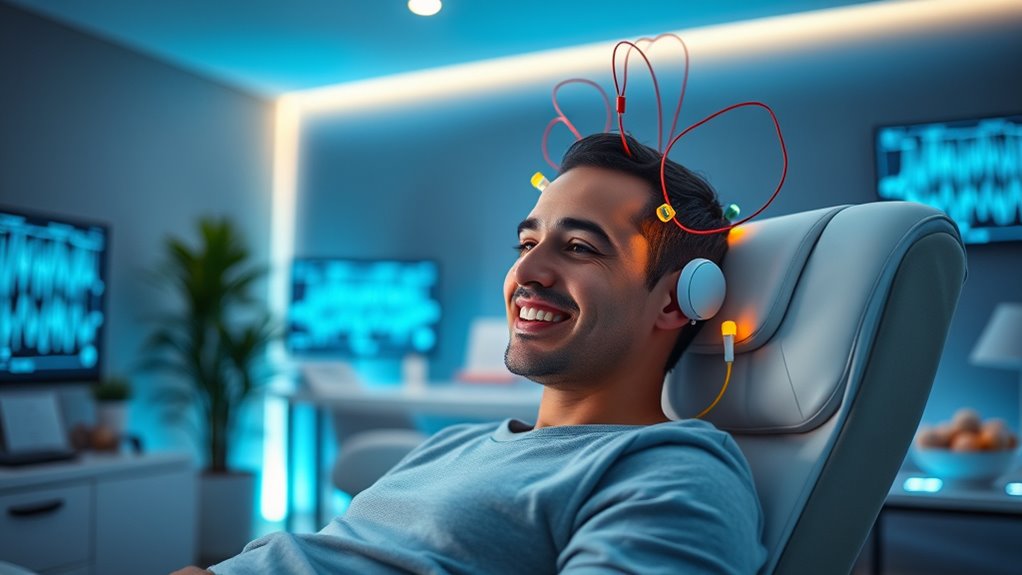

Biofeedback and neurofeedback are innovative, non-invasive therapies that help you control your body’s responses and brain activity. By using sensors, these techniques provide real-time feedback, enabling you to practice relaxation methods, reduce stress, and improve sleep quality. They target the root causes of insomnia by promoting mental and physiological calmness. As you explore further, you’ll discover how customizing these approaches can enhance your sleep health and overall well-being.
Key Takeaways
- Biofeedback and neurofeedback train individuals to regulate physiological and brain activity, reducing stress and mental hyperarousal linked to insomnia.
- These therapies provide real-time feedback to help develop automatic calming techniques improving sleep onset and quality.
- Neurofeedback focuses on enhancing relaxation brainwaves like alpha and theta, easing mental racing and sleep difficulties.
- Both methods are non-invasive, drug-free options that empower active participation in managing sleep health.
- Regular practice of biofeedback and neurofeedback supports long-term improvements in sleep hygiene and overall well-being.

Biofeedback and neurofeedback are innovative techniques that help you gain control over physiological processes often considered involuntary. When it comes to insomnia, these methods can be powerful tools for improving your sleep patterns by teaching you to regulate your body’s responses to stress and anxiety. As you become more aware of how your body reacts to different stimuli, you can actively work to reduce stress levels that interfere with falling asleep or staying asleep. This increased awareness can lead to better stress reduction, which is vital because high stress often disrupts your sleep hygiene—the habits and routines that promote restful sleep.
Enhancing sleep hygiene by reducing stress and increasing awareness through biofeedback and neurofeedback techniques.
With biofeedback, you learn to control bodily functions such as heart rate, muscle tension, and breathing. During a session, sensors monitor these responses, and you receive real-time feedback through visual or auditory cues. This allows you to practice calming techniques, like deep breathing or progressive muscle relaxation, while observing how your efforts influence your physiological state. Over time, these practices become more automatic, helping you create a calming pre-sleep routine. As your stress diminishes, you’re likely to find it easier to fall asleep and stay asleep throughout the night, improving your overall sleep hygiene. Additionally, integrating modern technology into these practices can enhance the effectiveness of your training and provide more personalized feedback.
Neurofeedback takes this a step further by focusing on brain activity. When you engage in neurofeedback, you receive feedback about your brainwaves, which can be trained to shift into states associated with relaxation and sleep readiness. By doing so, you can reduce the mental hyperarousal that often accompanies insomnia. As you learn to produce more alpha or theta waves—linked to calmness and drowsiness—you’ll notice improvements in how quickly you drift off and how restful your sleep becomes. Neurofeedback helps you develop mental habits that promote sleep hygiene, such as letting go of racing thoughts or anxiety before bed.
Both techniques empower you to take an active role in your sleep health. Instead of relying solely on medication or sleep aids, you gain skills that can be integrated into your daily routine. Regular practice of biofeedback and neurofeedback can enhance your ability to manage stress, which directly impacts sleep hygiene. As your body learns to respond calmly to stressors, you’ll find it easier to establish a consistent sleep schedule and create an environment conducive to quality rest. These therapies offer a non-invasive, drug-free approach that targets the root causes of insomnia, helping you regain control over your sleep cycle and improve your overall well-being.
Frequently Asked Questions
Are Biofeedback and Neurofeedback Suitable for Children With Insomnia?
Yes, biofeedback and neurofeedback can be suitable for children with insomnia when using child-friendly approaches. You should make certain that the techniques are adapted for their age and needs, making sessions engaging and simple. Parental involvement is vital, as it helps reinforce relaxation strategies at home and guarantees children stay motivated. Always consult a professional experienced with pediatric cases to determine the best, safe approach for your child.
How Long Does It Typically Take to See Results From These Therapies?
You might start seeing results from biofeedback and neurofeedback within a few weeks, but it varies depending on your treatment duration and how effectively you respond. Consistency and commitment are key, and some people notice improvements in sleep quality after 8 to 12 sessions. Keep in mind that therapy effectiveness differs individually, so patience and regular practice will help you achieve the best possible outcome.
Can These Therapies Replace Medication for Insomnia Treatment?
These therapies can serve as effective medication alternatives for insomnia, especially if you’re seeking non-drug options. While therapy effectiveness varies, many find biofeedback and neurofeedback helpful for improving sleep quality over time. However, they might not work for everyone or replace medication entirely, particularly in severe cases. It’s best to consult your healthcare provider to determine if these therapies are suitable for your specific needs.
Are There Any Side Effects Associated With Biofeedback or Neurofeedback?
You might experience some potential adverse effects from biofeedback or neurofeedback, like temporary discomfort or frustration as you learn new skills. While generally safe, there are contraindications and risks, especially if you have certain neurological or psychological conditions. Always consult a professional beforehand to confirm these therapies are suitable for you and to minimize any risks. Most people find them safe and effective when properly guided.
How Do I Find Qualified Practitioners for These Therapies?
Did you know only 20% of biofeedback and neurofeedback practitioners meet high certification standards? To find qualified practitioners, look for those with proper certification and verified practitioner credentials. Check professional associations like the Biofeedback Certification International Alliance (BCIA) or the International Society for Neurofeedback and Research (ISNR). Always validate their training, experience, and reviews to guarantee you receive safe, effective therapy from a reputable professional.
Conclusion
Just like a lighthouse guides ships safely home, biofeedback and neurofeedback can steer you toward restful nights. By harnessing your mind’s power, you regain control over your sleep, breaking free from insomnia’s grip. Remember, the journey to peaceful slumber is within your reach—your mind is your greatest ally. Embrace these therapies, and let them illuminate your path to restorative sleep, much like dawn dispels the darkness of night.