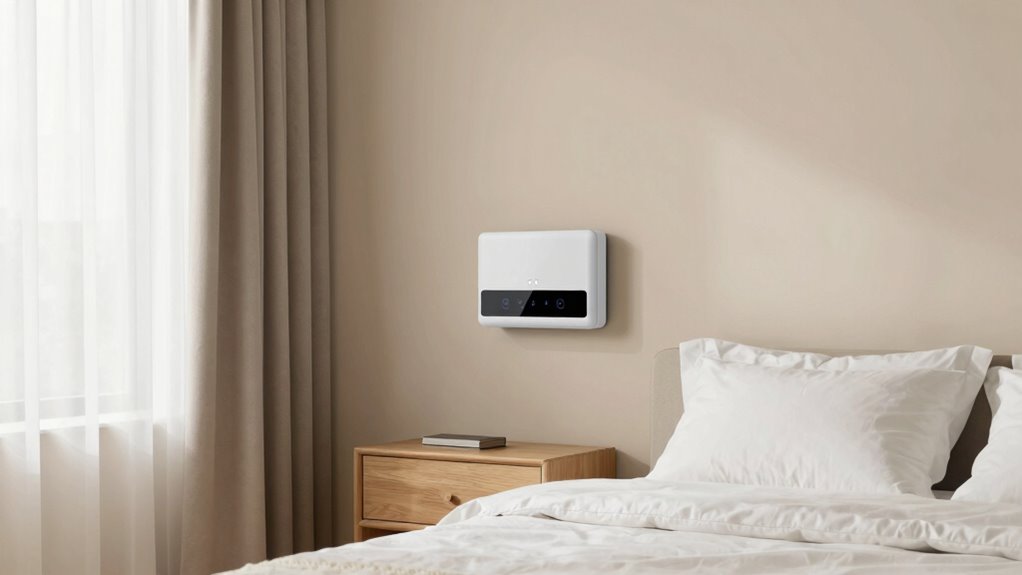

Smart air systems in bedrooms aim to make maintaining healthy, comfortable air effortless for you. They automatically monitor pollutants, allergens, humidity, and other factors, adjusting purifiers or fans as needed. These systems operate efficiently to save energy and connect seamlessly with your smart home devices, giving you remote control and instant alerts. If you want to discover how these innovations keep your bedroom fresh and safe without hassle, keep exploring.
Key Takeaways
- Automating air quality management to eliminate manual adjustments and ensure a consistently healthy indoor environment.
- Providing real-time monitoring and instant feedback to simplify understanding of air conditions.
- Integrating with smart home systems for seamless control and remote operation.
- Optimizing energy use by adjusting systems only when needed, reducing effort and costs.
- Enhancing user comfort by proactively maintaining ideal air quality tailored to individual needs.

Smart air systems are transforming the way you breathe comfortably in your bedroom. These innovative setups aim to simplify the often complex task of maintaining a healthy, comfortable environment while fitting seamlessly into your daily routine. At the core of their design is the focus on air quality monitoring, which continuously assesses the levels of pollutants, allergens, and humidity in your space. Instead of guessing whether your air is clean, these systems gather real-time data, alerting you when air quality drops or when conditions need adjustment. This means you can breathe easier knowing your environment is optimized without constantly checking or manually adjusting settings.
One of the main goals of smart air systems is to make air quality management effortless. They do this by automatically responding to the data they collect, adjusting purifiers, fans, or humidifiers as needed. For example, if the system detects increased levels of dust or pollen, it ramps up filtration to clear the air faster. Conversely, if the air is already clean, it conserves energy by reducing its activity. This proactive approach ensures you’re always breathing the best possible air without having to think about it, which is especially helpful for allergy sufferers or those with respiratory issues. Additionally, these systems often incorporate air quality monitoring features, providing continuous feedback to help you understand your indoor environment better. Many systems also incorporate energy efficiency features that minimize unnecessary power consumption, making them more sustainable. They are designed to respond to environmental cues, such as changes in humidity or pollutant levels, to optimize performance further. Furthermore, some systems integrate with other home automation devices to create a comprehensive, smart home ecosystem. Incorporating real-time data allows these systems to adapt instantly to changing conditions, enhancing overall comfort and health.
Energy efficiency is another critical aspect these systems target. They’re designed to operate only when necessary, minimizing waste and reducing your energy bills. Instead of running constantly at full power, smart air systems analyze patterns and environmental cues to optimize their operation. When the air quality is good, they scale back, and when it’s poor, they respond swiftly. This smart management not only improves your comfort but also aligns with eco-conscious practices, helping you reduce your carbon footprint. Plus, many systems connect with your home’s Wi-Fi, allowing you to control and monitor them remotely via your smartphone, giving you peace of mind whether you’re home or away.
smart air purifier with air quality monitor
As an affiliate, we earn on qualifying purchases.
As an affiliate, we earn on qualifying purchases.
Frequently Asked Questions
How Do Smart Air Systems Adapt to Different Bedroom Sizes?
Smart air systems adapt to different bedroom sizes by measuring room size through built-in sensors or user input, then adjusting airflow accordingly. They optimize air circulation, ensuring the entire space maintains a comfortable temperature and air quality. Larger rooms may trigger higher fan speeds, while smaller spaces receive gentler airflow. This dynamic adjustment helps you enjoy consistent comfort and efficient air circulation, regardless of your bedroom’s size.
Are Smart Air Systems Energy-Efficient for Overnight Use?
Yes, smart air systems are energy-efficient for overnight use. They monitor and adjust their power consumption based on real-time data, reducing unnecessary energy use. By optimizing airflow and filtration, they lower overall energy consumption and power consumption while maintaining air quality. This smart adjustment helps save electricity and costs, making them an eco-friendly choice for overnight air management. You can enjoy fresh air without worrying about high energy bills.
Can Smart Air Systems Be Integrated With Existing Smart Home Devices?
Yes, smart air systems can be integrated with your existing smart home devices. You can connect them through platforms like Alexa or Google Assistant, allowing voice control integration. Additionally, these systems often come with air quality sensors that monitor your room’s air, providing real-time data. This integration makes managing your bedroom’s air quality seamless, giving you control at your voice command and ensuring a healthier sleeping environment effortlessly.
What Maintenance Is Required for Smart Air Systems in Bedrooms?
You’ll wonder how much effort it takes when you realize that maintaining your smart air system is straightforward. Regularly, you’ll need to replace the air filter to keep the air pure and guarantee smooth operation. Occasionally, system calibration is necessary to optimize performance. These simple tasks keep your bedroom environment fresh and healthy, giving you peace of mind without the hassle. Just a little attention, and your smart air system stays in top shape.
Do Smart Air Systems Operate Quietly During Sleep Hours?
Yes, smart air systems operate quietly during sleep hours, so you won’t be disturbed by noise levels. They’re designed to run smoothly and keep noise minimal, helping improve your sleep quality. You won’t notice any loud sounds or vibrations, allowing you to rest comfortably. These systems prioritize silent operation, ensuring your bedroom remains a peaceful environment, perfect for uninterrupted sleep and better overall rest.
automatic bedroom air quality system
As an affiliate, we earn on qualifying purchases.
As an affiliate, we earn on qualifying purchases.
Conclusion
Smart air systems are transforming your bedroom into a sanctuary of comfort and health, working seamlessly behind the scenes like a gentle, invisible hand. By simplifying air quality control, they let you breathe easier and sleep better, turning your space into a haven of freshness. As these systems evolve, they become your quiet partners, ensuring your environment stays perfect—like a well-conducted symphony—so you wake up refreshed and ready to face the day.
smart humidity and air quality controller
As an affiliate, we earn on qualifying purchases.
As an affiliate, we earn on qualifying purchases.
Wi-Fi enabled air purifier for bedroom
As an affiliate, we earn on qualifying purchases.
As an affiliate, we earn on qualifying purchases.