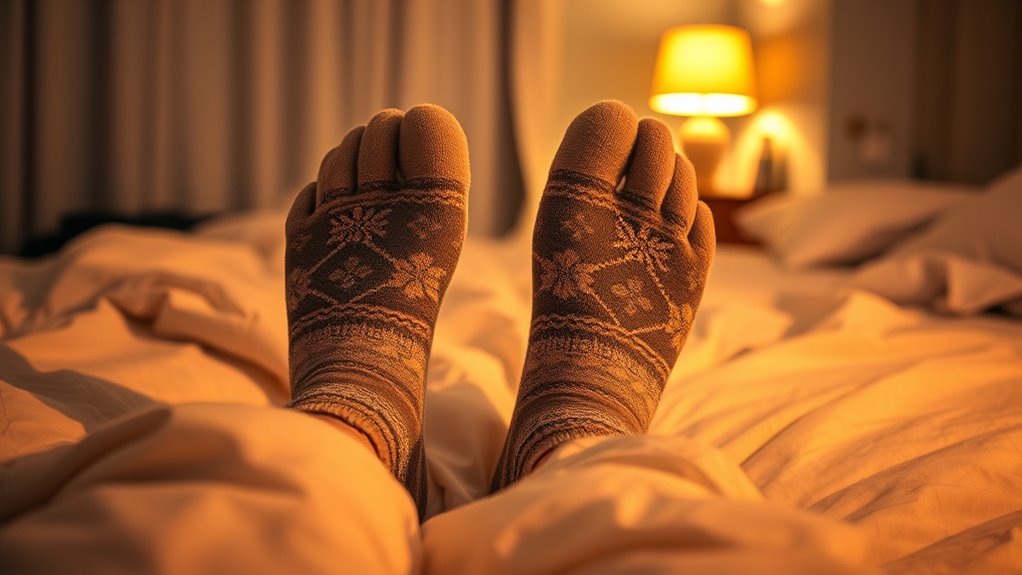

Wearing socks to bed can help you fall asleep faster by keeping your feet warm and maintaining a stable body temperature, which tells your brain it’s time to sleep. Warm feet also promote better blood circulation, reducing discomfort and helping you relax more quickly. If your feet are cold, it’s harder to fall asleep. Want to discover more about how the right socks support restful sleep? Keep exploring for helpful tips.
Key Takeaways
- Wearing socks helps maintain warm, consistent body temperature, signaling the brain that it’s time to sleep.
- Socks improve circulation by keeping feet warm, facilitating better blood flow and relaxation.
- Lightweight, breathable socks prevent overheating and sweating, supporting comfortable sleep.
- Keeping feet warm with socks can help you fall asleep faster by reducing cold-induced sleep disruptions.
- Proper sock choice and routine integration can enhance overall sleep quality and duration.
Have you ever wondered if wearing socks to bed is a good idea? It’s a common question, especially for those who struggle to fall asleep or stay warm through the night. The truth is, socks can influence your sleep temperature, which plays a significant role in how quickly you drift off. When your body is at the right temperature, your brain signals that it’s time to sleep, making it easier to relax and settle into a restful state. Wearing socks helps you maintain a consistent, warm sleep temperature, preventing your feet from becoming too cold, which can disrupt your sleep cycle. Cold feet often send signals to your brain that your core temperature needs adjusting, making it harder to relax and fall asleep. By keeping your feet warm with socks, you’re essentially telling your body that it’s time to wind down, which can accelerate the process of falling asleep. Proper thermal regulation is essential for restful sleep, and wearing socks can support this process effectively.
In addition to regulating sleep temperature, wearing socks can improve circulation. When your feet are cold, blood flow slows down, and your body works harder to warm your extremities. This inefficient circulation can lead to discomfort and make it more difficult to relax fully. Socks help promote better circulation by keeping your feet warm and encouraging blood flow. Improved circulation doesn’t just keep you comfortable; it also helps your body distribute oxygen and nutrients more efficiently, supporting overall sleep quality. Better blood flow can also relieve aches and numbness in your feet, which might otherwise wake you up during the night. As your circulation improves, you’ll likely notice that you fall asleep faster and stay asleep longer, as your body remains in a state of relaxation.
Some people worry that wearing socks might cause overheating or discomfort during the night, but that’s usually only if the socks are too thick or made from non-breathable materials. Opting for lightweight, breathable socks made from natural fibers like cotton or wool can help you enjoy the benefits without feeling overheated. The key is finding a balance—keeping your feet warm enough to support sleep temperature and circulation without causing excessive heat or sweating. If you find that socks help you fall asleep faster and sleep more soundly, it’s worth incorporating them into your bedtime routine. Remember, everyone’s different, but the science behind sleep temperature regulation and circulation improvement strongly suggests that a simple pair of socks could be your secret weapon for better rest.
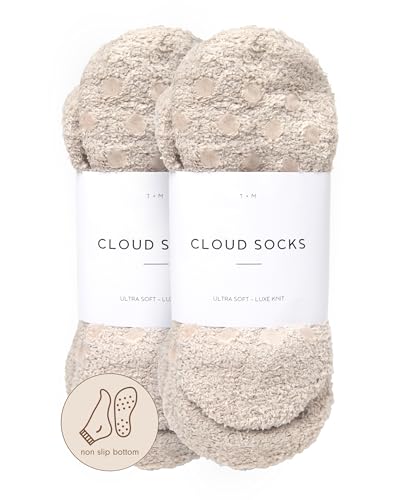
Unboxme Ultra-Luxe Cloud Socks – 2 Pairs Non-Slip Stone Color – Super Soft Gripper Sleep Socks for Women & Men
Step into Softness with Secure Grip: Experience all-day style and comfort with these plush grip socks crafted from…
As an affiliate, we earn on qualifying purchases.
As an affiliate, we earn on qualifying purchases.
Frequently Asked Questions
Can Wearing Socks to Bed Cause Foot Fungus?
Wearing socks to bed doesn’t directly cause foot fungus, but poor sock hygiene can increase your risk. To prevent foot fungus, make sure you wash your socks regularly and dry your feet thoroughly. Follow sock hygiene tips like choosing breathable materials and changing socks daily. If you keep your socks clean and your feet dry, you reduce the chances of developing foot fungus, making sock-wearing safer overnight.
What Types of Socks Are Best for Sleeping?
The best socks for sleeping are super soft, breathable sleep socks that feel like a gentle hug for your feet. Opt for cotton or bamboo blends—these sock choices boost sleep comfort and wick away moisture, preventing cold feet from disrupting your rest. Avoid tight or synthetic socks, which can cause discomfort or overheating. With the right socks, you’ll transform bedtime into a cozy, dreamy escape, like floating on a cloud of comfort.
Does Wearing Socks to Bed Affect Overall Sleep Quality?
Wearing socks to bed can improve your sleep quality by helping regulate your sleep temperature and supporting your circadian rhythms. When your feet stay warm, blood flow increases, signaling your body it’s time to rest. This can lead to deeper, more restful sleep. So, if you often feel cold at night, wearing socks might help you achieve better sleep, making it easier to fall asleep and stay asleep longer.
Are There Any Health Conditions That Make Sock-Wearing Risky?
If you have circulatory health issues or skin irritation, wearing socks to bed might be risky. Socks can restrict blood flow, making circulation worse, or cause skin irritation and infections. You want your sleep to be a peaceful river, not a turbulent storm. Check with your doctor if you have these conditions before slipping on socks, ensuring your bedtime remains safe and comfortable.
How Does Sock Material Influence Temperature Regulation Overnight?
The sock material considerably affects your temperature regulation overnight. Natural fibers like wool offer excellent thermal insulation, keeping your feet warm without overheating, while also providing moisture control to manage sweat. Synthetic materials may trap heat too much or fail to wick moisture, disrupting your comfort. Choose socks with good thermal insulation and moisture control to stay cozy yet dry, helping you fall asleep faster and enjoy restful sleep.

Busy Socks Winter Warm Thermal Socks for Men Women Extra Thick Insulated Heated Crew Boot Socks for Extreme Cold Weather, Medium, 1 Pair Black
SIZE- Medium fits for (US Men Shoe Size 6-9.5, Women Shoe Size 7-9.5), Large fits for (US Men…
As an affiliate, we earn on qualifying purchases.
As an affiliate, we earn on qualifying purchases.
Conclusion
So, next time you’re struggling to drift off, consider slipping on those socks. Like a modern-day Cinderella, you might find that comfort transforms your night’s journey. Wearing socks to bed can help your body’s natural warmth work in your favor, making sleep come easier. Remember, sometimes a simple change—like donning cozy socks—can be your fairy godmother in disguise, guiding you to a restful, peaceful slumber you’ve been dreaming of.

Buster Brown Women's 100% Cotton Fold Over Bobby Socks – Ankle Socks, 3 Pairs – Natural/Cream – S
100% COTTON SOCKS FOR WOMEN – Made of 100% cotton yarn, classic bobby socks have a wide ribbed…
As an affiliate, we earn on qualifying purchases.
As an affiliate, we earn on qualifying purchases.

BraceAbility Closed Toe Neuropathy Socks – Diabetic Socks for Women and Men, Foot Pain Relief, Circulation, Anti-Neuropathy, Foot Fatigue, Compression Nerve Support – 1 Pair (Medium Gray)
Wide range of sizes for men, women and kids: Designed for a comfortable, non-restrictive fit, these socks are…
As an affiliate, we earn on qualifying purchases.
As an affiliate, we earn on qualifying purchases.