
If you’re looking for the best astronomy laptops with long battery life in 2025, I’ve found five top models that balance portability, power, and extended observation sessions. These include lightweight options with high-resolution displays, fast processors like the 12th Gen Intel Alder Lake series, and batteries that last around 4 to 5 hours. They also support reliable connectivity for peripherals and feature anti-glare screens for outdoor use. Keep going to discover which fits your stargazing needs best.
Key Takeaways
- High-resolution, anti-glare displays with brightness over 300 nits ensure clear star mapping outdoors.
- Lightweight, slim designs with 4-5 hour battery life facilitate portability for outdoor stargazing.
- Powerful 12th Gen Intel CPUs and 16GB RAM support smooth multitasking and real-time celestial data processing.
- Energy-efficient OLED/LED screens and optimized power settings extend battery life during extended sessions.
- Advanced connectivity options like Wi-Fi 6/6E and multiple ports enable seamless integration with telescopes and peripherals.
NIMO 15.6″ FHD Laptop with 16GB RAM and 1TB SSD
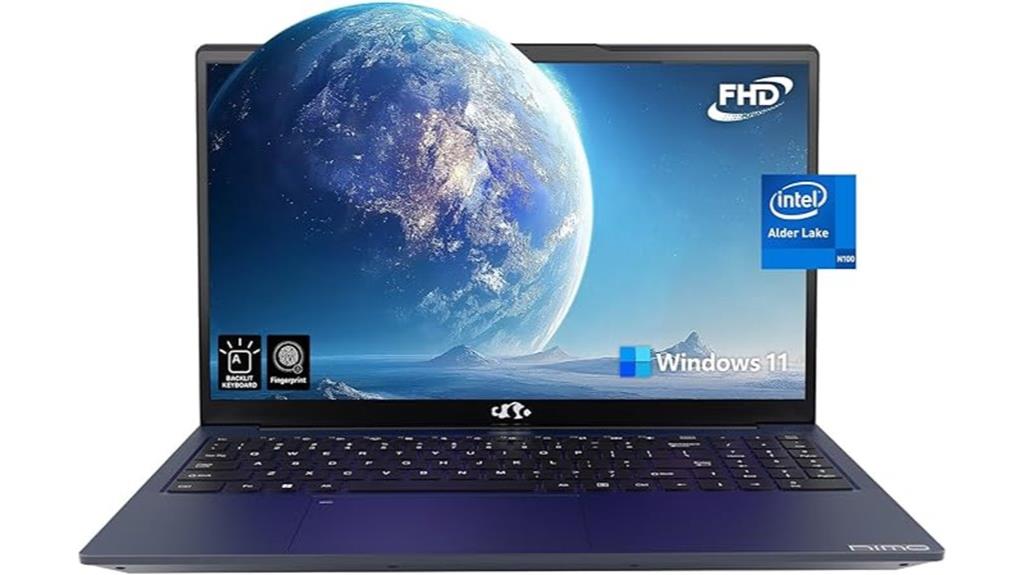
If you’re looking for a reliable laptop to enhance your stargazing experience, the NIMO 15.6″ FHD Laptop is an excellent choice. It features a crisp 1920×1080 anti-glare display with narrow bezels, perfect for immersive visuals during late-night sessions. Powered by a 12th Gen Intel Alder Lake-N100 processor, it handles multitasking and multimedia smoothly. With 16GB of RAM and a 1TB SSD, it ensures fast performance and ample storage. Plus, its durable metal shell, lightweight design, and modern connectivity options make it ideal for portability and long-term use. Backed by a 2-year warranty, this laptop offers reliability and support for all your stargazing adventures.
Best For: those seeking a reliable, portable laptop with excellent display quality and performance for stargazing, studying, or multimedia use.
Pros:
- High-resolution 15.6″ FHD anti-glare display with narrow bezels for immersive visuals
- Powerful 12th Gen Intel Alder Lake-N100 processor with 16GB RAM and 1TB SSD for smooth multitasking and fast data access
- Durable metal shell combined with lightweight design and modern connectivity options, including Wi-Fi 6 and Bluetooth 5.2
Cons:
- Limited upgrade options for RAM and storage beyond initial configuration
- Integrated graphics may not be suitable for intensive gaming or high-end graphic design
- The 2-year warranty, while comprehensive, may not cover certain accidental damages or peripherals
ACEMAGIC 2024 17.3-Inch FHD Business Laptop
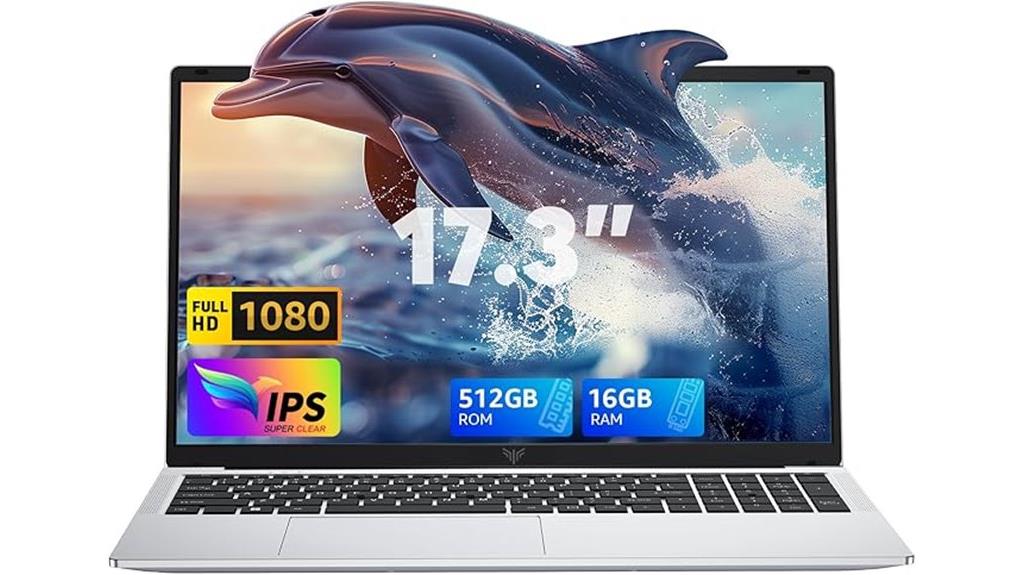
The ACEMAGIC 2024 17.3-Inch FHD Business Laptop is an excellent choice for stargazing enthusiasts who need a portable yet powerful device for planning sessions or reviewing star maps. Its Intel 12th gen Alder Lake processor, 16GB RAM, and 512GB SSD ensure quick multitasking and smooth performance. The large 17.3-inch FHD display offers immersive visuals, ideal for detailed star maps. With a lightweight design, a 6000mAh battery lasting up to five hours, and versatile connectivity options, it’s perfect for on-the-go use. The cooling system keeps performance steady during extended sessions, making it a reliable companion for your stargazing adventures.
Best For: Stargazing enthusiasts and travelers seeking a portable, high-performance laptop for planning sessions and reviewing star maps on the go.
Pros:
- Powerful Intel 12th gen Alder Lake N97 processor with up to 3.6GHz for fast multitasking
- Large 17.3-inch FHD display provides immersive visuals for detailed star maps
- Lightweight design with a 6000mAh battery lasting up to five hours, ideal for portability
Cons:
- Only 5 hours of battery life may require frequent charging during extended use
- Customer rating of 3.6 out of 5 stars suggests mixed reviews on overall satisfaction
- Limited to Windows 11, which may not suit users preferring alternative operating systems
Laptop Computer 15.6in with Backlit Keyboard, 1TB SSD, 16GB RAM, Quad-Core N150, Webcam, Portable IPS FHD Notebook
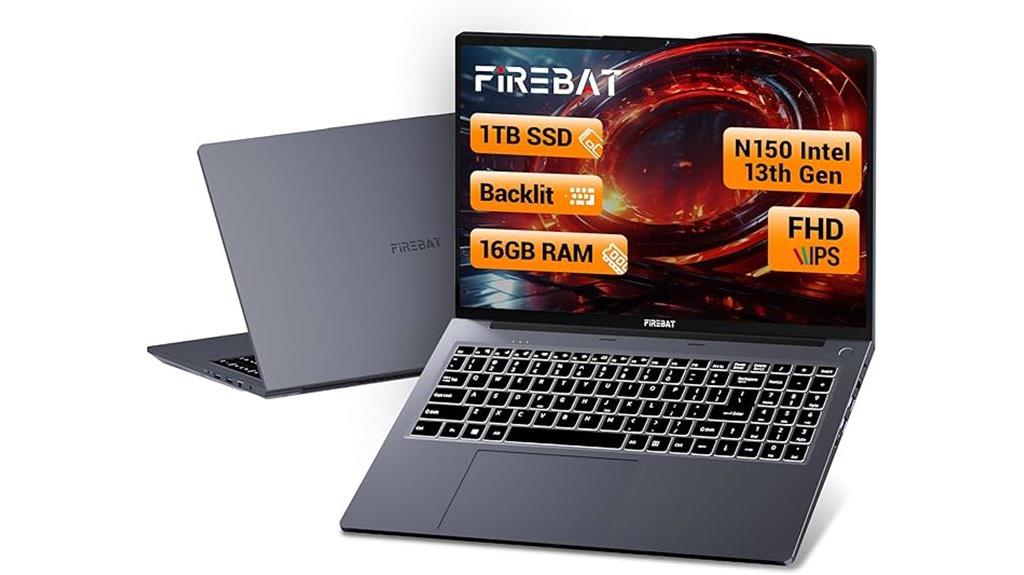
Looking for a reliable laptop that can handle late-night stargazing sessions while managing all your files smoothly? The 15.6-inch Portable IPS FHD Notebook is perfect. It’s powered by Intel’s 13th Gen Twin Lake N150 processor, offering a 30% performance boost over previous generations. The sharp 1920×1080 display, combined with dual stereo speakers and a webcam, makes it ideal for quick setups and streaming. With 16GB RAM and a 1TB SSD, multitasking and storage are effortless. Its long-lasting battery ensures you stay powered through long nights. Plus, extensive connectivity options make it versatile for any setup, making it a top choice for stargazing enthusiasts.
Best For: students, professionals, and light gaming enthusiasts seeking a reliable, high-performance portable laptop for multitasking, streaming, and everyday use.
Pros:
- Powered by Intel 13th Gen Twin Lake N150 processor for a significant performance boost
- Large 15.6-inch FHD IPS display with sharp visuals and slim bezels for immersive viewing
- 16GB RAM and 1TB SSD provide fast multitasking, quick file access, and ample storage
Cons:
- Limited to Wi-Fi 5, which is slower compared to newer Wi-Fi standards
- Battery capacity may not be sufficient for very long off-grid use without charging
- Lacks dedicated graphics card, limiting performance for intensive gaming or high-end creative work
2025 Laptop with N150 CPU, 16GB DDR4 RAM, 512GB SSD, 15.6″ FHD IPS Display, 5000mAh Battery, Metal Body, Portable Slim Laptop
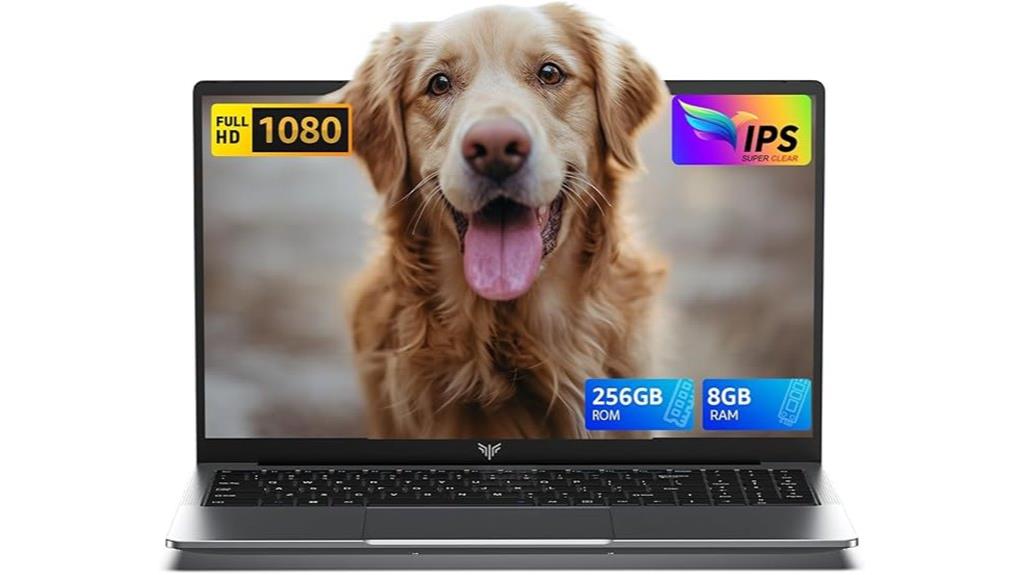
For stargazing enthusiasts who need a portable device that doesn’t compromise on performance, this 15.6-inch laptop with an N150 CPU and 16GB RAM is an excellent choice. It offers solid performance for daily tasks, web browsing, and light gaming thanks to its quad-core processor. The 512GB SSD ensures quick load times and ample storage, while the 15.6-inch FHD IPS display delivers vibrant, sharp visuals—perfect for stargazing apps or managing astrophotography. Its 5000mAh battery provides over four hours of use, and the lightweight metal body makes it easy to carry on trips. This slim, durable laptop balances power and portability effortlessly.
Best For: Stargazing enthusiasts and portable device users who need reliable performance for daily tasks, multimedia, and light gaming on the go.
Pros:
- Powerful quad-core N150 CPU with a 10% performance boost for smooth multitasking
- 16GB DDR4 RAM and 512GB SSD ensure fast data access and ample storage
- Vibrant 15.6″ FHD IPS display with accurate colors enhances visual experience
Cons:
- Battery life of over four hours may require frequent charging during extended use
- Lightweight 1.6kg design, while portable, may feel less sturdy for rough handling
- Limited to everyday tasks and light gaming; not suitable for heavy computational or gaming needs
ACEMAGIC 2024 17.3-Inch FHD Laptop with 16GB RAM and 512GB SSD
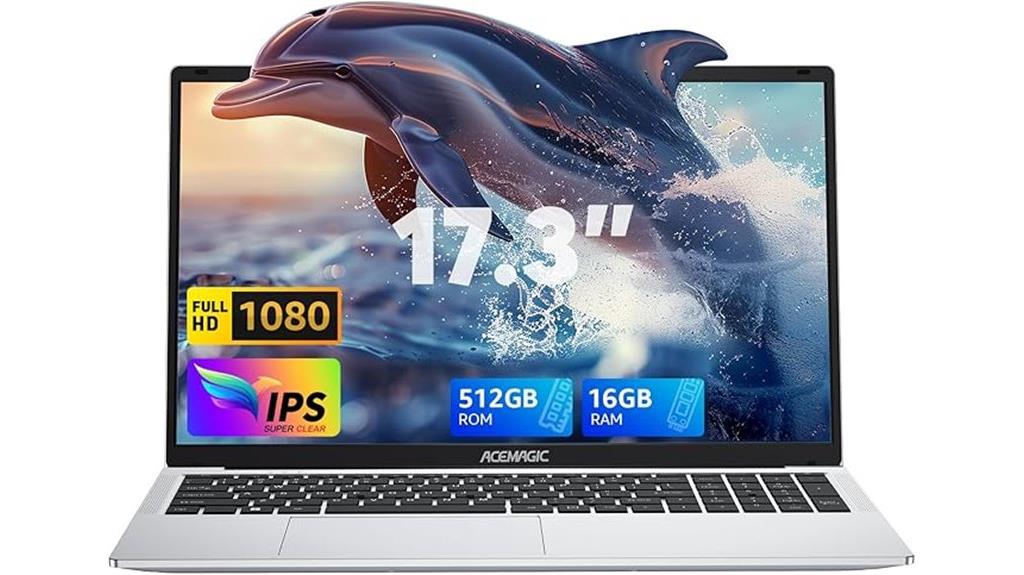
If you’re searching for a portable yet powerful laptop that can handle stargazing software and data analysis, the ACEMAGIC 2024 17.3-Inch FHD Laptop is an excellent choice. It features a 12th gen Alder Lake N97 processor, 16GB DDR4 RAM, and a 512GB SSD, ensuring smooth multitasking and quick data access. The 17.3-inch FHD IPS display offers an immersive viewing experience, ideal for star maps and software. Its slim, durable metal chassis makes it easy to carry, and the built-in cooling fans keep it running quietly during long sessions. With approximately five hours of battery life, it’s perfect for on-the-go astronomy adventures.
Best For: astronomers and data analysts seeking a portable, high-performance laptop for star mapping and multitasking on the go.
Pros:
- Powerful 12th gen Alder Lake N97 processor with 16GB RAM ensures smooth multitasking and data processing
- Large 17.3-inch FHD IPS display provides immersive viewing for star maps and detailed software use
- Durable metal chassis and lightweight design make it easy to carry during outdoor astronomy sessions
Cons:
- Battery life of approximately five hours may be limiting for extended field use without charging
- Built-in cooling fans could generate some noise during intensive tasks
- Limited data-only Type-C port may restrict connectivity options for some peripherals
Factors to Consider When Choosing Astronomy Laptops With High Battery Life

When selecting an astronomy laptop, I focus on battery longevity and power efficiency to make sure it lasts through long stargazing sessions. I also consider processing performance and display optimization so I can view celestial charts clearly without draining the battery. Finally, portability features matter, as a lightweight design helps me carry my gear easily for outdoor observations.
Battery Longevity
Choosing a laptop with long-lasting battery life is essential for outdoor astronomy sessions, where power outlets are often unavailable. A high-capacity battery, like 5000mAh or more, guarantees you can observe for hours without recharging. The display type plays a big role; IPS and FHD screens tend to drain more power compared to lower-resolution or OLED displays, so selecting energy-efficient screens helps extend battery life. Processors like Intel’s Alder Lake series are designed to optimize power consumption, providing longer use between charges. Features such as battery-saving modes and adaptive brightness further boost endurance, especially in field conditions. Remember, overall battery longevity depends on hardware, background apps, and usage patterns, so choosing a device with proven endurance is key to successful stargazing sessions.
Power Efficiency
Opting for a laptop with high battery capacity is only part of maximizing power efficiency during long stargazing sessions. I look for models with energy-efficient processors, like Intel’s Alder Lake series, which use less power and help extend battery life. Features such as optimized power management settings and low-power sleep modes are essential for conserving energy when the device isn’t in active use. High-resolution displays with adaptive brightness and anti-glare coatings reduce power consumption while ensuring visibility in various lighting conditions. Additionally, a larger battery capacity, measured in mAh or Wh, directly increases usage time. Incorporating energy-saving components like SSD storage and efficient graphics solutions further boosts overall power efficiency, allowing me to enjoy longer observation sessions without worrying about running out of juice.
Processing Performance
High processing performance is essential for running complex astronomy software and analyzing data efficiently during long observation sessions. I recommend laptops with multi-core processors like Intel’s 12th Gen chips, which handle multitasking smoothly when running multiple applications at once. Faster CPU speeds, reaching 3.6GHz or higher, markedly cut down lag when processing large datasets or running simulations. Adequate processing power also supports real-time data collection and analysis, essential for outdoor stargazing in remote locations. Choosing a laptop with a robust processor means fewer upgrades over time, ensuring consistent high performance during extended use. This reliability is critical when you’re out in the field, relying on your device to keep up with demanding scientific tasks without slowing down or crashing.
Display Optimization
A clear, vibrant display is indispensable when stargazing with a laptop, especially in outdoor settings where ambient light can be intense. An optimized screen with high resolution, like FHD or higher, ensures celestial details are sharp and easy to interpret, reducing eye strain during long sessions. Anti-glare and matte coatings help minimize reflections, making visibility better in bright environments. High brightness levels, above 300 nits, improve visibility under direct sunlight, which is crucial during field observations. Wide color gamuts and accurate color reproduction aid in identifying faint objects and subtle details in celestial images. Additionally, energy-efficient display technologies like OLED or LED backlit screens extend battery life while delivering vibrant visuals, letting me observe longer without worrying about power consumption.
Portability Features
When choosing an astronomy laptop for field use, portability features play a crucial role in guaranteeing I can carry it easily and observe comfortably. I look for lightweight models under 1.8kg, which make traveling and setup much simpler. Slim profiles, less than 0.7 inches thick, help me slip the laptop into my backpack or briefcase without hassle. Compact designs with minimal bezels maximize screen size while keeping overall dimensions manageable. Built-in wireless options like Wi-Fi 6 and Bluetooth 5.2 are essential for quick, reliable connections on the go. Additionally, energy-efficient processors and large-capacity batteries, such as 5000mAh or higher, ensure I get extended usage without frequent recharging. These portability features make field stargazing more convenient and enjoyable.
Connectivity Options
Selecting a portable astronomy laptop means paying close attention to its connectivity options, especially if I want to maximize battery life during field observations. I look for support of the latest Wi-Fi standards like Wi-Fi 6 or 6E, which offer faster, more reliable connections with less power consumption. Multiple USB ports, particularly USB 3.0 or higher, are essential for connecting external drives, cameras, or telescopes quickly. HDMI or DisplayPort outputs are a must for linking to external displays or projectors for detailed star maps. Bluetooth 5.0 or newer guarantees stable, low-latency connections with wireless accessories. Additionally, having an Ethernet port is valuable in remote locations with weak Wi-Fi signals, providing a dependable wired connection when needed.
Frequently Asked Questions
How Long Should an Astronomy Laptop’s Battery Last During Stargazing Sessions?
During stargazing sessions, I look for a laptop with at least 6 to 8 hours of battery life. This duration gives me plenty of time to explore the night sky without constantly worrying about recharging. I always carry a portable power bank just in case, but a long-lasting battery guarantees I can focus on observing and analyzing celestial objects without interruption. A reliable battery truly enhances my stargazing experience.
What Features Enhance a Laptop’s Performance for Astronomy Software?
Think of a laptop’s performance like a sturdy telescope—certain features make all the difference. I look for a fast processor, ideally an Intel i7 or AMD Ryzen 7, and at least 16GB RAM to handle astronomy software smoothly. A dedicated GPU boosts graphics, while SSD storage speeds up data access. Good cooling systems prevent overheating, ensuring my laptop stays reliable during long stargazing nights.
Are Lightweight Laptops More Suitable for Extended Stargazing Trips?
Yes, lightweight laptops are more suitable for extended stargazing trips because they’re easier to carry around, especially when you’re setting up at different locations. I prefer a slim, portable model because it doesn’t weigh me down and still offers good battery life. Plus, their compact size makes it easier to manage in outdoor environments. For long trips, I always choose a lightweight laptop to keep my stargazing experience hassle-free and enjoyable.
How Important Is Screen Brightness and Resolution for Astrophotography?
Screen brightness and resolution are essential for astrophotography because detailed, vibrant images depend on them. Bright screens help me see my work clearly even under dim conditions, while high resolution captures fine celestial details. Without enough brightness and clarity, my photos can look dull or blurry, making it harder to analyze star formations or nebulae. So, I always prioritize these features for stellar astrophotography results.
Can Gaming Laptops Be Effective for Astronomy With Long Battery Life?
Gaming laptops can be quite effective for astronomy if they have long battery life and good specs. I’ve found that their powerful processors and high-quality displays help me run astronomy software smoothly. Plus, their battery longevity allows me to stargaze or work in the field without constantly searching for power sources. Just make sure to choose a model with excellent battery performance and sufficient graphics capabilities for your needs.
Conclusion
Choosing the right astronomy laptop means balancing power with portability—like holding a telescope and a flashlight in one hand. While some models boast stunning displays, others shine with long battery life, letting you stargaze into the night without worry. Remember, it’s not just about specs but about how seamlessly your device can accompany you under a starry sky. After all, the best laptop isn’t just for work—it’s your gateway to the universe.