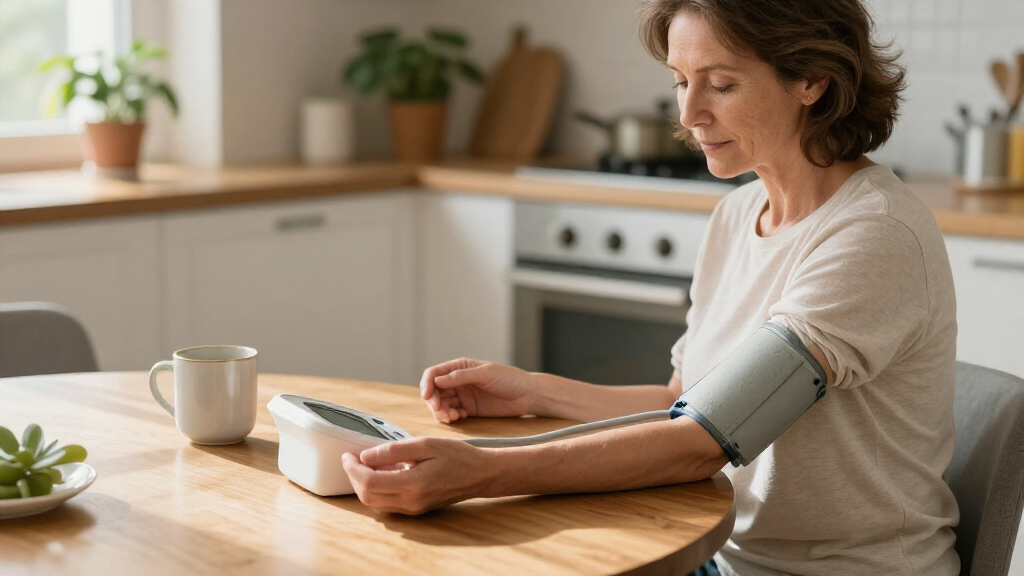
For most households, I’d start with the OMRON Gold Upper Arm Blood Pressure Monitor with AFib Detection: it combines an upper-arm cuff with an added heart-rhythm screening feature. The OMRON Silver is a more straightforward option for routine readings, while the OMRON Evolv suits people who want a compact, wireless design. The main tradeoffs are upper-arm versus wrist fit, simple operation versus app-connected tracking, and basic readings versus added screening features. Cuff fit and a reliable measurement routine matter more than a long feature list. Read on for how all 15 home blood pressure monitors differ and which buyer each one suits.

Get health and wellness essentials delivered free with Prime
- Fast, free delivery on millions of items
- Prime Video, Amazon Music and more included
- Member-only deals all year
Key Takeaways
Upper-arm models dominate the lineup, giving most buyers a familiar starting point; wrist options from Oklar and OMRON may suit people who cannot use an upper-arm cuff comfortably, but positioning is especially important.
AFib screening separates feature-rich OMRON options: Gold and Platinum add detection features, while Complete pairs blood pressure measurement with an EKG function. These capabilities do not replace clinical diagnosis.
Wireless does not always mean simpler. Evolv and iHealth Track can support connected tracking, while a basic display-focused monitor may be easier for someone who wants readings without app setup.
Cuff fit is a more useful comparison than brand name alone. Sinocare highlights an adjustable cuff, and any buyer should check the stated arm or wrist range against the person who will use the monitor.
The lineup offers distinct complexity levels: Bronze and Iron emphasize a simpler upper-arm approach, while Gold, Platinum, and Complete add features that make sense only for buyers who will use them.
| Sinocare Upper Arm Blood Pressure Monitor with Adjustable Cuff |  | Best for Simple Two-Person Tracking | Measurement location: Upper arm | Cuff fit: 8.6–16.5 inches | Display: 3.6-inch screen | VIEW LATEST PRICE | See Our Full Breakdown |
| Oklar Rechargeable Wrist Blood Pressure Monitor |  | Best for Portable Wrist Monitoring | Measurement location: Wrist | Cuff size: 4.92–8.46 inches | Measurement time: About 35 seconds | VIEW LATEST PRICE | See Our Full Breakdown |
| OMRON Complete 2-in-1 Upper Arm Blood Pressure Monitor with EKG | 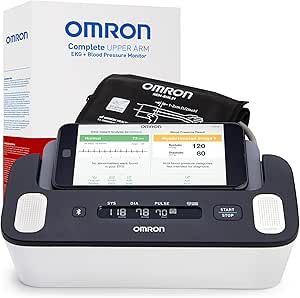 | Best for Blood Pressure and EKG Measurements | Measurement types: Blood pressure and EKG | Cuff fit: Arms 9–17 inches | On-device storage: Up to 90 readings | VIEW LATEST PRICE | See Our Full Breakdown |
| Oklar Upper Arm Blood Pressure Monitor |  | Best Value for Shared Household Use | Measurement location: Upper arm | Operation: One-button | Display: Backlit LED | VIEW LATEST PRICE | See Our Full Breakdown |
| OMRON Evolv Wireless Upper Arm Blood Pressure Monitor |  | Best Compact Connected Monitor | Measurement location: Upper arm | Cuff fit: 9–17 inches | Design: Compact one-piece monitor and cuff | VIEW LATEST PRICE | See Our Full Breakdown |
| OMRON Gold Upper Arm Blood Pressure Monitor with AFib Detection |  | Best for AFib Screening | Measurement type: Upper arm blood pressure | AFib screening: Automatic screening with each measurement | Connectivity: Bluetooth | VIEW LATEST PRICE | See Our Full Breakdown |
| Braun ExactFit 2 Upper Arm Blood Pressure Monitor |  | Best for At-a-Glance Readings | Brand: Braun | Model: ExactFit 2 BUA4050US | Monitor type: Upper-arm blood pressure monitor | VIEW LATEST PRICE | See Our Full Breakdown |
| Alcedo Upper Arm Blood Pressure Monitor |  | Best for Two-User Home Tracking | Monitor type: Upper-arm blood pressure monitor | Display: LCD | Voice broadcast: Adjustable volume | VIEW LATEST PRICE | See Our Full Breakdown |
| OMRON Iron Upper Arm Blood Pressure Monitor |  | Best for Simple One-Touch Use | Brand: OMRON | Monitor type: Upper arm | Cuff size: Fits arms 9–17 inches | VIEW LATEST PRICE | See Our Full Breakdown |
| OMRON Gold Wireless Wrist Blood Pressure Monitor for Home Use |  | Best Compact Connected Monitor | Monitor type: Wireless wrist blood pressure monitor | Cuff size: Wrist circumference 5.3–8.5 inches | Memory capacity: 200 readings per user with dual-user support | VIEW LATEST PRICE | See Our Full Breakdown |
| iHealth Track Smart Upper Arm Blood Pressure Monitor |  | Best for a Clear, Color-Coded Display | Measurement type: Upper arm blood pressure | Cuff fit: 8.7–16.5 inches (22–42 cm) | On-device memory: Up to 99 readings | VIEW LATEST PRICE | See Our Full Breakdown |
| OMRON Silver Upper Arm Blood Pressure Monitor |  | Best for Straightforward Elevated-Reading Alerts | Measurement type: Upper arm blood pressure | On-device memory: Up to 30 readings | App storage: Unlimited readings in the OMRON Connect app | VIEW LATEST PRICE | See Our Full Breakdown |
| OMRON Bronze Upper Arm Blood Pressure Monitor |  | Best for Basic OMRON App Tracking | Measurement type: Upper arm blood pressure | On-device memory: Up to 14 readings | App storage: Unlimited readings in the OMRON Connect app | VIEW LATEST PRICE | See Our Full Breakdown |
| Invaxe Automatic Upper Arm Blood Pressure Monitor with Large Backlit Display |  | Best for Two Users Without App Dependence | Users: 2 | Readings per user: Up to 199 | Display: 4.5-inch backlit LCD | VIEW LATEST PRICE | See Our Full Breakdown |
| Omron Platinum Upper Arm Blood Pressure Monitor with AFib Detection |  | Best for Automatic AFib Screening | Measurement type: Upper arm blood pressure | AFib detection: Automatic screening with each measurement | Memory: Up to 100 readings each for two users | VIEW LATEST PRICE | See Our Full Breakdown |
| home blood pressure monitor | Cuff fit | Power |
|---|---|---|
| Sinocare Upper Arm Blood Press | 8.6–16.5 inches | Four AAA batteries or Type-C charging port; cable not included |
| Oklar Rechargeable Wrist Blood | — | — |
| OMRON Complete 2-in-1 Upper Ar | Arms 9–17 inches | — |
| Oklar Upper Arm Blood Pressure | — | Three AA batteries or Type-C cable; not rechargeable |
| OMRON Evolv Wireless Upper Arm | 9–17 inches | Four AAA batteries |
| OMRON Gold Upper Arm Blood Pre | — | — |
| Braun ExactFit 2 Upper Arm Blo | — | — |
| Alcedo Upper Arm Blood Pressur | Arms 8.7–16.5 inches in circumference | — |
| OMRON Iron Upper Arm Blood Pre | — | — |
| OMRON Gold Wireless Wrist Bloo | — | — |
| iHealth Track Smart Upper Arm | 8.7–16.5 inches (22–42 cm) | Four AAA batteries included |
| OMRON Silver Upper Arm Blood P | 9–17 inches | Four AA batteries |
| OMRON Bronze Upper Arm Blood P | 9–17 inches | Four AA batteries included |
| Invaxe Automatic Upper Arm Blo | 9–17 inches | USB cable or four AAA batteries |
| Omron Platinum Upper Arm Blood | 9–17 inches | AC adapter or four AA batteries |
More Details on Our Top Picks
Sinocare Upper Arm Blood Pressure Monitor with Adjustable Cuff
The Sinocare pairs one-button operation with a large 3.6-inch screen, making routine checks straightforward for people who prefer not to work through menus. Its memory holds 99 readings for each of two users, enough to review separate measurement histories without relying on an app. Compared with the Oklar Upper Arm Blood Pressure Monitor, Sinocare offers posture detection and flexible Type-C or battery power, while Oklar stores more readings overall and has a backlit display. The adjustable cuff fits arms from 8.6 to 16.5 inches, but buyers should check that range before choosing it. The Type-C port adds a convenient power option, though the cable is not included. This is a practical pick for shared household use, not for shoppers who want app-based trend tracking.
Pros:- One-button operation keeps routine measurements simple
- Stores up to 99 readings for each of two users
- Posture detection and irregular heartbeat alerts add useful measurement cues
- Can run on four AAA batteries or Type-C power
Cons:- Type-C cable is not included
- No Bluetooth or app tracking is listed
- Memory per user is lower than the Oklar Upper Arm monitor’s 120 readings per user
Best for: Two-person households seeking simple upper-arm readings, separate device memory, and a choice of battery or Type-C power.
Not ideal for: Buyers who want Bluetooth reports or need a cuff larger than 16.5 inches; the Type-C cable must also be supplied separately.
- Measurement location:Upper arm
- Cuff fit:8.6–16.5 inches
- Display:3.6-inch screen
- Operation:One-button
- User profiles:2
- Memory:Up to 99 readings per user
- Power:Four AAA batteries or Type-C charging port; cable not included
- Additional features:Posture detection, irregular heartbeat alerts, and color-coded blood pressure indicators
Our verdict“Choose Sinocare for uncomplicated two-person tracking and flexible power, but pick the Oklar Upper Arm model if larger per-user memory and a backlit display matter more.”
Oklar Rechargeable Wrist Blood Pressure Monitor
The Oklar is the lineup’s wrist-based option, suited to buyers who value a compact format over an upper-arm cuff. It stores 240 readings for two users and gives measurements in about 35 seconds, while its backlit screen and adjustable voice broadcast can make results easier to access. Unlike the Sinocare Upper Arm monitor, it recharges by Type-C and includes the cable, but wrist readings depend on correct positioning; users need to follow the instructions closely and hold the wrist at heart level. Its cuff fits wrists from 4.92 to 8.46 inches, so it will not suit every wearer. The Oklar Upper Arm model may be a better fit for shoppers set on an upper-arm device, while this model makes more sense when portability and spoken readings take priority. The charging adapter is not included.
Pros:- Stores up to 240 readings for two users
- Rechargeable battery and included Type-C cable reduce reliance on disposable batteries
- Backlit display and adjustable voice broadcast support easier access to readings
- About 35-second measurement time
Cons:- Charging adapter is not included
- Wrist cuff fit is limited to 4.92–8.46 inches
- Correct wrist positioning is important, unlike the usual upper-arm setup
Best for: People who need a compact monitor for travel or have a specific reason to choose a wrist cuff, and who value voice guidance and shared memory.
Not ideal for: Buyers who prefer an upper-arm cuff or may find it difficult to hold the wrist correctly during a measurement.
- Measurement location:Wrist
- Cuff size:4.92–8.46 inches
- Measurement time:About 35 seconds
- Reading storage:Up to 240 readings for two users
- Display:Large backlit LED
- Voice broadcast:Adjustable volume or can be turned off
- Charging:Rechargeable battery; Type-C cable included; adapter not included
- Auto shutoff:After 60 seconds of inactivity
Our verdict“Pick the Oklar Wrist monitor when portability and voice output outweigh the positioning demands of a wrist cuff.”
OMRON Complete 2-in-1 Upper Arm Blood Pressure Monitor with EKG
The OMRON Complete earns its place by combining upper-arm blood pressure readings and EKG measurements in one device. That broader measurement set separates it from the OMRON Evolv, which focuses on blood pressure and irregular heartbeat detection during routine readings rather than adding EKG functionality. Bluetooth links the Complete to OMRON Connect, with Apple Health and Google Fit compatibility for tracking and sharing reports. The device itself holds up to 90 readings, so app use matters for buyers who want longer-term trends or more extensive storage. A wide-range D-ring cuff fits arms from 9 to 17 inches, and the package includes batteries and a storage case. This is the feature-rich choice for people specifically seeking EKG capability, but it is a more app-dependent option than the straightforward Sinocare.
Pros:- Combines blood pressure and EKG measurements
- Bluetooth supports tracking and report sharing through compatible apps
- Works with OMRON Connect, Apple Health, and Google Fit
- Includes a wide-range D-ring cuff, storage case, and four AA batteries
Cons:- On-device storage is limited to 90 readings
- Unlimited reading storage and trend tracking require the smartphone app
- Cuff fit is limited to arms measuring 9–17 inches
Best for: People who want blood pressure and EKG measurements in one upper-arm device and plan to use a compatible smartphone for tracking.
Not ideal for: Buyers who want a basic monitor without app setup, or whose arm circumference falls outside the 9–17-inch cuff range.
- Measurement types:Blood pressure and EKG
- Cuff fit:Arms 9–17 inches
- On-device storage:Up to 90 readings
- Connectivity:Bluetooth
- App compatibility:OMRON Connect, Apple Health, and Google Fit
- Included cuff:Wide-range D-ring cuff
- Included accessories:Storage case, instruction manual, quick start guide, and four AA batteries
Our verdict“Choose the OMRON Complete if EKG measurements are a priority; for blood pressure monitoring without that added function, the OMRON Evolv is a simpler alternative.”
Oklar Upper Arm Blood Pressure Monitor
The Oklar Upper Arm is a straightforward choice for households that want two-user memory without app setup. It stores 120 readings per user, more than the Sinocare’s 99 per user, and the backlit LED display helps make results easier to read in dim rooms. One-button operation keeps the routine simple, though a measurement takes about a minute. Its power options include three AA batteries or a Type-C cable, but the device is not rechargeable; the cable serves as an alternative power source rather than charging a built-in battery. The 8.7–15.7-inch cuff range is narrower than the Sinocare’s, so fit may decide between them. This model suits buyers who want plentiful local storage and a clear display, but not those who need app connectivity or a wider cuff range.
Pros:- Stores up to 120 readings per user for two users
- One-button operation is easy to use
- Backlit LED display has clear digits
- Can use three AA batteries or a Type-C cable as a power source
Cons:- Not rechargeable, despite offering Type-C power
- Cuff range of 8.7–15.7 inches may not fit every adult
- About one-minute measurement time is slower than the Oklar Wrist monitor’s stated timing
Best for: Two-person households that want a clear, backlit upper-arm monitor with substantial on-device memory and no app requirement.
Not ideal for: People who need a cuff larger than 15.7 inches or expect Type-C power to recharge the monitor.
- Measurement location:Upper arm
- Operation:One-button
- Display:Backlit LED
- Reading time:About 1 minute
- Memory:Up to 240 readings total; 120 per user
- Users:2
- Arm cuff range:8.7–15.7 inches (22–40 cm)
- Power:Three AA batteries or Type-C cable; not rechargeable
Our verdict“Choose the Oklar Upper Arm monitor for generous shared memory and a readable display, provided its cuff fits and non-rechargeable power suits your setup.”
OMRON Evolv Wireless Upper Arm Blood Pressure Monitor
The OMRON Evolv puts the cuff and monitor into a compact one-piece design, reducing the separate tubing and components associated with conventional upper-arm models. Bluetooth connection to OMRON Connect, Apple Health, and Google Fit gives it an advantage over the Oklar Upper Arm monitor for buyers who want readings tracked and shared digitally. It also detects irregular heartbeats during routine measurements. On-device memory holds 100 readings, so people who want longer histories or trend views will need the app. Compared with the OMRON Complete, Evolv is the more focused blood pressure option: it does not add EKG measurements, but its compact design is simpler to pack and store. Four AAA batteries power it, which means there is no rechargeable option listed.
Pros:- Compact one-piece cuff and monitor design
- Bluetooth supports tracking and sharing readings through compatible apps
- Detects irregular heartbeats during readings
- Compatible with OMRON Connect, Apple Health, and Google Fit
Cons:- Requires four AAA batteries
- On-device memory is limited to 100 readings
- Does not offer the EKG measurement function found on the OMRON Complete
Best for: People who want a compact upper-arm monitor with Bluetooth tracking and irregular heartbeat detection for regular home use or travel.
Not ideal for: Buyers seeking EKG readings, rechargeable power, or extensive history stored directly on the device.
- Measurement location:Upper arm
- Cuff fit:9–17 inches
- Design:Compact one-piece monitor and cuff
- Memory:Up to 100 readings on the monitor
- Connectivity:Bluetooth
- App compatibility:OMRON Connect, Apple Health, and Google Fit
- Irregular heartbeat detection:Yes
- Power:Four AAA batteries
Our verdict“Choose the OMRON Evolv for a compact, connected blood pressure monitor, but select the OMRON Complete if EKG measurements are a priority.”
OMRON Gold Upper Arm Blood Pressure Monitor with AFib Detection
For buyers who want more than a blood pressure reading, this upper-arm monitor screens for AFib with each measurement and sends results to the OMRON Connect app over Bluetooth. Its High Morning Average Indicator also draws attention to elevated morning averages, giving users a specific trend to discuss with a clinician. Compared with the OMRON Iron, the Gold adds app-based tracking, AFib screening, and morning-average insights; the Iron is the simpler choice for one-touch readings without app reliance. The tradeoff is that the Gold’s connected features depend on a smartphone, and its cuff only fits arms measuring 9–17 inches. I’d choose it for people who will use the extra tracking, not those seeking a basic monitor with minimal setup.
Pros:- Screens for AFib with each blood pressure measurement
- Bluetooth app supports tracking and sharing readings
- High Morning Average Indicator flags elevated morning averages
- Includes a D-ring cuff, storage case, and four AA batteries
Cons:- Smartphone is needed to use the app and connected tracking features
- Cuff fit is limited to arms measuring 9–17 inches
Best for: People who want AFib screening, app-based history, and morning blood pressure trends to share with a clinician
Not ideal for: Buyers who avoid smartphone apps or whose arm circumference falls outside the 9–17-inch cuff range
- Measurement type:Upper arm blood pressure
- AFib screening:Automatic screening with each measurement
- Connectivity:Bluetooth
- App compatibility:OMRON Connect, Apple Health, and Google Fit
- Cuff size:Fits arms 9–17 inches
- Included items:Monitor, D-ring cuff, storage case, instruction manual, quick start guide, and four AA batteries
Our verdict“Choose the OMRON Gold if AFib screening and connected trend tracking matter more to you than a simpler, app-free monitor like the OMRON Iron.”
Braun ExactFit 2 Upper Arm Blood Pressure Monitor
The Braun ExactFit 2 is a straightforward pick for people who want help interpreting a reading without opening an app. Its color-coded indicator gives a quick visual cue, while irregular heartbeat detection adds a screening feature often absent from basic monitors. Compared with the Alcedo, Braun offers a simpler stated feature set and stores up to 30 readings rather than 120 per user; Alcedo is better suited to households that need more memory and two user profiles. The ExactFit 2’s limited memory makes it less useful for long-term recordkeeping, and the product details do not specify cuff fit or connectivity. I’d favor it for someone who values clear on-device guidance over extensive storage or app-based tracking.
Pros:- Color-coded indicator helps make readings easier to interpret
- Detects irregular heartbeats during measurements
- Stores up to 30 readings for measurement history
- Uses an inflation measurement system
Cons:- Memory is limited to 30 readings
- Product details do not specify cuff fit or smartphone connectivity
Best for: People who want an easy-to-read indicator and a modest on-device history without relying on an app
Not ideal for: Two-person households or buyers who need extensive memory, app connectivity, or a specified wide-range cuff
- Brand:Braun
- Model:ExactFit 2 BUA4050US
- Monitor type:Upper-arm blood pressure monitor
- Memory:Up to 30 readings
- Reading guidance:Color-coded indicator
- Detection:Irregular heartbeat detection
- Measurement system:Inflation measurement system
Our verdict“Pick the Braun ExactFit 2 for simple visual reading guidance, but choose the Alcedo if you need substantially more memory or two-user tracking.”
Alcedo Upper Arm Blood Pressure Monitor
The Alcedo stands out for households that share a monitor: it keeps 120 readings for each of two users, so one person’s history does not crowd out the other’s. It also averages three readings automatically, which gives users a useful combined result instead of asking them to calculate one themselves. Compared with the Braun ExactFit 2, Alcedo offers far more memory and separate profiles, while Braun provides a color-coded indicator for quick interpretation. Adjustable voice readings and one-button operation can help users who prefer spoken prompts, though movement during measurement may affect results and the monitor detects movement rather than preventing it. Its cuff fits arms from 8.7–16.5 inches, so buyers outside that range should look elsewhere.
Pros:- Two user profiles store up to 120 readings each
- Automatically averages three readings
- Adjustable voice broadcast and clear LCD display
- Detects cuff positioning and movement
Cons:- Movement during measurement may affect the reading
- Cuff fit is limited to arms measuring 8.7–16.5 inches
Best for: Couples or family members who want separate, high-capacity reading histories and spoken measurement prompts
Not ideal for: People whose arms fall outside the 8.7–16.5-inch cuff range or who may have difficulty staying still during readings
- Monitor type:Upper-arm blood pressure monitor
- Display:LCD
- Voice broadcast:Adjustable volume
- Measurement averaging:Automatically averages three readings
- User profiles:2
- Memory:120 readings per user
- Cuff fit:Arms 8.7–16.5 inches in circumference
- Detection features:Cuff positioning and movement detection
- FSA/HSA eligibility:Eligible
Our verdict“Choose Alcedo for shared home use and roomy per-user memory; the Braun ExactFit 2 is a better fit if you prefer a color-coded cue and need less storage.”
OMRON Iron Upper Arm Blood Pressure Monitor
The OMRON Iron is the uncomplicated option in this group: one-touch operation and body-movement alerts keep the routine simple, while irregular heartbeat detection adds a useful screening feature. Its wide-range D-ring cuff fits arms measuring 9–17 inches, a practical range for many households. Compared with the OMRON Gold, the Iron skips AFib screening, Bluetooth, and morning-average tracking, so it suits buyers who want direct readings rather than connected records. The simpler setup is also its limitation: the supplied details do not list memory, app support, or a storage case. I’d choose it when ease of operation matters more than saving and reviewing readings over time; buyers who need richer tracking should look to the Gold or the two-user Alcedo.
Pros:- One-touch operation keeps the measurement routine simple
- Detects irregular heartbeats during measurements
- Movement alerts can prompt users to keep still
- Wide-range cuff fits arms measuring 9–17 inches
Cons:- Does not include the AFib screening or connected tracking listed for the OMRON Gold
- Product details do not specify reading memory or app support
Best for: People who want a straightforward upper-arm monitor with one-touch operation and movement alerts
Not ideal for: Buyers who need AFib screening, Bluetooth tracking, or a stated reading-memory feature
- Brand:OMRON
- Monitor type:Upper arm
- Cuff size:Fits arms 9–17 inches
- Operation:One-touch
- Measurement technology:Advanced Accuracy Technology
- Detection features:Irregular heartbeat and body movement detection
- Included items:Monitor, wide-range D-ring cuff, instruction manual, and quick start guide
Our verdict“Choose the OMRON Iron for simple one-touch readings, but opt for the OMRON Gold if you want AFib screening and app-based history.”
OMRON Gold Wireless Wrist Blood Pressure Monitor for Home Use
This wrist monitor is the most portable connected option here, with dual-user profiles and storage for 200 readings per person before Bluetooth syncing extends tracking through the OMRON Connect app. It also detects irregular heartbeats and flags high morning averages, features shared with the OMRON Gold upper-arm model. The key difference is the measuring location: this wrist design is easier to pack, but wrist readings can be less accurate for some users than upper-arm readings and depend on proper positioning. The OMRON Iron is a better fit for shoppers who prefer an upper-arm cuff and simpler operation; the wrist Gold makes more sense when portability and app-based records take priority. Its cuff fits wrists measuring 5.3–8.5 inches.
Pros:- Compact wrist design is convenient for travel
- Dual-user profiles store up to 200 readings per person
- Bluetooth syncs with OMRON Connect, Apple Health, and Google Fit
- Includes irregular heartbeat detection and a High Morning Average Indicator
Cons:- Wrist readings may be less accurate than upper-arm readings for some users
- Requires periodic replacement of its two AAA batteries
Best for: Travelers and two-person households who want a compact monitor with app syncing and separate reading histories
Not ideal for: People who prefer upper-arm measurement or may have trouble positioning a wrist monitor correctly
- Monitor type:Wireless wrist blood pressure monitor
- Cuff size:Wrist circumference 5.3–8.5 inches
- Memory capacity:200 readings per user with dual-user support
- Battery:Two AAA batteries included
- Connectivity:Bluetooth to the OMRON Connect app
- Health platform compatibility:Apple Health and Google Fit
- Key features:Irregular heartbeat detection and High Morning Average Indicator
Our verdict“Choose this OMRON Gold for portable, connected tracking, while the OMRON Iron is the better match if you want an upper-arm measurement.”
iHealth Track Smart Upper Arm Blood Pressure Monitor
The iHealth Track suits people who want an at-a-glance reading without relying on an app for every measurement. Its large, color-coded backlit display and two-button operation make the monitor straightforward to read and use, while on-device storage holds up to 99 readings. That is more local history than the OMRON Silver’s 30-reading limit, though the Silver adds a hypertension indicator and also connects to an app.
Bluetooth syncing lets iHealth users keep a longer record and share trends, and the monitor flags detected heart rhythm disturbances. Its 8.7–16.5-inch cuff range also accommodates a wider range of arms than the OMRON models listed here. The tradeoff is that app tracking depends on a compatible phone, and careful setup matters for reliable measurements. Choose it for display clarity and useful built-in memory, not for the most guided app experience.
Pros:- Large, color-coded backlit display makes readings easier to interpret
- Stores up to 99 readings on the monitor before app syncing
- Wide cuff fits upper arms from 8.7 to 16.5 inches
- Bluetooth app syncing and heart rhythm disturbance alerts
Cons:- App tracking requires a compatible smartphone and Bluetooth
- Instructions call for careful setup to support accurate measurements
Best for: People who want an easy-to-read display, substantial on-device history, and optional smartphone tracking.
Not ideal for: Buyers who want elevated-reading alerts or prefer a monitor that does not depend on careful setup and a compatible phone for digital tracking.
- Measurement type:Upper arm blood pressure
- Cuff fit:8.7–16.5 inches (22–42 cm)
- On-device memory:Up to 99 readings
- Connectivity:Bluetooth 4.0 or later
- App compatibility:iOS 12.0 or later; Android 9.0 or later
- Power:Four AAA batteries included
- Display:Large, multi-color backlit display
- Performance standard:ESH 2010
- Warranty:12 months
Our verdict“Pick the iHealth Track if a clear display and ample on-device history matter more to you than a dedicated elevated-reading indicator.”
OMRON Silver Upper Arm Blood Pressure Monitor
The OMRON Silver is a sensible choice for people who want an upper-arm monitor that flags both irregular heartbeats and elevated readings. Its hypertension indicator adds a cue the iHealth Track does not list, while Bluetooth and the OMRON Connect app allow users to review trends and share reports with a doctor. The monitor holds only 30 readings locally, though, compared with 99 on the iHealth Track and 199 per user on the Invaxe.
The included ComFit cuff, storage case, and batteries make this a ready-to-use package, and Apple Health and Google Fit compatibility may fit into an existing health-data routine. That convenience comes with a reliance on the app for an extended history: once the local memory fills, users will need to sync readings to retain a longer record. Choose the Silver for its clear alert focus, not for generous standalone storage.
Pros:- Flags elevated readings and detects irregular heartbeats
- OMRON Connect supports trend tracking and report sharing
- Works with Apple Health and Google Fit
- Includes a ComFit cuff, storage case, and four AA batteries
Cons:- Stores only 30 readings on the monitor
- Long-term digital tracking depends on syncing with a compatible phone
Best for: People who want elevated-reading and irregular-heartbeat alerts, plus app-based trend sharing with a doctor.
Not ideal for: Households that need extensive reading history stored on the monitor itself or users who do not want Bluetooth app tracking.
- Measurement type:Upper arm blood pressure
- On-device memory:Up to 30 readings
- App storage:Unlimited readings in the OMRON Connect app
- Connectivity:Bluetooth
- Cuff fit:9–17 inches
- Alerts:Irregular heartbeat detection and hypertension indicator
- Power:Four AA batteries
- App compatibility:Apple Health and Google Fit
- Included items:ComFit cuff, storage case, instruction manual, quick start guide, and four AA batteries
Our verdict“Choose the OMRON Silver for its elevated-reading indicator and app sharing, provided 30 local readings are enough between syncs.”
OMRON Bronze Upper Arm Blood Pressure Monitor
The OMRON Bronze keeps the essentials: upper-arm readings, irregular-heartbeat detection, an elevated-reading alert, and Bluetooth access to the OMRON Connect app. It makes more sense for buyers who want those alerts and the option to share trends than for anyone prioritizing an extensive record on the device. Its 14-reading local memory is less than half the Silver’s 30 readings and far below the iHealth Track’s 99.
Like the Silver, the Bronze works with Apple Health and Google Fit and uses a 9–17-inch cuff. It includes batteries and a storage case, but its shorter on-device history means regular syncing matters if you want to keep a longer log. Compared with the Silver, the Bronze is the more basic pick within this OMRON pair: it retains the key alerts and app link, but offers less room for readings before a sync.
Pros:- Detects irregular heartbeats and alerts users to elevated readings
- Bluetooth links readings to OMRON Connect for trends and report sharing
- Compatible with Apple Health and Google Fit
- Includes four AA batteries and a storage case
Cons:- On-device memory holds only 14 readings
- Unlimited app history requires a compatible phone and regular syncing
Best for: People who want OMRON app tracking and key reading alerts, and are comfortable syncing often to keep a longer record.
Not ideal for: People who travel without a smartphone, rarely sync devices, or want more than 14 readings stored locally.
- Measurement type:Upper arm blood pressure
- On-device memory:Up to 14 readings
- App storage:Unlimited readings in the OMRON Connect app
- Connectivity:Bluetooth
- Cuff fit:9–17 inches
- Alerts:Irregular heartbeat detection and elevated-reading alerts
- Power:Four AA batteries included
- App compatibility:Apple Health and Google Fit
- Included accessories:Storage case, instruction manual, and quick start guide
Our verdict“The Bronze fits buyers who want OMRON alerts and app reporting in a basic setup, but the Silver is a better fit for more local storage.”
Invaxe Automatic Upper Arm Blood Pressure Monitor with Large Backlit Display
The Invaxe Automatic stands out for households that want to keep two people’s readings on the monitor rather than rely on phone syncing. It stores up to 199 readings per user, well beyond the iHealth Track’s 99-reading single-device history and the OMRON Silver’s 30. Its 4.5-inch backlit display and one-button operation also favor people who want simple, visible controls over app-based records.
The monitor averages the last three measurements and detects irregular heartbeats, giving users extra context beyond a single result. Its cuff fits arms from 9 to 17 inches, a narrower lower limit than the iHealth Track’s cuff. Power can come from four AAA batteries or a USB cable, but an AC adapter is not included. The supplied information also does not substantiate its accuracy claims independently, so buyers seeking documented validation may prefer another option in this lineup.
Pros:- Stores up to 199 readings for each of two users
- Large 4.5-inch backlit display with one-button operation
- Averages the last three measurements
- Runs on four AAA batteries or a USB cable and includes a carrying bag
Cons:- AC adapter is not included
- Provided product information does not independently substantiate accuracy claims
- Cuff fit starts at 9 inches, narrower than the iHealth Track’s lower limit
Best for: Two-person households that want separate, high-capacity reading histories and a large display without making app syncing central to use.
Not ideal for: Buyers who need an included AC adapter, a cuff for arms below 9 inches, or independently substantiated accuracy claims.
- Users:2
- Readings per user:Up to 199
- Display:4.5-inch backlit LCD
- Cuff fit:9–17 inches
- Power:USB cable or four AAA batteries
- Recent-reading average:Averages the last three measurements
- Detection:Irregular heartbeat detection
- Included accessories:Carrying bag, user manual, four AAA batteries, and USB cable
Our verdict“Choose the Invaxe for two separate, high-capacity on-device logs, but look elsewhere if documented accuracy support or an included wall adapter is a priority.”
Omron Platinum Upper Arm Blood Pressure Monitor with AFib Detection
The Omron Platinum is the most specialized pick here for buyers who want an automatic atrial fibrillation screening with each measurement. That goes beyond the irregular-heartbeat alerts offered by the OMRON Silver and Bronze, while its two-user memory of 100 readings per person gives a household a separate local history. Bluetooth app syncing also supports trend tracking and report sharing, though it requires a compatible smartphone.
A High Morning Average Indicator adds a specific cue for users tracking morning readings, and the package includes both an AC adapter and four AA batteries, so there are flexible power options. The Invaxe stores more readings per user and has a larger stated display, but it does not list automatic AFib screening. The Platinum’s main fit limitation is its 9–17-inch cuff range; buyers with arms outside that span should choose a monitor with a suitable cuff.
Pros:- Automatically screens for AFib with each measurement
- Stores up to 100 readings for each of two users
- High Morning Average Indicator supports tracking morning readings
- Includes an AC adapter, batteries, wide-range cuff, and storage case
Cons:- Cuff fits only arms from 9 to 17 inches
- App tracking and report sharing require a compatible smartphone
- Provides less memory per user than the Invaxe’s 199-reading history
Best for: People who want automatic AFib screening with each measurement, separate two-person memory, and app-based trend sharing.
Not ideal for: People whose arm circumference falls outside 9–17 inches or who want to avoid smartphone-dependent app tracking.
- Measurement type:Upper arm blood pressure
- AFib detection:Automatic screening with each measurement
- Memory:Up to 100 readings each for two users
- App connectivity:Bluetooth; Omron Connect app
- App compatibility:Apple Health and Google Fit
- Cuff fit:9–17 inches
- Power:AC adapter or four AA batteries
- Additional feature:High Morning Average Indicator
- Included accessories:Wide-range D-ring cuff, AC adapter, storage case, instruction manual, quick start guide, and four AA batteries
Our verdict“Pick the Omron Platinum if automatic AFib screening is your priority and its cuff range fits, rather than choosing the Invaxe for maximum local storage.”

How We Picked
I ranked these monitors around what affects routine home use: measurement style and fit, ease of operation, display readability, and the usefulness of extra features. Upper-arm models generally rank ahead for buyers seeking a conventional home setup; wrist models remain relevant for fit or portability needs, but their readings depend strongly on holding the wrist at heart level. I also considered whether the product’s design supports a repeatable routine, rather than treating more functions as automatic advantages.
The order reflects versatility for the broadest set of home users, followed by clearer specialization. OMRON Gold leads as a feature-rich upper-arm choice, while Silver and Bronze serve buyers who want fewer extras. Platinum and Complete rank well for specific screening needs, not as universal upgrades. Compact, connected, rechargeable, or large-display designs earn a place when those traits solve a practical problem; cuff compatibility and clinical guidance still take priority over the ranking.
Factors to Consider When Choosing Home Blood Pressure Monitors
I’d narrow the choice by starting with the person’s body fit and daily routine, then deciding whether connected records or extra screening features will actually be used. These broader checks can prevent a monitor from being difficult to use even when its feature list looks appealing.
Choose the cuff style around fit and positioning
An upper-arm monitor is the usual first choice for home tracking, but the cuff must fit the actual arm circumference within its stated range. A cuff that is too small or too large can make readings less dependable, so measure before buying rather than assuming an adjustable design fits everyone. Wrist monitors can help when an upper-arm cuff is uncomfortable or hard to place, but they require the wrist to stay at heart level during measurement. That positioning can be difficult for some users to repeat consistently. If several people will share the device, check that the cuff fits each person and that the monitor supports a practical way to keep their records separate.
Decide whether app tracking will help your routine
Bluetooth or wireless syncing can make it easier to keep a longer record, but it adds setup, phone compatibility, and account or app steps. Before choosing a connected model, consider who will enter or review readings and whether that person is comfortable using a smartphone. A clear on-device display may be more useful than an app for someone who wants to take a reading and move on. If you plan to share results with a clinician, ask whether a handwritten log, device memory, or exported app history fits that clinician’s preference. Avoid paying attention to connectivity alone; a feature only helps when it makes consistent record-keeping easier.
Treat AFib and EKG features as screening tools
Some monitors in this roundup add AFib detection or an EKG function, which can provide information beyond a standard blood pressure reading. Those functions may be useful for people who have discussed rhythm monitoring with a clinician, but they do not diagnose a condition or replace a medical evaluation. A screening alert can require follow-up, and a lack of an alert does not rule out a heart rhythm problem. Ask a healthcare professional whether the added feature fits your care plan before choosing a more complex model for that reason. If your main need is routine blood pressure tracking, a simpler monitor may be easier to operate and interpret.
Prioritize repeatable readings over extra modes
A monitor is only useful when readings are taken under consistent conditions. Sit quietly before measuring, keep your back supported and feet flat, and follow the device instructions for arm or wrist placement. Take readings at the times recommended by your clinician and record them in a consistent way; avoid changing medication based on a single home result. Some buyers focus on the number of stored readings or special indicators, but a repeatable routine matters more than a long feature list. If the user has difficulty pressing buttons, reading a screen, or positioning a cuff, choose the design they can operate reliably without help.
Check power, display, and long-term convenience
Battery-powered, rechargeable, and app-connected designs each bring a different upkeep routine. Rechargeable models avoid routine battery replacement but need charging; models that use replaceable batteries may be easier to keep ready if spare batteries are on hand. A large, backlit display can help users who have trouble reading small screens, while a compact monitor may be easier to store or carry. Check what accessories are included and whether the cuff or power supply can be replaced if needed. These details rarely change the reading method, but they can determine whether the monitor stays convenient after the first few weeks.
Match the feature set to the person who will use it
For a first-time user, simple controls and an easy-to-read result can be more valuable than multiple measurement modes. For someone who tracks readings with a clinician, memory or app history may matter more than portability. A shared household may need separate user records, while a person with limited storage space may favor a compact unit. Extra screening functions make the most sense when a healthcare professional has explained how to interpret the results. Buying for the intended user—not for the longest spec list—usually leads to a monitor that gets used consistently.
Frequently Asked Questions
Should I choose an upper-arm monitor or a wrist monitor?
I’d begin with an upper-arm model if its cuff fits and the user can put it on comfortably, since that is the more conventional home-monitor setup. A wrist model can be a practical alternative when an upper-arm cuff is unsuitable or difficult to manage. Wrist readings depend on keeping the monitor at heart level, so poor positioning can undermine consistency. Ask a clinician which style is appropriate if the user has a condition or physical limitation that affects cuff placement. Whichever style you choose, follow its instructions and use the same positioning each time.
Is an AFib detection feature worth choosing for home monitoring?
It may be useful when a clinician has recommended rhythm screening or explained what to do with an alert. In this roundup, OMRON Gold and Platinum add AFib detection, while OMRON Complete includes an EKG function alongside blood pressure measurement. These features are screening aids, not diagnostic tools, and a normal result cannot rule out a problem. If you have symptoms such as a racing or irregular heartbeat, seek medical advice rather than relying on a home monitor. For routine blood pressure tracking without a specific rhythm-monitoring need, a simpler model may be easier to use.
How can I tell whether a blood pressure cuff will fit me?
Measure the circumference of the arm or wrist where the cuff will sit, then compare it with the monitor’s stated range. Do not assume that a one-size or adjustable cuff will fit every user. A cuff that does not fit correctly can produce unreliable readings, making brand or feature comparisons less useful. If a household shares one device, check the fit for every person who will use it. When the product information does not clearly state the range, contact the manufacturer or choose a model with documented sizing.
Do I need a monitor that connects to my phone?
Phone syncing can help if you need a longer record or want to share readings electronically, but it is not required for useful home tracking. A monitor with on-device memory or a paper log may be a better match for someone who prefers fewer setup steps. Before choosing a connected model, check phone compatibility and consider whether the intended user will keep the app working and review the stored readings. If a clinician asks for a particular format, choose a device or record method that makes sharing straightforward. The best option is the one that supports a routine you will maintain.
Can I use home monitor readings to change my medication?
No—do not start, stop, or change medication based only on readings from a home monitor unless your healthcare professional has given you a specific plan. A single result can be affected by positioning, recent activity, stress, or an incorrectly fitted cuff. Take readings using the method recommended by your clinician and keep a record they can review. If a result is unusually high or low, follow the medical advice you have been given for that situation. Seek urgent care for severe symptoms, regardless of what the monitor displays.
Conclusion
For a broadly capable upper-arm option, I’d choose the OMRON Gold with AFib Detection; it is my best overall fit for buyers who want routine readings plus a screening feature. The OMRON Bronze is the best value-style pick for someone who wants a more straightforward upper-arm monitor without prioritizing advanced functions, while OMRON Platinum is my premium choice for buyers who specifically want AFib detection and are comfortable with a fuller feature set. For beginners, I’d favor a simple, readable upper-arm design such as OMRON Silver over a model whose extra functions may complicate the routine. If an upper-arm cuff is hard to use, compare the Oklar Rechargeable Wrist and OMRON Gold Wrist, keeping positioning requirements in mind; for combined blood pressure and EKG functions, look at OMRON Complete. Check cuff fit and discuss any screening feature with a healthcare professional before deciding.
Cold & flu season Picks
humidifiers
As an affiliate, we earn on qualifying purchases.