
TL;DR

Get health and wellness essentials delivered free with Prime
- Fast, free delivery on millions of items
- Prime Video, Amazon Music and more included
- Member-only deals all year
A new at-home testing kit for ticks aims to identify infected ticks more easily, which could lead to earlier Lyme Disease detection. The development is in early stages, but it offers promise for improving public health responses.
Researchers have introduced an at-home testing kit for ticks that can identify whether a tick is infected with Lyme Disease bacteria. This development could significantly improve early diagnosis and prevention efforts, especially in areas where Lyme Disease is prevalent. The kit is currently in early testing phases and has not yet been widely released.
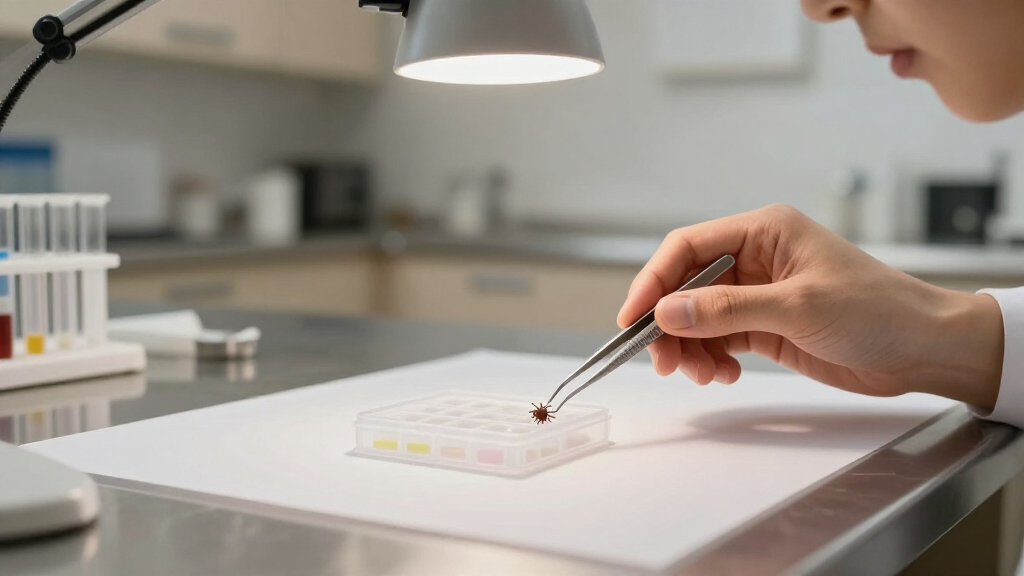
The new DIY tick test is designed to allow individuals to collect a tick from themselves or their pets and send it for analysis without visiting a healthcare facility. According to the research team at the University of New Hampshire, the kit uses a simplified molecular detection method that can identify the presence of Borrelia burgdorferi, the bacteria responsible for Lyme Disease.
Preliminary trials indicate that the test can produce results within 24 to 48 hours, with a high degree of accuracy in detecting infected ticks. Experts suggest that early identification of infected ticks could lead to more timely treatment for Lyme Disease, which often goes undiagnosed until symptoms appear weeks later.
The development is supported by ongoing funding from public health agencies, and researchers plan to expand testing to larger populations before seeking regulatory approval for commercial distribution.
Potential Impact on Lyme Disease Prevention and Diagnosis
This at-home tick test could transform how Lyme Disease is managed by enabling individuals to quickly identify risky ticks. Early detection may lead to prompt medical intervention, reducing the risk of severe symptoms and long-term health complications. Public health officials see this as a promising tool to curb the spread of Lyme Disease, especially in endemic regions.
However, experts also caution that the test’s accuracy and reliability need further validation before it can be recommended for widespread use. If successful, it could also reduce unnecessary antibiotic treatments by confirming infection status early.
As an affiliate, we earn on qualifying purchases.
Background on Lyme Disease and Tick Testing Challenges
Lyme Disease, transmitted by infected ticks, affects thousands of people annually in North America and Europe. Diagnosis typically relies on symptom assessment and blood tests, which can take weeks to confirm and may not detect early infections. Current methods for testing ticks involve laboratory analysis that is often limited to specialized facilities and not accessible to the general public.
In recent years, there has been increased interest in developing rapid, user-friendly testing options that can be used outside clinical settings. Previous efforts have faced challenges related to accuracy, cost, and ease of use. The new at-home test aims to address these issues by providing a simple, quick, and reliable method for detecting infected ticks at home.
While some commercial kits exist for testing ticks, they are primarily used by professionals or researchers, not consumers. The current development marks a significant step toward democratizing tick testing and Lyme Disease prevention.
“Our goal is to empower individuals with a simple tool to assess tick infection status, potentially catching Lyme Disease earlier and reducing long-term health impacts.”
— Dr. Emily Carter, lead researcher at University of New Hampshire
As an affiliate, we earn on qualifying purchases.
Uncertainties About Test Accuracy and Regulatory Approval
It is not yet clear how accurately the test can detect infected ticks in real-world conditions, or how it compares to laboratory-based methods. The test is still in preliminary trials, and further validation is needed before regulatory approval and commercial release. Details about the cost and availability of the kit are also still under development.
As an affiliate, we earn on qualifying purchases.
Next Steps in Validation and Potential Market Launch
Researchers plan to conduct larger-scale field trials to assess the test’s accuracy and usability. They aim to submit the data for regulatory approval within the next year. If approved, the kit could become available to consumers within 18 to 24 months, pending manufacturing and distribution arrangements. Public health agencies will monitor the rollout and effectiveness of the tool.
As an affiliate, we earn on qualifying purchases.
Key Questions
How does the at-home tick test work?
The test involves collecting a tick, placing it in a provided container, and sending it to a lab for analysis. Results are returned within 24-48 hours, indicating whether the tick carries Lyme Disease bacteria.
Can this test replace clinical diagnosis of Lyme Disease?
No, the test detects infected ticks, not the disease in humans. It is intended as a preventive tool to identify risky ticks before potential infection occurs.
When will the test be available to the public?
The test is currently in early validation stages. If successful, it could be commercially available within 18-24 months, after regulatory approval.
Is the test 100% accurate?
It is too early to determine the test’s final accuracy. Further validation is needed, and users should not rely solely on it for health decisions.
Will the test be affordable?
Pricing details are still being developed, but researchers aim to make it accessible and affordable for widespread use.
Source: hn
Halloween Picks
halloween
As an affiliate, we earn on qualifying purchases.