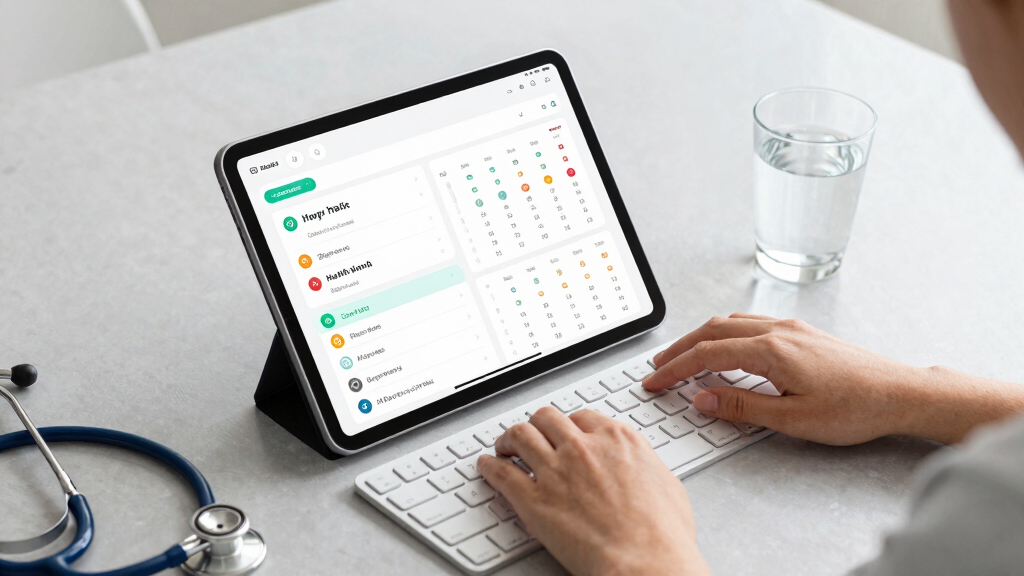

📊 Full opportunity report: Women’s Health Radar on IdeaNavigator AI — validation score, market gap, and execution plan.

Get health and wellness essentials delivered free with Prime
- Fast, free delivery on millions of items
- Prime Video, Amazon Music and more included
- Member-only deals all year
TL;DR
A women’s health digital tool is being developed to identify early perimenopause symptoms using symptom logging and AI pattern detection. The goal is to facilitate earlier diagnosis and treatment, benefiting women and employers. Validation is underway through a waitlist and tracking test.
A new digital health initiative is underway to develop a mobile app that detects early signs of perimenopause in women aged 40-58. This tool aims to improve diagnosis and treatment by leveraging symptom tracking and AI analysis, addressing a long-standing gap in women’s healthcare. The project is in the validation phase, with testing of a waitlist and symptom tracking model planned. You can learn more about mental health trends that are relevant to women’s health.
The proposed women’s health radar is designed for women experiencing unexplained perimenopausal symptoms such as sleep disruption, mood changes, brain fog, irregular cycles, and hot flashes. These symptoms are often misattributed to stress or aging, leading to delayed diagnosis. The app will allow women to log daily symptoms and optional wearable data, then compare patterns against validated symptom scales using rules and machine learning to identify likely perimenopause signals. For more insights, see how supplement intake impacts women’s health.
Developers plan to position the tool as an educational pattern detection system, not a diagnostic device. This approach aligns with ongoing efforts to improve heart health awareness and early detection. It will generate a clinician-ready symptom summary and suggest referrals to covered telehealth or local specialists. The goal is to facilitate early intervention, potentially reducing the health and work impacts of unmanaged menopause symptoms. Validation efforts include a 4-6 week landing page test with a waitlist, measuring engagement and interest in ongoing tracking and referrals.
Potential Impact on Menopause Diagnosis and Care
This initiative could significantly improve early detection of perimenopause, enabling women to access appropriate care sooner. It addresses a key gap where symptoms are often dismissed or misdiagnosed, contributing to better health outcomes and reduced work attrition. For employers and insurers, it offers a pathway to support women’s health benefits proactively, potentially reducing absenteeism and healthcare costs associated with unmanaged menopause symptoms.
women's perimenopause symptom tracking app
As an affiliate, we earn on qualifying purchases.
As an affiliate, we earn on qualifying purchases.
Growing Focus on Menopause in Digital Health
Menopause has shifted from a taboo to a rapidly expanding category within femtech, with companies like Midi Health reaching a $1 billion valuation as of February 2026. Major insurers now cover virtual menopause consultations, reflecting increased acceptance and recognition of menopause-related health needs. Advances in consumer wearables, validated symptom scales, and AI pattern detection are making early identification of perimenopause feasible, creating new opportunities for digital health solutions targeting women during this transition.
“The integration of symptom logging with AI analysis could transform how we detect and manage perimenopause, leading to earlier, more accurate diagnoses.”
— an anonymous researcher
As an affiliate, we earn on qualifying purchases.
Unresolved Questions About Validation and Adoption
It is not yet clear how effectively the app will perform in real-world settings or how women will respond to symptom tracking and AI analysis. The validation process is still in planning stages, and user engagement, clinical accuracy, and integration with healthcare providers remain to be demonstrated. Additionally, regulatory and privacy considerations are still being addressed.
wearable devices for women's health
As an affiliate, we earn on qualifying purchases.
As an affiliate, we earn on qualifying purchases.
Next Steps for Development and Testing
The project plans to launch a 4-6 week landing page campaign to build a waitlist of women aged 40-55. During this phase, researchers will measure engagement metrics such as quiz completion, ongoing symptom tracking, and interest in clinician summaries or telehealth referrals. Successful results could lead to further development, clinical validation, and eventual deployment of the app as a tool to support early menopause detection.
As an affiliate, we earn on qualifying purchases.
Key Questions
How will the women’s health radar identify perimenopause?
The app will allow women to log daily symptoms like sleep, mood, and hot flashes. Using validated symptom scales and AI pattern detection, it will flag likely perimenopause signals and generate a clinician-ready report.
Is this tool a diagnostic device?
No, the app is positioned as an educational pattern detection system, not a diagnostic tool. It aims to help women and clinicians identify potential early signs of perimenopause for further evaluation.
Who can benefit from this app?
Women aged 40-58 experiencing unexplained perimenopausal symptoms, as well as employers and health plans seeking to reduce attrition and support women’s health benefits, could benefit from this tool.
When will the app be available for wider testing?
The current plan involves a 4-6 week waitlist and validation testing, with broader availability depending on the results of initial testing and development progress.
How will privacy and data security be handled?
Details are still being finalized, but the project will adhere to relevant privacy standards and regulations, ensuring user data is protected and used responsibly.
Source: IdeaNavigator AI
Fall Picks
fall essentials
As an affiliate, we earn on qualifying purchases.