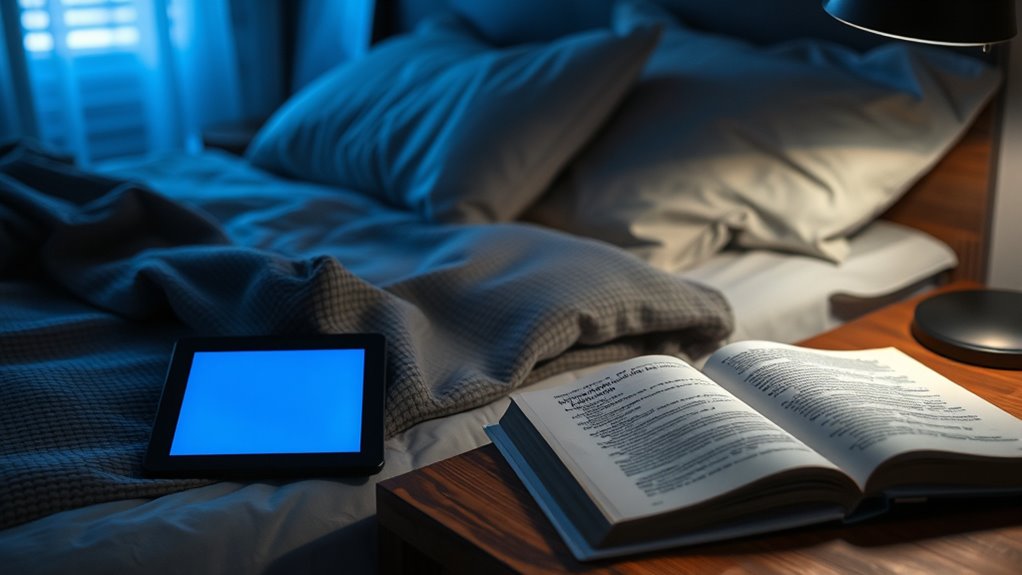

Reading before bed can help you relax and wind down, but your choice of device matters. Physical books create a calming environment without emitting light, while e-readers that emit blue light can disrupt melatonin production, making it harder to fall asleep. To enjoy the benefits without sleep disruption, you can adjust your e-reader’s settings or opt for traditional books. Keep exploring to discover more ways to improve your sleep routine and environment.

Get health and wellness essentials delivered free with Prime
- Fast, free delivery on millions of items
- Prime Video, Amazon Music and more included
- Member-only deals all year
Key Takeaways
- Reading before bed can promote relaxation, but the type of content and environment significantly influence sleep quality.
- Physical books are less disruptive than e-readers due to absence of blue light emission.
- E-readers’ blue light exposure can interfere with melatonin production, delaying sleep onset.
- Adjusting lighting, using blue light filters, and choosing calming content improve sleep benefits of pre-bed reading.
- Creating a relaxing, clutter-free environment supports better sleep regardless of the reading medium.
blue light blocking reading glasses
As an affiliate, we earn on qualifying purchases.
As an affiliate, we earn on qualifying purchases.
The Relaxation Benefits of Reading Before Sleep
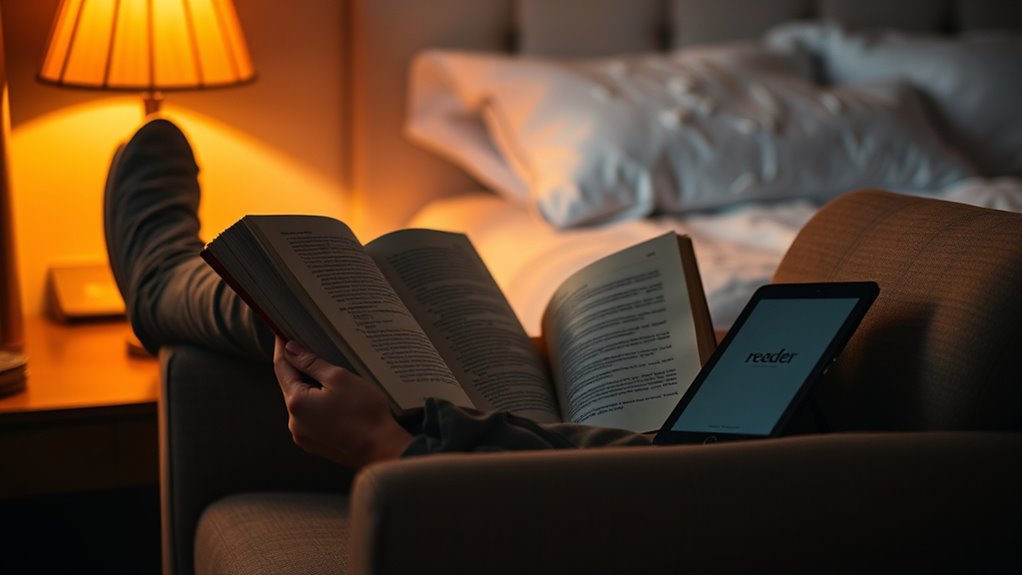
Reading before bed can considerably enhance relaxation, helping you unwind after a busy day. Engaging in mindfulness meditation while reading encourages present-moment awareness, reducing stress and calming your mind. When you combine reading with aromatherapy benefits, such as diffusing soothing scents like lavender or chamomile, you create an environment that promotes tranquility. This sensory experience can deepen your sense of calm, making it easier to shift into sleep. This is where Relaxation techniques can further enhance the calming effects of your bedtime routine, promoting better sleep quality. Additionally, choosing the right home cinema setup for a cozy environment can contribute to a more restful night, especially when designed to reduce distractions that interfere with sleep. Incorporating knowledge about recovery devices—even in small ways—can support overall relaxation and well-being, reinforcing your sleep routine. Practicing mindfulness while reading can also help you develop a greater awareness of your stress levels, supporting your overall relaxation efforts.
As an affiliate, we earn on qualifying purchases.
How E-Readers Differ From Physical Books in Bedtime Routines
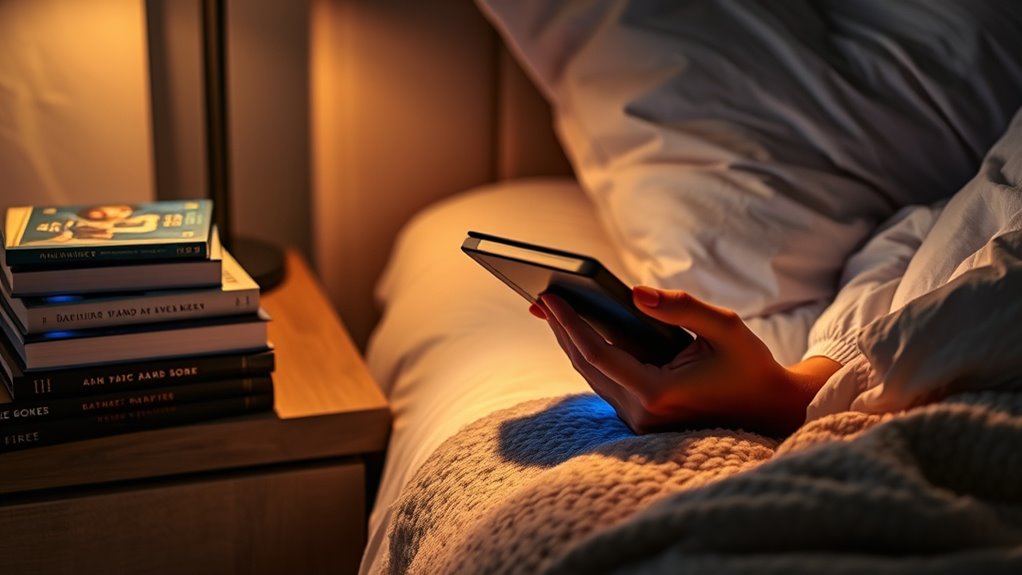
You might notice that e-readers emit light directly into your eyes, unlike physical books that don’t. This difference can impact your ability to fall asleep, since screen brightness and light color matter. Additionally, interacting with a digital device feels different than flipping through paper pages, affecting your bedtime routine. Moreover, the energy-efficient design of modern e-readers aims to reduce eye strain and improve sleep quality. Adjusting screen brightness can also help minimize blue light exposure and promote better rest. Furthermore, the waves and wind surrounding digital devices can influence sleep by affecting ambient noise and environmental comfort.
Light Emission Differences
Unlike traditional books, e-readers emit light through their screens, which can interfere with your body’s natural sleep signals. The screen brightness on e-readers can be adjusted, but even lower settings might still disrupt melatonin production. This is especially true if you use bright backlit screens in dark ambient lighting conditions. Physical books, on the other hand, rely on external light sources, so they don’t emit light themselves and are less likely to disturb your sleep cycle. The key difference lies in how each device handles light: e-readers produce their own, which can be problematic if you’re trying to wind down. To minimize impact, consider dimming your e-reader’s screen brightness or avoiding use in very dark rooms, or opt for traditional books when you’re preparing for sleep. Understanding blue light emitted by screens can help you make better choices for your bedtime routines.
Physical vs. Digital Interaction
Physical books and e-readers engage you differently as part of your bedtime routine. With physical books, tactile engagement creates a sensory connection, making the reading experience more tangible and calming. The interactive effects of flipping pages and feeling the paper can signal your brain that it’s time to wind down. E-readers, on the other hand, lack this tactile engagement, relying instead on screen interaction, which can sometimes stimulate your senses or cause distraction. The absence of physical cues may influence how easily you switch over to sleep. Additionally, the tactile feedback of a physical book may help establish a consistent bedtime ritual, while digital interaction with an e-reader might alter that routine. These differences impact how each format influences your relaxation and sleep readiness. Furthermore, considering Free Floating elements in outdoor relaxation setups can help create a more calming environment conducive to sleep. Incorporating body awareness practices, such as mindful breathing or gentle stretches, can further enhance your bedtime routine and promote better sleep. For example, the gentle physical act of holding a book can also promote relaxation through sensory engagement, aiding in winding down before sleep.
As an affiliate, we earn on qualifying purchases.
The Impact of Blue Light on Melatonin and Sleep Quality

Blue light from screens can block your body’s production of melatonin, the hormone that helps you sleep. When melatonin levels drop, your sleep quality may suffer, making it harder to fall and stay asleep. Being aware of this effect can help you make better choices about reading devices before bed. Additionally, blue light exposure can disrupt your circadian rhythm, further impacting your overall sleep health. Incorporating ergonomic workspace design can also promote better sleep by reducing eye strain and promoting relaxation before bedtime. Improving air quality in your sleeping environment can further enhance sleep quality by reducing indoor pollutants that may interfere with rest. Recognizing the importance of passive voice detection can help you craft clearer, more engaging sleep-related content, making information about sleep habits more accessible and impactful. Implementing support breakfast practices, such as maintaining a healthy sleep routine, can further promote restful sleep by ensuring your body receives proper nutrition and recovery time overnight.
Blue Light Suppresses Melatonin
When you use an e-reader before bed, the blue light emitted by the screen can interfere with your body’s natural sleep process. Blue light suppresses melatonin, the hormone that signals your body it’s time to sleep. This melatonin suppression delays sleep onset and reduces sleep quality. Understanding this effect helps explain why reading on screens might make falling asleep harder. Additionally, some devices include blue light filters to mitigate these effects, but they may not fully eliminate the impact on melatonin production. Moreover, the sustainable fabrics used in some e-readers and accessories reflect a growing emphasis on eco-friendly tech options, though their influence on sleep remains minimal. Research also indicates that establishing a consistent bedtime routine can significantly improve sleep quality despite exposure to blue light. Incorporating sleep hygiene practices can further help mitigate the disruption caused by blue light exposure before sleep. Recent studies on light exposure suggest that limiting screen time before bed can enhance overall sleep health.
Sleep Disruption Risks
Exposing yourself to blue light before bed can substantially disrupt your sleep quality. High screen brightness on e-readers or tablets increases blue light exposure, which suppresses melatonin production, making it harder to fall asleep. Device notifications can worsen this effect by prompting you to check your device, prolonging blue light exposure and delaying your sleep onset. Even brief moments of screen time before bed can lead to fragmented sleep and reduced REM cycles. To minimize these risks, lower your device’s screen brightness and disable notifications at least an hour before bedtime. Choosing physical books over screens prevents blue light exposure altogether, supporting better melatonin levels and more restorative sleep. Additionally, using specialized vacuums designed to minimize airborne pollutants can help create a healthier sleep environment by reducing allergens and dust that may interfere with rest. Being mindful of these factors and understanding the effects of blue light exposure can significantly improve your sleep hygiene.
As an affiliate, we earn on qualifying purchases.
Comparing Sleep Patterns of E-Reader Users and Traditional Book Readers
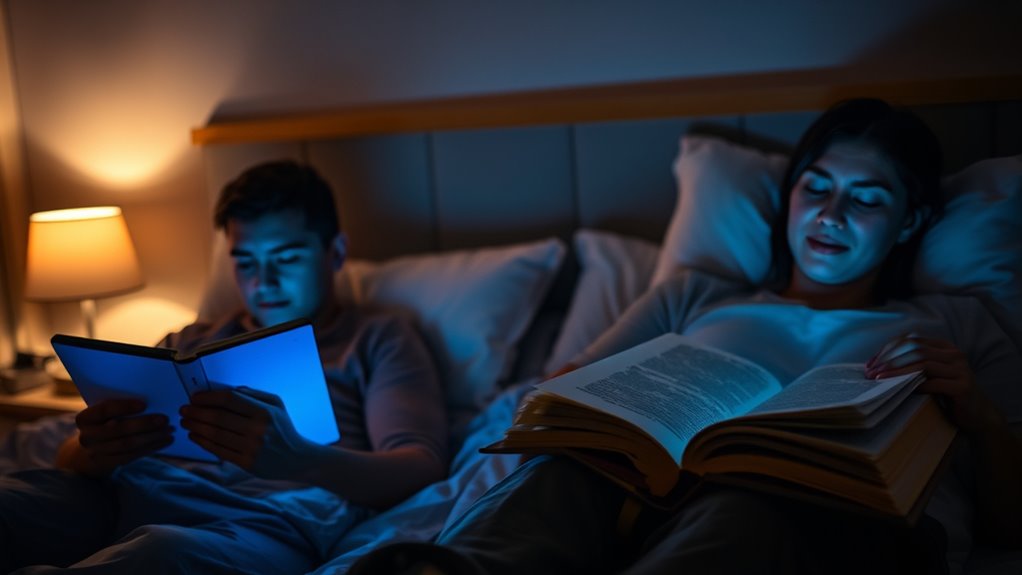
Studies show that reading on e-readers before bed can disrupt sleep more than reading traditional books. E-reader users often experience longer sleep onset times and decreased sleep quality. This difference may be linked to factors like the blue light emitted, which can interfere with melatonin production, and how book coloration affects visual comfort. Additionally, your reading speed might decrease on digital screens, leading to longer exposure and potential alertness. Traditional books, with their paper pages and absence of light, help maintain natural sleep patterns. To better understand these impacts, consider these factors:
- The effect of blue light on melatonin suppression
- Differences in reading speed between screens and paper
- How book coloration influences visual comfort and fatigue
Strategies to Minimize Blue Light Disruption When Reading on Devices
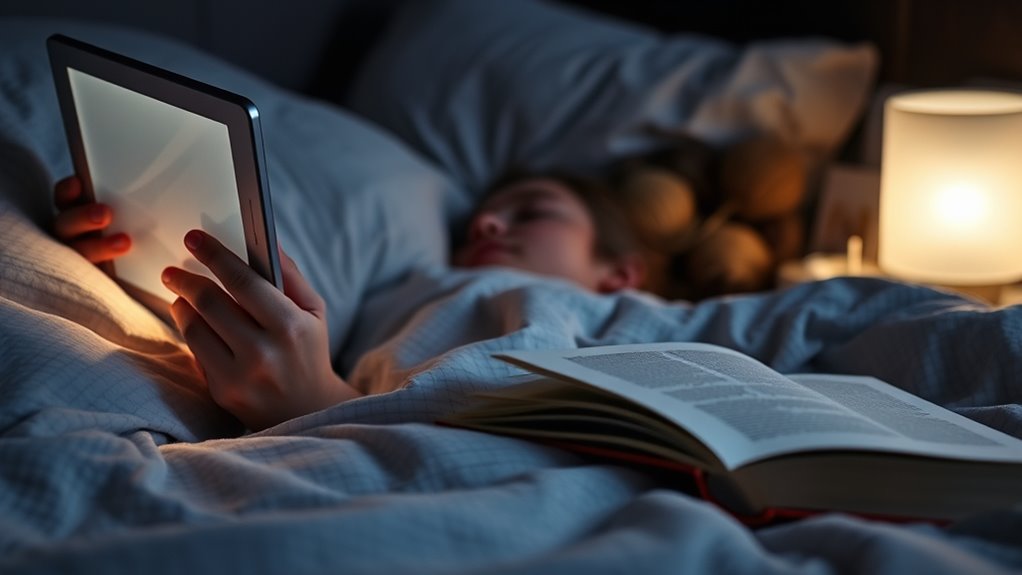
To reduce blue light’s impact while reading on devices, you can adopt practical strategies that help protect your sleep. First, lower your screen brightness to minimize blue light exposure, especially in dim environments. Adjust the color temperature to warmer settings, which reduces blue light emission and creates a more sleep-friendly glow. Many e-readers and devices have built-in night mode or blue light filters—activate these features before you start reading. If your device lacks such options, consider using external apps or screen covers that shift the display to warmer tones. By controlling screen brightness and setting a warmer color temperature, you can enjoy your reading without markedly disrupting your melatonin production and sleep quality.
The Role of Content and Engagement in Pre-Sleep Reading Habits

The content you choose to read before bed can influence how quickly you relax and fall asleep. Complex or intense material might keep your mind active, making it harder to unwind, while lighter content can promote calmness. Additionally, your level of engagement and the visual stimuli involved can either help you relax or keep you alert, affecting your sleep quality.
Content Complexity and Sleep
Content complexity plays a crucial role in how well you relax before sleep. If the material is too challenging or emotionally stimulating, it can hinder your ability to unwind. Conversely, simple, straightforward content helps your mind ease into rest. When choosing what to read, consider how it impacts your reading comprehension and vocabulary development without overloading your brain. Complex texts may require more mental effort, making it harder to shift into sleep. Striking a balance ensures your mind is engaged but not overstimulated. To deepen your understanding, look for content that offers moderate vocabulary and manageable comprehension levels. This way, you keep your brain active enough to avoid boredom but calm enough to promote restful sleep.
- Use of unfamiliar vocabulary that excites or stimulates
- Dense, information-heavy content that demands deep focus
- Emotional stories that evoke strong feelings or stress
Engagement Levels and Relaxation
Engagement levels in your reading material substantially influence how easily you relax before sleep. If you pick content that’s too exciting or emotionally charged, it can heighten your alertness instead of calming it. Your reading posture also plays a role; slouching or holding a heavy book can cause physical discomfort, making it harder to unwind. Conversely, choosing a light, easy-to-handle book helps maintain a relaxed posture that promotes calmness. When you engage with calming stories or gentle content, your mind shifts more smoothly into relaxation. On the other hand, overly stimulating material can keep your brain active. Adjusting your reading posture and selecting content that matches your desire for tranquility can considerably improve your pre-sleep routine.
Visual Stimuli Impact
Since visual stimuli can considerably influence your ability to unwind, choosing calming images and minimalistic designs in your reading material is essential for a restful pre-sleep routine. Bright screens and complex visuals can increase visual fatigue and worsen sleep quality. Screen glare from e-readers or devices can strain your eyes, making it harder to relax. To minimize these effects, opt for simple, soothing content with muted colors and clear fonts. Avoid stimulating images or rapid movements that draw your attention away from relaxation. Instead, focus on content that promotes calmness and ease. By controlling visual stimuli, you help your eyes and mind passage smoothly into sleep, reducing the likelihood of disrupted rest caused by excessive screen glare or visual overload.
Technological Features That Can Enhance or Hinder Sleep Hygiene
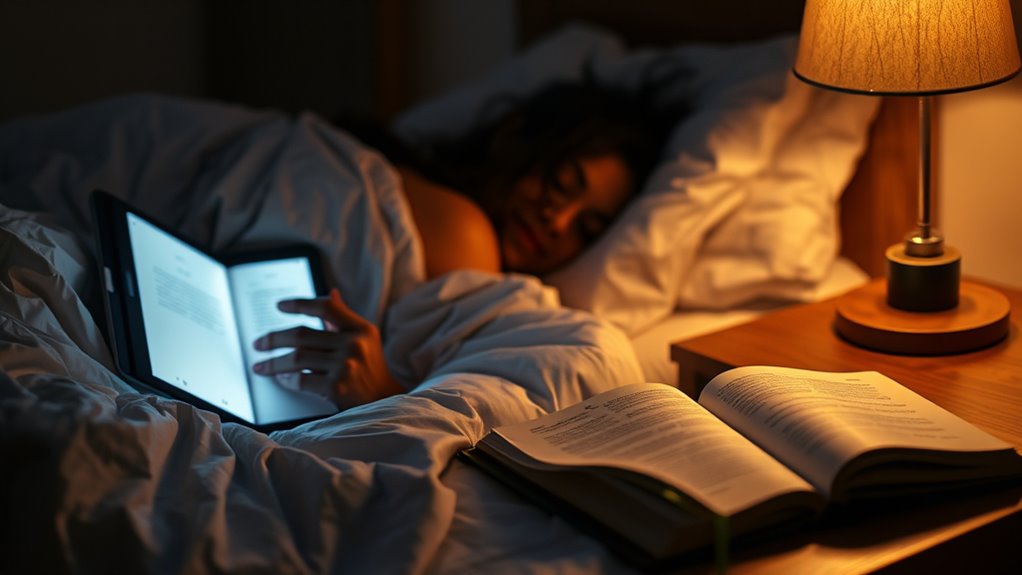
Technological features on e-readers and tablets can substantially influence your sleep hygiene, either helping you wind down or disrupting your rest. Haptic feedback, the subtle vibrations when you tap or turn pages, can be distracting or soothing depending on your sensitivity. Digital annotations allow you to highlight text or jot notes easily, which can keep your mind engaged and delay relaxation. Adjustable brightness and color temperature settings can reduce blue light exposure, promoting melatonin production and better sleep. However, notifications or interactive features may tempt you to check messages or browse, interfering with your bedtime routine. Being mindful of these features helps you optimize your device use, ensuring technology aids rather than hinders your journey toward restful sleep.
Psychological Effects of Reading in Bed on Stress and Anxiety
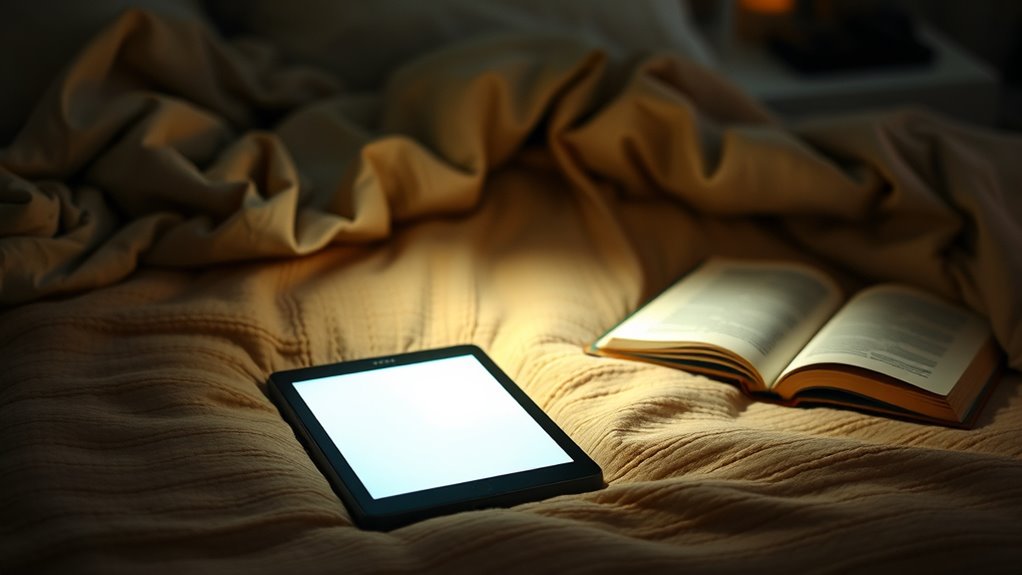
Reading in bed can considerably influence your stress and anxiety levels, either calming your mind or, if poorly managed, increasing tension before sleep. Engaging with calming content can promote relaxation and support stress reduction, especially when combined with mindfulness meditation techniques. Conversely, reading stimulating or distressing material may elevate anxiety, making it harder to unwind. To maximize benefits, choose soothing books or e-books with minimal blue light. Consider incorporating brief mindfulness meditation exercises after reading to reinforce relaxation. This practice can help you shift smoothly into sleep, reducing overall stress levels. Be mindful of your emotional response to reading material, and prioritize content that fosters calmness rather than agitation. Your mental state before sleep plays a vital role in quality rest and stress management.
Tips for Creating a Sleep-Friendly Reading Environment

Creating a sleep-friendly reading environment involves more than just choosing calming books; it also means optimizing your surroundings to promote relaxation. Pay attention to your reading posture—sit comfortably with good support to avoid tension that can interfere with sleep. Use ambient lighting that’s soft and warm; harsh or bright lights can signal your brain to stay alert. Consider a bedside lamp with adjustable brightness or warm-colored bulbs to create a calming atmosphere. Keep your reading area tidy and free of distractions, so your mind can relax easily. Avoid screens or devices emitting blue light close to bedtime, as they can disrupt melatonin production. By adjusting your reading posture and ambient lighting, you set the stage for a more restful, sleep-friendly environment.
Future Trends in Digital Devices and Sleep Health Research

As digital device technology continues to evolve, researchers are increasingly focusing on how new innovations can support better sleep health. Future trends include integrating augmented reality (AR) to create calming, immersive environments that reduce sleep anxiety. Additionally, haptic feedback could be used to deliver gentle, soothing sensations, helping you relax before sleep. Devices may also incorporate adaptive lighting that adjusts wavelengths based on your circadian rhythms, minimizing blue light exposure. Advancements aim to personalize your sleep experience, making digital reading less disruptive. These innovations could transform how you interact with digital content at night, promoting healthier sleep habits. By combining AR, haptic feedback, and smart lighting, future devices might help you wind down more effectively, supporting your overall sleep quality and well-being.
Frequently Asked Questions
Does the Type of Book or Content Affect Sleep Quality?
Yes, the content type and reading material can affect your sleep quality. Engaging with stimulating or emotionally intense content might make it harder to wind down, while calming and soothing material promotes relaxation. Choose gentle, light reading that helps you relax rather than excite your mind. Avoid highly engaging or stressful content before bed, as it can interfere with your ability to fall asleep easily and enjoy restful sleep.
Can Audiobooks Serve as a Better Alternative for Pre-Sleep Relaxation?
Studies show that 60% of people find audiobooks helpful for relaxation before sleep. You might find audiobooks a better alternative for bedtime storytelling, as auditory relaxation can reduce stress and ease your mind. Listening to calming narratives helps you unwind without the visual stimulation of screens or physical books, making it easier to drift off. Give audiobooks a try; they could become your new sleep ritual.
How Long Should I Read Before Sleep to Avoid Sleep Disruption?
You should limit your reading duration to about 20-30 minutes before sleep to avoid sleep disruption. Staying within this timeframe helps you unwind without overstimulating your brain or exposing yourself to blue light from e-readers, which can interfere with melatonin production. Keep your reading relaxing and avoid intense or emotionally charged material. By managing your reading duration, you can enjoy a peaceful pre-sleep routine that promotes better sleep quality.
Are There Specific Features in E-Readers That Promote Better Sleep Hygiene?
Think of your e-reader as a gentle lighthouse guiding you into sleep. Look for features like adjustable screen brightness and blue light reduction, which act like filters to protect your sleep. These settings minimize eye strain and prevent blue light from signaling your brain to stay alert. By choosing devices with these features, you’re creating a calming environment that promotes better sleep hygiene and helps you drift off peacefully.
Does the Time of Day I Read Influence Its Impact on Sleep?
Your reading timing definitely influences its sleep impact. If you read too close to bedtime, especially with screens, it can delay your sleep onset due to blue light exposure. Ideally, you should finish reading at least 30 minutes before sleep to give your mind time to relax. Choosing physical books over e-readers in the evening can also minimize sleep disruption, helping you fall asleep more easily and enjoy better rest.
Conclusion
Reading before bed can be a double-edged sword, like a delicate dance between relaxation and disruption. If you choose physical books, you might find it easier to drift into sleep, while e-readers could keep you awake if blue light isn’t managed. By creating a sleep-friendly environment and using features to minimize blue light, you can turn your bedtime reading into a soothing lullaby rather than a wake-up call. Sweet dreams start with mindful choices.
Fall Picks
fall essentials
As an affiliate, we earn on qualifying purchases.