Disconnecting from screens at least one hour before bed helps protect your sleep quality by reducing blue light exposure, which can trick your brain into thinking it’s daytime. Blue light suppresses melatonin, delaying sleep and disrupting your natural circadian rhythm. By unplugging, you give your body a chance to unwind, lower mental overstimulation, and create a calming environment. If you stay committed, you’ll find healthier sleep habits and better overall well-being—learn more about making this change effective.
Key Takeaways
- Disconnecting an hour before bed reduces blue light exposure, allowing melatonin production to increase naturally.
- It helps reset circadian rhythms, promoting quicker sleep onset and better sleep quality.
- Limiting screen time before sleep minimizes mental overstimulation and digital stress.
- Establishing a tech-free routine fosters relaxation through calming activities like reading or meditation.
- Proper device maintenance and consistent routines support healthier sleep habits and overall well-being.
The Science Behind Screen Time and Sleep Disruption
When you spend too much time looking at screens before bed, it can interfere with your sleep in ways you might not realize. Excessive screen time can lead to tech addiction, making it harder to disconnect and causing your brain to stay active when it should be winding down. This constant stimulation hampers your ability to relax naturally. Engaging in a digital detox before sleep helps reduce this overstimulation, signaling your body that it’s time to rest. The blue light emitted by screens tricks your brain into thinking it’s daytime, disrupting your circadian rhythm. By limiting screen exposure in the evening, you give your nervous system a break, making it easier to fall asleep and enjoy restorative rest. Incorporating energy-efficient cloud solutions into your digital habits can also promote healthier technology use. This science-backed approach can notably improve your sleep quality. Additionally, establishing a tech-free zone in your bedroom can further support healthy sleep patterns.
How Blue Light Affects Melatonin Production
Blue light suppresses melatonin production by signaling your brain that it’s still daytime, making it harder to fall asleep. The stronger the blue light, the greater its impact on your melatonin levels. This disruption can lead to poorer sleep quality and difficulty staying asleep through the night. Additionally, engaging with blue light-emitting devices can interfere with the effectiveness of Gold IRA investments by increasing stress and reducing overall well-being. Exposure to blue light during the evening can also negatively affect your circadian rhythms, which are essential for maintaining healthy sleep-wake cycles and overall biological rhythm regulation. Limiting blue light exposure before bedtime can help protect your sleep quality and support healthier melatonin production.
Melatonin Suppression Mechanism
Blue light exposure directly impacts your body’s production of melatonin, the hormone responsible for regulating sleep. When you use devices before bed, blue light signals your brain that it’s daytime, suppressing melatonin release. This disruption hampers your sleep hygiene, making it harder to fall asleep and stay asleep. To understand how this works, consider the following:
| Effect of Blue Light | Resulting Impact |
|---|---|
| Suppresses Melatonin | Delays sleep onset |
| Disrupts Circadian Rhythms | Poor sleep quality |
| Reduces Sleep Duration | Increased fatigue |
| Impairs Sleep Cycles | Less restorative sleep |
| Affects Sleep Hormones | Overall sleep disruption |
Implementing a digital detox before bed helps restore melatonin levels, improving sleep quality and overall health. Additionally, understanding the melatonin suppression mechanism can motivate you to limit screen time during evening hours. Recognizing how blue light interferes with sleep hormone production emphasizes the importance of reducing screen exposure before sleep. Limiting exposure to blue light in the evening supports a natural circadian rhythm, promoting healthier sleep patterns.
Blue Light Intensity Impact
The intensity of blue light determines how strongly it suppresses melatonin production. Higher blue light levels from screens can substantially delay your sleep onset. To minimize this impact, consider these points:
- Lower your screen brightness in the evening to reduce blue light exposure.
- Use device settings or apps that filter blue light, especially during night hours.
- Adjust your device ergonomics by keeping screens at a comfortable distance and angle.
- Limit prolonged screen use before bed to prevent excessive melatonin suppression.
- Incorporate blue light filtering glasses into your nightly routine to further protect your melatonin levels.
Sleep Quality Disruption
Ever wonder how exposure to blue light during evening hours can undermine your sleep quality? When you’re glued to screens, your device dependency increases, making it harder to unwind naturally. Blue light suppresses melatonin, the hormone that signals your body it’s time to sleep. This disruption can delay sleep onset, reduce sleep duration, and hinder REM cycles, leaving you tired and unrefreshed. Screen addiction makes it tempting to stay up longer, but it only worsens the cycle. Even a brief exposure before bed can considerably impact your sleep quality. To break free from this pattern, it’s essential to disconnect at least an hour before bedtime, allowing your melatonin levels to rise and your sleep to improve naturally.
Benefits of Disconnecting Before Bedtime

By disconnecting before bed, you can experience better sleep quality and wake up feeling more refreshed. It also helps reduce digital stress, making it easier to relax and unwind. These simple changes can markedly improve your overall well-being. Incorporating consistent sleep routines can further enhance these benefits and promote healthier sleep patterns. Establishing a digital curfew during the evening can support these routines and improve your sleep hygiene. Additionally, integrating connected sleep technology can help monitor and optimize your rest for better health outcomes. Creating a relaxing bedtime environment using principles from outdoor survival wisdom can also promote more restorative sleep.
Improved Sleep Quality
Have you noticed how your sleep improves when you put away screens before bedtime? Reducing screen time before bed enhances your sleep hygiene, leading to better rest. Here are four ways disconnecting helps improve sleep quality:
- Lowers exposure to blue light, which can suppress melatonin production.
- Creates a calming environment, making it easier to fall asleep.
- Minimizes mental stimulation, reducing bedtime anxiety.
- Promotes a consistent sleep schedule, supporting natural circadian rhythms.
Reduced Digital Stress
Disconnecting from screens before bed not only improves sleep quality but also considerably reduces digital stress. By practicing a digital detox, you give your mind a break from constant notifications and information overload. This intentional pause can also support your home automation routines, allowing your environment to adapt more effectively to your needs. This fosters tech mindfulness, helping you become more aware of your digital habits and their impact. Reduced digital stress means fewer feelings of anxiety and overwhelm caused by screens. Implementing the One-Hour Rule allows your brain to unwind and relax, promoting emotional calmness. Creating a sense of calm and organization in your home can be supported by establishing these mindful routines. Engaging in intentional digital boundaries aligns with evidence-based strategies to enhance overall well-being and resilience.
Practical Tips for Implementing the One-Hour Rule
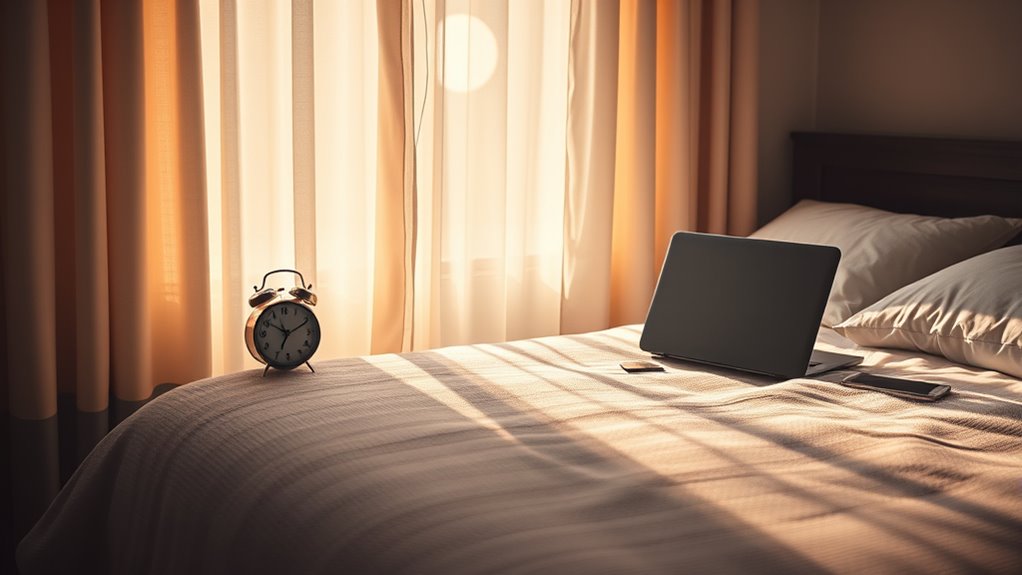
Implementing the One-Hour Rule effectively starts with setting clear boundaries and creating a dedicated workspace. To establish a successful digital detox before bed, follow these tips: 1. Define exact tech boundaries, like turning off devices an hour before sleep. 2. Prepare your environment by placing devices out of reach or in another room. 3. Use physical alarms instead of your phone to avoid temptation. 4. Develop relaxing pre-sleep routines, such as reading or journaling, to shift smoothly. Additionally, consider the importance of device maintenance to ensure your technology functions properly and minimizes disruptions during your wind-down time.
Alternatives to Screen Time for Evening Relaxation

Instead of reaching for your phone or tablet, try engaging in activities that promote relaxation without screens. Meditation techniques, such as deep breathing or guided imagery, can help calm your mind and prepare you for restful sleep. These practices reduce stress and improve sleep quality without the need for electronic devices. Aromatherapy options also offer a soothing alternative; diffusing lavender or chamomile essential oils creates a calming environment that signals your body to unwind. You might also consider reading a physical book, journaling your thoughts, or listening to calming music. Incorporating sleep-friendly environment into your evening routine can help create a peaceful and welcoming space that encourages relaxation. Creating a calm atmosphere can significantly enhance your ability to unwind naturally. Establishing a relaxing pre-bedtime routine can further enhance your ability to wind down naturally. These activities help shift your focus away from screens and foster a peaceful evening routine. Incorporating these alternatives can make your pre-bedtime hours more relaxing and contribute to better sleep health. Additionally, avoiding blue light exposure from screens before bed can make it easier to fall asleep and improve sleep quality.
Overcoming Challenges and Staying Consistent

Sticking to the one-hour rule for evening screen time can be challenging, especially when habits are deeply ingrained or when you’re feeling stressed. To stay consistent, try these strategies: 1. Schedule mindful journaling to process your day, replacing screen time with reflection. 2. Incorporate evening stretching to relax your muscles and signal bedtime. 3. Set a reminder an hour before bed to wind down and prepare for disconnecting. 4. Create a calming environment—dim lighting and soothing music can help resist the urge to reach for devices. Additionally, understanding the importance of cutting through tech clutter can motivate you to stay committed to your digital detox.
Frequently Asked Questions
How Long Does It Take to See Sleep Improvements After Implementing the Rule?
You can start noticing sleep improvements within a few nights to a week after implementing the one-hour rule. The timeline expectations vary depending on your habits, but many people report feeling more rested and experiencing better sleep quality in just a few days. Consistently disconnecting from tech helps reduce blue light exposure, which promotes melatonin production, leading to improved sleep patterns and a healthier sleep cycle over time.
Are There Any Health Risks Associated With Excessive Screen Time Before Bed?
If you keep staring at screens before bed, you’re inviting blue light exposure and sleep disruption like unwelcome party crashers. Excessive screen time can mess with your melatonin, making it harder to fall asleep and wake up refreshed. Overdoing it may lead to eye strain, headaches, and worse sleep quality. So, ditch the devices an hour before bed to protect your health and enjoy better rest.
Can Certain Apps or Devices Help Enforce the One-Hour Rule?
Yes, certain apps and devices can help enforce your screen detox before bed. You can use app blockers to limit your screen time and set reminders to disconnect an hour before sleep. These tools remind you to follow the one-hour rule, reducing exposure to blue light and promoting better sleep. By actively using these apps, you make it easier to stick with your healthy bedtime habits and improve your overall sleep quality.
What Are Some Quick Relaxation Techniques to Replace Screen Time?
Your stress levels can skyrocket faster than a rocket, so try quick relaxation techniques instead of screen time. Focus on mindful breathing—inhale slowly through your nose, hold, then exhale gently. Combine this with progressive relaxation, tensing and releasing muscle groups gradually. These simple practices calm your mind and body, helping you unwind effortlessly. Within minutes, you’ll feel more relaxed, making it easier to drift into restful sleep without screens interfering.
Is the One-Hour Rule Effective for All Age Groups?
The one-hour rule isn’t equally effective for all age groups due to age differences and tech adaptability. Younger people may find it harder to disconnect because they’re more accustomed to constant tech use, while older individuals might embrace it more easily. However, regardless of age, reducing screen time before bed can improve sleep quality. Adjust the rule to fit your habits and tech comfort level for better results.
Conclusion
So, are you ready to reclaim your nights? Disconnecting just an hour before bed might seem simple, but it could transform your sleep—and your life. Imagine drifting off more easily, waking refreshed, and waking up enthusiastic for what’s ahead. Will you take the first step tonight? The choice is yours—embrace the change, break free from the screen, and discover what better sleep can truly do. Your future self will thank you.