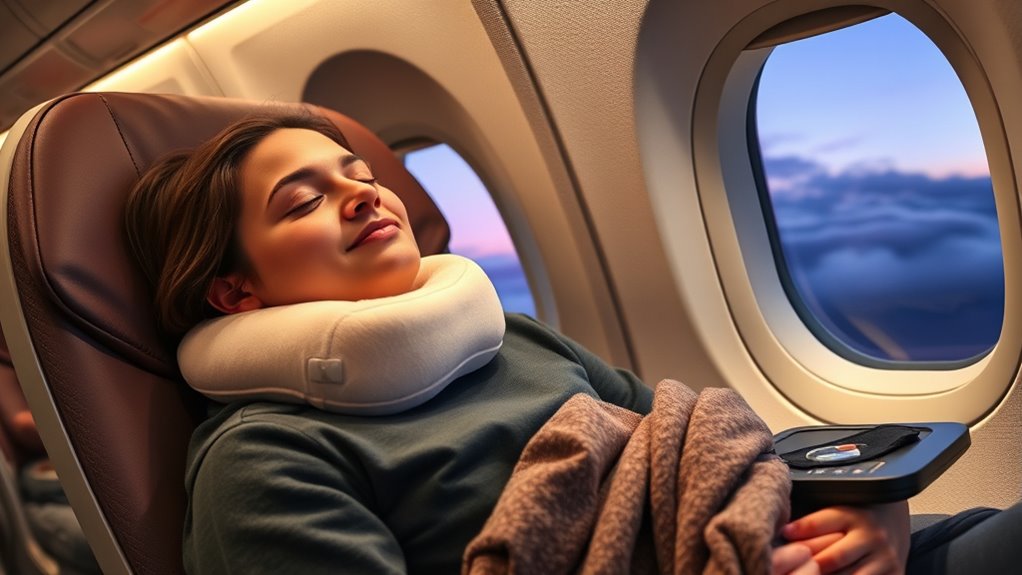

To catch better sleep in economy, dim your in-flight entertainment or switch to calming music and use noise-canceling headphones or earplugs to block out noise. Wear a sleep mask to create darkness and recline your seat comfortably. Stay hydrated, avoid caffeine and alcohol, and dress in layers to adjust to cabin temperature. Combining these environment tweaks with personal comforts can considerably improve your rest—keep going for more tips to make this happen.

Get health and wellness essentials delivered free — and shop member deals
- Fast, free delivery on millions of items
- Access to Prime Big Deal Days deals on October 6–7
- Prime Video, Amazon Music and more included
Key Takeaways
- Use a comfortable neck pillow, eye mask, and noise-canceling headphones to create a cozy, dark, and quiet environment.
- Recline your seat and use a blanket to support your body and block out light for better rest.
- Dim or turn off in-flight screens, and switch to calming music or white noise to minimize distractions.
- Stay well-hydrated, avoid caffeine and alcohol, and dress in layers to adapt to cabin temperature changes.
- Plan ahead by arriving rested, and combine environment controls with personal comfort adjustments for optimal sleep.

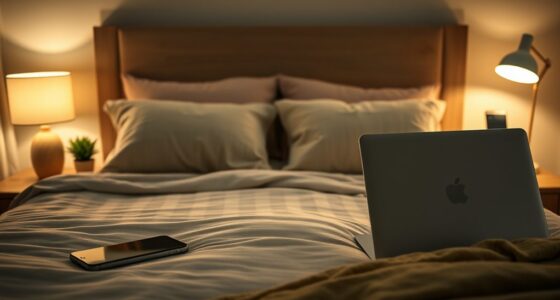
Sleeping on a plane can be challenging, but with the right strategies, you can improve your chances of getting restful rest during your flight. One of the first things to consider is managing your environment, starting with in-flight entertainment and cabin lighting. When you’re ready to sleep, avoid the bright screens of the in-flight entertainment system. The glow from tablets, phones, or seat-back screens can interfere with your ability to doze off. Instead, use headphones to block out noise and consider turning off or dimming screens if possible. Many airlines now offer options to turn off or lower the brightness of in-flight entertainment, helping you create a more sleep-friendly environment.
Cabin lighting plays a vital role in signaling your body that it’s time to rest. As the cabin dims or switches to night mode, your body begins to produce melatonin, the hormone that helps you feel sleepy. If the cabin lighting remains bright, you can use an eye mask to block out the light and mimic nighttime conditions. Eye masks are compact, affordable, and highly effective at creating a dark environment, making it easier for you to relax and drift off. If you’re sensitive to light, consider wearing a sleep mask even before the cabin dims, so your body adapts more quickly. Additionally, color temperature adjustments can help optimize your viewing conditions and promote better sleep.
To further enhance your ability to sleep, combine controlling the cabin lighting with other comfort strategies. Adjust your seat to a more reclined position, and use a neck pillow to keep your head supported. Keep noise to a minimum by using noise-canceling headphones or earplugs, which, paired with a sleep mask, create a cocoon of comfort. If in-flight entertainment is unavoidable, switch to calming music or white noise options available on some systems, which can drown out background sounds.
Remember to stay hydrated and avoid caffeine or alcohol, which can disrupt your sleep cycle. Dress comfortably in layers so you can adapt to the changing cabin temperature. With the right combination of controlling in-flight entertainment, managing cabin lighting, and personal comfort, you’ll considerably increase your chances of catching some quality sleep during your flight. It takes a bit of planning, but these small adjustments can make a big difference in turning a restless flight into a more restful journey.
As an affiliate, we earn on qualifying purchases.
Frequently Asked Questions
What Are the Best Positions to Sleep Comfortably on a Plane?
To sleep comfortably on a plane, use your airplane pillow to support your neck and head. Recline your seat as much as possible to reduce pressure on your lower back and promote relaxation. Keep your legs slightly elevated with a footrest or by adjusting your seat. These positions help you rest better, making it easier to doze off despite the limited space. Remember, comfort is key to catching quality sleep on a plane.
How Can I Block Out Noise Effectively During a Flight?
You can block out noise effectively during a flight by using noise-canceling headphones, which reduce ambient sounds and create a peaceful environment. Pair them with a comfortable eye mask to block out light and enhance your rest. Make sure your headphones fit snugly and the eye mask covers your eyes completely. These simple tools help you relax, fall asleep faster, and enjoy a more restful flight.
Are There Specific Foods or Drinks That Help With Sleep on Planes?
You can boost your chances of sleeping on a plane by choosing sleep-inducing snacks like almonds, cherries, or a banana, which contain natural melatonin or magnesium. Avoid heavy or spicy airline meal options that might cause discomfort. Drinking chamomile tea or warm milk can also help relax you. Carry these snacks and drinks with you and consume them strategically to promote better rest during your flight.
What Personal Items Should I Bring for Better Sleep on a Flight?
You should bring travel pillows and eye masks to improve your sleep. While the plane’s noise and cramped space make rest difficult, these items create a personal sanctuary of comfort. The pillow supports your neck, preventing soreness, while the eye mask blocks out light, helping you relax. Together, they turn a noisy, uncomfortable environment into a cozy, private space, making it easier to catch some quality z’s.
How Do I Reset My Sleep Schedule After a Long Flight?
To reset your sleep schedule after a long flight, start by exposing yourself to natural light during the day and avoid screens before bed. Use jet lag remedies like melatonin or a short nap to help adjust. Follow sleep hygiene tips, such as maintaining a consistent bedtime, keeping your room cool, and avoiding caffeine. These steps help realign your internal clock faster and improve your overall rest.
As an affiliate, we earn on qualifying purchases.
Conclusion
Sleeping on a plane can be challenging, but with the right hacks, you can catch some quality rest. Remember, studies show that up to 70% of travelers struggle to sleep during flights, so you’re not alone. Preparing your seat, bringing essential sleep aids, and staying comfortable can make a big difference. Next time you fly, try these tips and enjoy arriving refreshed—because a good nap at 30,000 feet isn’t impossible!
noise-canceling headphones for travel
As an affiliate, we earn on qualifying purchases.
As an affiliate, we earn on qualifying purchases.
white noise machine for airplane
As an affiliate, we earn on qualifying purchases.
As an affiliate, we earn on qualifying purchases.
Evergreen bestsellers Picks
bestsellers
As an affiliate, we earn on qualifying purchases.