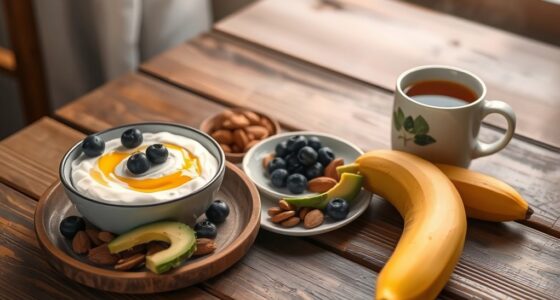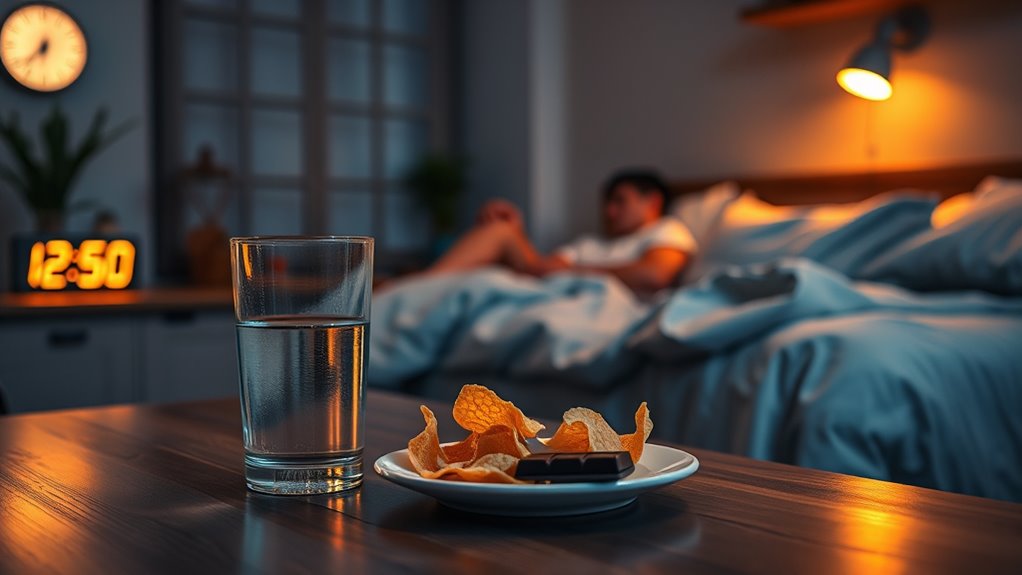

Eating late at night can interfere with your sleep because your body stays active during digestion, which can cause discomfort and disruptions. It also shifts your circadian rhythm, making it harder to fall asleep at your usual time. Going to bed with a full stomach keeps you alert and prevents deep, restorative sleep stages. To improve your sleep, try finishing meals 2-3 hours before bed—keep going to discover how timing makes a difference.
Get ready for Prime Big Deal Days — try Prime free
Exclusive member deals on October 6–7, plus fast free delivery. Cancel anytime.
As an affiliate, we earn on qualifying purchases.
Key Takeaways
- Eating late can disrupt circadian rhythms, making it harder to fall asleep at your usual time.
- Consuming food close to bedtime increases digestion activity, which can cause discomfort and fragmented sleep.
- Going to bed with a full stomach keeps your body alert, reducing the chance of entering deep, restorative sleep stages.
- Finishing meals 2-3 hours before sleep helps your body wind down and promotes better sleep quality.
- Proper meal timing supports natural sleep cycles, leading to more restful, uninterrupted sleep.

The digestion process is essential in understanding why eating late affects your sleep. If you eat close to bedtime, your stomach remains active, and your body diverts energy to digesting food instead of winding down for rest. This ongoing activity can cause discomfort, acid reflux, or indigestion, all of which can keep you awake or cause fragmented sleep. Additionally, the increased blood flow to aid digestion diverts resources away from sleep-promoting processes, making it harder to reach deep, restorative sleep stages. When you go to bed with a full stomach, your body remains in a heightened state of alertness, which prevents you from drifting into the restful sleep your body needs.
Moreover, late-night eating can also influence your circadian rhythm, the internal clock that regulates sleep and wakefulness. Eating late can shift this rhythm, making it harder to fall asleep at your usual time and possibly reducing sleep quality overall. Over time, this disruption can lead to poorer sleep patterns, impacting your daytime alertness, mood, and overall health. The timing of your meals plays an indispensable role in synchronizing your circadian rhythm, and eating earlier helps your body prepare for sleep naturally. Being mindful of meal timing can support your sleep cycle and promote overall well-being.
To optimize your sleep, aim to finish eating at least two to three hours before bed. This allows your digestion process to wind down and your metabolic rate to settle, minimizing discomfort and promoting a more restful sleep. When you give your body enough time to process food, you reduce the likelihood of waking up during the night and improve your chances of experiencing uninterrupted, deep sleep stages. Making this simple adjustment can profoundly enhance your sleep quality, leaving you more refreshed and energized the next day.
As an affiliate, we earn on qualifying purchases.
Frequently Asked Questions
Does Late-Night Snacking Influence Sleep Quality Differently on Weekends?
Late-night snacking can impact your sleep quality differently on weekends because your weekend routines often involve social eating and more relaxed schedules. You might indulge more or eat later than usual, making it harder to fall asleep or causing restless sleep. These habits can disrupt your circadian rhythm and reduce sleep quality, especially when your body isn’t accustomed to late eating. Staying mindful of your weekend routines helps maintain better sleep.
Can Specific Foods Eaten Late at Night Improve Sleep?
You might think late-night eating disrupts sleep, but certain healthy snacks and sleep-promoting foods can actually help you rest better. Foods rich in tryptophan, magnesium, or melatonin—like almonds, bananas, or warm milk—can calm your mind and promote relaxation. Incorporate these into your late-night routine to improve sleep quality without feeling guilty. Just avoid heavy, spicy meals that could cause discomfort or indigestion.
How Does Caffeine Consumption Impact Late-Night Eating and Sleep?
Caffeine consumption late at night can disrupt your sleep because its stimulant effects last for several hours, depending on caffeine timing. If you drink coffee or tea close to bedtime, it can make falling asleep harder and reduce sleep quality. To avoid this, limit caffeine intake in the late afternoon and evening. Be mindful of how stimulant effects impact your sleep, and try to switch to decaf or herbal teas later in the day.
Are There Age Groups More Affected by Late-Night Eating and Sleep Issues?
You’re more affected by late-night eating and sleep issues during adolescence and senior years. Adolescents have a faster metabolism, which can lead to increased hunger and disrupt sleep if they eat late. Seniors often experience slower digestion, causing discomfort and difficulty falling asleep. Both groups should be mindful of meal timing to improve sleep quality, as their metabolic and digestive differences make them more vulnerable to the negative effects of late-night eating.
What Are the Long-Term Health Effects of Habitual Late-Night Eating?
Habitual late-night eating can lead to long-term health issues like metabolic disruption and hormonal imbalance. You might find your metabolism slows down, making it harder to burn calories efficiently. Hormonal shifts can increase your risk of weight gain, diabetes, and heart disease. If you keep eating late, you could cause lasting damage to your body’s balance, affecting your overall health and energy levels over time.
As an affiliate, we earn on qualifying purchases.
Conclusion
So, if you want to sleep like a peaceful baby, try eating earlier in the evening. Skipping late-night snacks can turn your restless nights into serene slumber, making your sleep as deep and invigorating as a mountain lake. Don’t let late-night eating sabotage your rest—take control now, and you’ll wake up feeling unstoppable. Remember, your sleep quality is the secret weapon to conquering each day with energy and confidence!
digestive health probiotic supplements
As an affiliate, we earn on qualifying purchases.
As an affiliate, we earn on qualifying purchases.
As an affiliate, we earn on qualifying purchases.
Fall Picks
fall essentials
As an affiliate, we earn on qualifying purchases.