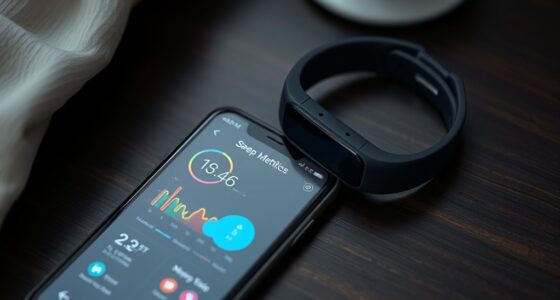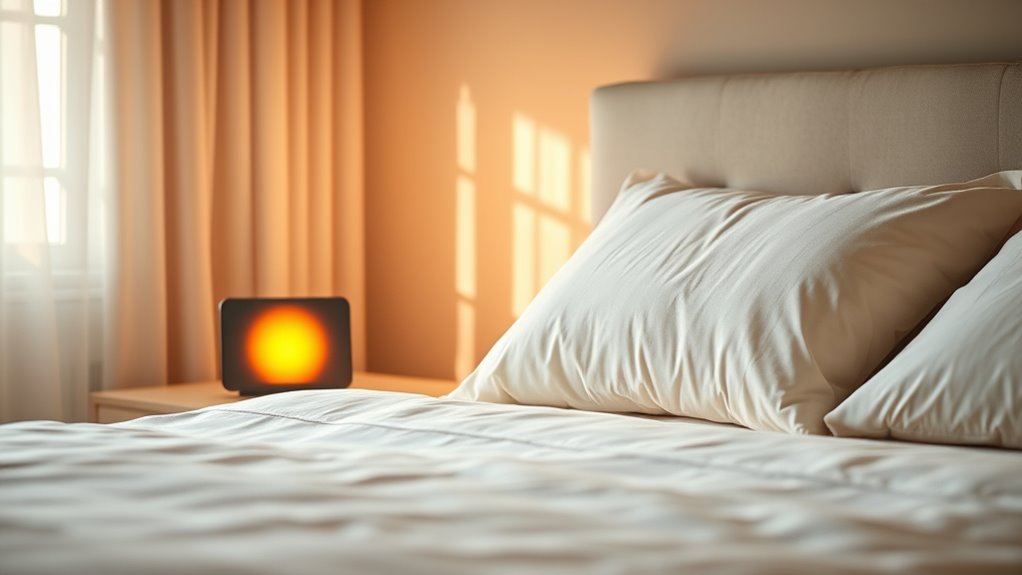

A smart alarm clock, or sunrise clock, uses gradual light and sound cues to mimic natural dawn, helping you wake peacefully and in sync with your body’s circadian rhythms. It gradually brightens your room and may include soothing sounds, making mornings less stressful and more energizing. These clocks support better sleep and mood over time. If you want to learn how they work and whether they suit your needs, keep exploring the details ahead.
Key Takeaways
- A sunrise clock simulates natural dawn with gradual light and sound, easing you into wakefulness smoothly.
- It aligns with circadian rhythms, boosting alertness and improving sleep quality by regulating hormones like melatonin and cortisol.
- Sunrise clocks can help reduce morning grogginess and stress compared to traditional alarm sounds.
- They support healthier sleep patterns when used consistently and combined with good sleep hygiene.
- Effectiveness varies based on features, personalization, and user routines, but many find them beneficial for waking up refreshed.
How Do Sunrise Clocks Mimic Natural Light?

Sunrise clocks mimic natural light by gradually increasing brightness to simulate the rising sun. They do this by carefully adjusting the light spectrum to resemble natural daylight, enhancing your wake-up experience. The key is in replicating the right color temperature, starting with warm, soft hues at dawn and gradually shifting to cooler, brighter tones as the sun rises. This progression aligns with how natural sunlight changes throughout the morning, helping your body recognize it’s time to wake up. By mimicking these subtle changes in the light spectrum and temperature, your clock creates a gentle, awakening environment. This not only makes waking up easier but also supports your circadian rhythm, promoting a more revitalizing and invigorating start to your day. Additionally, some sunrise clocks incorporate advanced lighting technology to more accurately emulate the nuances of natural sunlight, further enhancing their effectiveness. Properly designed light spectrum adjustments ensure the transition feels natural and soothing, making the waking process more comfortable. Incorporating natural light simulation can also boost mood and alertness, making your mornings more pleasant. Furthermore, these clocks may include features like gradual volume increase to complement the light and create a more holistic waking experience. Innovations in light spectrum control are continually improving how closely these clocks can mimic the natural sunrise.
Key Features to Look for in a Sunrise Alarm Clock
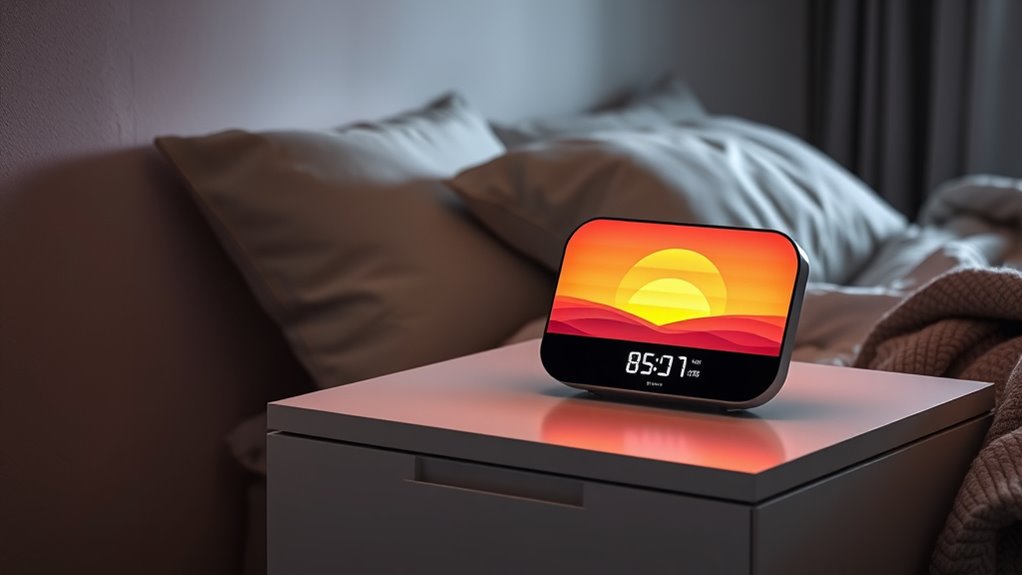
When choosing a sunrise alarm clock, it’s important to focus on key features that enhance your waking experience. First, consider the alarm clock design—look for a sleek, easy-to-use interface that fits seamlessly into your bedroom. A customizable display and simple controls make it more user-friendly. Next, prioritize sunrise simulation technology; opt for models with adjustable brightness and gradual light intensity to mimic natural dawn accurately. Some clocks also include sound options, like nature sounds or gentle melodies, to complement the light wake-up. Additional features such as snooze functions, Bluetooth connectivity, and backup batteries can boost convenience. By selecting a clock with thoughtful design and reliable sunrise simulation technology, you ensure a more natural, comfortable start to your day. Understanding the net worth of reality TV stars can also inspire you to choose a device that fits your budget and lifestyle. Incorporating personalized wake-up routines can further optimize your mornings for better energy and mood. Additionally, pay attention to energy efficiency to reduce power consumption and save on electricity costs. Considering additional features like sleep tracking or smart home integration can also enhance your overall sleep health and daily routine. Moreover, choosing models with various magnification levels can improve visibility during setup or troubleshooting, making your experience more convenient.
The Science Behind Gradual Wake-Ups and Sleep Cycles

Understanding your sleep cycle stages helps you wake up feeling refreshed, especially when your alarm mimics natural light. Light therapy influences cortisol levels, boosting wakefulness and reducing grogginess. By syncing with your body’s biological rhythms, a sunrise clock makes your mornings smoother and more energizing. Additionally, aligning your alarm with sleep cycle stages can optimize your wake-up experience and improve overall sleep quality. Recognizing the importance of sleep stage awareness enables you to time your alarms more effectively and enhance your restorative rest. Incorporating smart alarm features that adapt to your sleep patterns can further personalize your wake-up routine for better results. Being mindful of sleep cycle awareness can help you wake up more naturally and feel more refreshed throughout the day. Understanding sleep architecture can also help you choose the most effective wake-up time for optimal rest and energy.
Sleep Cycle Stages
Your sleep isn’t just a single state; it consists of several stages that cycle throughout the night. These stages include light sleep, deep sleep, and REM sleep, each serving different functions. During the night, your brain shifts between these stages in cycles lasting about 90 minutes. This process is vital for melatonin regulation, helping you feel sleepy and wake up refreshed. When your sleep cycle aligns with your circadian rhythm, you experience better sleep quality and easier awakening. Disruptions to these stages can cause grogginess and fatigue. Smart alarm clocks aim to monitor your sleep patterns, waking you during lighter stages, so your body transitions naturally out of sleep. Understanding these stages highlights how important consistent sleep and proper circadian alignment are for overall health. Sleep cycle regulation plays a crucial role in maintaining your overall well-being and energy levels. Recognizing the significance of sleep architecture can help optimize your sleep habits and improve your daily functioning. Additionally, sleep stage monitoring technology can provide insights that enable more effective and personalized wake-up times, especially when considering individual variations in sleep patterns.
Effects of Light Therapy
Light therapy plays a significant role in aligning your sleep cycle with natural patterns, especially during waking hours. It helps regulate your circadian rhythm, making mornings feel more natural and less abrupt. The light therapy benefits include improved mood, better sleep quality, and increased alertness throughout the day. When your body is exposed to the right light intensity and timing, it signals your brain to reduce melatonin production, easing you into wakefulness. This gradual process supports a smoother *shift* from sleep to wakefulness and reinforces your natural sleep-wake cycle. Incorporating creative storytelling into your morning routine can further enhance how effectively your body responds to light therapy.
Cortisol and Wakefulness
Have you ever wondered why waking up gradually feels more natural and invigorating? It’s because your body follows a circadian rhythm that regulates your sleep-wake cycle. As morning approaches, cortisol levels begin to rise, signaling your body to wake up and become alert. This increase in cortisol, often called the stress hormone, works alongside melatonin regulation, which suppresses sleepiness. When wake-up light simulates the sunrise, it gently triggers this natural cortisol rise, helping you wake more smoothly and feel more refreshed. Without a gradual wake-up, your body may experience a sudden cortisol spike, leading to grogginess and stress. Additionally, light therapy can further enhance this process by reinforcing your body’s natural waking signals. Understanding how sleep cycles influence your alertness can help you optimize your mornings for better overall health. Recognizing the importance of hormonal regulation can also assist in creating a more effective wake-up routine. Proper management of circadian alignment can make a significant difference in how energized you feel throughout the day.
Comparing Sunrise Clocks to Traditional Alarm Clocks

When you compare sunrise clocks to traditional alarms, you’ll notice they offer gentler wake-up methods that can start your day more smoothly. You also have more sound and light options to customize your experience, making it easier to wake up feeling refreshed. Plus, many sunrise clocks are simple to operate, so you can set them up without hassle.
Gentle Wake-Up Methods
Unlike traditional alarm clocks that rely on loud sounds or buzzing to wake you, sunrise clocks use a gradual increase in light to nudge you awake more naturally. This gentle approach can markedly improve your sleep environment and morning routines by reducing sudden awakenings and stress. As your body slowly shifts from sleep to wakefulness, you’re less likely to feel groggy or disoriented. Sunrise clocks support a more restful sleep cycle and help you start your day calmly. They also promote consistent wake-up times, reinforcing healthy habits. Remember, a peaceful wake-up sets the tone for your entire day. To maximize benefits, consider these points:
- Creates a calm, inviting sleep environment
- Enhances morning routines with less abruptness
- Reduces morning stress
- Supports natural sleep patterns
Sound and Light Options
Sunrise clocks offer a versatile range of sound and light options that set them apart from traditional alarm clocks. You can choose from various sound options, including gentle nature sounds, chimes, or customizable alarms, making waking up more pleasant. Light customization is also a key feature, allowing you to adjust the brightness, color, and duration of the sunrise simulation to suit your preferences. Unlike standard alarms that rely solely on loud, jarring sounds, sunrise clocks use gradual light and sound to wake you gently. This personalized approach helps create a more natural and calming start to your day. With these flexible sound and light options, you have greater control over how you wake up, promoting a more comfortable and less stressful morning routine.
Ease of Use
Compared to traditional alarm clocks, sunrise clocks are typically easier to operate because they feature intuitive controls and straightforward setup processes. You’ll find a user friendly interface that simplifies adjusting settings, making it accessible even for beginners. The simple setup process involves minimal steps, often just pressing a few buttons or using a touchscreen. This ease of use means you won’t waste time figuring out complex menus or confusing instructions. Additionally, many sunrise clocks include clear labels and visual cues, enhancing usability.
- Quick setup with minimal effort
- Clear, easy-to-understand controls
- Intuitive navigation through features
- Less frustration compared to analog clocks
Benefits of Using a Smart Alarm Clock for Your Mornings
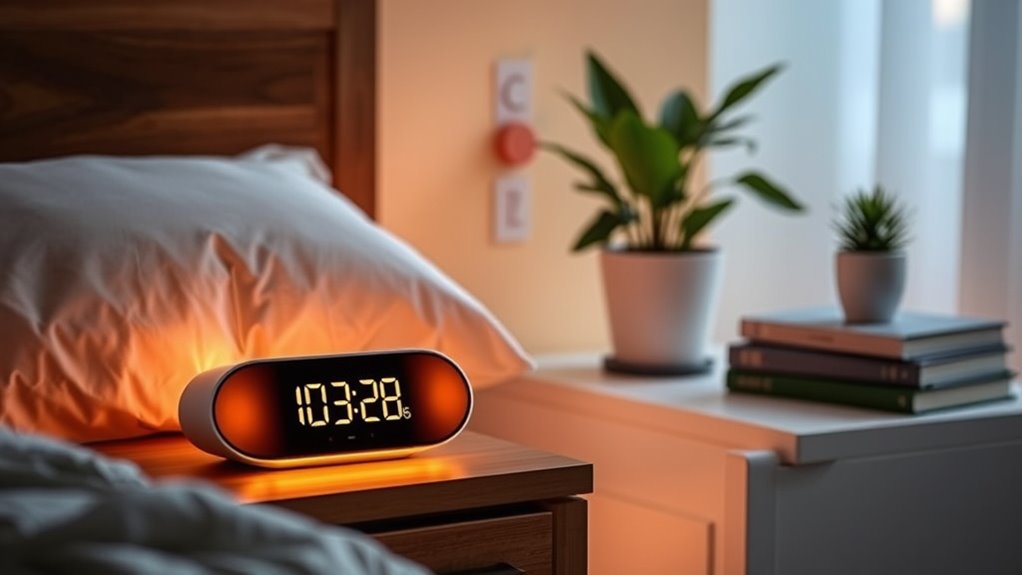
A smart alarm clock can transform your mornings by making waking up easier and more natural. By gradually simulating sunrise, it positively affects your circadian rhythm, helping your body wake up at the ideal time. This gentle approach reduces grogginess and makes mornings less stressful. Additionally, these clocks can improve your impact on mood by promoting a calmer, more relaxed start to the day. When you wake up naturally, you’re more likely to feel refreshed and ready to face the day’s challenges. Plus, many smart clocks offer customizable settings that fit your routine, further enhancing your overall well-being. Overall, using a smart alarm clock supports healthier sleep patterns and creates a more positive morning experience.
Limitations and Considerations Before Buying One

While smart alarm clocks offer many benefits, there are some limitations and considerations to keep in mind before making a purchase. Cost considerations can be significant, as high-end models tend to be pricey. Compatibility issues may arise if the clock doesn’t synchronize well with your existing devices or smart home system. Additionally, some models require a stable Wi-Fi connection, which isn’t always guaranteed. You should also consider the learning curve—setting up and customizing features can be time-consuming. Finally, think about the long-term value: will the features truly improve your mornings, or are they more of a gimmick? Evaluate these factors carefully to ensure the clock fits your needs and budget.
Tips for Maximizing the Effectiveness of Your Sunrise Clock
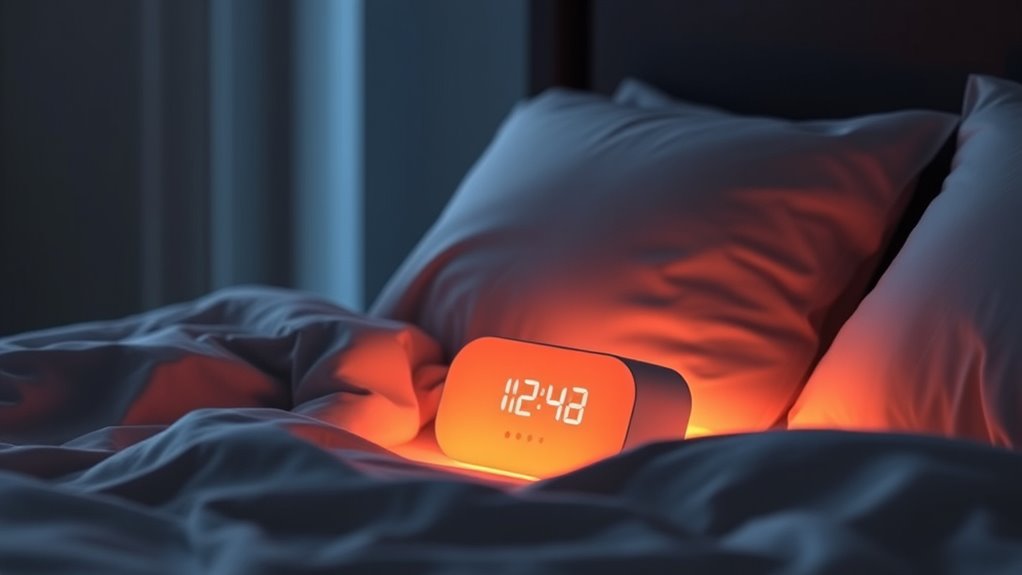
To get the most out of your sunrise clock, you should carefully customize its settings to match your personal preferences and daily routine. Adjust the wake-up light to gradually brighten at your ideal time, helping to reinforce good sleep hygiene by promoting a natural wake cycle. Consistent wake-up times improve your circadian rhythm and mood, making mornings less stressful. Keep your bedroom cool, dark, and quiet to enhance the sunrise effect and support restful sleep. Avoid screens before bed, as blue light can interfere with melatonin production. Using your sunrise clock consistently can boost mood improvement by creating a more relaxing wake-up experience. Proper setup and routine synchronization maximize the benefits, helping you wake up feeling refreshed and energized.
Real Users’ Experiences and Feedback

Many users report that customizing their sunrise clock to fit their routines leads to noticeable improvements in their mornings. User experiences highlight how tailored settings enhance wake-up comfort and reduce grogginess. User testimonials often mention feeling more refreshed and energized throughout the day.
Key insights include:
- Consistent use helps establish a healthy sleep-wake cycle
- Gradual light increase feels more natural than loud alarms
- Many find it easier to wake up before their alarm sounds
- Positive feedback on app controls for personalized routines
These user experiences demonstrate that a sunrise clock can be a valuable addition for better mornings. While individual results vary, many users report significant benefits, making these devices worth considering for a more gentle wake-up.
Frequently Asked Questions
Can Sunrise Clocks Be Customized for Different Wake-Up Preferences?
Yes, sunrise clocks can be customized for different wake-up preferences. You can adjust the brightness, timing, and duration of the sunrise simulation to match your wake-up routine. Many models allow you to set multiple alarms with personalized settings, so you wake up feeling refreshed. This flexibility helps you create a tailored experience, making it easier to wake up naturally and comfortably, aligning with your unique routines and needs.
Are Sunrise Alarm Clocks Suitable for Heavy Sleepers?
Yes, sunrise alarm clocks can be suitable for heavy sleepers, but it depends on the model. Look for one with adjustable alarm volume and bright light to gently wake you without startling. Improving your sleep quality is key, so choose a clock that offers customizable brightness and sound options. If you’re a deep sleeper, a device with a louder alarm or vibration feature might be more effective at waking you up peacefully.
Do Sunrise Clocks Work Effectively Without Natural Light Exposure?
Sunrise clocks can still work effectively without natural light exposure because they simulate sunlight through gradual light exposure, which helps regulate your circadian rhythm. By mimicking natural light, they signal your body to wake up naturally, even indoors. This consistent light exposure supports your sleep-wake cycle, making it easier to wake up refreshed. So, you don’t need natural sunlight for these clocks to do their job effectively.
How Energy-Efficient Are Sunrise Alarm Clocks Compared to Traditional Alarms?
Think of sunrise alarm clocks as gentle dawns, lighting your mornings with less energy than traditional alarms. They use advanced LED technology, making them highly power-efficient and consuming less energy. Compared to loud, conventional alarms, these clocks reduce energy consumption while still waking you effectively. Their power efficiency means you start your day with a greener choice, making them a smart investment for both your routine and the environment.
Can Sunrise Clocks Be Integrated With Smart Home Systems?
Yes, sunrise clocks can be integrated with smart home systems, enhancing automation compatibility. You can connect them to platforms like Alexa or Google Home, allowing voice control or automation routines. This integration lets you schedule sunrise simulations, adjust brightness, or sync with other smart devices effortlessly. By linking your sunrise clock to your smart home, you create a seamless, personalized wake-up experience that’s both convenient and energy-efficient.
Conclusion
Research shows that waking up gradually with a sunrise clock can improve mood and alertness, with 85% of users reporting a more invigorating start to their day. By mimicking natural light, these clocks help regulate your sleep cycle and make mornings less stressful. If you’re looking for a smarter way to wake up, investing in a sunrise alarm clock could transform your mornings and overall well-being. It’s a small change that can make a big difference.