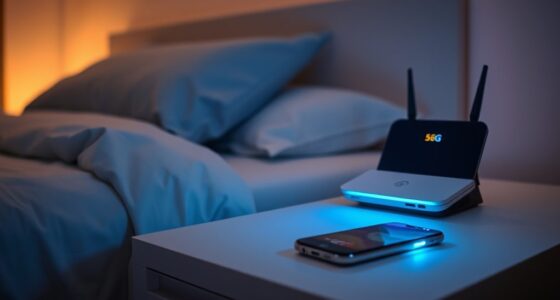
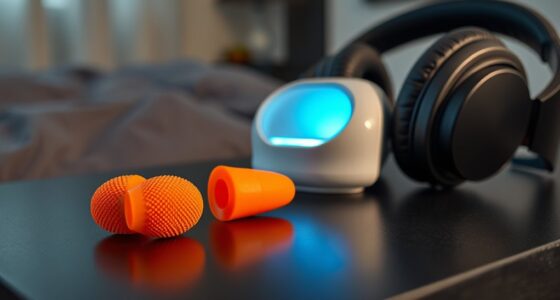
Using smart home devices can help you improve your sleep by creating a relaxing, personalized environment. You can automate lighting to mimic natural sunset and sunrise, regulate room temperature with smart thermostats, and use sound machines for soothing sounds. Voice assistants make it easy to control these devices seamlessly. Monitoring your sleep patterns with wearables gives insights to fine-tune your routine. Keep exploring how these tech tools can transform your sleep for better rest and health.
Key Takeaways
- Automate lighting and sound machines to create a relaxing bedtime environment that supports circadian rhythms.
- Use smart thermostats to maintain optimal sleep temperatures, promoting better rest.
- Monitor sleep patterns with wearable devices and adjust routines based on data insights.
- Enhance comfort and safety by integrating smart devices that control environment variables and ensure secure setup.
- Personalize pre-sleep routines with voice commands and adaptive lighting to reduce stress and improve sleep quality.
Automating Lighting for Better Bedtime Routines

Automating your home lighting can considerably improve your bedtime routine by creating a calming environment that signals to your body it’s time to wind down. Using mood lighting, you can adjust the brightness and color temperature to mimic natural sunset hues, helping to support your circadian rhythm. As evening approaches, your smart lighting system can gradually dim and shift to warmer tones, signaling your brain that it’s time to relax. This gentle progression reduces exposure to blue light, which can interfere with melatonin production. Additionally, adaptive lighting systems can learn your preferences over time to optimize your sleep environment, making the experience even more seamless. Incorporating lighting automation features allows for a more personalized and consistent bedtime routine. With automation, you don’t have to think about manually changing lights; your system does it for you, fostering a peaceful atmosphere. Incorporating local automation platforms and trusted businesses and services near you can help you select the best smart lighting products for your needs. Leveraging smart home integration can further streamline your entire bedtime environment, enhancing comfort and convenience. This simple adjustment can make a significant difference in preparing your body for restful sleep.
Regulating Temperature With Smart Thermostats

Maintaining the right temperature is key to a restful night’s sleep, and smart thermostats make this easy. They automatically adjust your home’s temperature to match your ideal sleep conditions, so you wake up feeling refreshed. With these devices, you don’t have to worry about manual changes—your environment stays perfectly regulated. Smart home integration allows you to control your thermostat remotely or through voice commands for added convenience. Additionally, some models support adaptive temperature control, which learns your preferences over time for even more personalized comfort. Incorporating energy efficiency features can also help reduce your utility bills while maintaining optimal sleep conditions. Ensuring your system has safe wiring and proper installation is essential for reliable operation and home safety. Being mindful of home safety features ensures that your sleeping environment remains secure and comfortable throughout the night.
Optimal Sleep Temperature
Have you ever wondered why your sleep quality improves when your room is just the right temperature? Smart thermostats help you find that ideal range, usually around 60-67°F (15-19°C). Achieving this depends on a well-insulated bedroom, which maintains consistent temperatures and prevents drafts. You can also enhance your sleep environment scent, like calming lavender, to support relaxation. Proper ventilation considerations are also crucial to maintain airflow and humidity levels conducive to restful sleep. Maintaining optimal air quality can further promote better sleep by reducing pollutants and allergens in your environment. Additionally, ensuring your space features Free Floating elements can help create a sense of calm and openness that supports restful sleep. Incorporating thermal regulation strategies can also help prevent temperature fluctuations that disrupt sleep cycles. To optimize your sleep temperature: – Adjust your thermostat for consistent warmth without overheating – Improve bedroom insulation for stable conditions – Use scents that promote calmness – Avoid sudden temperature fluctuations that disrupt sleep. Incorporating smart home devices like automated window vents or humidifiers can further enhance your sleep environment by maintaining ideal conditions.
Automated Temperature Adjustments
Smart thermostats make it easy to regulate your bedroom temperature automatically throughout the night, ensuring it stays within the ideal range for restful sleep. By maintaining a consistent temperature, they help improve bedroom air quality, reducing fluctuations that can disrupt your sleep cycle. Automated adjustments mean you don’t have to wake up to change the thermostat manually, promoting uninterrupted rest. A stable environment supports sleep posture enhancement, preventing discomfort caused by temperature extremes. Some smart thermostats learn your preferences over time, fine-tuning settings for maximum comfort. With these devices, you can create an excellent sleep environment that adapts to your needs, helping you fall asleep faster and enjoy deeper, more restorative sleep every night. Additionally, setting up your smart thermostat with proper security measures can protect your device from potential cyber threats. Implementing security best practices ensures your smart home remains safe and your sleep environment uncompromised. Incorporating these devices into your sleep routine can also contribute to energy efficiency, reducing utility costs while maintaining comfort and optimizing thermal regulation in your home. Properly configured thermostats can also enhance home automation integration, making your sleep environment even more seamless.
Monitoring Sleep Patterns With Wearable Devices

Wearable devices have revolutionized how you can monitor your sleep patterns, offering real-time insights right at your wrist. These devices use wearable sensors to track your sleep cycle, helping you understand how much time you spend in light, deep, and REM sleep. They often sync with your smartphone, providing detailed data on your sleep quality. Additionally, many devices incorporate sleep hygiene recommendations to support healthier sleep habits. You can:
- Detect disruptions or irregularities in your sleep cycle
- Track sleep duration and consistency
- Set personalized sleep goals based on your data
- Receive tips to improve your sleep habits
This continuous monitoring allows you to identify patterns and make adjustments for better rest. With wearable sensors, you gain a clearer picture of your sleep health, empowering you to optimize your nightly routine. Understanding your sleep patterns can also help you identify sleep disturbances, enabling targeted improvements. As technology advances, integration with smart home devices can further enhance your sleep environment management.
Creating a Calm Sleep Environment With Sound Machines

Building on your efforts to monitor sleep patterns, creating a calming environment can make a significant difference in how well you rest. Sound machines are excellent tools for establishing soothing bedtime routines and relaxation techniques. By generating consistent, gentle sounds like white noise, nature sounds, or soft melodies, they drown out disruptive noises and signal to your brain that it’s time to wind down. You can set your sound machine to turn on automatically as part of your nightly routine, helping your mind associate these sounds with sleep. This creates a peaceful atmosphere that promotes relaxation, reduces anxiety, and makes falling asleep easier. With a smart sound machine, you customize your environment for ideal rest, ensuring a more restorative sleep cycle.
Integrating Voice Assistants for Sleep Optimization

Integrating voice assistants into your sleep routine offers a seamless way to enhance relaxation and guarantee a restful night. You can customize voice commands to control lights, sound machines, and thermostats effortlessly. This hands-free approach reduces disruptions and creates a calming environment. Be mindful of privacy considerations by reviewing device settings and limiting data sharing. To optimize your experience, consider:
- Personalizing voice command responses for comfort
- Setting routines that activate before sleep
- Disabling microphones when not in use
- Regularly updating privacy settings
Using Sleep-Tracking Data to Improve Rest Habits

By analyzing your sleep-tracking data, you can identify patterns and habits that impact your rest quality. If your data shows inconsistent bedtimes or frequent awakenings, consider adjusting your bedtime rituals to promote relaxation, such as reading or gentle stretches. Pay attention to your sleep environment—if it indicates disturbances like noise or light, take steps to minimize these factors. Consistent sleep and wake times, combined with a calming pre-sleep routine, help reinforce your body’s internal clock. Use your sleep data to experiment with changes and track their effects over time. Small adjustments to your bedtime rituals or sleep environment can lead to significant improvements in rest quality, helping you wake feeling more refreshed and energized.
Frequently Asked Questions
How Secure Are Smart Home Devices Against Hacking Attempts?
Smart home devices have decent security, but they aren’t invincible. They often rely on encryption protocols to protect your data, and regular firmware updates are vital for fixing vulnerabilities. If you don’t keep your devices updated, hackers could exploit known weaknesses. To stay safe, make sure your devices are always running the latest firmware, use strong, unique passwords, and enable two-factor authentication whenever possible.
Can Smart Devices Adapt to Individual Sleep Preferences Over Time?
Yes, smart devices can adapt to your sleep preferences over time through advanced personalization capabilities and adaptive learning. They analyze your sleep patterns, temperature preferences, and ambient noise levels, making real-time adjustments that seem almost magical. Imagine waking up feeling more refreshed each morning because your device intuitively knows exactly what you need, creating a sleep environment tailored perfectly to you—it’s like having a personal sleep coach in your home!
Are There Health Risks Associated With Prolonged Exposure to Smart Sensors?
Long-term exposure to smart sensors generally poses minimal health risks, but you should stay cautious. Prolonged exposure might cause discomfort or skin irritation if sensors are in direct contact, and some worry about potential electromagnetic fields. Keep in mind that sensor accuracy can vary over time, affecting data reliability. To stay safe, follow manufacturer guidelines, limit exposure if you notice any issues, and ensure proper device maintenance.
How Do Smart Devices Handle Power Outages or Connectivity Issues?
If your smart devices experience a power outage, they often have backup power options or local storage to keep essential functions running temporarily. When connectivity issues occur, these devices usually attempt connectivity recovery through retries or switching to backup networks like Wi-Fi or cellular. This guarantees your devices remain operational and maintain your sleep environment, even during interruptions, so you can continue to enjoy a comfortable, automated sleep setting.
Can These Devices Be Integrated With Existing Home Automation Systems?
While smart home devices may seem like a puzzle, you can easily integrate them with your existing home automation system. Compatibility varies, so check device specifications before purchasing. Many devices offer customization options, allowing you to tailor features to your sleep needs. This seamless integration guarantees your smart devices work harmoniously, enhancing your sleep environment without creating chaos, making your home smarter and your nights more restful.
Conclusion
By harnessing smart home devices, you craft a sanctuary where sleep becomes effortless—like a symphony tuning itself to perfection. Automate your lighting, set the right temperature, and let sound machines lull you into calm. With voice assistants and sleep data guiding you, each night becomes a step closer to restful dreams. Embrace these tech tools to turn your bedroom into a haven where peaceful sleep flows as naturally as a gentle river.