
Using sleep tech for your child can give you helpful insights into their sleep patterns and help identify issues like frequent awakenings or irregular sleep times. However, it shouldn’t replace good sleep routines or a comfortable sleep environment. Think of it as a useful supplement that adds to your observations and intuition. If you continue, you’ll discover how to balance technology with natural cues for better sleep success.
Key Takeaways
- Sleep tech provides valuable insights into children’s sleep patterns but should complement, not replace, traditional routines and environments.
- Use sleep data to identify irregularities or disruptions, aiding in tailored adjustments to sleep schedules.
- Rely on a good sleep environment and natural cues alongside tech to ensure holistic sleep quality.
- Regularly evaluate whether sleep tracking helps or hinders your child’s sleep, adjusting routines accordingly.
- Combining technology with observation fosters a balanced approach for healthier, more consistent sleep habits.
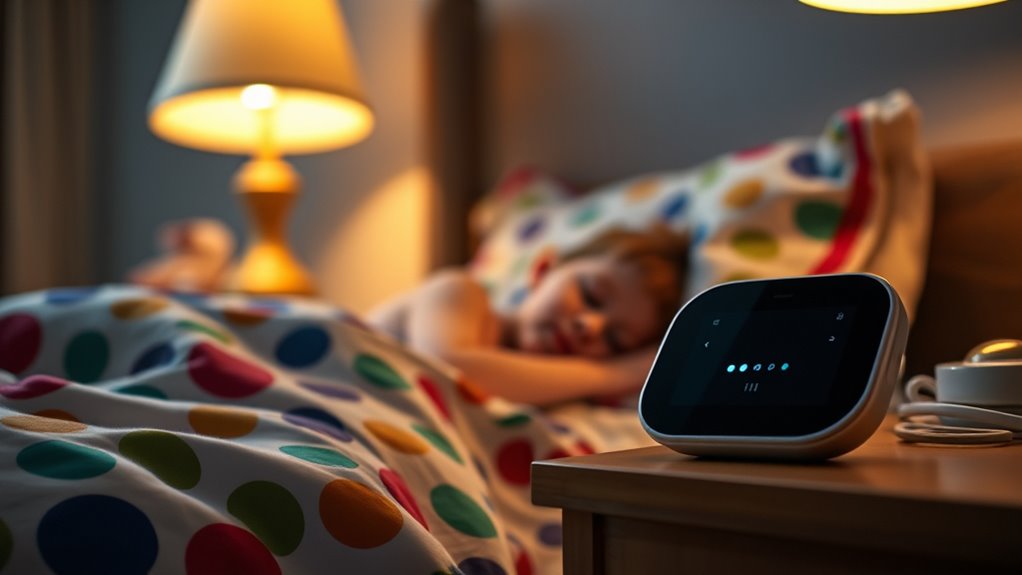
Have you ever wondered how well your child sleeps each night? Tracking sleep can give you valuable insights into their rest patterns, but it’s essential to approach it thoughtfully. One of the first things you might consider is establishing consistent nap schedules, which play a vital role in ensuring your child gets enough restorative sleep during the day. When you track their sleep, you can identify if they’re napping too much or too little, helping you adjust routines to better suit their needs. Alongside nap schedules, creating a sleep environment that promotes rest is equally important. Using sleep tech can help you monitor not just how long your child sleeps but also the quality of their sleep, giving you a clearer picture of their overall well-being. Incorporating evidence-backed guidance can further enhance your understanding and improve their sleep habits.
Tracking your child’s sleep with tech helps fine-tune routines and ensure restorative rest.
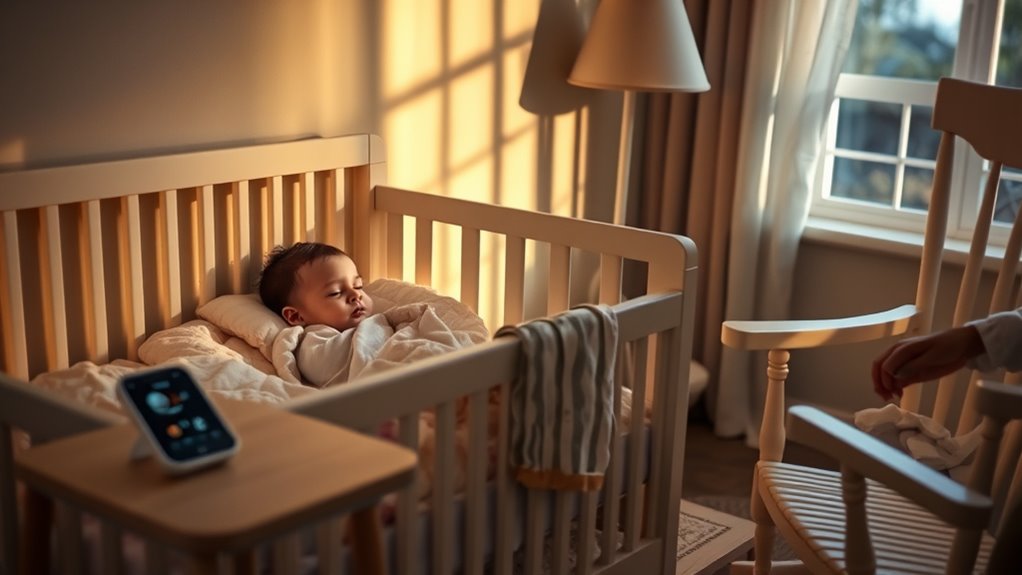
If you’re contemplating using sleep technology for your child, it’s worth noting that many devices are designed to track sleep patterns by monitoring movements and breathing. These gadgets can alert you to disruptions or irregularities, such as frequent awakenings or restless nights. However, it’s important to remember that technology is just one piece of the puzzle. While it can provide helpful data, it shouldn’t replace a good sleep environment—think dark, quiet, and cool rooms—nor should it override your child’s natural sleep cues and routines. Instead, use tech as a supplementary tool to gain a better understanding of their sleep habits.
Tracking sleep with tech can also help you fine-tune your child’s nap schedules. For example, if a device shows that your child often wakes up tired or seems to struggle with falling asleep, you might need to shift their nap times or lengthen their rest periods. By paying close attention to these patterns, you can develop routines that support their age-specific sleep needs. Remember, children’s sleep needs evolve as they grow, so ongoing tracking can help you adapt as necessary, ensuring they’re well-rested and ready for each day.
While sleep tech offers many benefits, it’s essential to balance its use with your intuition and observation. Keep an eye on how your child responds to changes in their sleep environment and routines. Regularly evaluating whether their nap schedules are aligned with their needs will help you create a consistent, calming sleep routine. Ultimately, combining careful tracking with a nurturing sleep environment can greatly improve your child’s sleep quality, making bedtime smoother for everyone involved.
Frequently Asked Questions
Are Sleep Trackers Safe for Very Young Children?
Sleep trackers can be safe for very young children if you prioritize child sleep safety and choose devices designed specifically for their age. Always check device compatibility with your child’s age and follow manufacturer instructions carefully. Guarantee the tracker doesn’t interfere with their sleep or comfort. Consult your child’s healthcare provider if you’re unsure, and avoid devices with unnecessary features that might cause discomfort or pose safety risks.
How Accurate Are Sleep Tracking Devices for Kids?
Think of sleep trackers as weather vanes—they give you a general idea but aren’t perfectly precise. When it comes to your child’s sleep pattern, device accuracy can vary widely between brands and models. While some devices offer useful insights, they might not capture every nuance of your child’s sleep. Use them as guides, not gospel, and always consult a healthcare professional for concerns about sleep issues.
Can Sleep Tech Replace Professional Sleep Assessments?
Sleep technology can’t fully substitute professional sleep assessments, but it can help ease your parental anxiety by providing useful insights. While these devices track sleep patterns, only a healthcare professional can diagnose underlying issues or sleep disorders. Use sleep tech as a helpful tool, not a substitute for expert advice. Rely on professional assessments when necessary to ensure your child’s sleep health is thoroughly evaluated.
What Features Should I Look for in Kid Sleep Trackers?
When choosing a kid sleep tracker, look for features that monitor sleep patterns accurately and are comfortable for your child to wear. You want a device that’s lightweight, non-intrusive, and easy to use, so it doesn’t disturb their sleep. Additionally, check if it offers insights into sleep quality and provides simple, understandable reports. Comfort and reliable data are key to supporting your child’s healthy sleep habits.
Do Sleep Trackers Help Improve Children’s Sleep Quality?
Sleep trackers can help improve your child’s sleep quality by providing insights into their sleep patterns. When combined with establishing consistent bedtime routines and managing screen time, these devices can identify issues like irregular sleep or disruptions. By monitoring and adjusting these habits based on tracker data, you can create a healthier sleep environment, making it easier for your child to fall asleep and stay rested.
Conclusion
Tracking sleep in children can be helpful, but it’s important to use technology wisely. Did you know that over 70% of parents report better sleep routines after using sleep trackers? While tech can provide insights, always balance it with your child’s needs and consult healthcare professionals when necessary. Remember, the goal is to promote healthy habits, not just data. Use sleep tech as a tool to support your child’s well-being, not replace your intuition and care.