Blue light blocking glasses can indeed help you sleep better by reducing blue light exposure during evening hours, which often suppresses melatonin and delays sleep. By filtering out blue wavelengths, these glasses support your body’s natural sleep signals and improve sleep quality. While they aren’t a magic fix and work best alongside good sleep habits, many find they make a noticeable difference. If you want to understand how to maximize their benefits, there’s more to know ahead.
Key Takeaways
- Scientific studies indicate that blue light blocking glasses can improve sleep quality by supporting melatonin production.
- They reduce blue light exposure from screens, which suppresses melatonin and delays sleep onset.
- Properly designed glasses with high-quality lenses minimally distort screen clarity and enhance comfort.
- Evidence shows they are effective when used consistently in the evening before bedtime.
- However, they are most effective as part of comprehensive sleep hygiene, not a standalone solution.
Understanding Blue Light and Its Sources

Blue light is a high-energy visible light that naturally occurs in sunlight and is also emitted by digital screens like smartphones, tablets, and computer monitors. You might notice screen flicker when using these devices, which is often linked to blue light emissions. Additionally, light pollution from streetlights and outdoor lighting can contribute to increased blue light exposure, especially at night. This widespread presence means you’re constantly exposed to blue light, whether indoors or outdoors. The flickering of screens and the excess blue light from artificial sources can disrupt your environment, making it harder to relax and prepare for sleep. Understanding where blue light comes from helps you recognize why managing your exposure is important.
How Blue Light Affects Our Circadian Rhythm
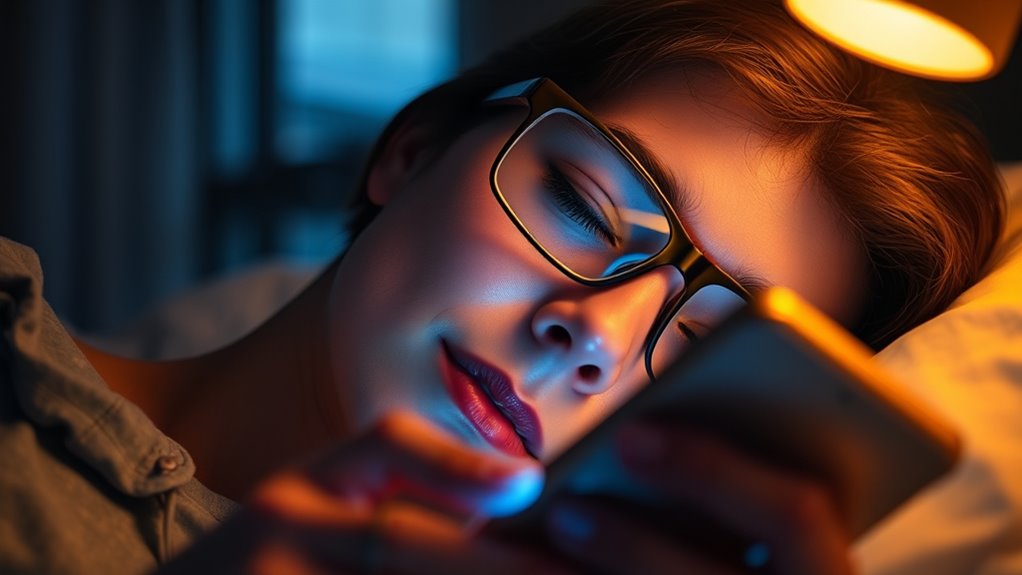
Since your body relies on natural cues to regulate sleep, exposure to blue light can profoundly disrupt your circadian rhythm. Blue light, especially from screens, tricks your brain into thinking it’s daytime. This is because of its high color temperature, which signals alertness. When you increase screen brightness or use devices late at night, it suppresses melatonin, the hormone that helps you fall asleep. Additionally, understanding the impact of color temperature on your sleep can help you make better device usage choices.
The Science Behind Sleep and Light Exposure

Your sleep is closely linked to how light influences your body’s internal clock, known as the circadian rhythm. When exposed to certain light wavelengths, especially blue light, your melatonin production drops, making it harder to fall asleep. Understanding these light effects helps you see why managing light exposure is key to better sleep. Proper lighting practices can significantly improve your sleep quality by supporting your circadian health. Additionally, some Gold IRA markets offer educational resources that can help you learn more about optimizing your environment for better rest. Recognizing the impact of light exposure on your biological clock emphasizes the importance of mindful lighting habits for restorative sleep.
Circadian Rhythm Regulation
Understanding how light influences your body’s internal clock is key to grasping sleep regulation. Exposure to light pollution at night can disrupt your circadian rhythm, making it harder to fall asleep and wake up refreshed. Modern lifestyles often involve a digital detox that exposes you to screens emitting blue light, which tricks your brain into thinking it’s daytime. This interference signals your body to stay alert, delaying sleep onset. By managing your light exposure—especially in the evening—you help keep your circadian rhythm in sync. Incorporating light management strategies like dimming lights and using blue light filters can further support this natural process. Limiting artificial light and practicing a digital detox before bed supports this natural process. When your internal clock functions properly, you experience better sleep quality, alertness during the day, and overall health. Additionally, understanding light pollution and its effects can empower you to create a sleep-friendly environment at home. **Managing evening light exposure, including blue light from screens, is essential for maintaining your circadian health.**
Melatonin Production Impact
Light exposure, especially in the evening, directly influences the production of melatonin, the hormone responsible for signaling your body that it’s time to sleep. When you’re exposed to bright light, particularly blue light, it causes melatonin suppression, making it harder to fall asleep. This effect explains why using light therapy during the day can help regulate your circadian rhythm. To optimize melatonin production at night, consider these points:
- Minimize screen time before bed to reduce blue light exposure.
- Use blue light blocking glasses to decrease melatonin suppression.
- Maintain a consistent sleep schedule to support natural melatonin levels.
Light Wavelength Effects
Different wavelengths of light affect your sleep differently because they interact uniquely with your body’s biological processes. Your eyes have spectral sensitivity that determines how various light colors influence your circadian rhythm. Blue light, with its short wavelength, is especially potent in light modulation, signaling your brain to stay alert and suppress melatonin. This means exposure to certain wavelengths can either delay or advance your sleep cycle. Longer wavelengths, like red or orange, have less impact on your biological clock and are less likely to disrupt sleep. Understanding the specific effects of light wavelengths helps explain why blue light blocking glasses may improve sleep quality. By filtering out problematic wavelengths, these glasses can reduce unwanted light modulation, allowing your body’s natural sleep signals to function more effectively. Additionally, research shows that light wavelength effects play a crucial role in how your sleep patterns are regulated throughout the night.
What Are Blue Light Blocking Glasses?
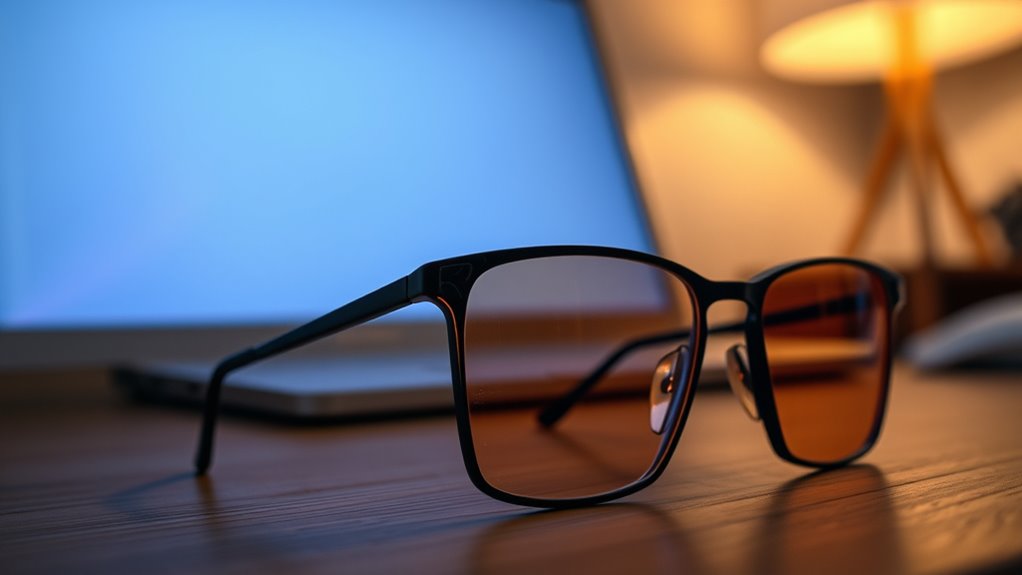
Blue light blocking glasses are specially designed eyewear that filter out a significant portion of blue light emitted by screens and artificial lighting. These glasses often feature lenses with special coatings that reduce blue light exposure, helping to protect your eyes. When choosing a pair, consider these factors:
- Fashion trends – They come in stylish designs, so you can stay trendy while protecting your eyes.
- Optical clarity – High-quality lenses maintain sharpness and color accuracy, ensuring clear vision.
- Lens tint – Some glasses have a slight amber or yellow tint, optimized to block blue light without distorting your view.
- Compatibility with other electronic devices – Many models are designed to work seamlessly with various screens and lighting environments, enhancing overall eye protection.
Additionally, the emphasis on design and aesthetics allows users to incorporate them into their daily fashion choices without sacrificing style. Modern blue light blocking glasses often feature adjustable frames, making them more comfortable for extended wear. The effectiveness of these glasses can vary based on blue light exposure levels, so choosing the right pair depends on your typical screen time and environment. Whether for work or leisure, blue light blocking glasses combine function with style, making them a popular choice for those seeking better eye health and sleep support.
Evidence Supporting the Use of Blue Light Glasses
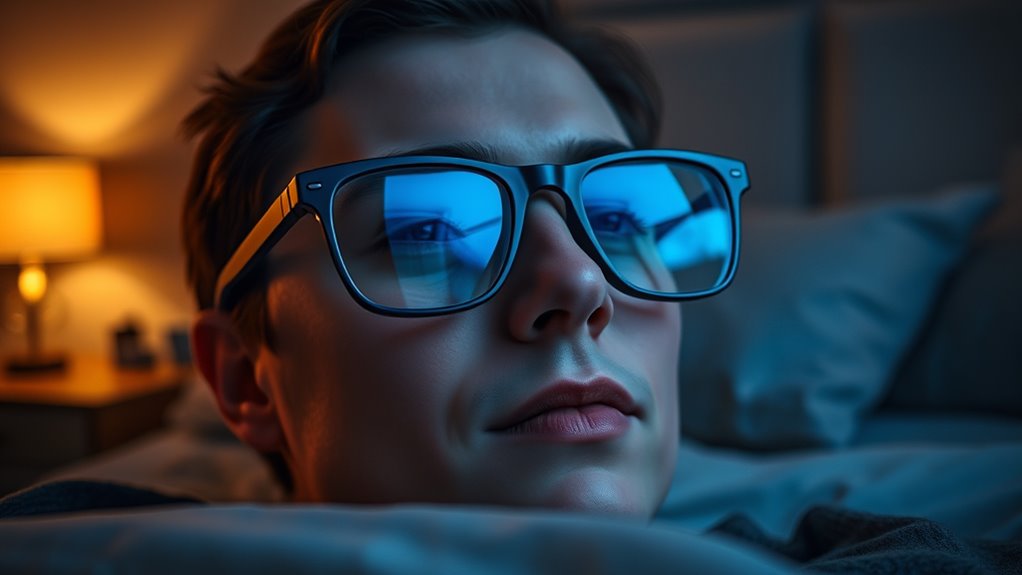
Numerous studies have shown that wearing blue light glasses can improve sleep quality, especially for those who spend long hours in front of screens. These glasses reduce blue light exposure, minimizing photon absorption in the eyes. This decrease helps preserve your circadian rhythm and promotes melatonin production, which is essential for restful sleep. Research also suggests that blue light blocking enhances eye health by reducing strain and potential damage caused by prolonged exposure. The table below highlights key findings:
| Study | Key Result |
|---|---|
| Smith et al. (2020) | Improved sleep onset with blue light glasses |
| Johnson & Lee (2019) | Reduced eye strain after prolonged screen use |
| Kumar et al. (2021) | Increased melatonin levels when using blue light glasses |
| Davis (2018) | Less digital eye strain in evening hours |
| Chen & Wang (2022) | Better sleep quality linked to blue light reduction |
Adding blue light exposure to the discussion emphasizes the importance of limiting this type of light for better sleep. Additionally, reducing artificial light at night can further support healthier sleep patterns. Incorporating proper screen time management practices also plays a vital role in improving sleep quality.
Limitations and Criticisms of Blue Light Blocking Devices
While blue light blocking glasses show promise, they are not without limitations. One major concern is that these devices only filter blue light and don’t address other factors affecting sleep, like stress or screen time duration. Additionally, the actual effectiveness can vary depending on the quality of the glasses and individual differences. Here are some key limitations to contemplate:
- Device limitations: Not all blue light filters are equally effective; cheaper glasses may only block a small percentage of blue light.
- Limited research: Evidence supporting their sleep benefits is still inconclusive, and some studies show minimal impact.
- Behavioral factors: Relying solely on glasses might cause you to overlook other essential sleep hygiene practices.
- User variability can influence how much benefit you experience from blue light blocking devices.
- The scientific evidence regarding their long-term effectiveness remains limited, making it difficult to establish definitive benefits.
Understanding these limitations helps in making informed decisions about using blue light blocking devices.
Practical Tips for Better Sleep Hygiene

To improve your sleep quality, start by sticking to a consistent sleep schedule, even on weekends. Reducing screen time before bed and creating a calming routine can also make a big difference. These simple steps help signal to your body that it’s time to wind down and rest. Incorporating sleep-friendly technology such as blue light filters or smart lighting can further enhance your sleep environment and promote better rest. Additionally, maintaining a healthy indoor air quality can reduce respiratory disruptions that interfere with restful sleep. Incorporating Free Floating elements like indoor plants can naturally purify the air and create a more relaxing atmosphere. Being mindful of your environmental noise levels can also help create a more peaceful and conducive setting for sleep.
Establish Consistent Sleep Schedule
Establishing a consistent sleep schedule is one of the most effective ways to improve your sleep quality. When you go to bed and wake up at the same times every day, you reinforce your sleep hygiene and help regulate your internal clock. This consistency makes it easier to fall asleep and wake up refreshed. To strengthen your routine, consider these practical tips:
- Set a fixed wake-up time, even on weekends, to maintain your circadian rhythm.
- Use light therapy in the mornings to signal your body it’s time to wake, especially if natural light is limited.
- Avoid irregular sleep times that disrupt your body’s natural patterns, making it harder to fall asleep at night.
- Be mindful of sleep-wake schedules and how they influence your overall sleep quality.
Minimize Screen Time Before Bed
Reducing screen time before bed can considerably improve your sleep quality by minimizing exposure to blue light, which interferes with melatonin production. If you’re battling screen addiction or struggling to disconnect, try implementing a digital detox at least an hour before sleep. Instead of scrolling, read a book, meditate, or practice gentle stretches. Creating boundaries helps reset your sleep cycle and reduces blue light exposure. To visualize ideas:
| Tip | Action | Benefits |
|---|---|---|
| Set Screen Curfew | Turn off devices 1 hour before bed | Boosts melatonin by reducing blue light |
| Replace Screen Time | Engage in relaxing offline activities | Eases transition to sleep |
| Limit Screen Use | Avoid screens in bedroom | Improves sleep environment |
Minimizing screen time is a practical step toward better sleep hygiene. Additionally, choosing the right best anime movies can provide relaxing entertainment that doesn’t interfere with your sleep routine.
Create a Relaxing Bedtime Routine
Creating a relaxing bedtime routine can considerably improve your sleep quality by signaling to your body that it’s time to wind down. Establishing calming activities helps reduce stress and prepares your mind for restful sleep and dream enhancement. To optimize your routine, consider these tips:
- Dim the lights an hour before bed to promote melatonin production and signal your body to relax.
- Engage in calming activities like reading a paperback or practicing gentle stretches to decrease tension.
- Avoid screens and stimulating content, focusing instead on relaxing music or meditation to foster a peaceful mindset.
Choosing the Right Blue Light Blocking Glasses
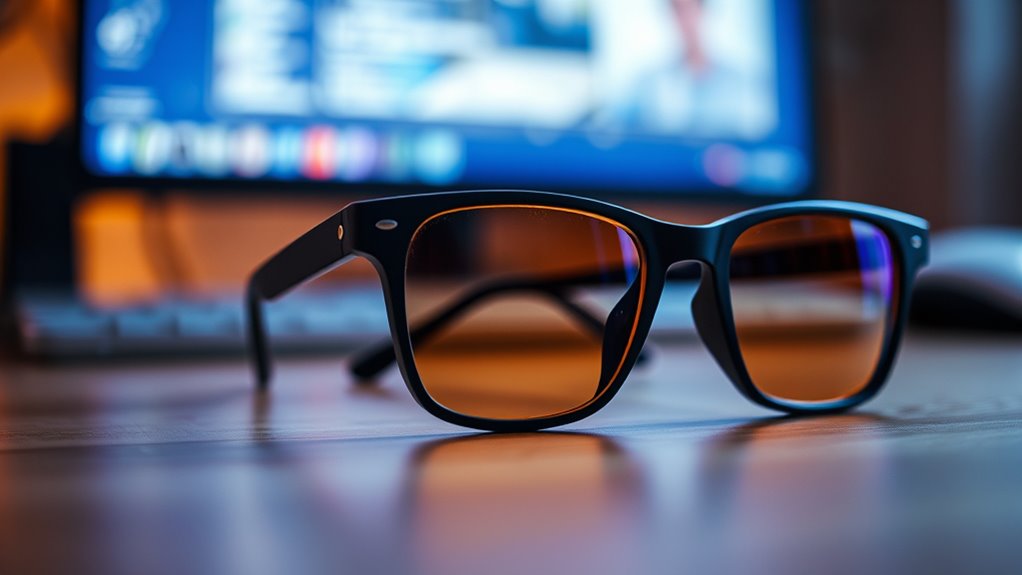
Choosing the right blue light blocking glasses involves considering several key factors to guarantee they effectively protect your sleep. First, focus on spectacle fit—ensure they sit comfortably without pinching or slipping, so you wear them consistently during evening screen time. Next, evaluate the lens tint; darker tints block more blue light but may reduce screen clarity, while lighter tints offer a subtler effect. Decide what level of blue light reduction suits your needs and comfort. Additionally, look for high-quality lenses that don’t distort colors or cause eye strain. Consider frames that are lightweight and durable for extended use. By paying attention to fit and tint, you’ll maximize the glasses’ effectiveness and make it easier to maintain your evening routine for better sleep.
Are They Worth the Investment for Better Sleep?

Investing in blue light blocking glasses can seem like an extra expense, but many find them worthwhile when considering their impact on sleep quality. If you spend hours on screens, these glasses may help reduce digital eye strain and support your eye health. They can make a noticeable difference in how quickly you fall asleep and improve sleep quality overall.
Consider these benefits:
- Minimize digital eye strain, preventing discomfort that can interfere with rest.
- Protect your eye health by filtering harmful blue light exposure.
- Enhance melatonin production, leading to better sleep patterns.
While not a cure-all, if you frequently use digital devices, blue light glasses could be a valuable investment for your sleep and eye health.
Frequently Asked Questions
Do All Blue Light Glasses Provide the Same Level of Protection?
Not all blue light glasses offer the same level of protection. Lens materials vary, with some featuring specialized coatings that block more blue light, while frame styles can affect comfort and fit. Cheaper options might not filter as effectively, so choose glasses with high-quality lenses designed specifically for blue light blocking. Your choice should also consider frame style for comfort during long use, ensuring you get the most benefit for better sleep.
Can Blue Light Blocking Glasses Improve Sleep Quality in Teenagers?
Boosting bedtime benefits, blue light blocking glasses can indeed improve teen sleep habits by reducing the blue light impact. When teens spend hours on screens, these glasses help signal sleep signals, making it easier for them to fall asleep and stay asleep longer. While they aren’t magic, they serve as a simple, supportive solution to minimize sleep disruptions caused by late-night light exposure, promoting healthier sleep cycles.
Are There Any Side Effects From Wearing Blue Light Blocking Glasses Long-Term?
Wearing blue light blocking glasses long-term generally doesn’t cause serious side effects, but you might experience some eye strain or discomfort if they don’t fit well or are worn excessively. These glasses can improve visual comfort, especially during prolonged screen time, reducing eye strain. However, if you notice any persistent discomfort or vision changes, it’s best to consult an eye care professional. Overall, they’re a safe way to protect your eyes over time.
How Do Blue Light Glasses Compare With Screen Time Reduction?
Blue light blocking glasses and screen time reduction both improve eye strain and visual comfort, but they work differently. Wearing glasses filters blue light directly, reducing eye fatigue and helping your eyes relax. Meanwhile, cutting screen time minimizes blue light exposure altogether. Combining both strategies offers the best relief, especially if you spend long hours on devices. You’ll notice less eye strain and greater visual comfort throughout your day.
Is There a Specific Brand or Type of Blue Light Glasses Recommended by Sleep Experts?
You don’t need a specific brand to see benefits, but some expert-endorsed options like Felix Gray or Gunnar are popular for their quality and effectiveness. While many brands claim to block blue light, ensuring they have proper amber or orange lenses helps maximize sleep benefits. Trusting expert recommendations can guide you toward a comfortable, reliable pair that fits your budget and lifestyle, making it easier to wind down at night.
Conclusion
So, do blue light blocking glasses really help you sleep better? While they can reduce exposure and may improve sleep quality for some, they’re not a magic wand. Think of them as a helpful tool in your sleep toolkit, not the entire story. Ultimately, good sleep habits matter most. Are these glasses worth the investment? Only if you see them as a step toward better rest, not the whole solution—because better sleep is a journey, not a shortcut.