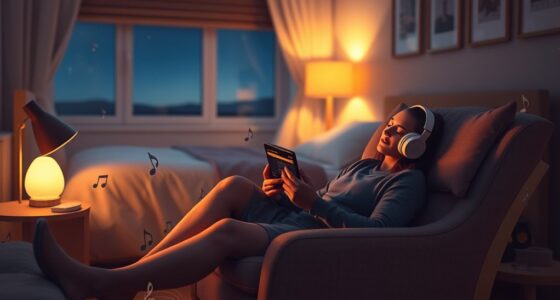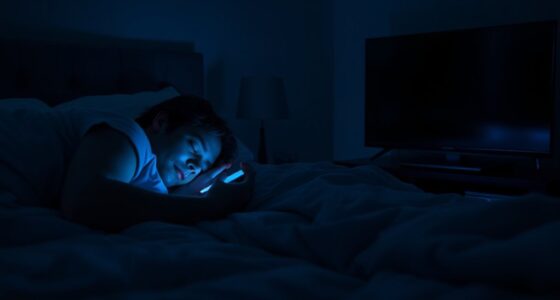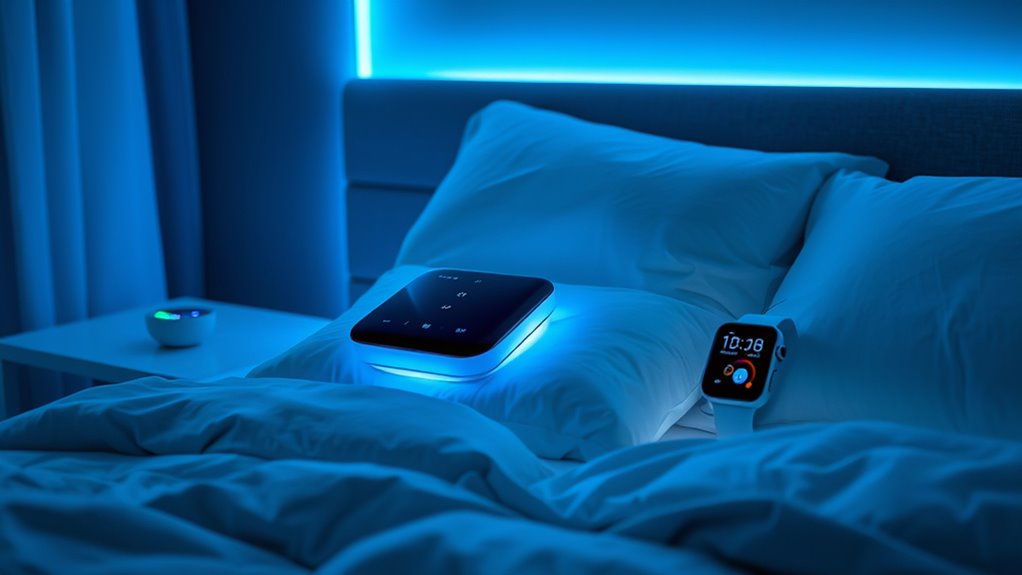
While many sleep devices promise to help with insomnia, they can’t truly cure it. Gadgets like sleep trackers, light and sound machines, or neurostimulation devices can support better sleep habits and provide relaxation, but they mainly serve as tools to improve sleep quality. Real solutions often involve lifestyle changes and addressing underlying causes. To discover which options might suit you best, keep exploring how these devices work and their limitations.
Open a free Amazon Business account
Business pricing, bulk buying and tax-exempt orders.
As an affiliate, we earn on qualifying purchases.
Key Takeaways
- Sleep gadgets can improve sleep quality but are not proven to fully cure chronic insomnia.
- Devices offer monitoring, relaxation, and environmental adjustments that support better sleep hygiene.
- Combining gadgets with traditional strategies enhances effectiveness, but they are not standalone solutions.
- Neurostimulation and light therapy devices show mixed results and may not work equally for everyone.
- Responsible use and realistic expectations are essential, as gadgets complement but do not replace professional treatment.
As an affiliate, we earn on qualifying purchases.
Understanding Insomnia and Its Causes
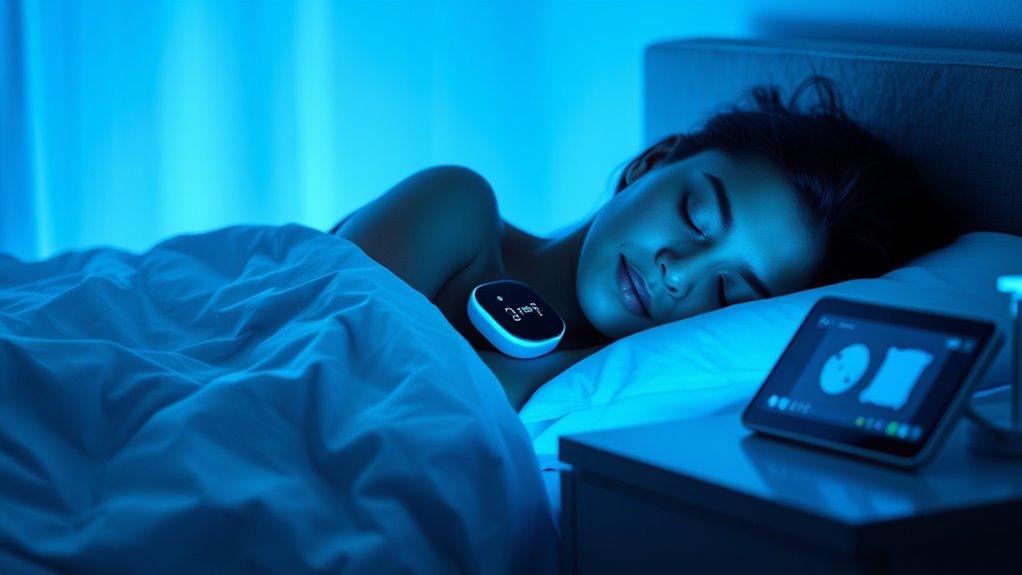
Insomnia occurs when your sleep cycle is disrupted, making it hard to fall asleep or stay asleep through the night. Poor sleep hygiene often contributes to this, involving habits like irregular sleep schedules, excessive screen time before bed, or consuming caffeine late in the day. Your circadian rhythms, the body’s internal clock, regulate sleep-wake cycles and are sensitive to light exposure and daily routines. When these rhythms are misaligned—due to shift work, jet lag, or inconsistent sleep times—insomnia can develop. Understanding these causes helps you identify behaviors that may be impairing your sleep. Improving sleep hygiene and aligning your routines with your natural circadian rhythms can considerably reduce sleep disruptions, providing a foundation for better rest and overall health. Utilizing seasonal checklists for cleaning and maintenance can also help create a sleep-friendly environment. Recognizing and supporting your circadian rhythms with consistent routines can further enhance sleep quality, especially when considering how light exposure influences your internal clock. Additionally, managing environmental factors like noise and temperature can significantly impact sleep quality. Incorporating relaxation techniques can also promote better sleep and help address underlying causes of insomnia.
As an affiliate, we earn on qualifying purchases.
The Rise of Sleep Technology and Market Trends
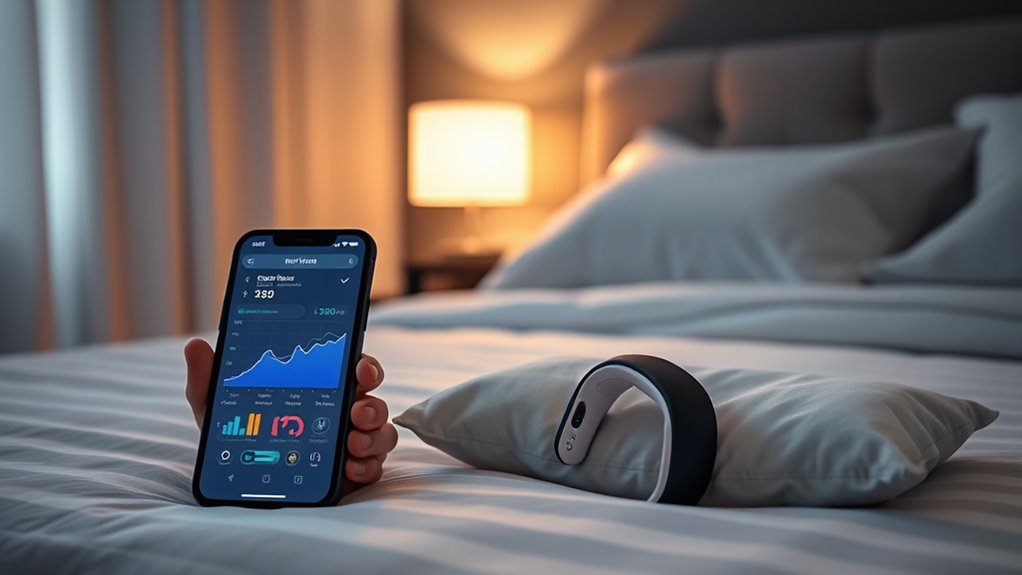
In recent years, sleep technology has experienced rapid growth as more people seek innovative solutions to improve their rest. This surge reflects a broader focus on sleep hygiene and personalized insights, making devices more accessible and effective. Market trends show a shift toward integrating data-driven features that track sleep patterns and analyze dreams, helping you understand your sleep quality better. You might find gadgets that monitor your sleep environment or offer gentle stimuli to promote relaxation. As demand grows, companies are refining their products to include:
Sleep tech advances with data-driven tools, enhancing understanding and relaxation for better rest.
- Advanced sleep trackers with real-time data
- Apps for dream analysis and journaling
- Wearables that promote relaxation techniques
- Smart beds adjusting to your sleep cycles
This evolution aims to enhance your understanding of sleep and optimize your nightly rest, with some devices now leveraging sleep data analysis to provide personalized recommendations. Additionally, innovations in biometric monitoring are helping users gain deeper insights into their overall health and sleep efficiency, supporting a more holistic approach to sleep wellness. Furthermore, the integration of connected devices is enabling seamless synchronization across multiple platforms for a comprehensive sleep management experience, which is increasingly backed by scientific research to improve sleep outcomes.
light therapy lamp for circadian rhythm
As an affiliate, we earn on qualifying purchases.
As an affiliate, we earn on qualifying purchases.
How Do Sleep Devices Claim to Improve Rest?
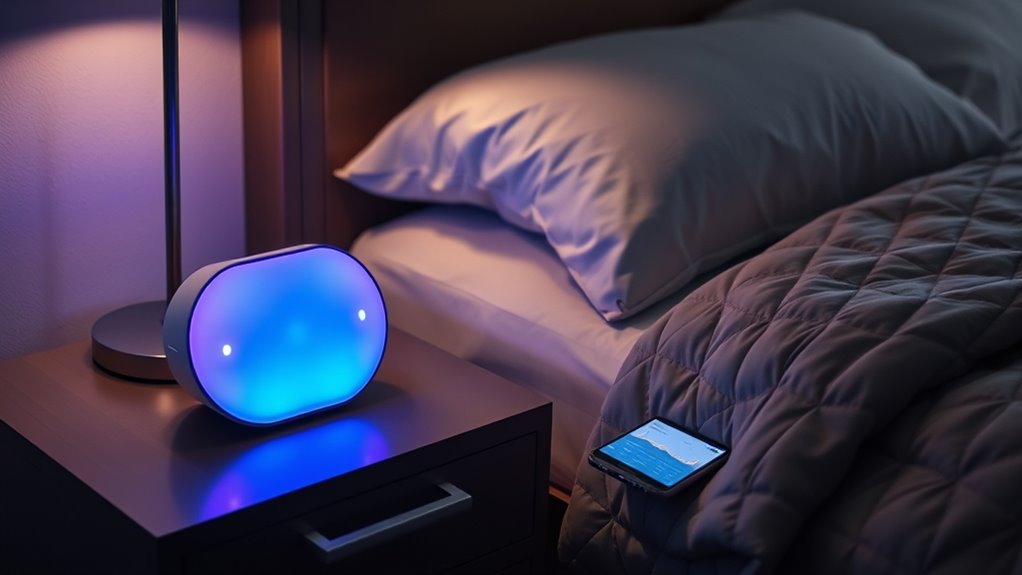
Sleep devices claim to improve your rest by combining advanced technology with personalized feedback. They often monitor your sleep patterns, helping you understand how factors like sleep hygiene affect your rest. Many devices track metrics such as movement, heart rate, and ambient noise to identify disruptions. Some use light and sound therapy to create a calming environment, encouraging better sleep habits. Others claim to enhance sleep quality through features like dream analysis, which interprets your dreams to identify stress or anxiety that may interfere with rest. By providing insights into your sleep cycles and habits, these gadgets aim to help you make informed changes. Additionally, understanding the importance of home electrical safety ensures that any devices used for sleep improvement are operated safely and reliably. Recognizing the role of personalized feedback can further enhance your ability to tailor sleep strategies to your unique needs. Incorporating scientific research behind these devices can also help users select effective options. Furthermore, many of these gadgets utilize biofeedback techniques to help you relax and prepare your mind for sleep. Ultimately, they seek to optimize your sleep environment and routines, making it easier to fall asleep and stay asleep throughout the night.
As an affiliate, we earn on qualifying purchases.
Popular Types of Sleep Gadgets and Their Features
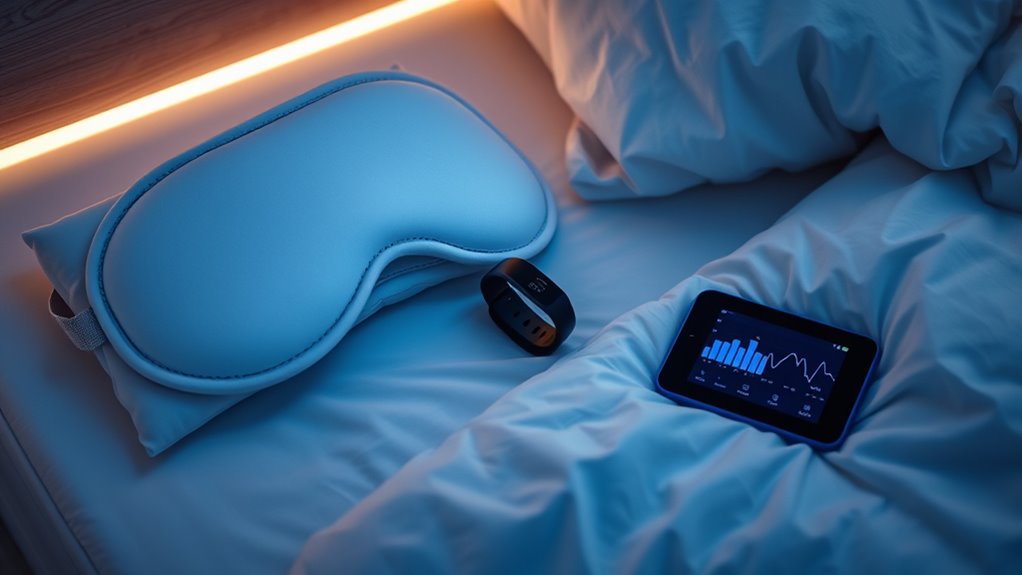
There are several popular types of sleep gadgets designed to enhance your rest, each offering unique features to suit different needs. Smart alarms wake you gently during light sleep, helping you feel more refreshed. Sleep trackers monitor your sleep patterns, providing insights into duration and quality. You might also consider sound machines that generate calming noises, or aroma diffusers to create a relaxing environment. Incorporating home-care techniques can further improve sleep quality by maintaining a comfortable and healthy sleep environment. Understanding fandom’s past, present, and future can shed light on how technological trends influence lifestyle choices like sleep habits. Additionally, some devices integrate sleep science principles to optimize effectiveness. These innovations reflect the evolving European cloud solutions that support health and wellness applications through secure and energy-efficient platforms. Key features include:
Discover sleep gadgets that promote restful nights with gentle alarms, tracking, and calming sounds.
- Smart alarms that sync with your sleep cycles
- Sleep trackers that analyze movement and heart rate
- Noise machines for ambient sound
- Aromatherapy devices to promote relaxation
These gadgets can help optimize your sleep routine, making them essential tools for anyone seeking better rest.
The Science Behind Light and Sound Sleep Aids
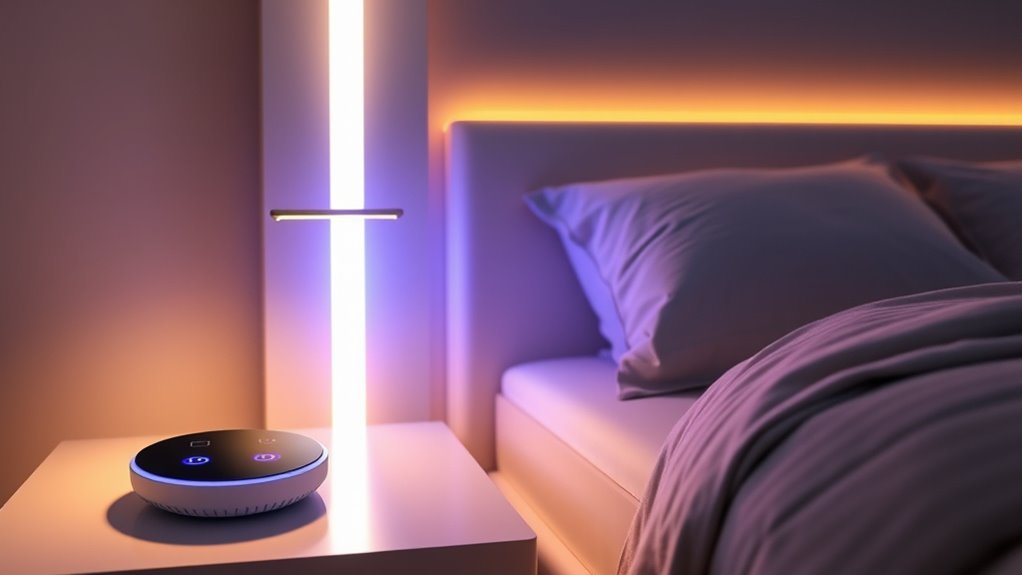
You might notice that light can influence your melatonin levels, which helps regulate your sleep cycle. Sound frequencies, on the other hand, can either promote relaxation or disrupt rest, depending on what you hear. Understanding how light and sound interact with your body can help you choose the right sleep aids for better rest. Additionally, air quality plays a crucial role in sleep quality, as pollutants and allergens can interfere with your ability to rest peacefully. Being aware of environmental factors that affect sleep can further enhance the effectiveness of these aids. For example, incorporating sleep environment adjustments like controlling temperature and minimizing noise can optimize sleep conditions. Ensuring proper power sources for any electronic sleep devices can also contribute to consistent, safe use during the night. Moreover, considering device placement can help maximize the benefits of sound and light therapy by reducing unwanted disturbances.
How Light Influences Melatonin
Light plays an essential role in regulating melatonin production, the hormone responsible for signaling your body to sleep. Exposure to natural or artificial light influences your circadian rhythms, which control your sleep-wake cycle. Bright light during the day helps reinforce these rhythms, promoting alertness and daytime activity. Conversely, exposure to blue light at night can suppress melatonin, making it harder to fall asleep. Light therapy devices are designed to mimic natural sunlight, supporting healthy circadian rhythms and improving sleep quality. By understanding how light impacts melatonin, you can optimize your environment for better rest. Consider these factors:
- Timing of light exposure
- Intensity of light used
- Spectrum of light (blue vs. warm tones)
- Duration of light therapy sessions
Additionally, the use of light therapy devices has become a popular method for managing circadian rhythm disorders and improving sleep patterns.
Sound Frequencies and Sleep
Sound frequencies can considerably influence your ability to fall asleep and stay asleep by entraining your brainwaves into states associated with relaxation and rest. Through sound therapy, specific frequency modulation techniques are used to target brainwave patterns that promote calmness, such as alpha and theta waves. These devices emit gentle, consistent sounds designed to guide your mind into a restful state, reducing anxiety and eliminating disruptive thoughts. By tuning into these frequencies, you can create an environment conducive to sleep without medication. The science behind this approach relies on the brain’s natural tendency to synchronize with external rhythms, making sound therapy a promising, non-invasive tool for improving sleep quality. As a result, many find that sound frequencies help them fall asleep faster and enjoy deeper, more restorative rest.
Wearable Devices: Monitoring vs. Improving Sleep Quality
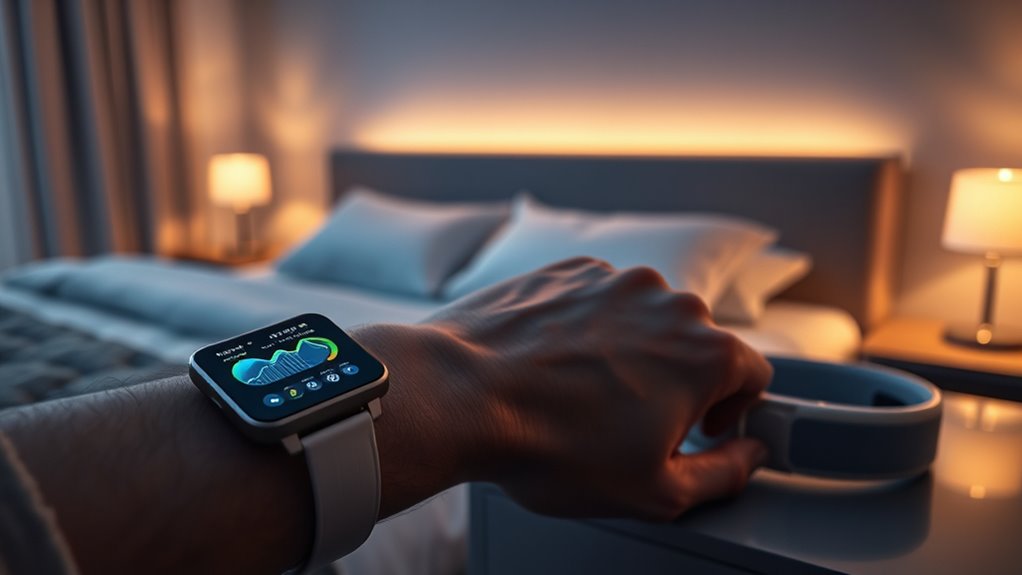
Wearable devices have become popular tools for tracking sleep patterns, but their role extends beyond simple monitoring. While sleep tracking provides valuable insights, some devices aim to improve sleep quality through features like gentle vibrations or biofeedback. When choosing a wearable, consider these aspects:
- Wearable comfort ensures you wear the device comfortably all night without disruption.
- Data accuracy helps you identify sleep patterns and disturbances precisely.
- Real-time feedback can alert you to sleep issues and suggest adjustments.
- Integration with apps offers personalized recommendations for better sleep hygiene.
These features move wearable devices from passive monitors to active sleep enhancers. By focusing on both comfort and functionality, you can use these gadgets to optimize your sleep, not just track it.
The Role of Neurostimulation Devices in Sleep Enhancement
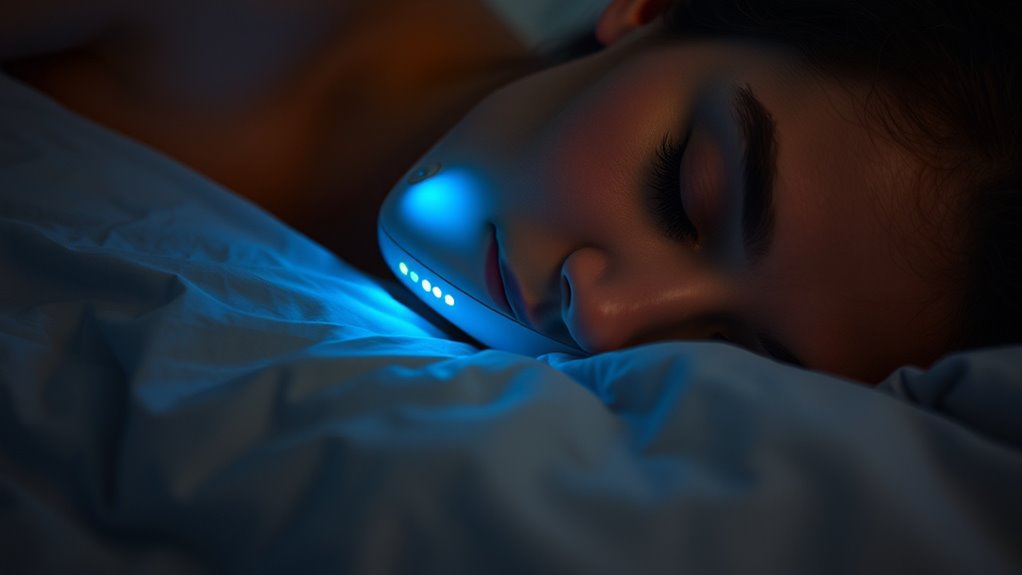
Neurostimulation devices target specific brain areas to promote better sleep, often by sending gentle electrical impulses. You might wonder how effective they truly are and what limitations they have. Let’s explore how they work, their proven benefits, and where they still face challenges.
How Neurostimulation Works
Because sleep disorders often stem from disrupted brain activity, neurostimulation devices target specific neural pathways to promote healthier sleep patterns. They work by delivering controlled electrical impulses that facilitate brain stimulation and neural modulation, helping to reset irregular sleep signals. This process influences areas of the brain responsible for sleep regulation, encouraging relaxation and progression into deeper sleep stages. Key mechanisms include:
- Modulating activity in sleep-related neural circuits
- Stimulating specific brain regions to promote sleep onset
- Adjusting neural excitability for improved sleep consistency
- Enhancing communication between brain areas involved in rest
Effectiveness and Limitations
While neurostimulation devices show promise in regulating sleep-related brain activity, their overall effectiveness varies among users. Some find significant improvements, while others see minimal benefit. Device reliability plays a vital role, as malfunctioning or inconsistent stimulation can hinder sleep quality. Your user experience also impacts results; comfort, ease of use, and personalization influence whether these gadgets help or hinder your sleep.
| Factor | Impact on Effectiveness |
|---|---|
| Device reliability | Ensures consistent stimulation, avoiding disruptions |
| User experience | Affects comfort and adherence to usage instructions |
| Individual variation | Different brain responses lead to varied results |
Ultimately, neurostimulation isn’t a guaranteed cure but a potential tool with limitations to consider.
What Research Tells Us About the Effectiveness of Sleep Gadgets
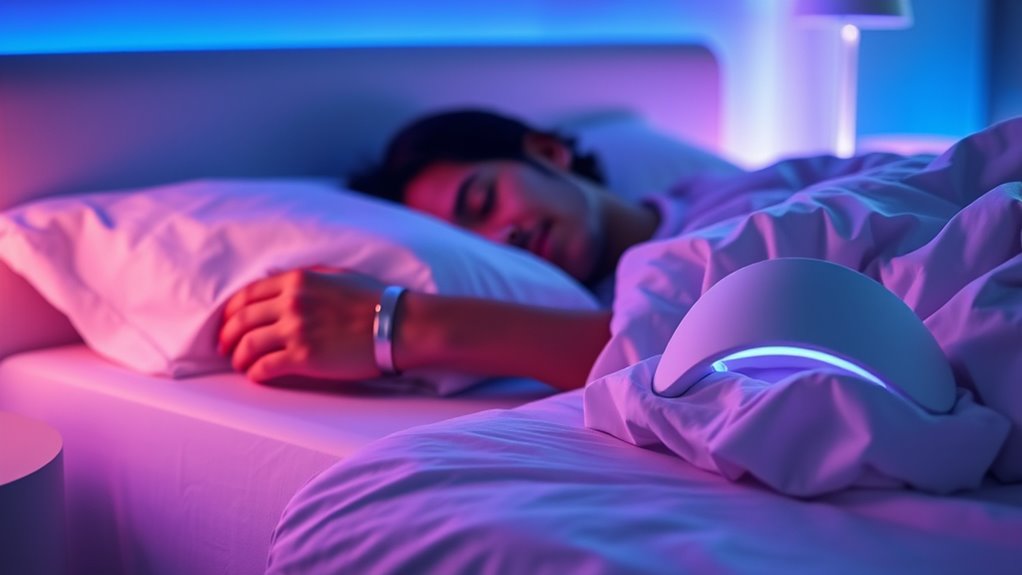
Research on sleep gadgets shows mixed results regarding their effectiveness. While some devices claim to improve sleep quality, studies reveal that benefits often depend on individual factors like sleep hygiene habits and personal preferences. Scientific evidence suggests that gadgets may help with relaxation or sleep tracking but rarely replace exhaustive approaches like cognitive behavioral therapy. In particular, tools that incorporate dream analysis or promote better sleep routines show limited, inconsistent results. You may find that:
- Sleep trackers can increase awareness but don’t guarantee better sleep.
- Relaxation devices may reduce anxiety before bed.
- Devices focusing on light therapy can help regulate circadian rhythms.
- Combining gadgets with good sleep hygiene practices yields better outcomes.
Ultimately, gadgets serve as complements rather than cures, and their effectiveness varies from person to person.
Potential Risks and Limitations of Using Sleep Devices
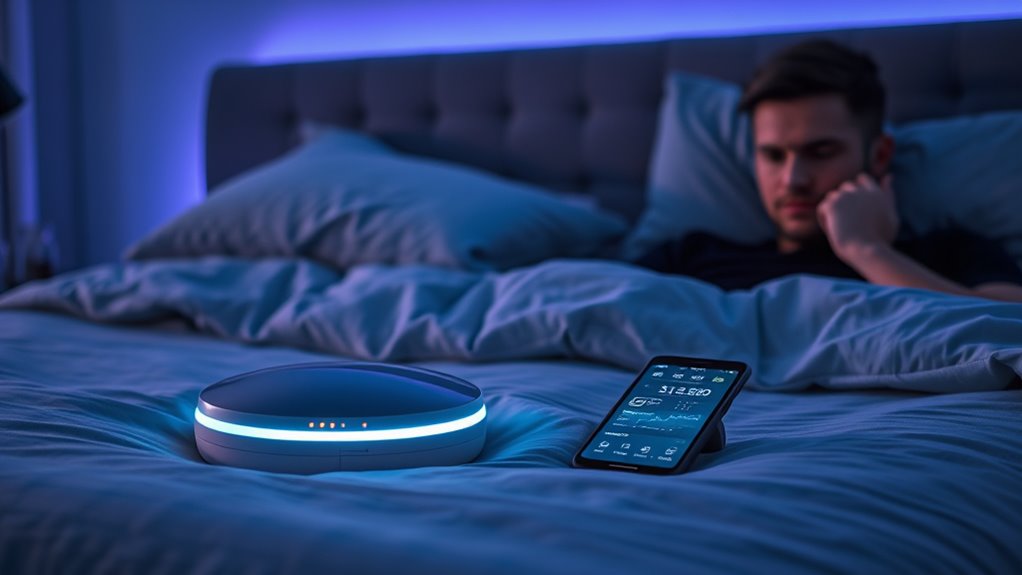
Although sleep devices can offer some benefits, they also come with notable risks and limitations that you should consider. Privacy concerns are a major issue, as many devices collect personal data about your sleep patterns, which could be vulnerable to hacking or misuse. Relying too heavily on these gadgets may lead to device dependency, where you feel unable to fall asleep without them. This dependency can interfere with natural sleep habits and make you less adaptable to environments without technology. Additionally, some devices may provide inaccurate data or false reassurance, leading you to misinterpret your sleep quality. It’s essential to weigh these risks carefully and not let technology replace fundamental sleep hygiene practices. Using sleep devices responsibly helps prevent potential setbacks to your sleep health.
Integrating Technology With Traditional Sleep Strategies
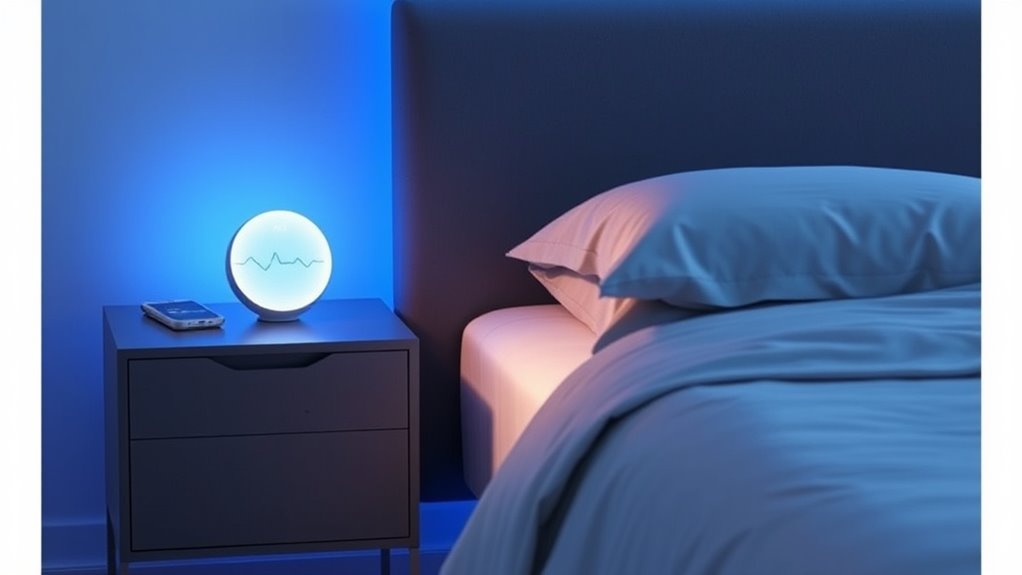
Integrating technology with traditional sleep strategies can enhance your overall sleep quality by combining the best of both worlds. By using sleep devices alongside good sleep hygiene practices, you create a holistic approach to rest. Technology can assist with tracking sleep patterns, helping you identify issues that disrupt your sleep, while traditional methods like maintaining a consistent bedtime reinforce healthy habits. Dream analysis apps can offer insights into subconscious thoughts, complementing relaxation techniques. To optimize this integration, consider:
Combining sleep tech with good habits creates a balanced, personalized approach to better rest.
- Regularly reviewing sleep data to adjust routines
- Using calming tech like white noise or light therapy
- Practicing relaxation exercises before bed
- Recording dreams for self-awareness and stress reduction
This balanced approach helps you develop a deeper understanding of your sleep needs and improves overall rest.
Frequently Asked Questions
Are There Any Side Effects From Using Sleep Gadgets Regularly?
Using sleep gadgets regularly can lead to device dependency, making it harder to fall asleep without them. Some devices may cause potential allergies if you’re sensitive to materials or chemicals used in their design. Additionally, prolonged use might disrupt your natural sleep cycle or cause discomfort. It’s important to monitor your response and consult a healthcare professional if you notice adverse effects, ensuring safe and effective sleep aid use.
Can Sleep Devices Replace the Need for Medical Treatment?
Sleep devices might seem like simple solutions, but they can’t replace the need for medical treatment. While they can support sleep through alternative therapies and lifestyle changes, persistent insomnia requires professional help. You should prioritize consulting a healthcare provider if sleep problems continue. Devices can complement treatments, but they shouldn’t substitute proper medical advice, diagnosis, or therapy to truly tackle chronic sleep issues effectively.
How Long Does It Typically Take to See Results From Sleep Gadgets?
You might start noticing improvements within a few days to a couple of weeks, depending on your device and consistency. Keep in mind, device durability and your satisfaction play roles in how quickly you observe results. Regular use and proper maintenance ensure the gadget functions effectively, boosting your chances of better sleep. Stay patient, and give the device time to work; most users experience positive changes within this timeframe.
Are Sleep Gadgets Effective for Severe or Chronic Insomnia?
Think of sleep gadgets as tools in your toolbox, but for severe or chronic insomnia, they’re just one part of the whole repair kit. While they can help improve sleep patterns, they work best alongside behavioral therapy and better sleep hygiene. Relying solely on gadgets is like trying to fix a complex machine with just a screwdriver—sometimes you need an all-encompassing approach to truly resolve the issue.
Do Sleep Devices Work Equally Well for Everyone?
Sleep devices don’t work equally well for everyone because individual differences and device compatibility matter. Some people find certain gadgets helpful, while others don’t see much improvement. Your unique sleep patterns, preferences, and lifestyle influence how effective a device is for you. It’s important to try different options and choose one that matches your needs, rather than expecting a universal solution that works perfectly for everyone.
Conclusion
While sleep gadgets show promise, they’re not magic cures—about 60% of users report improved rest, but results vary. Remember, technology can complement traditional sleep habits like maintaining a routine and managing stress. Don’t rely solely on devices; they’re tools, not solutions. If you’re struggling with insomnia, consult a healthcare professional. Combining smart gadgets with proven strategies might just be your best shot at a better night’s sleep.
Flea & tick season Picks
flea and tick prevention
As an affiliate, we earn on qualifying purchases.