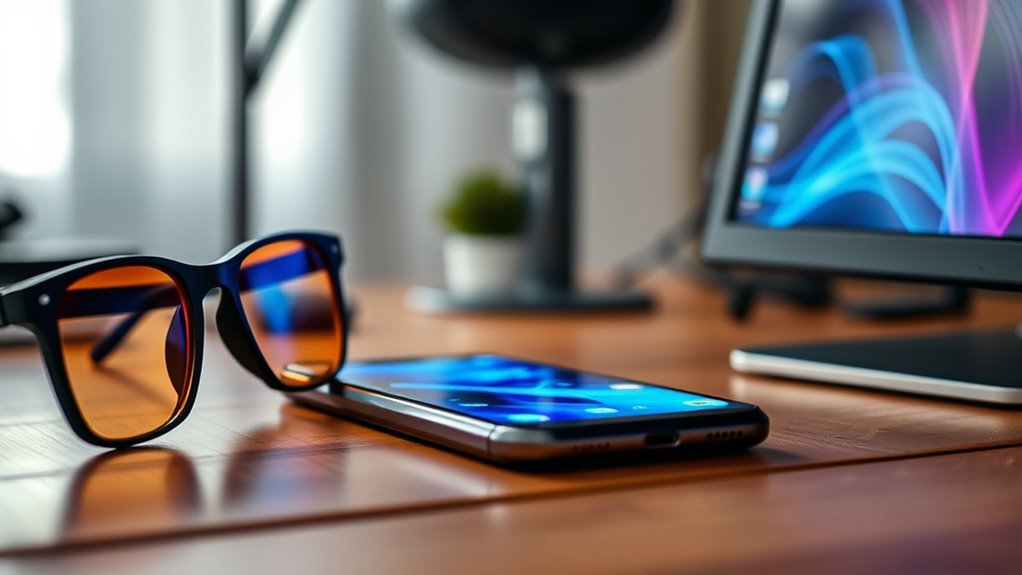

Choosing between blue light blocking glasses, screen apps, and filters depends on your lifestyle and preferences. Glasses are portable, stylish, and provide immediate blue light reduction, especially useful if you’re on the go. Apps offer customizable settings and can adjust your screen’s color temperature easily. Filters are simple and cost-effective, often built into devices or added as overlays. To find the best fit for you and learn more about each option, keep exploring these solutions.
Key Takeaways
- Glasses provide immediate, portable blue light filtering with stylish design, suitable for all-day wear and regulating sleep.
- Screen apps allow customizable, software-based blue light reduction, adjustable for personal preferences and schedules.
- Screen filters are physical overlays or device settings offering a simple, cost-effective solution without software reliance.
- Glasses often enhance comfort and style, while apps and filters may impact display clarity or color accuracy.
- The choice depends on lifestyle, convenience, and personal preference, with all methods reducing eye strain and improving sleep quality.
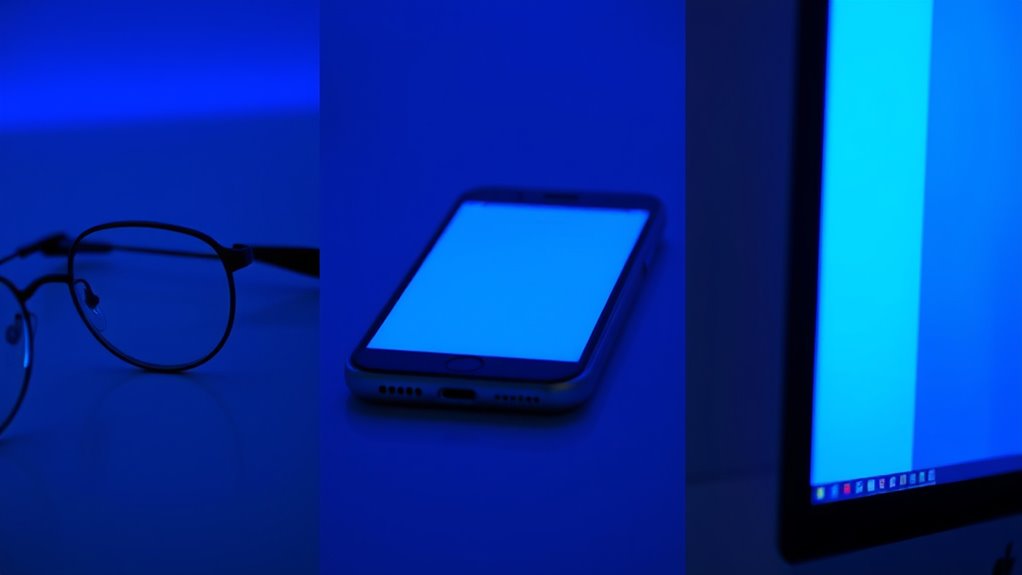
Blue light blocking has become a popular solution for reducing eye strain caused by prolonged exposure to screens. Whether you’re working on your computer, scrolling through your phone, or watching videos, blue light can cause discomfort and disrupt your daily routine. When it comes to choosing the right method, you have three main options: glasses, screen apps, and screen filters. Each offers unique benefits, but understanding their differences can help you make an informed decision.
Blue light blocking options include glasses, apps, and filters—each with unique benefits for eye comfort and sleep.
If you opt for blue light blocking glasses, you’ll notice an immediate reduction in flicker and glare. These glasses are designed with special lenses that filter out a significant portion of blue light before it reaches your eyes. They’re portable, easy to wear, and effective at providing flicker reduction, which minimizes eye fatigue and helps you maintain focus longer. Plus, many glasses are stylish and comfortable, making them suitable for all-day wear. When it comes to sleep enhancement, wearing blue light blocking glasses in the evening can help regulate your circadian rhythm. By reducing blue light exposure before bedtime, they encourage the production of melatonin, improving your sleep quality. Additionally, they’re a practical solution for those who spend significant time outdoors or in varied lighting conditions.
Screen apps are another popular choice because they’re easy to install and customize. These applications adjust the color temperature of your device’s display, shifting it towards warmer tones during evening hours. As a result, flicker becomes less noticeable, and eye strain decreases. Many apps also include features aimed at sleep enhancement, such as blue light schedules that automatically reduce blue light in the evening. They give you control over how much blue light you want to block and can be tailored to your needs. However, since these apps work directly through your device, their effectiveness depends on proper calibration and consistent use.
Screen filters are physically placed on your device, either as adhesive overlays or built-in display settings. They provide a direct barrier to blue light, offering flicker reduction without relying on software adjustments. Filters are a cost-effective solution and don’t require regular updates or battery power. Like glasses and apps, some filters are designed to enhance sleep by filtering out blue light in the evening. But they can sometimes affect display clarity or color accuracy, which might bother users engaged in color-sensitive work.
Ultimately, the best choice depends on your lifestyle and preferences. If you value portability and style, glasses might be your best bet. For flexibility and customization, screen apps are excellent. If you prefer a simple, no-fuss solution, a screen filter could suffice. Whichever method you choose, the goal remains the same: reducing flicker, protecting your eyes, and improving your sleep quality. Understanding blue light can help you choose the most effective method for your needs.
Frequently Asked Questions
How Does Blue Light Affect Sleep Quality?
Blue light can disrupt your sleep by causing melatonin suppression and circadian disruption. When you’re exposed to blue light, especially before bed, your body produces less melatonin, making it harder to fall asleep and stay asleep. To improve your sleep quality, consider reducing blue light exposure in the evening. Use blue light blocking glasses, screen filters, or apps to minimize these effects and help maintain a healthy sleep cycle.
Are Blue Light Blocking Glasses Suitable for Children?
Is it wise to shield children’s eyes like a fortress from blue light? Yes, blue light blocking glasses can be suitable for children, offering protection for their developing eyes, especially with UV protection. They help reduce eye strain and support better sleep. Just make certain the glasses are designed for kids and meet safety standards, giving your children a shield that nurtures their eye health and shields them from digital screen harm.
Can Blue Light Filters Harm Screen Display Quality?
Blue light filters generally won’t harm your screen display quality if you adjust screen brightness properly and maintain good display calibration. However, overly dimming your screen or incorrect calibration can affect clarity and color accuracy. Always make sure your device’s settings are optimized to balance blue light reduction with maintaining image quality. This way, you protect your eyes without compromising the display’s performance or visual experience.
What Is the Cost Difference Between Glasses and Apps?
Think of blue light filters as different tools in your tech toolkit. Glasses often come with a higher upfront cost, sometimes around $50 to $200, but they’re reusable and stylish. Screen apps are like pocket change, usually free or costing under $10, making them highly affordable options. Consider your budget and needs to find the perfect balance—affordability options make protecting your eyes accessible without breaking the bank.
How Long Does Blue Light Protection Last With Screen Filters?
Blue light protection with screen filters typically lasts around 6 to 12 months, depending on usage and screen cleaning habits. The durability of a screen filter’s blue light blocking features can diminish over time as the coating wears or gets scratched. To guarantee maximum blue light durability and screen filter longevity, clean your screen regularly and replace the filter when you notice reduced effectiveness.
Conclusion
Choosing between glasses, screen apps, or filters is like picking the right tool for a tricky job—you’ll find what works best for you. While glasses block blue light more effectively, apps and filters offer convenient alternatives. Think of them as different shields protecting your eyes, just like a sturdy umbrella shields you from rain. Try each to see which feels best, and give your eyes the relief they deserve after a long day.