Sleep trackers can give you helpful insights into your sleep habits, but they’re not perfect at identifying sleep stages like deep or REM sleep. They mainly rely on movement, heart rate, and other signals, which can sometimes lead to inaccuracies. Factors like device quality and how you wear them also matter. While they offer useful trends, for precise sleep analysis, professional sleep studies are best. Keep going, and you’ll discover what affects their accuracy and how to get the most from your tracker.
Key Takeaways
- Sleep trackers primarily use movement and heart rate data, which can lead to moderate accuracy but may misclassify sleep stages.
- Device sensor quality, calibration, and placement significantly influence data reliability and measurement precision.
- External factors like user movement, sleep position, and environment can cause inaccuracies in sleep detection.
- While useful for tracking sleep patterns and trends, trackers cannot match the detailed accuracy of clinical sleep studies.
- Ongoing technological improvements aim to enhance measurement accuracy, but limitations still exist in detecting subtle sleep features.
How Do Sleep Trackers Work?
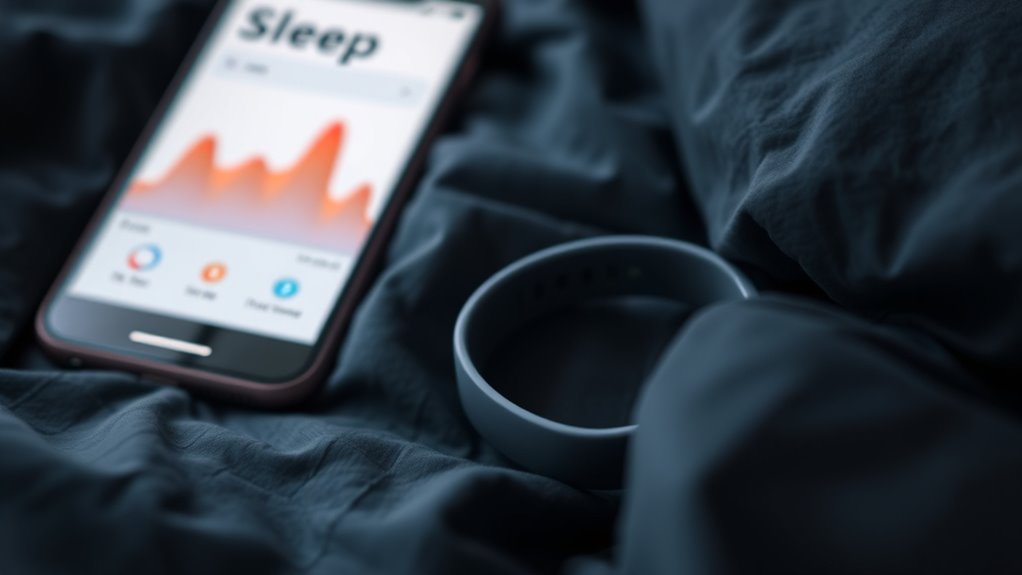
Sleep trackers work by monitoring your body’s movements and physiological signals while you sleep. They analyze data to estimate your sleep quality and sleep duration, giving you insights into how well you’re resting. Many devices use accelerometers to detect your movements, which helps determine when you’re asleep or awake. Some trackers incorporate heart rate sensors to monitor your heart rate variability, providing a more detailed picture of your sleep cycles. By tracking these signals throughout the night, sleep trackers can identify different sleep stages and measure total sleep time. This data analysis is crucial for understanding your overall sleep health and identifying patterns over time. Additionally, sensor technology can influence the accuracy of data collected during sleep, as different sensors may have varying levels of sensitivity. The accuracy of sleep trackers can also be affected by factors such as placement and user movement. While they offer valuable insights, keep in mind that their accuracy can vary depending on the device and how you wear it. Furthermore, physiological signals like breathing patterns and skin temperature can enhance the precision of sleep stage detection in some advanced models.
Types of Sleep Tracking Technologies
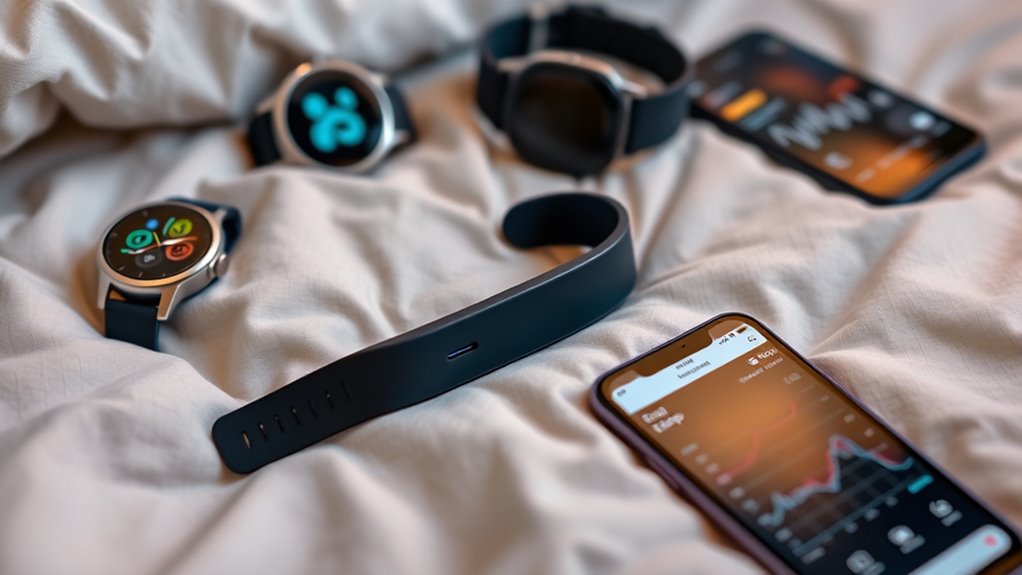
You’ll find different sleep tracking technologies offer varying levels of accuracy, depending on their design. Wearable devices, bedside monitors, and smartphone apps each have strengths and limitations you should consider. Understanding how each type works helps you choose the most reliable option for your needs. Additionally, some devices incorporate advanced tracking features like heart rate variability and movement sensors to improve data accuracy. These enhancements can provide a more comprehensive picture of your sleep patterns, making the data more meaningful for your sleep health. Recognizing the importance of sensor placement can also impact the reliability of the collected data, especially when considering smart home integration that can automate and enhance sleep environment adjustments. Proper sensor placement and integration can significantly influence the accuracy of sleep data collection, ensuring you get the most reliable insights into your sleep quality.
Wearable Devices Accuracy
Wearable devices employ various sleep tracking technologies that differ in accuracy and reliability. Many rely on accelerometers to monitor movement, which can be affected by user compliance—if you don’t wear the device properly, readings may be inaccurate. Some advanced wearables incorporate algorithm improvements that analyze movement patterns and heart rate data to estimate sleep stages more precisely. These sleep stage algorithms** have become better at distinguishing between wakefulness and sleep, but they still face limitations in detecting subtle sleep disturbances. The accuracy of wearable devices also depends on consistent usage; irregular wearing or improper placement can compromise data quality. Furthermore, sensor technology continues to evolve, aiming to improve detection capabilities and reliability. As technology advances, new validation studies are emerging to assess how closely these devices reflect actual sleep patterns. Overall, while wearables offer convenient insights into your sleep habits, their precision varies depending on the technology, user adherence, and ongoing algorithm updates. Additionally, ongoing research aims to enhance the measurement accuracy** of these devices for more reliable sleep analysis.
Bedside Monitors Precision
Bedside monitors use a variety of sleep tracking technologies that differ markedly in their precision. These monitors typically rely on sensors like EEG, ballistocardiography, or contactless optical methods to gather data. Because of this, their ability to provide accurate sleep measurements varies considerably. Some bedside monitors focus on precision measurement of sleep stages, heart rate, and breathing patterns, offering detailed insights. However, their accuracy can be influenced by placement, user movement, or environmental factors. While many devices excel at tracking overall sleep duration, they may fall short in reliably distinguishing between light and deep sleep. Understanding these differences helps you select a bedside monitor that aligns with your expectations for precise sleep data, though no device guarantees perfect accuracy. Factors such as sensor placement and user activity can significantly impact measurement reliability, and ongoing advancements aim to improve overall measurement accuracy and consistency. Additionally, technological limitations currently prevent some devices from achieving clinical-grade precision. Improvements in sensor technology are continuously being developed to enhance measurement reliability and reduce error margins.
Smartphone App Reliability
Smartphone apps use various sleep tracking technologies that considerably impact their reliability. Many rely on accelerometers to monitor movement, while others analyze sounds or estimate sleep stages through data patterns. The user interface plays a crucial role in how easily you can interpret results, but data privacy remains a concern. Some apps securely handle your data, but others may share it with third parties. Understanding these differences helps you choose trustworthy options. Here’s a quick comparison:
| Technology Type | Key Features |
|---|---|
| Movement Tracking | Detects restlessness and sleep duration |
| Sound Analysis | Monitors snoring or disturbances |
| Heart Rate Estimation | Uses accelerometer data for sleep stages |
| Data Privacy | Varies; check app permissions and policies |
Additionally, network infrastructure considerations can influence data security and privacy. Being aware of privacy policies can help you make informed choices about your sleep data security.
Moreover, some apps incorporate machine learning algorithms to improve their accuracy over time. A comprehensive understanding of sleep tracking accuracy can aid in making more reliable health decisions.
Factors Affecting Accuracy

The accuracy of your sleep tracker can be influenced by several factors you should consider. Variations in sensor quality can lead to inconsistent data, while limitations in detecting different sleep stages may affect results. Additionally, your movements during sleep can disrupt readings, impacting overall accuracy. Utilizing proper device placement can help improve measurement consistency and reliability.
Sensor Quality Variability
Sensor quality varies considerably between different sleep trackers, directly impacting their accuracy. Poor sensor calibration can lead to inconsistent readings, making your sleep data unreliable. Device durability also plays a role; less durable sensors may degrade over time, reducing measurement precision. To understand how sensor quality affects performance, consider:
- Calibration consistency: Accurate sensors require proper calibration to track sleep stages effectively.
- Material robustness: Durable components resist wear and tear, maintaining accuracy over time.
- Sensor sensitivity: High-quality sensors detect subtle physiological signals essential for precise data.
If the sensors are poorly calibrated or made from inferior materials, your sleep tracking data may be skewed or inconsistent. As a result, investing in devices with high sensor quality ensures more reliable sleep insights.
Sleep Stage Detection Limits
Despite advances in technology, sleep stage detection remains limited by several key factors. Your device often relies on movement and heart rate data, which can misrepresent your actual sleep stages. This affects the accuracy of dream analysis, as it’s difficult to pinpoint REM sleep precisely. Additionally, sleep disorder detection is hindered because subtle variations in brain activity aren’t captured without polysomnography. Variability in individual sleep patterns further complicates this, making it hard for trackers to differentiate between stages reliably. While some devices claim to identify deep sleep or REM, their algorithms have limitations. Ultimately, these factors mean that sleep trackers provide a general overview but can’t fully replace clinical assessments for detailed sleep stage analysis or diagnosing sleep disorders.
User Movement Impact
User movement during sleep can markedly impact the accuracy of sleep trackers. Excessive bed movement or tossing and turning can interfere with the device’s ability to detect your true sleep patterns. To minimize this, consider these factors:
- Bed movement: Frequent shifting may cause false wake detections or misinterpret sleep stages.
- Device sensitivity: If your tracker is highly sensitive, minor movements might be overinterpreted, skewing results.
- Sleep position: Certain positions, like sleeping on your side or stomach, can cause more movement, affecting readings.
Being aware of these factors helps you understand potential inaccuracies. Adjusting device sensitivity settings or choosing a tracker that accounts for movement can improve reliability. Remember, user movement is a key factor influencing sleep tracker precision.
Comparing Consumer Devices to Sleep Labs
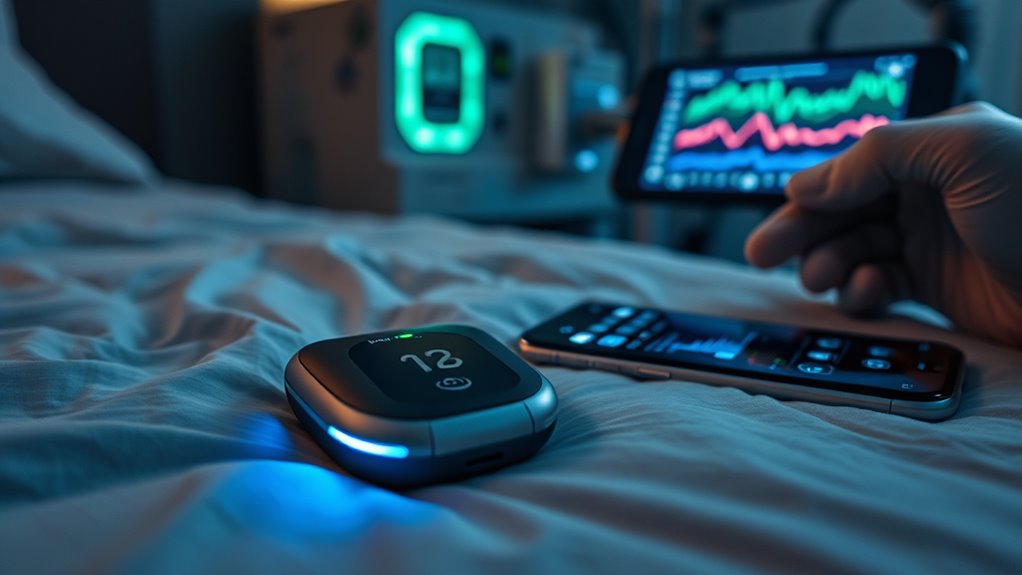
While consumer sleep trackers have become increasingly popular, their accuracy often falls short when compared to the gold standard of sleep labs. Sleep labs, equipped with EEG and other advanced tools, provide detailed insights into sleep architecture, including REM cycles and dream analysis. In contrast, trackers primarily rely on movement and heart rate data, which can misinterpret sleep stages. To understand the differences, consider this comparison:
| Feature | Sleep Lab | Consumer Sleep Tracker |
|---|---|---|
| Data Accuracy | High, detailed sleep stages | Moderate, movement-based |
| Sleep Hygiene Insights | Comprehensive | Limited |
| Dream Analysis | Possible through EEG | Not available |
| Cost | Expensive | Affordable |
| Convenience | Limited to clinical setting | At-home, daily use |
Common Discrepancies and Limitations

Although consumer sleep trackers offer a convenient way to monitor your sleep at home, they often produce discrepancies compared to clinical sleep studies. Common issues include:
- Sleep pattern inconsistencies, where movement or environmental factors cause inaccurate readings of your sleep stages.
- Device calibration challenges, which can lead to errors if the tracker isn’t properly set up or adjusts poorly over time.
- Limited sensitivity in detecting subtle sleep disruptions, resulting in an inaccurate reflection of your actual sleep quality. These limitations mean you might see variations in your sleep data, making it difficult to rely solely on these devices for precise insights. Recognizing these discrepancies helps you better interpret your sleep patterns and understand the constraints of your sleep tracker.
Tips for Using Sleep Trackers Effectively
To get the most accurate and useful insights from your sleep tracker, it’s essential to use it correctly and consistently. Maintain good sleep hygiene by going to bed and waking up at the same times each day, which helps your device better detect patterns. Avoid caffeine, alcohol, and screens before bed, as these can interfere with sleep quality and skew data. Track your sleep over multiple weeks to identify trends rather than focusing on single nights. If you’re interested in dream analysis, note any vivid dreams or awakenings in a sleep journal alongside your tracker data. Consistent use guarantees your device gathers enough information to provide meaningful insights, helping you make informed improvements to your sleep habits and overall sleep quality.
Future Developments in Sleep Monitoring
Advancements in sensor technology and data analysis are paving the way for more accurate and exhaustive sleep monitoring devices. Future developments include:
- Enhanced sleep data privacy measures, ensuring your sensitive information stays secure and confidential.
- Reduced sleep tracker cost through innovative manufacturing and scalable solutions, making quality sleep tracking accessible to more people.
- Integration of AI and machine learning to interpret complex sleep patterns, providing personalized insights and recommendations.
These innovations will improve device reliability, address concerns about sleep data privacy, and make sleep tracking more affordable. As technology evolves, you’ll benefit from more detailed sleep analysis, better privacy protections, and lower costs, helping you optimize your sleep health effectively.
Frequently Asked Questions
Can Sleep Trackers Diagnose Sleep Disorders Accurately?
Sleep trackers can’t diagnose sleep disorders accurately, but they can give you insights into your sleep quality. You might find that your device captures movement and heart rate data to identify patterns, yet its accuracy varies. While useful for monitoring general sleep trends, you shouldn’t rely solely on it for a diagnosis. Consult a healthcare professional for proper assessment if you suspect a sleep disorder, since device accuracy has limits.
How Do External Factors Influence Sleep Tracker Readings?
External factors like environmental influences, such as room temperature, light, and noise, can affect your sleep tracker readings. Wearable sensors pick up movement and heart rate, but if your environment isn’t ideal, it may misinterpret your sleep patterns. For example, a noisy or bright room might cause restlessness, leading to inaccurate data. To get better results, make certain your sleeping environment is calm and comfortable.
Are Sleep Trackers Suitable for Children or Elderly Users?
Think of sleep trackers as your vigilant night watch—helpful but not foolproof. For children, they support child safety by monitoring sleep patterns, but aren’t foolproof for medical diagnoses. Elderly monitoring benefits from these devices, offering insights into sleep quality and detecting irregularities, yet they shouldn’t replace professional care. Always supplement sleep tracker data with medical advice, ensuring both children and seniors get the proper attention they need during restful nights.
What Is the Best Way to Interpret Sleep Data?
To interpret sleep data effectively, focus on sleep analysis trends over time rather than daily fluctuations. Look for patterns in your sleep duration, quality, and consistency. Keep in mind that data accuracy can vary between devices, so consider using sleep analysis as a helpful guide rather than absolute truth. Use insights to improve your sleep habits, but consult a healthcare professional if you notice persistent issues or irregularities.
Do Sleep Trackers Improve Sleep Quality Over Time?
Think of sleep trackers as your guiding lighthouse, helping you navigate the dark seas of restless nights. Over time, they can improve your sleep quality by highlighting patterns in your sleep cycle and pinpointing issues. While tracking accuracy varies, consistent use allows you to make informed adjustments. As you listen to your tracker’s signals, you’ll find better sleep habits, leading to more restorative nights and brighter mornings.
Conclusion
So, are sleep trackers truly accurate? The answer isn’t simple. While they offer valuable insights, they’re not foolproof and can sometimes mislead you. As technology advances, the line between reliable data and guesswork blurs. Will future innovations bridge this gap? Or will sleep trackers remain an imperfect snapshot of your nightly rest? The truth lies just beyond today’s limits—waiting to be uncovered. Stay tuned, because what comes next could change how you understand your sleep forever.