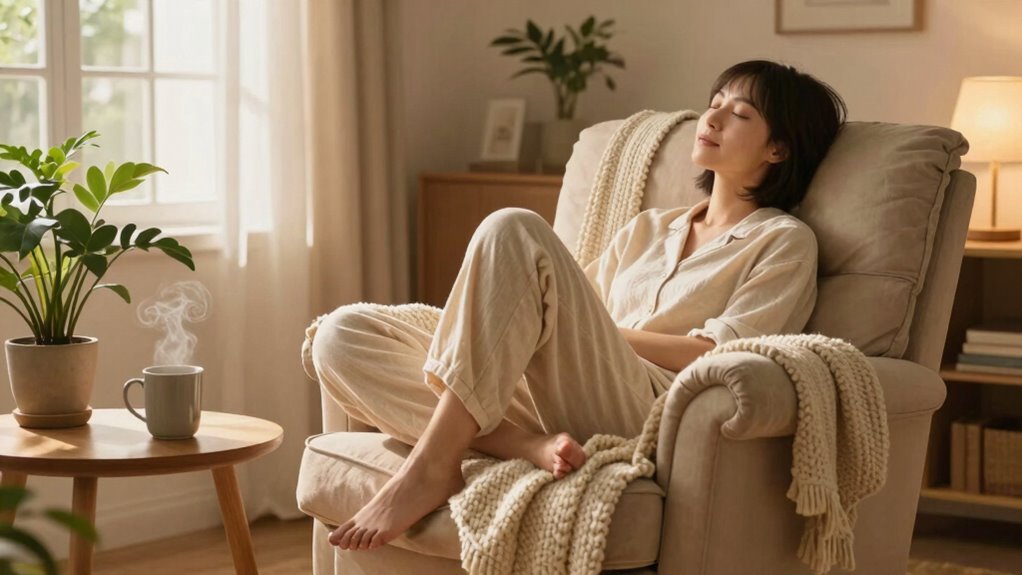
Full body relaxation at home means intentionally calming your mind and body through mindful practices like deep breathing, body scans, and gentle meditation. It involves creating a soothing environment with natural decor, good air quality, and calming scents such as lavender or chamomile. Using aromatherapy and focusing on the present moment helps release tension and suppress stress. Keep exploring to discover how combining these techniques can help you achieve lasting, peaceful relaxation from the comfort of your own space.

Get health and wellness essentials delivered free — and shop member deals
- Fast, free delivery on millions of items
- Access to Prime Big Deal Days deals on October 6–7
- Prime Video, Amazon Music and more included
Key Takeaways
- Achieving calmness throughout the entire body and mind through intentional relaxation practices.
- Using mindfulness techniques like deep breathing and body scans to release tension and racing thoughts.
- Creating a peaceful environment with natural decor, proper ventilation, and aromatherapy to enhance relaxation.
- Incorporating sensory cues, such as essential oils, to deepen relaxation and promote tranquility.
- Combining environmental, mental, and physical techniques consistently for a holistic, lasting state of full body relaxation.
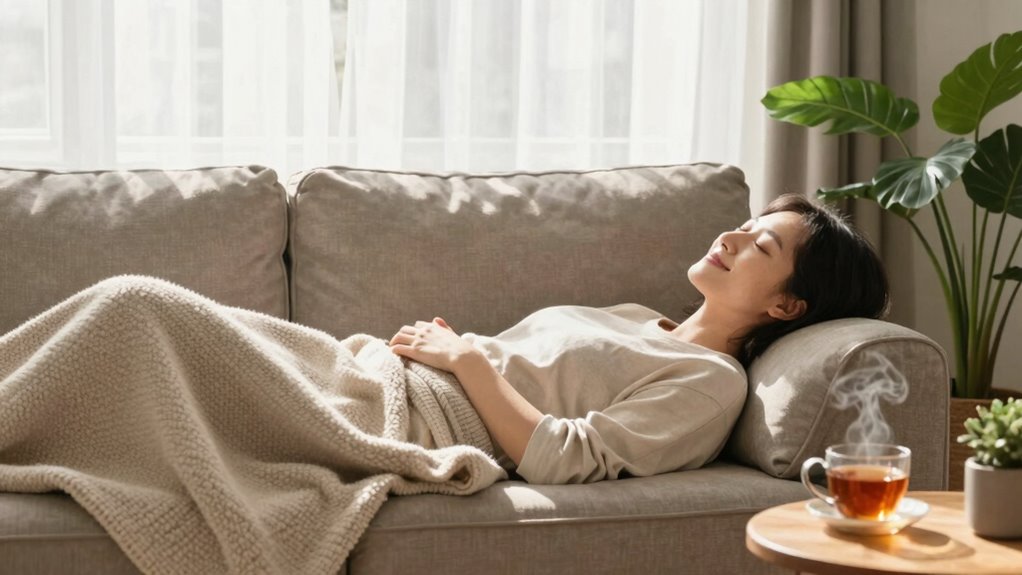
Ever wonder how to achieve complete relaxation without leaving your home? The secret lies in understanding what full body relaxation truly means and how you can tap into it effortlessly. It’s not just about lying down or taking a nap; it’s about cultivating a sense of calm that permeates every part of your body and mind. To do this, you can incorporate mindfulness techniques, which teach you to focus on the present moment and let go of stress and worries. These techniques help slow down your racing thoughts, relax tense muscles, and bring your awareness inward. Whether it’s deep breathing, body scans, or gentle meditation, mindfulness allows you to reconnect with your body and create a peaceful state of being. Incorporating biodiversity into your environment, such as houseplants or natural decor, can also enhance your relaxation experience by creating a more calming and restorative space. Creating a healthy indoor environment with proper ventilation can further support your relaxation efforts by reducing indoor air pollutants and maintaining fresh air flow. Understanding the importance of indoor air quality can help you make better choices for maintaining a peaceful atmosphere. Additionally, paying attention to air circulation can improve comfort and relaxation by preventing stuffiness and aiding in the removal of indoor pollutants. Aromatherapy benefits play a significant role in achieving full body relaxation at home. Using essential oils like lavender, chamomile, or eucalyptus can elevate your relaxation experience, stimulating your senses and promoting a feeling of tranquility. As you breathe in these calming scents, your nervous system responds by reducing stress hormones and encouraging a state of ease. You can add a few drops of your favorite essential oil to a diffuser or mix them with a carrier oil for a soothing massage. The aroma’s subtle influence not only relaxes your mind but also relaxes your muscles, making it easier for your entire body to unwind.
Discover how mindfulness techniques help relax your mind and body, creating lasting peace from within.
Combine mindfulness techniques with aromatherapy benefits for a holistic approach. Start by creating a quiet space where you won’t be disturbed. Sit comfortably, close your eyes, and take slow, deep breaths, focusing on the sensation of the air entering and leaving your body. As your mind begins to settle, allow the scent of your chosen essential oil to fill the space, deepening your sense of calm. Visualize tension leaving your body with each exhale and feel the relaxation spread from your head to your toes. This combination works synergistically, calming your nervous system and releasing built-up tension, helping you feel rejuvenated.
Achieving full body relaxation at home isn’t about perfection; it’s about consistency and intentionality. By integrating mindfulness techniques and aromatherapy benefits into your daily routine, you create a sanctuary of peace within your own space. Over time, these practices become second nature, transforming your home into a retreat where relaxation is not just a fleeting moment but a lasting state of well-being. This isn’t about escaping life’s stressors but learning to nurture your body and mind amidst them, making relaxation an accessible, everyday experience.
essential oil diffuser for relaxation
As an affiliate, we earn on qualifying purchases.
As an affiliate, we earn on qualifying purchases.
Frequently Asked Questions
Can Full Body Relaxation Be Achieved Without Professional Help?
Yes, you can achieve full body relaxation without professional help by establishing effective self-care routines and practicing relaxation techniques. Dedicate time daily to activities like deep breathing, meditation, or gentle stretching. Creating a calming environment and prioritizing your well-being helps reduce stress and tension. Consistency is key, so incorporate these practices into your routine regularly. Over time, you’ll notice enhanced relaxation and a greater sense of overall calm at home.
How Long Should a Relaxation Session Last?
A relaxation session should last about 20 to 30 minutes for effective results. Like a knight in shining armor, you shield yourself from stress with breathing techniques and meditation practices. Focus on slow, deep breaths and mindful meditation to calm your mind and body. If you’re pressed for time, even 10 minutes can help, but longer sessions deepen relaxation and restore your energy.
Are There Specific Times of Day Best for Relaxation?
The best times for relaxation are during your morning routines and evening wind-down. Starting your day with a few calming minutes helps set a positive tone and reduces stress. In the evening, winding down allows your body to release tension and prepare for restful sleep. By scheduling relaxation during these periods, you create a consistent habit that promotes overall well-being and deepens your full body relaxation at home.
What Are Common Obstacles to Achieving Full Relaxation at Home?
Like Sisyphus battling his boulder, you might face obstacles blocking your path to relaxation. Distractions, a cluttered environment, or persistent stress can hinder your stress reduction and mental clarity. To overcome these barriers, create a dedicated quiet space, turn off notifications, and set boundaries. Recognize that patience is key; with consistent effort, you’ll find it easier to achieve full relaxation and restore your mind’s calm.
Does Relaxation Help With Chronic Pain or Health Issues?
Yes, relaxation helps with chronic pain and health issues by strengthening the mind-body connection. When you relax, your stress levels decrease, which can reduce inflammation and muscle tension, easing pain. Regular relaxation practices improve overall health by promoting stress reduction and better body awareness. This holistically supports your well-being, making managing chronic conditions more manageable and improving your quality of life.
As an affiliate, we earn on qualifying purchases.
Conclusion
Achieving full body relaxation at home isn’t just about hitting pause on your busy day; it’s about nurturing yourself and finding balance. When you carve out time for calming routines, you’re giving your mind and body a much-needed break. Remember, Rome wasn’t built in a day, so be patient and gentle with yourself. With consistent effort, relaxation becomes second nature, helping you feel renewed and ready to face whatever comes your way.
As an affiliate, we earn on qualifying purchases.
aromatherapy candles lavender chamomile
As an affiliate, we earn on qualifying purchases.
As an affiliate, we earn on qualifying purchases.
Halloween Picks
halloween
As an affiliate, we earn on qualifying purchases.