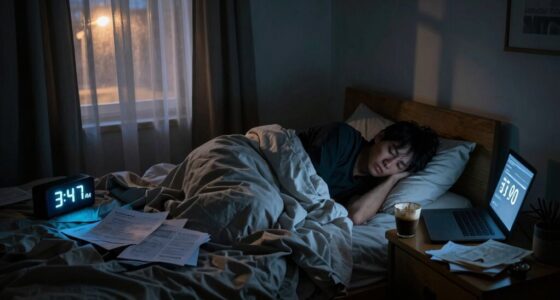

Winter’s shorter days and longer nights mess with your body’s internal clock, disrupting your sleep-wake cycle and causing sleep troubles. Reduced sunlight lowers serotonin levels, making you feel more emotional lows and affecting mood. At the same time, altered melatonin production from increased darkness can lead to daytime sleepiness. These changing hormone levels create a cycle that links winter blues with sleep problems. Discover how this complex connection impacts you and what you can do to feel better.

Get health and wellness essentials delivered free — and shop member deals
- Fast, free delivery on millions of items
- Access to Prime Big Deal Days deals on October 6–7
- Prime Video, Amazon Music and more included
Key Takeaways
- Reduced sunlight lowers serotonin levels, impacting mood and disrupting sleep regulation.
- Shorter days and darkness alter melatonin production, causing sleep difficulties and emotional lows.
- Seasonal changes disrupt circadian rhythms, leading to both mood dips and sleep problems.
- Hormonal imbalances from decreased light exposure contribute to feelings of depression and sleep irregularities.
- Strategies like light therapy and outdoor activities help reset biological clocks, improving both mood and sleep.
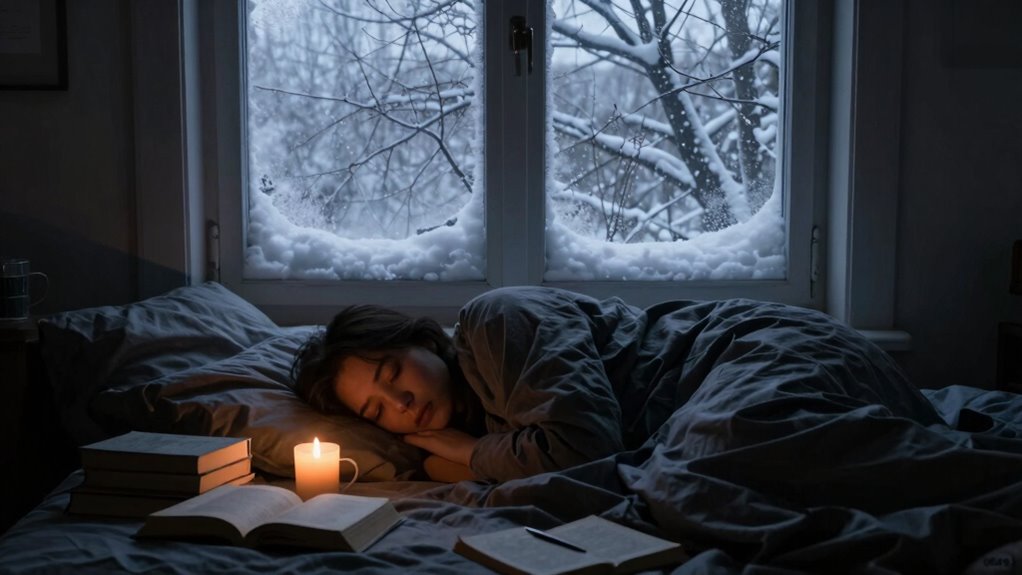
Winter often brings a drop in mood and energy, making many people feel the so-called “winter blues.” During this season, shorter days and less sunlight can disrupt your body’s internal clock, leading to sleep difficulties and feelings of sluggishness. The lack of sunlight affects your circadian rhythms, which are responsible for regulating sleep-wake cycles. When these rhythms are thrown off, you may find it harder to fall asleep, stay asleep, or wake up feeling rested. This disruption isn’t just about feeling tired; it often intertwines with your mood, creating a cycle of low energy and emotional lows.
Shorter days disrupt your body’s internal clock, causing sleep issues and mood swings during winter.
One key factor behind this connection is seasonal affective disorder, or SAD. It’s a form of depression that occurs seasonally, typically during winter months, and is closely linked to changes in sunlight exposure. SAD’s symptoms often include fatigue, hopelessness, and difficulty concentrating—all of which can worsen sleep problems. When your mood dips, your sleep quality can suffer, and poor sleep can, in turn, deepen feelings of sadness, creating a vicious cycle.
Melatonin regulation plays a significant role in this process. Melatonin is a hormone your body produces in response to darkness, signaling to your brain that it’s time to sleep. During winter, with shorter days and extended periods of darkness, your melatonin production can become dysregulated. You might produce more melatonin than usual or at the wrong times, making you feel more sleepy during the day or causing irregular sleep patterns at night. This misalignment can leave you feeling groggy, restless, or unable to enjoy restful sleep. Recognizing this hormonal imbalance can help in developing targeted strategies to improve sleep during winter months.
The lack of sunlight also impacts serotonin, another hormone linked to mood and sleep. Reduced sunlight lowers serotonin levels, which can contribute to feelings of depression and sleep disturbances. When serotonin dips, melatonin regulation can become even more erratic, compounding sleep issues and emotional lows. Additionally, maintaining light exposure during winter months can help support your internal clock and improve your overall well-being. Engaging in outdoor activities or using light therapy lamps can be effective ways to counteract these effects.
Understanding this connection helps you see why winter blues and sleep troubles often go hand in hand. The decreased sunlight triggers changes in melatonin and serotonin levels, which influence both your mood and sleep patterns. Addressing these issues often requires intentional strategies, such as light therapy or maintaining regular sleep schedules, to help reset your internal clock. Recognizing the link between seasonal affective factors and sleep regulation empowers you to take steps to improve both your mood and sleep quality during the challenging winter months.
light therapy lamp for winter blues
As an affiliate, we earn on qualifying purchases.
As an affiliate, we earn on qualifying purchases.
Frequently Asked Questions
Can Winter Blues Affect My Overall Mental Health Long-Term?
Yes, winter blues can impact your long-term mental health if left unchecked. Seasonal affective disorder, a severe form of winter blues, may lead to persistent depression and anxiety. This ongoing struggle can affect your daily functioning, relationships, and overall well-being. Recognizing symptoms early and seeking appropriate treatment helps protect your mental health and prevent winter blues from causing lasting emotional or psychological issues.
Are There Specific Foods That Help Improve Winter Mood and Sleep?
Think of your diet as a toolbox for mood and sleep. Comfort foods like warm soups and whole grains, along with vitamin-rich snacks such as nuts, seeds, and fruits, can boost your serotonin and melatonin levels. Incorporate omega-3 fatty acids from fish or flaxseeds to help regulate your mood and sleep cycles. These foods act like a gentle hug for your brain, helping lift winter blues and improve sleep quality.
How Can I Differentiate Between Winter Blues and Seasonal Affective Disorder?
You can differentiate between winter blues and seasonal affective disorder (SAD) by paying attention to your symptoms. If you experience mild mood swings and occasional sleep disturbances that improve with warmer months, it’s likely winter blues. However, if your symptoms are severe, persistent, and interfere with daily life—like significant depression and ongoing sleep issues—it might be SAD. Consulting a healthcare professional can help you get an accurate diagnosis.
Do Exercise Routines Change During Winter to Improve Mood and Sleep?
Yes, you should adjust your exercise routines during winter to boost your mood and sleep. Opt for indoor workouts to stay warm and maintain consistency. Wear appropriate cold weather gear when exercising outdoors, like layered clothing and insulated shoes, to stay comfortable and motivated. Incorporating regular physical activity, regardless of the season, can help combat winter blues and promote better sleep by releasing endorphins and regulating your sleep patterns.
What Are Quick Tips to Boost Energy During Winter Days?
Imagine your energy as a flickering candle struggling in winter’s wind—brighten it quickly with simple tips. Get outside during daylight, soaking in natural sunlight to combat seasonal affective dip. Eat vitamin D-rich foods and consider supplements to boost your mood and energy. Stay active, even if it’s a quick walk, to stimulate your body’s rhythm. Hydrate well, and listen to energizing music—these sparks can reignite your winter vigor.
melatonin supplements for sleep regulation
As an affiliate, we earn on qualifying purchases.
As an affiliate, we earn on qualifying purchases.
Conclusion
As winter’s chill wraps around you like a thick blanket, your mood and sleep can feel like flickering candles battling the dark. The cold, gray days can cast shadows over your happiness and disturb your rest, turning nights into restless journeys. But remember, just as dawn breaks after the longest night, brighter days and restful nights are within reach. Embrace the change, and let the sunlight guide your way back to balance and warmth.
As an affiliate, we earn on qualifying purchases.
As an affiliate, we earn on qualifying purchases.
Fall Picks
fall essentials
As an affiliate, we earn on qualifying purchases.