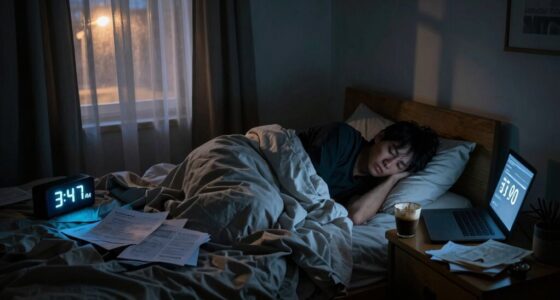
Wildfire smoke and seasonal air problems can seriously disrupt your sleep by contaminating indoor air and causing breathing irritations. Smoke particles drift inside through windows and vents, leading to allergies, asthma symptoms, and discomfort that make it hard to fall asleep or stay asleep. Poor air quality also interferes with your natural sleep cycles, leaving you tired and less alert. If you want to discover effective ways to protect your sleep environment, keep exploring how you can improve indoor air quality.
Get ready for Prime Big Deal Days — try Prime free
Exclusive member deals on October 6–7, plus fast free delivery. Cancel anytime.
As an affiliate, we earn on qualifying purchases.
Key Takeaways
- Wildfire smoke infiltrates indoor spaces, causing respiratory irritation that disrupts sleep cycles.
- Prolonged exposure to pollutants worsens breathing problems, leading to difficulty falling and staying asleep.
- Indoor air pollution from smoke triggers allergies and asthma symptoms, impairing restful sleep.
- Poor air quality during wildfire seasons increases sleep disturbances, resulting in fatigue and decreased alertness.
- Implementing air purification and sealing leaks can mitigate smoke effects and improve sleep quality.

As wildfire seasons grow longer and air quality fluctuates with seasonal changes, many people find their sleep disrupted in ways they might not immediately realize. Smoke particles and pollutants can drift indoors, making you breathe in irritants that disturb your body’s natural rest cycles. Poor air quality can cause discomfort, leading to difficulty falling asleep or frequent awakenings during the night. Over time, this ongoing disruption affects your overall sleep quality, leaving you tired and less alert during the day. To counteract these effects, indoor air purification becomes essential. High-quality air purifiers equipped with HEPA filters can significantly reduce airborne particles, dust, and smoke remnants, creating a cleaner, healthier sleep environment. When you focus on sleep environment optimization, you set the stage for better rest despite external air quality challenges.
You might not realize how much indoor air quality influences your sleep, but every breath you take impacts your body’s ability to relax and recover. During wildfire seasons, outdoor smoke can seep in through windows, vents, or poorly sealed doors, making indoor air just as contaminated as outside. This triggers respiratory irritation, allergies, or asthma symptoms, all of which interfere with deep, restorative sleep. To improve your sleep environment, consider sealing leaks around windows and doors, using air purifiers, and maintaining proper ventilation. These steps help keep indoor air cleaner and reduce the health impacts of wildfire smoke exposure. Additionally, understanding air filtration technologies can help you choose the most effective solutions for your space.
In addition to air purification, managing your sleep environment involves paying attention to other factors like temperature, humidity, and lighting. Keep your sleeping area cool and well-ventilated, as warm, stagnant air can make breathing more difficult. Use blackout curtains to block out external light and create a dark, calm setting that promotes melatonin production. A comfortable mattress and pillows also support restful sleep, especially when your body is under stress from poor air quality. When you optimize your sleep environment, you give your body the best chance to rest and repair itself, even in challenging seasons.
Ultimately, tackling seasonal air problems means taking proactive steps to improve indoor air quality and sleep conditions. By investing in indoor air purification and carefully managing your sleep environment, you can reduce the impact of wildfire smoke and seasonal pollutants. It may require some effort, but creating a cleaner, more comfortable sleep space helps you maintain better health and more restful nights, regardless of what’s happening outside.
HEPA air purifier for wildfire smoke
As an affiliate, we earn on qualifying purchases.
As an affiliate, we earn on qualifying purchases.
Frequently Asked Questions
Can Wildfire Smoke Worsen Existing Sleep Disorders?
Yes, wildfire smoke can worsen existing sleep disorders. When you breathe in smoky air, it irritates your lungs and airways, making it harder to breathe comfortably. Poor indoor ventilation traps smoke inside your sleep environment, increasing exposure. This can lead to disrupted sleep, coughing, or breathing difficulties, especially if you already have a sleep disorder. Improving indoor ventilation and creating a clean, smoke-free sleep environment can help protect your sleep quality.
How Long Does It Take to Recover Sleep Quality After Smoke Exposure?
Recovery time from smoke exposure varies, but generally, your sleep quality improves within a few days to a week after avoiding further exposure. During this period, your body clears respiratory irritation caused by smoke, reducing sleep disruption. To speed up recovery, guarantee good indoor air quality, stay hydrated, and prioritize rest. If symptoms persist beyond a week, consider consulting a healthcare professional to rule out ongoing issues.
Are Certain Age Groups More Vulnerable to Air Pollution’s Sleep Effects?
Yes, certain age groups are more vulnerable to air pollution’s sleep effects. Younger children and older adults face increased age-related susceptibility because their immune systems and respiratory functions are less resilient. Vulnerability factors like pre-existing health conditions, outdoor activity levels, and living environments can heighten risks. You should be especially cautious during poor air quality days, as these groups may experience more disrupted sleep and respiratory symptoms.
Do Air Purifiers Effectively Improve Sleep During Smoke Seasons?
Air purifiers are like a revitalizing change during smoke seasons, effectively improving sleep. HEPA filters capture tiny smoke particles, reducing indoor pollutants. Pairing your purifier with an air quality monitor helps you track improvements and guarantee ideal conditions. When smoke fills the air outside, these devices create a cleaner space indoors, so you can sleep soundly without the worries of harmful particles disrupting your rest.
Can Diet or Supplements Help Protect Sleep From Air Pollution?
Diet strategies and supplements can help protect your sleep from air pollution effects. Incorporate antioxidant-rich foods like berries, leafy greens, and nuts to reduce inflammation caused by pollutants. Supplements such as vitamin C, vitamin E, and omega-3 fatty acids offer additional benefits by supporting your immune system and reducing oxidative stress. These choices can help mitigate the impact of polluted air, promoting better sleep even during challenging air quality seasons.
sealant for window and door leaks
As an affiliate, we earn on qualifying purchases.
As an affiliate, we earn on qualifying purchases.
Conclusion
So, next time you’re tossing and turning, blaming your insomnia on stress or a bad mattress, remember it might just be Mother Nature’s sneaky way of keeping you alert—thanks to wildfire smoke and seasonal air woes. Who needs a cozy sleep cycle when you can wake up feeling like you’ve run a marathon in smoky air? Embrace the chaos—after all, it’s only your lungs and sleep habits that are paying the price.
As an affiliate, we earn on qualifying purchases.
As an affiliate, we earn on qualifying purchases.
Fall Picks
fall essentials
As an affiliate, we earn on qualifying purchases.