TL;DR

Get health and wellness essentials delivered free with Prime
- Fast, free delivery on millions of items
- Prime Video, Amazon Music and more included
- Member-only deals all year
Researchers at The Jackson Laboratory mapped age-related inflammation and tissue-remodeling signals in mouse hearts, finding them concentrated in the aortic valves and aortic root. The study also found that some markers associated with aging appear in young hearts, underscoring that those markers alone do not establish cellular senescence.
Researchers at The Jackson Laboratory have mapped areas of inflammation and scarring-associated activity in mouse hearts, finding the signals concentrated in the aortic valves and aortic root rather than spread evenly through the heart muscle. The study, published November 6 in Aging Cell, offers a more detailed view of where cellular changes associated with cardiac aging occur, but it does not establish that the same pattern causes disease in people.
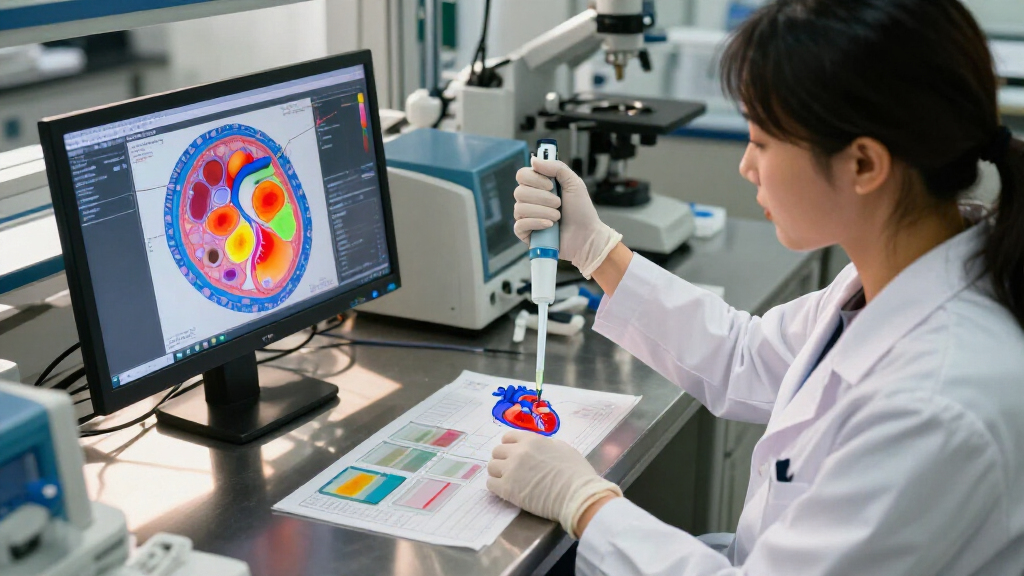
The team examined thousands of cells from young and aged mouse hearts using single-cell and spatial genomics technologies. Single-cell analysis helped identify changes in gene activity in different cell types, while spatial methods showed where those cells and signals were located within the organ. The researchers said studying the whole heart, rather than concentrating primarily on its muscle, revealed age-related patterns in regions that have received less attention.
The study found that macrophages, immune cells involved in coordinating inflammatory responses, showed increased activity in genes linked to inflammation and tissue remodeling as the mice aged. Fibroblasts, which help maintain connective tissue and can contribute to scar formation, more often displayed patterns associated with fibrosis. These signals were concentrated in the valves and aortic root, where immune and connective-tissue cells interact.
Two genes stood out in the regions showing age-related changes: Ccl8, associated with inflammatory signaling, and Cdkn1a, also known as p21 and commonly used as a marker of cellular senescence. The researchers also found that some markers associated with aging were present in young hearts. The report notes that their presence alone does not show that a cell is senescent.
Why Heart Aging May Start in Patches
The findings suggest that cardiac aging is spatially uneven: changes may be concentrated in particular structures rather than occurring at the same pace throughout the organ. That matters for research that has often focused on heart muscle, especially the left ventricle, the chamber that pumps blood into the aorta. The valves and aortic root may also be important sites for studying how age-related inflammation and tissue remodeling develop.
The work offers researchers a map for future studies, not a demonstrated treatment target. The authors suggest that changes in immune cells and fibroblasts could affect the support they provide to heart muscle, but the study does not show that the observed hotspots directly cause muscle damage or cardiovascular disease. Its findings are from mice, so whether the same locations and cell interactions are important in human aging remains to be tested.
Products Worth Considering

Withings BPM Connect Blood Pressure Monitor with Wi-Fi and Bluetooth

Withings BPM Vision Blood Pressure Monitor with Wi-Fi and Bluetooth

Withings BeamO Contactless Smart Thermometer, ECG Monitor, and Stethoscope
As an affiliate, we earn on qualifying purchases.
How Researchers Mapped the Heart
Age is a major risk factor for cardiovascular disease, but the cellular changes that accompany aging are not fully understood. Earlier work has linked aging with low-grade, chronic inflammation and changes in immune and connective-tissue cells. Studies of the heart have reported shifts involving macrophages and fibroblasts, but they have often examined selected cell types or regions rather than mapping changes across the whole organ.
The JAX team combined single-cell and spatial genomics to investigate both which genes changed and where the associated cells were situated. That approach identified the valves and aortic root as areas where inflammation- and fibrosis-associated signals accumulated. The study also examined differences between male and female mice; the source report says the patterns were not identical, but does not provide enough detail here to describe the full sex-specific results.
What Mouse Findings Cannot Yet Show
The study reports patterns in mouse hearts; the available source does not establish whether those patterns occur in the same way in people. It also does not show that the localized signals cause cardiovascular disease, or that changing them would prevent age-related decline. The presence of markers such as p21 in young hearts further complicates interpretation: a marker alone is not proof of senescence.
The source report indicates that male and female mice showed different age-related patterns, but the details of those differences are incomplete in the material provided. It is also not clear how the mapped signals relate to particular heart-function outcomes or whether the hotspots change over the animals’ lifetimes in ways that could be used to predict disease.
Testing the Map Beyond Mice
The study provides a basis for follow-up work on how immune cells and fibroblasts communicate in the valves and aortic root as hearts age. Future research will need to test whether the same regions and molecular patterns are found in human hearts and determine how those patterns relate to heart function and disease. The report does not specify a next study or a timeline for that work.
Researchers will also need to clarify how sex-related differences affect the findings and how to interpret aging-associated markers that appear in young tissue. Until those questions are addressed, the map should be treated as a research finding in mice, not as evidence of a clinical test or intervention.
Key Questions
Where did the study find inflammation-associated signals in aging hearts?
The study found the signals concentrated in the aortic valves and aortic root of mouse hearts, rather than evenly distributed through the heart muscle.
What cells were involved in the reported changes?
The researchers reported age-related changes in macrophages, which coordinate inflammatory responses, and fibroblasts, which help maintain connective tissue and can contribute to scarring.
Does finding p21 or another aging marker prove a cell is senescent?
No. The report says some markers associated with aging were present in young mouse hearts. The researchers cautioned that these markers alone do not establish senescence.
Does the study show that these hotspots cause heart disease in people?
No. The research examined mouse hearts and mapped cellular and molecular patterns. It does not establish that the patterns cause disease or that they occur identically in people.
What happens after this study?
The map can guide further research into cell interactions in the valves and aortic root. Follow-up work will need to examine human relevance, links to heart function, and reported sex differences; the source does not give a timeline.
Source: news-medical.net