
TL;DR

Get health and wellness essentials delivered free with Prime
- Fast, free delivery on millions of items
- Prime Video, Amazon Music and more included
- Member-only deals all year
A Fit&Well report describes yoga nidra, a guided relaxation practice done lying down or seated, and says a yoga therapist recommends it to clients seeking better sleep. The source cites research on sleep-related effects but provides no specific study results, and advises some people to seek professional guidance before trying it.
Fit&Well has published a yoga therapist’s recommendation of yoga nidra, a guided relaxation practice, for clients seeking better sleep. The report describes the practice as movement-free and says research has examined its relationship to sleep, but it does not provide specific study findings or establish that yoga nidra treats sleep disorders.
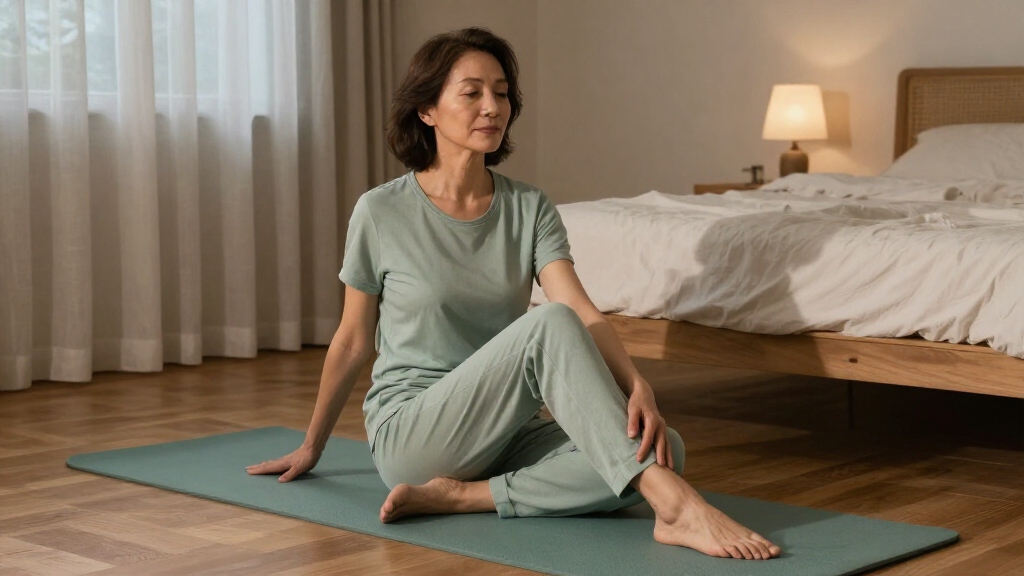
Yoga nidra, often translated as “yogic sleep,” is generally practiced lying down, though a person can also sit comfortably. A teacher guides participants through relaxation while the body remains still. The report distinguishes it from meditation focused on a single point: in yoga nidra, the aim is relaxation, with the mind ideally remaining aware of the instructions. Falling asleep is also acceptable, according to the account.
The Fit&Well contributor says they have practiced yoga nidra for almost 20 years and use it in yoga therapy work. They recommend guided audio, particularly for beginners, and describe sessions ranging from 10 to 20 minutes to longer practices of 30 to 45 minutes. The report also names classical practices associated with the Bihar School and iRest, developed by Dr. Richard Miller.
The article says research has found that yoga nidra can gradually shift brain activity toward a state resembling deep, non-REM sleep and may activate the parasympathetic nervous system. It also says the practice can lower heart rate, breathing rate and blood pressure. These claims are presented without citations or details about the studies, so readers cannot assess the evidence, methods or size of the reported effects from the article alone.
A Low-Movement Option for Relaxation
The report presents yoga nidra as an option for people who find movement-based yoga difficult or want a structured period of rest. Because it can be done seated as well as lying down, it may be adaptable for different physical needs; the contributor mentions using a seated format with a Parkinson’s group. That example is an account of their practice, not evidence that the method is appropriate for every person with Parkinson’s.
For readers dealing with sleep difficulties, the distinction between relaxation support and treatment matters. The source describes possible sleep-related effects but does not show that yoga nidra reliably improves sleep or replaces assessment and care for persistent problems. Its practical suggestions—short guided sessions and a comfortable, supported position—are framed as ways to try the practice, not as a guaranteed route to better sleep.
Products Worth Considering

Withings Sleep Under-Mattress Sleep Tracking Pad

Philips Sonicare 6500 Series Rechargeable Electric Toothbrush with 2 Brush Heads, White

Therabody Theragun Relief Massage Gun, 3-Speed, Navy
As an affiliate, we earn on qualifying purchases.
How the Practice Is Guided
The article traces yoga nidra’s wider public profile to Swami Satyananda, who brought the practice into greater attention in the 1960s through the Bihar School. It describes the method as one of yoga’s older practices and says it is now examined in sleep research. The report does not provide a timeline of that research or identify particular papers.
A typical session uses spoken instructions to help participants settle the body and follow awareness or visualization cues. The contributor suggests starting with a 10-minute practice for people new to lying still, then trying longer sessions if comfortable. Props such as a cushion, blanket, bolster under the knees or eye mask may help someone remain supported. The article advises trying a session earlier in the evening if it leaves a person feeling refreshed, rather than assuming it will make them sleepy immediately before bed.
““I’ve been practicing yoga nidra for almost 20 years and now use it in my yoga therapy work.””
— Fit&Well contributor and yoga therapist
Evidence and Suitability Questions
The report does not name or link to the sleep studies it references, give sample sizes, or explain how the reported changes were measured. It is therefore not possible from this source to judge the strength of the evidence or determine whether effects differ by person, practice length or instructor. The article also does not establish whether yoga nidra improves insomnia or other diagnosed sleep conditions.
Fit&Well says the practice is suitable for most people but advises against trying it without prior advice for people living with PTSD, psychosis or an unstable mental condition. The source recommends speaking with a trained practitioner first. It does not specify how an individual should assess whether a particular recording or session is appropriate, and it provides no clinical guidance for people with ongoing sleep problems.
Trying a Session Safely
The report’s suggested next step for beginners is a short, guided session in a comfortable position, with support added as needed. Readers can begin with roughly 10 minutes and decide whether they are comfortable before attempting a longer practice. If a session feels unsettling or causes discomfort, stopping and seeking guidance from a qualified professional or experienced, trained practitioner is a reasonable precaution.
Fit&Well does not announce a follow-up study, clinical trial or formal guidance change. The evidence question remains open in the material provided: a reader looking for a stronger basis for sleep-related claims would need to consult the underlying research, which the report does not identify. People with persistent sleep concerns should not treat the article’s recommendation as a diagnosis or substitute for professional advice.
Key Questions
What is yoga nidra?
Yoga nidra is guided relaxation performed while lying down or seated. Instructions may direct attention through the body or use visualization, while the participant remains still.
Does the report prove yoga nidra improves sleep?
No. The article refers to research on sleep-related brain activity and physical responses but gives no study citations or detailed results. It does not establish that the practice treats sleep disorders.
How long should a beginner practice?
The contributor suggests starting with a 10-minute guided practice. The report also describes sessions of 10 to 20 minutes and longer options lasting 30 to 45 minutes.
Who should seek advice before trying yoga nidra?
The Fit&Well report advises people living with PTSD, psychosis or an unstable mental condition to consult a trained practitioner first. Its recommendation is not a substitute for individualized professional guidance.
Source: fitandwell.com