
Different cultures have unique sleep traditions that reflect their values, environments, and lifestyles. For example, some societies include calming bedtime rituals like drinking warm tea or performing meditation, while others prioritize efficiency with hurried routines. In regions like Spain, midday siestas help adapt to hot climates, and Scandinavian countries adjust schedules for long winters. Exploring these diverse practices reveals how cultural factors shape the way people approach rest—if you want to discover more, keep exploring these fascinating sleep traditions.

Get health and wellness essentials delivered free — and shop member deals
- Fast, free delivery on millions of items
- Access to Prime Big Deal Days deals on October 6–7
- Prime Video, Amazon Music and more included
Key Takeaways
- Many cultures have elaborate bedtime rituals, like Japanese calming practices, emphasizing mindfulness and cultural values.
- Western societies often prioritize efficiency, resulting in hurried, less ritualized sleep routines focused on productivity.
- Mediterranean regions practice midday siestas, aligning sleep patterns with warm climates and relaxed lifestyles.
- Environmental factors and architectural styles influence sleep environments and routines across different cultures.
- Sleep reflects cultural identity, environmental conditions, and collective beliefs, highlighting varied global sleep traditions.
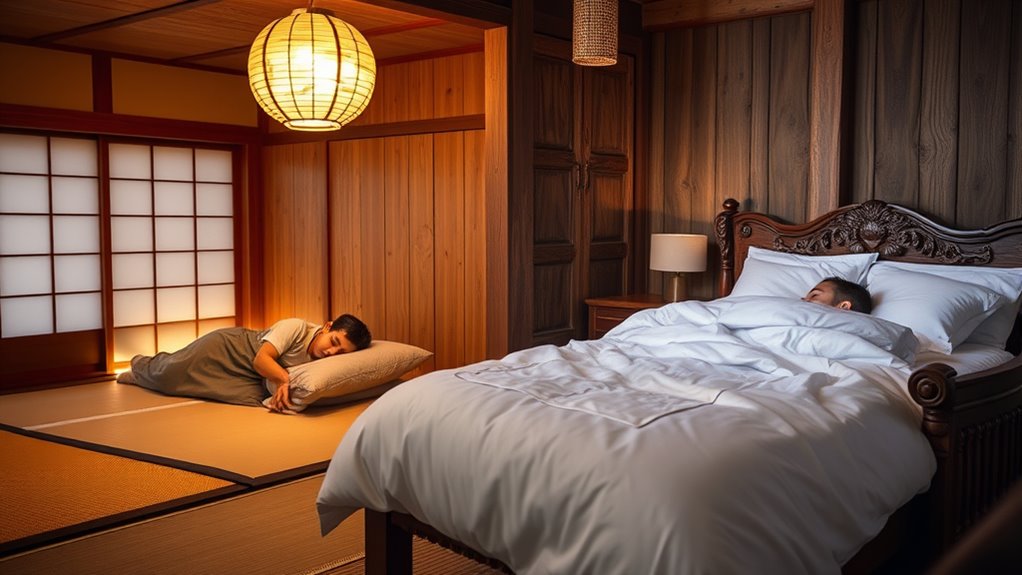
Sleep habits vary widely across cultures, reflecting different beliefs, lifestyles, and environmental factors. As you explore how people from around the world approach rest, you’ll notice that sleep rituals and cultural sleep patterns shape routines in fascinating ways. In some cultures, bedtime rituals are elaborate, involving specific customs that mark the *shift* from wakefulness to sleep. For example, in Japan, it’s common for families to perform calming activities like drinking warm tea or practicing gentle meditation before bed, helping everyone wind down in a peaceful, ritualistic manner. These sleep rituals aren’t just about comfort—they’re deeply rooted in cultural values emphasizing harmony, respect, and mindfulness.
In contrast, some cultures prioritize practicality over ceremony. In many Western countries, for instance, sleep patterns tend to be more individualized, with people often rushing through routines or skipping rituals altogether. Here, the focus is on efficiency—getting enough rest to face busy days—rather than on specific customs surrounding bedtime. This approach reflects a broader cultural emphasis on productivity and independence. You might notice that in these settings, sleep routines are often hurried or inconsistent, influenced by work schedules, social obligations, or digital distractions.
Cultural sleep patterns also influence how and where people sleep. For example, in Mediterranean regions like Spain or Italy, it’s common to take a midday nap, known as a siesta. This practice aligns with the warm climate and a slower pace of life, allowing individuals to recharge during the hottest part of the day. You might find that such patterns aren’t just about comfort—they’re embedded in society’s rhythm, shaping how people plan their daily activities and rest periods. Conversely, in Scandinavian countries, long winter nights mean people often adapt by sleeping longer or adjusting their routines to maximize daylight hours when available. These differences highlight how environmental factors intertwine with cultural sleep patterns, creating unique sleep habits that suit local conditions.
Additionally, research shows that the design and technology of home sleep environments can significantly influence sleep quality, which varies across cultures based on available resources and architectural styles. Understanding these diverse practices can help you appreciate that sleep isn’t a one-size-fits-all activity. It’s a reflection of cultural identity, environmental realities, and personal values. By exploring different sleep rituals and cultural sleep patterns, you gain insight into how societies prioritize rest and well-being. Recognizing the variety in habits around the world reminds you that your sleep routine is just one part of a broader cultural tapestry—one shaped by history, environment, and collective beliefs.
As an affiliate, we earn on qualifying purchases.
Frequently Asked Questions
How Do Cultural Beliefs Influence Sleep Hygiene Practices Worldwide?
Cultural perceptions deeply influence your sleep hygiene practices worldwide. You might avoid sleeping during certain hours due to beliefs about sleep taboos, or follow specific rituals that promote restful sleep. In some cultures, napping is encouraged, while others see it as lazy. These cultural beliefs shape your habits, making sleep practices vary greatly based on what your community views as respectful or healthy, ultimately affecting your sleep quality.
What Are Some Traditional Sleep Remedies Used in Different Cultures?
Did you know that over 80% of traditional remedies involve herbal infusions? In many cultures, you might use chamomile or lavender tea to promote relaxation before bed. Meditation techniques are also common, helping you calm your mind. These remedies, rooted in cultural beliefs, aim to improve sleep naturally. Incorporate herbal infusions or practice meditation to enhance your sleep quality, just like people worldwide have done for generations.
How Do Climate and Geography Affect Sleep Patterns Across Regions?
Climate and geography shape your sleep patterns through climate adaptation and geographic variations. In hot, humid regions, you might sleep lighter or take naps to beat the heat, while colder climates encourage longer, uninterrupted sleep. Mountainous areas with high altitudes can affect oxygen levels, disrupting sleep. These environmental factors influence your sleep habits, demonstrating how climate adaptation and geographic differences create diverse sleep routines worldwide.
Are There Specific Rituals Associated With Bedtime in Various Societies?
Did you know that over 60% of cultures have specific bedtime rituals? You might find it interesting that many societies incorporate bedtime stories or special sleep rituals to signal the end of the day. These rituals, like chanting, prayer, or a warm bath, help create a calming atmosphere, making it easier to fall asleep. Embracing these traditions can enrich your nightly routine and foster a deeper cultural connection.
How Has Globalization Impacted Traditional Sleep Customs Globally?
Globalization has profoundly impacted traditional sleep customs through urbanization effects and technology influence. You might notice that urban lifestyles lead to later bedtimes and reduced sleep due to busy schedules and bright city lights. Technology, especially screens, disrupts your circadian rhythms, making it harder to sleep naturally. As cultures blend, you may adopt new sleep habits while losing some traditional rituals, creating a more uniform but less diverse global sleep pattern.
As an affiliate, we earn on qualifying purchases.
Conclusion
As you explore these diverse sleep traditions, you realize that sleep is more than just rest; it’s a reflection of culture, a bond with community, and a way to honor history. Embrace the similarities that unite us and appreciate the differences that enrich our understanding. Sleep across cultures teaches you that rest is universal, yet uniquely personal. In honoring these traditions, you find that sleep connects us all—across borders, beliefs, and ways of life.
As an affiliate, we earn on qualifying purchases.
As an affiliate, we earn on qualifying purchases.
Fall Picks
fall essentials
As an affiliate, we earn on qualifying purchases.