
Before electricity, your ancestors’ sleep was naturally divided into multiple segments, often shortly after sunset and waking around midnight. Their sleep patterns reflected the sun’s rhythm, with activities like prayer or socializing during wakeful intervals. Sleep was a communal and flexible part of life, shaped by natural light and social ties. If you’re curious, you’ll discover how these ancient habits influenced our modern sleep habits and perceptions.
Key Takeaways
- People typically divided sleep into multiple segments, sleeping shortly after sunset and waking around midnight.
- Nighttime was a communal period with quiet activities like chores, prayer, and socializing.
- Sleep was naturally aligned with daylight cycles, influenced by natural light and biological rhythms.
- The advent of artificial lighting and industrialization shifted sleep toward longer, consolidated periods.
- Modern sleep habits evolved from community-based, natural patterns to private, efficiency-driven routines.
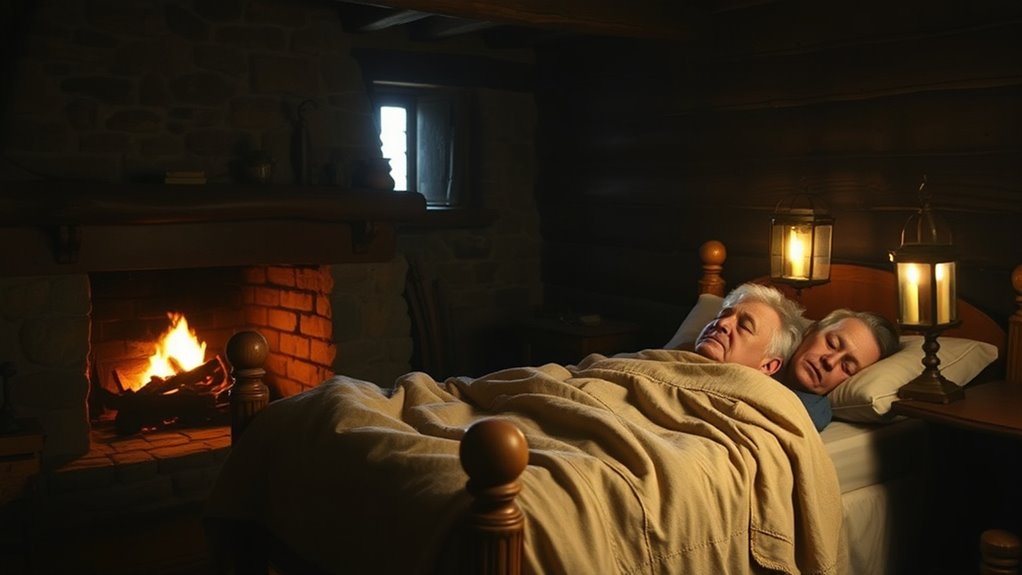
Have you ever wondered how humans have understood and experienced sleep throughout history? Before modern technology changed everything, sleep wasn’t a single, continuous period but often divided into segments, with people adjusting their routines based on natural light and daily demands. During medieval times, sleep was quite different from today’s expectations. People often practiced what’s called medieval slumber, which involved going to bed shortly after sunset, waking around midnight to tend to chores, pray, or socialize, and then returning to sleep until dawn. This pattern wasn’t viewed as abnormal; rather, it reflected a natural rhythm dictated by the absence of artificial light. In those days, the night was a communal time, filled with quiet activities, conversations, or reflection, and sleep was seen as a series of two or more periods rather than one long stretch. The understanding of sleep as a natural and multifaceted process has persisted through history, influenced by cultural and technological changes.
As societies advanced, particularly during the Industrial Revolution, perceptions and habits surrounding sleep began to shift. The Industrial Revolution brought about a significant change in how people lived and worked. Factories operated on strict schedules, often requiring early mornings and late nights, which influenced sleep patterns. Artificial lighting became more widespread, gradually extending waking hours and reducing the natural cues that dictated sleep and wakefulness. This shift led to a decline in the medieval slumber pattern, pushing individuals toward consolidated sleep—one long, uninterrupted period at night. People started viewing sleep as a necessary but separate activity, rather than an integrated part of their social and spiritual lives. The rise of artificial lighting also meant that evenings could be extended, changing the rhythm of daily life and sleep habits.
Throughout this period, sleep remained a personal, somewhat elusive activity. While the medieval approach embraced fragmented sleep, the industrial era’s focus was on efficiency and productivity, which often meant sacrificing some sleep hours. People’s understanding of sleep evolved from a natural, community-centered routine to a more individualistic and scientifically studied process. The advent of electricity further accelerated these changes, making sleep more of a private, controlled activity rather than a communal or natural event. Today, we look back at these historical shifts to understand that sleep has always been deeply tied to cultural, technological, and societal developments. Recognizing how perceptions of sleep have transformed over time helps us appreciate the importance of balancing natural rhythms with modern demands, just as people did centuries ago. Moreover, modern research increasingly emphasizes the importance of aligning sleep patterns with our biological needs, including attention to detail and understanding individual differences in sleep needs.
Frequently Asked Questions
How Did Ancient Civilizations Regulate Their Sleep Schedules?
Ancient civilizations regulated their sleep schedules through natural cues like sunlight and moonlight, establishing routines rooted in their environment. You might have followed meditation routines and sleep rituals to wind down, aligning your rest with the day’s rhythm. These practices helped maintain a consistent sleep pattern, emphasizing relaxation and mindfulness. By listening to nature and creating calming routines, you could guarantee restful sleep without relying on artificial lighting or modern schedules.
Were There Cultural Differences in Pre-Electric Sleep Patterns?
You’ll notice cultural differences in pre-electric sleep patterns through various traditional sleep practices and bedtime rituals. For example, some societies embraced segmented sleep, napping in the afternoon or evening, while others prioritized a single, consolidated sleep period. Cultural bedtime rituals, like communal sleeping or specific bedtime routines, influenced sleep schedules considerably. These practices reflect diverse beliefs and lifestyles, shaping how communities approached rest long before electricity changed the way we sleep.
What Nighttime Activities Were Common Before Electric Lighting?
Before electric lighting, you likely engaged in fireplace storytelling, moonlit socializing, and candlelit crafts. You read by firelight, shared tales with family, and enjoyed quiet conversations under the stars. These activities fostered closeness, creativity, and relaxation, filling your nights with warmth and connection. Instead of screens, your evenings revolved around natural light and community, making your nighttime routines more intimate and reflective of nature’s cycles.
How Did Natural Light Influence Sleep in Historical Societies?
Natural light, especially moon phases, greatly influenced your sleep patterns in historical societies. During full moons, brighter nights often led to later activities, while new moons brought darker skies, encouraging earlier sleep. You likely experienced fewer sleep disruptions on darker nights, aligning rest with natural light cycles. Without artificial lighting, your sleep schedule depended on the sun and moon, creating a rhythm that balanced activity and rest with the natural environment.
Did Historical Sleep Patterns Vary by Social Class or Occupation?
You’ll find that historical sleep patterns definitely varied by social class and occupation. For instance, wealthier individuals often enjoyed longer, more structured sleep, while laborers had fragmented sleep due to early work hours. Studies show that lower social classes experienced shorter sleep durations, averaging around 5-6 hours, compared to 8 hours for the upper classes. Your social standing and job type directly influenced when, how long, and how well you slept.
Conclusion
Before electricity, your ancestors relied on natural rhythms, waking and sleeping with the sun. They embraced a simpler, more connected way of life, guided by the cycles of day and night. As the saying goes, “Early to bed and early to rise, makes a person healthy, wealthy, and wise.” Embracing this history reminds you to honor your natural sleep patterns and find harmony with the world around you, just as they did long before modern lights.