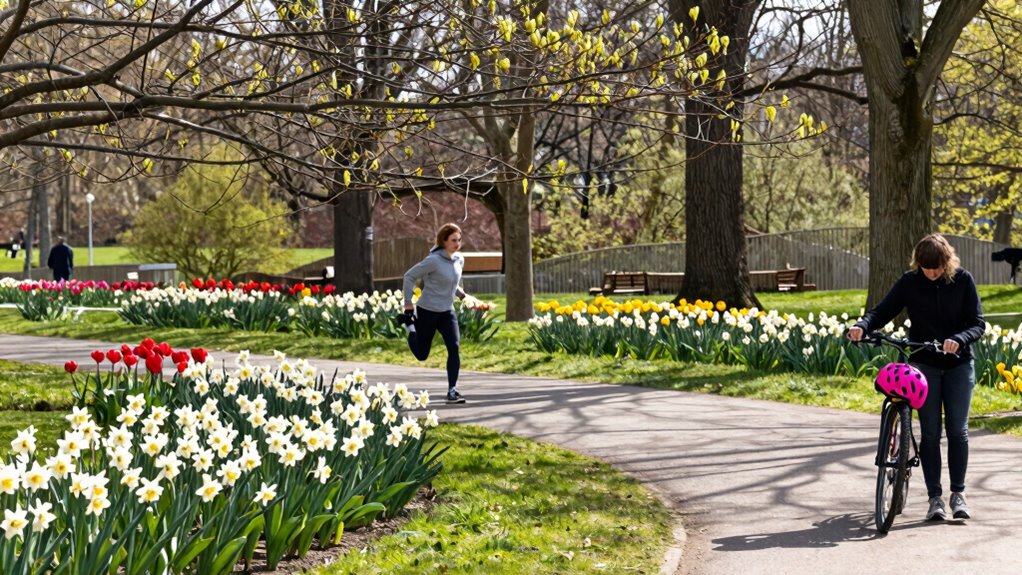

As the weather warms up, your recovery habits shift from resting and slower routines to more active outdoor activities. You’ll naturally feel more energized and enthusiastic to go for walks, gentle stretches, or light exercise outside. Your focus moves from indoor relaxation to soaking up sunlight and engaging with nature. By gradually adjusting your routine, you can support both your physical and mental well-being. Keep exploring how to adapt your habits for a healthy, balanced spring shift.

Get health and wellness essentials delivered free — and shop member deals
- Fast, free delivery on millions of items
- Access to Prime Big Deal Days deals on October 6–7
- Prime Video, Amazon Music and more included
Key Takeaways
- Shift from indoor, restful routines to more outdoor activities like walking and light exercise.
- Gradually decrease sleep and rest durations as energy levels naturally increase.
- Incorporate dynamic stretches and active movement to reengage muscles and joints.
- Increase exposure to sunlight to enhance mood, sleep quality, and circadian regulation.
- Adapt fitness routines to include more energetic and varied activities aligned with warmer weather.
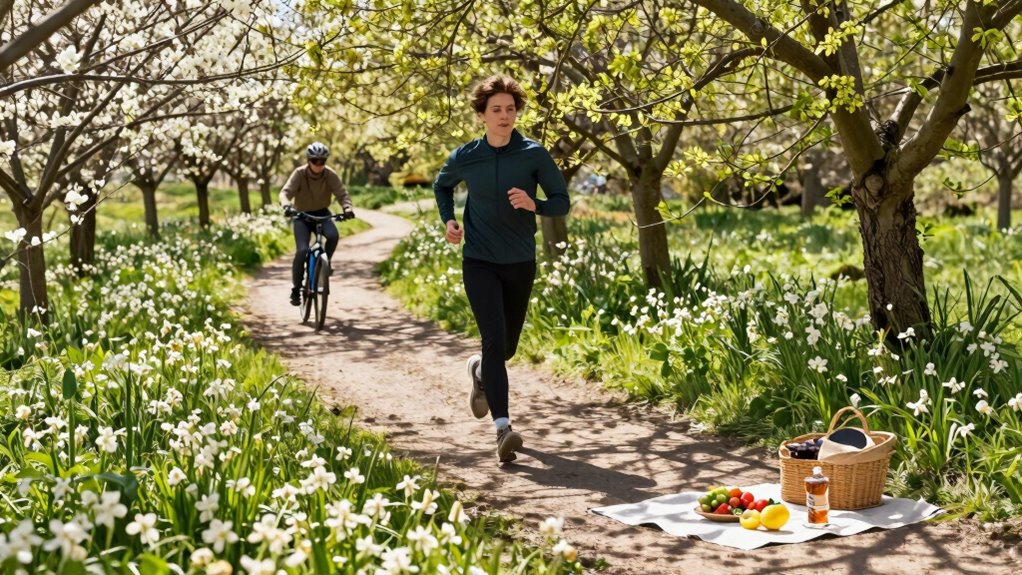
As the seasons change, so do your body’s needs for recovery and renewal. You might notice that after the long, cold winter months, your energy levels dip, and your rest routines lean toward winter rest. During this period, your body craves extra sleep, slower-paced activities, and a focus on recovery from the physical and mental fatigue that winter often brings. You might find yourself prioritizing longer sleep durations, taking more naps, or simply slowing down to let your body heal and reset. The colder months can suppress your motivation for outdoor activity, so your recovery habits naturally shift toward indoor relaxation, gentle stretching, and mindfulness practices that support mental clarity and emotional balance.
Winter calls for extra rest, gentle activities, and mental renewal to support your body’s natural recovery.
As the weather warms up, your body begins craving different things. With spring activity on the horizon, your recovery habits should adapt to support this shift. You’ll want to gradually reduce your reliance on winter rest, encouraging yourself to get moving again. Incorporate lighter, more dynamic stretches and outdoor walks, which help loosen stiff muscles accumulated during the winter. The change in temperature and increased daylight naturally boosts your energy, making it easier to engage in physical activities. Shifting from a period of rest to spring activity means listening to your body and avoiding sudden jumps into intense workouts. Instead, ease into new routines, focusing on gentle movement that reactivates your muscles and joints without overtaxing them.
Spring also presents an opportunity to refresh your mental and emotional well-being. As you shed the sluggishness of winter, you should adopt habits that enhance your overall vitality. Consider spending more time outdoors, soaking up sunlight, which helps regulate your circadian rhythm and improves sleep quality. Better sleep is essential as you ramp up activity levels, enabling your body to recover efficiently after exercise. Incorporate hydration, balanced nutrition, and restorative practices like yoga or meditation to support your body’s adaptation. These habits will help you avoid burnout as you increase your physical activity. Additionally, exploring fitness routines that align with your evolving energy levels can make your transition smoother. Recognizing the importance of adaptable habits and their role in seasonal recovery helps you maintain consistency and resilience throughout seasonal transitions. Engaging in mindful movement can further enhance your recovery process as you adapt to the changing seasons.
As an affiliate, we earn on qualifying purchases.
Frequently Asked Questions
How Do Recovery Habits Vary Across Different Climates?
Your recovery habits vary across different climates through climate adaptation and habit modification. In warmer weather, you might shift to outdoor activities like hiking or swimming, boosting your motivation. Cooler climates may require indoor routines or layered clothing. You adapt your habits to suit the environment, making recovery easier and more effective. By modifying your routines according to climate, you stay consistent and maximize your recovery efforts year-round.
What Role Does Sunlight Play in Seasonal Recovery?
Sunlight plays a vital role in your seasonal recovery by boosting Vitamin D production, which supports your immune system and overall health. Exposure to sunlight also enhances your mood, helping you feel more energized and positive. As the weather warms up, taking regular sunlight breaks can improve your recovery habits, making it easier to stay active, motivated, and balanced during the season.
Are Outdoor Activities More Beneficial Than Indoor Ones?
Did you notice how the sunshine seems to invite outdoor activities? They’re often more beneficial than indoor ones because fresh air boosts your mood and energy. While indoor relaxation and cold therapy are great, stepping outside helps you absorb sunlight, which aids recovery. Plus, outdoor activities naturally incorporate movement and nature’s calming effects, making your recovery more effective and enjoyable as the weather warms up.
How Can I Prevent Overexertion as the Weather Warms?
To prevent overexertion as the weather warms, prioritize hydration strategies by drinking water regularly and adding electrolyte-rich drinks during workouts. Also, focus on sleep optimization by maintaining a consistent sleep schedule and ensuring restful rest, which helps your body recover efficiently. Listen to your body’s signals, take breaks when needed, and adjust your activity intensity to match the warmer weather, protecting yourself from burnout and heat-related issues.
What Are Some Common Mistakes During Seasonal Recovery?
Don’t let your guard down; common mistakes during seasonal recovery include neglecting hydration tips and inconsistent sleep routines. You might think you’re fine, but dehydration sneaks up and hampers recovery. Also, skipping sleep or irregular routines can slow down healing. Stay attentive to your body’s signals, drink enough water, and maintain regular sleep patterns. These small steps keep your recovery on track and help you enjoy the season’s benefits fully.
lightweight walking shoes for spring
As an affiliate, we earn on qualifying purchases.
As an affiliate, we earn on qualifying purchases.
Conclusion
As the seasons shift and the weather warms, your recovery habits bloom like spring flowers—fresh, vibrant, and full of potential. Just as the earth awakens, you too can embrace new routines that breathe life into your wellness journey. Let the gentle sun be a symbol of renewal, guiding you to nurture yourself with patience and hope. With each passing day, your resilience grows, blossoming into a healthier, more vibrant you.
As an affiliate, we earn on qualifying purchases.
hydration water bottle with infuser
As an affiliate, we earn on qualifying purchases.
As an affiliate, we earn on qualifying purchases.
Fall Picks
fall essentials
As an affiliate, we earn on qualifying purchases.