Choosing between white noise and pink noise depends on your preferences and needs. White noise offers a broad spectrum that masks sudden sounds effectively, ideal for blocking disruptions. Pink noise features softer, more natural tones, which many find more calming and conducive to deep sleep. If you want a gentle, less intrusive sound, pink noise might suit you better. Want to discover which type can boost your sleep quality more? Keep exploring for helpful tips.
Key Takeaways
- Pink noise offers a softer, more natural sound profile that many find more soothing for sleep than white noise’s sharp, uniform tone.
- White noise masks a broader range of frequencies, effectively blocking sudden sounds, while pink noise emphasizes lower, more calming frequencies.
- Pink noise may promote deeper sleep stages and reduce disturbances more effectively than white noise for some individuals.
- Personal preference plays a significant role; experimenting with both types helps determine the most relaxing option.
- Properly adjusting volume and selecting the suitable noise type can enhance sleep quality and create a more restful environment.
Understanding the Basics of Sound Types
To understand the differences between white noise and pink noise, it’s important to first grasp the basics of sound types. Sound is characterized by its frequency spectrum, which describes how energy is distributed across different pitches. White noise contains equal energy across all frequencies, giving it a consistent, static-like quality. Its sound characteristics are sharp and uniform, with no particular frequency standing out. In contrast, pink noise’s energy decreases with increasing frequency, resulting in a richer, more balanced sound. Its sound characteristics are softer and more natural, resembling the ambient noise we often hear in nature or quiet environments. Recognizing these fundamental differences helps you better understand how each type of noise interacts with your hearing and affects your perception. Additionally, these sound types are often used in various sound therapy applications to promote relaxation and sleep. The way our ears perceive these sounds is also influenced by auditory processing, which plays a role in how calming or disruptive a noise may feel. Moreover, understanding frequency distribution can help tailor sound environments for optimal comfort and effectiveness. Analyzing sound spectrum can further enhance our understanding of how different noises impact relaxation and sleep quality. Being aware of sound intensity levels is also important in choosing the most suitable noise type for your environment.
How White Noise Affects Sleep
White noise can considerably impact your sleep by masking disruptive sounds and creating a consistent auditory environment. This is the core idea behind white noise therapy, which many use to improve sleep quality. By providing a steady sound, white noise helps drown out sudden noises like traffic or loud neighbors, minimizing their disturbance. It works by reducing the brain’s need to react to interruptions, promoting deeper rest. Many find that white noise creates a calming atmosphere, helping to relax the mind and body. Additionally, sound masking can be tailored to individual preferences, making it a versatile tool for better sleep. Employing sound masking techniques can optimize the effectiveness of white noise in your sleep environment. Using devices designed for wiring basics (informational) can ensure safe and effective setup of white noise machines. Furthermore, understanding the benefits of white noise can help users make informed choices about incorporating it into their nightly routine. Incorporating white noise into your sleep environment can also help reduce sleep disturbances caused by external factors, leading to more consistent rest. Overall, incorporating white noise into your sleep routine can enhance your sleep environment, making restful nights more attainable.
The Benefits of Pink Noise for Restful Nights
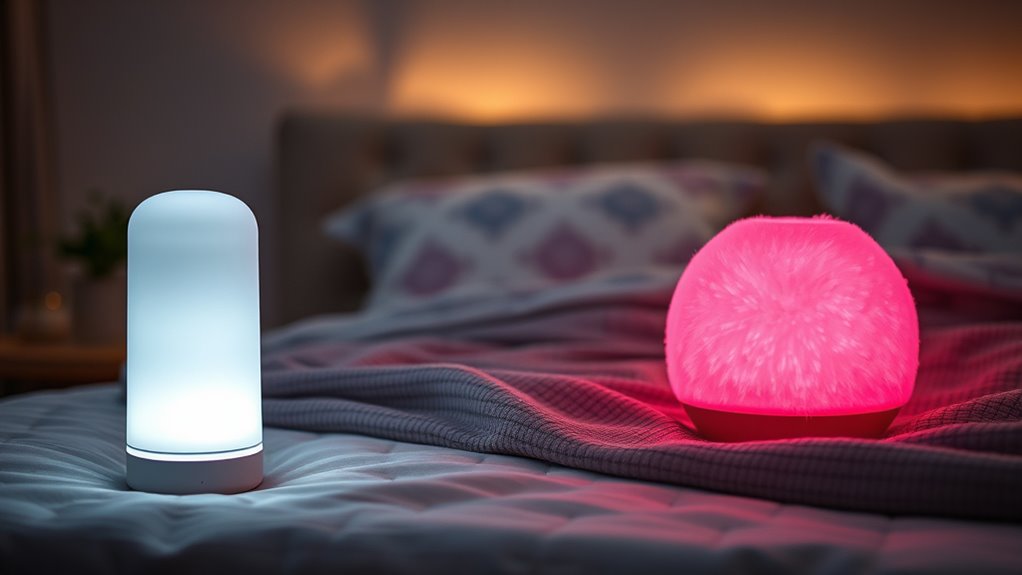
Unlike white noise, pink noise offers a more balanced and soothing sound profile that many find more conducive to restful sleep. Its deeper, richer tones help create a calming sleep environment, promoting relaxation and reducing disturbances. Pink noise is often used in sound therapy to enhance sleep quality by masking background sounds without being overpowering. Its even energy distribution across frequencies encourages your brain to relax, making it easier to fall asleep and stay asleep longer. Incorporating pink noise into your sleep environment can improve overall sleep quality and consistency. Additionally, pink noise’s sound profile is less likely to cause auditory fatigue compared to white noise, making it a more sustainable option for nightly use. The frequency distribution of pink noise aligns more closely with the natural sounds in our environment, which may explain its relaxing effects. This natural alignment can also benefit individuals seeking stress reduction through sound therapy. Moreover, research suggests that pink noise may support brain wave synchronization, further aiding restful sleep. The calming effects of pink noise are often attributed to its ability to mimic natural sound environments, helping to soothe the nervous system. To visualize, consider this comparison:
| Aspect | White Noise | Pink Noise |
|---|---|---|
| Sound Profile | Bright, high-frequency | Balanced, soothing deep tones |
| Effect on Sleep | Masking background sounds | Promotes relaxation |
| Use in therapy | Less common | Widely used in sound therapy |
| Suitability | For light sleepers | For deep, restful sleep |
| Overall Benefit | Mask distractions | Enhance sleep quality |
Comparing Effectiveness: Which Noise Reigns Supreme?

When choosing between white noise and pink noise for sleep, it’s essential to contemplate how effectively each sound masks background disturbances and promotes relaxation. White noise, with its broad frequency modulation, provides consistent sound masking by covering a wide range of frequencies, making it ideal for blocking sudden noises. Pink noise, on the other hand, emphasizes lower frequencies, which can be more soothing and less intrusive, aiding relaxation. While white noise offers more uniform sound masking, pink noise’s natural balance often feels more calming. Effectiveness depends on personal preference, but pink noise’s gentle, frequency-modulated qualities tend to create a more restful environment for many sleepers. Additionally, pink noise has been observed to promote more deep sleep stages, enhancing overall sleep quality. The sound masking properties of pink noise may also help reduce the perception of environmental disturbances, contributing to a more uninterrupted sleep cycle. Ultimately, experimenting with both helps determine which noise provides the best effectiveness for your sleep quality. Personal preference plays a significant role in choosing the most effective sound environment.
Tips for Using Sound Machines to Improve Sleep
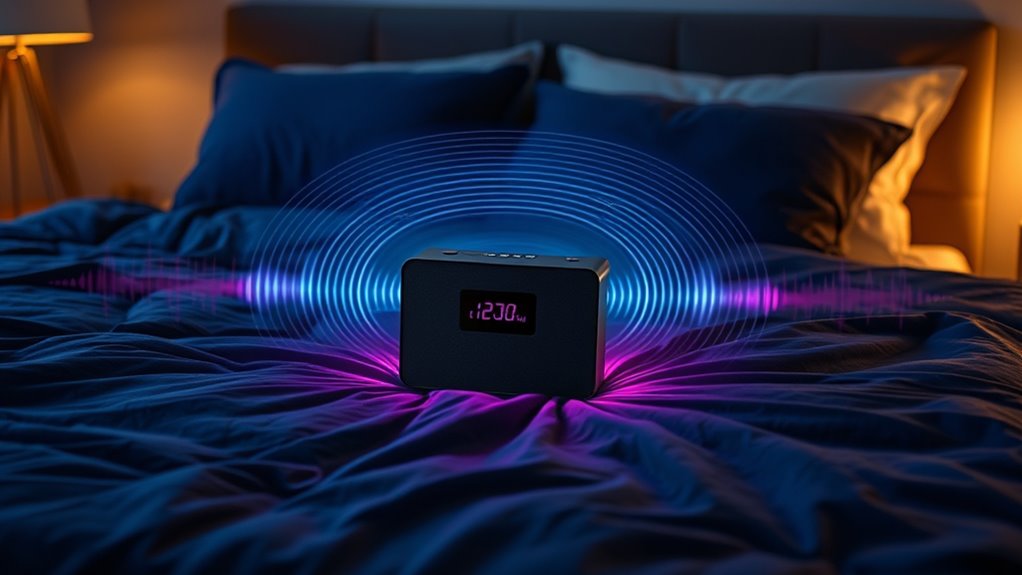
To get the most benefit from your sound machine, it’s important to set it up correctly and choose the right settings for your needs. Start by placing it near your bed, but not too close to avoid overwhelming noise. Use sound therapy to create a consistent, soothing background that promotes relaxation. Keep the volume at a comfortable level—loud enough to mask disruptive sounds but not so loud that it interferes with sleep. Incorporate your sound machine into your sleep hygiene routine by using it at the same time every night. Experiment with white noise or pink noise to see which type helps you fall asleep faster and stay asleep longer. Regular use can reinforce a calming environment, making it easier to establish healthy sleep habits. Additionally, understanding the differences between white noise and pink noise can help you select the most effective sound for your sleep needs. Recognizing the benefits of sound masking can further enhance your sleep environment. For optimal results, consider how sound frequency influences your relaxation and sleep quality. Exploring personalized sound settings may also improve your overall sleep experience. Being aware of the sound profile that best suits your preferences can help you tailor your sleep environment more effectively.
Frequently Asked Questions
Can Individual Preferences Influence Which Noise Type Helps Sleep Better?
Your personal preferences definitely influence which noise type helps you sleep better. If you find certain sounds soothing, your noise preferences will guide your choice, making it easier to fall asleep and stay asleep. Some people prefer the steady, consistent sound of white noise, while others may find pink noise more calming. Experimenting with different sounds helps you discover what works best for your sleep, ensuring a more restful night.
Are There Any Health Risks Associated With Long-Term Use of Sound Machines?
Think of sound therapy as a gentle river guiding your auditory health—long-term use is generally safe, but overexposure might cause hearing fatigue or disrupt your hearing sensitivity. While research shows minimal risks, it’s wise to use sound machines at moderate volumes and durations. Regular breaks can help prevent potential issues, ensuring your auditory health remains protected while you enjoy peaceful sleep.
How Do Ambient Room Noises Affect the Efficacy of White or Pink Noise?
Ambient room noises can influence the effectiveness of white or pink noise by creating environmental interference, making it harder for your chosen sound to mask distractions. To improve sleep, you should minimize ambient soundscapes like conversations, electronics, or outside noise. Using sound machines in a quiet, consistent environment helps guarantee white or pink noise effectively blocks environmental interference, promoting a deeper, uninterrupted sleep.
Is There a Recommended Volume Level for Optimal Sleep Benefits?
You should aim for a sound level calibration around 50 to 60 decibels, which is comparable to a quiet conversation. Research suggests this volume provides ideal sleep benefits without causing disturbance. Use volume guidelines to avoid setting it too loud, as excessive noise can disrupt your sleep cycle. Keep the sound comfortably steady, ensuring it masks background noises without becoming a distraction. Adjust as needed for your personal comfort and sleep environment.
Can Children or Babies Benefit Equally From White or Pink Noise?
Children and babies can benefit from white or pink noise, but their needs vary based on noise sensitivity and sleep routines. You should observe how your little one responds; pink noise often creates a softer, more calming environment, which may help those with noise sensitivity. Adjust volume to a gentle level, ensuring it supports their sleep without becoming disruptive. Tailoring sound choices can improve their sleep quality and establish better sleep routines.
Conclusion
Choosing between white and pink noise can markedly improve your sleep quality. Did you know that studies show pink noise may help you fall asleep faster and enjoy deeper rest? By understanding the differences and experimenting with sound machines, you can find what works best for you. Whether you prefer the steady hum of white noise or the soothing softness of pink noise, making these sounds part of your bedtime routine could lead to more restful nights and energized mornings.