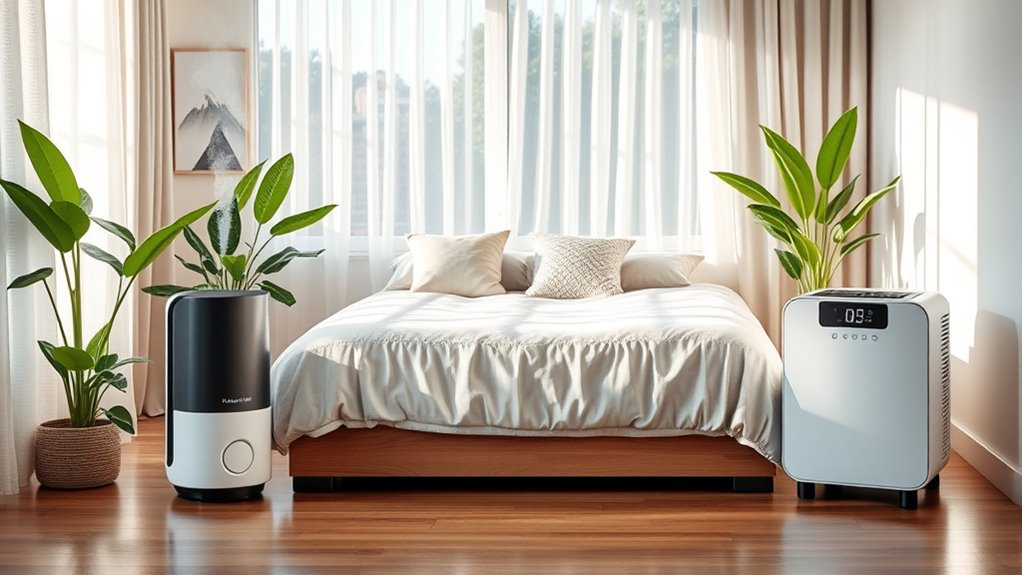

Maintaining proper humidity in your bedroom is key to restful sleep and good health. If you wake up with dry skin, chapped lips, or nasal congestion, a humidifier can add moisture and boost comfort. Conversely, if you notice mold, condensation, or feel stuffy, a dehumidifier helps reduce excess moisture. Knowing your room’s humidity levels and symptoms can guide you to the right device, and you’ll find more tips on balancing humidity for better sleep ahead.

Get health and wellness essentials delivered free — and shop member deals
- Fast, free delivery on millions of items
- Access to Prime Big Deal Days deals on October 6–7
- Prime Video, Amazon Music and more included
Key Takeaways
- Low humidity can cause dry nasal passages, throat irritation, and disrupted sleep, indicating a need for a humidifier.
- High humidity promotes mold, dust mites, and condensation, suggesting a dehumidifier is necessary for comfort and health.
- Maintaining indoor humidity between 40-60% optimizes sleep quality and respiratory comfort.
- Signs like dry skin or frequent nosebleeds point to low moisture levels; musty odors or mold indicate excess humidity.
- Using a hygrometer helps determine if a humidifier or dehumidifier is needed to create a balanced sleeping environment.
humidifier for bedroom with adjustable humidity
As an affiliate, we earn on qualifying purchases.
As an affiliate, we earn on qualifying purchases.
How Humidity Levels Affect Sleep Quality
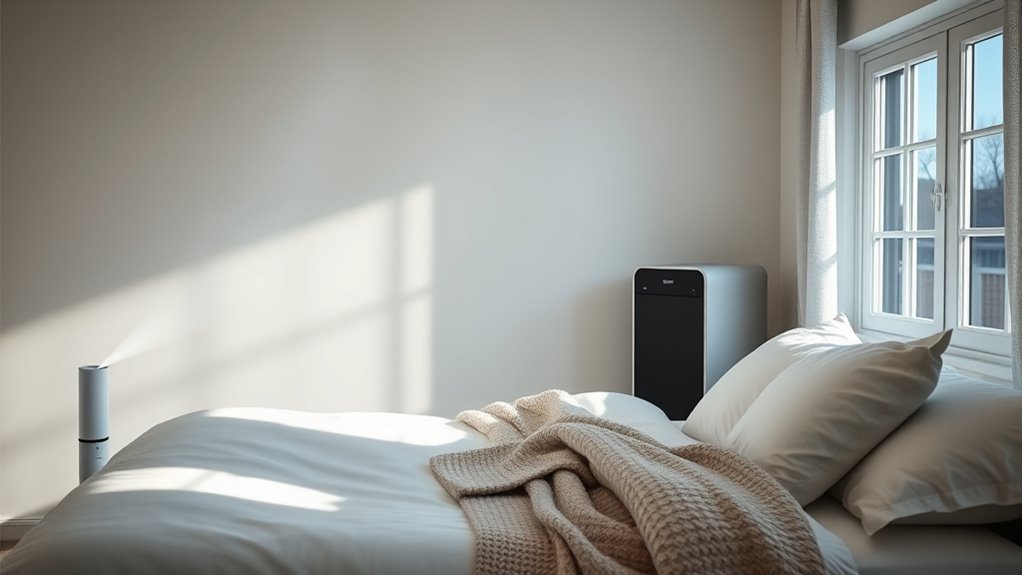
Humidity levels play a crucial role in determining your sleep quality. Your sleep environment’s moisture balance directly affects how comfortably you breathe and how well you rest. When the air is too dry, your nasal passages and throat can become irritated, leading to discomfort and disrupted sleep. Conversely, excessive humidity can make the room feel stuffy and promote mold or dust mites, which may worsen allergies. Proper moisture balance ensures your body stays comfortable throughout the night, preventing dryness or excessive dampness. Maintaining ideal humidity levels helps your body regulate temperature more effectively and keeps your skin and respiratory systems in better condition. Environmental factors such as room temperature and airflow also influence how humidity affects sleep quality. Additionally, maintaining proper humidity levels can prevent the proliferation of dust mites and mold, which are common triggers for allergy symptoms during sleep. In some cases, using a humidifier or dehumidifier can help achieve optimal humidity and improve overall sleep comfort. Ensuring good air quality can further enhance sleep by reducing airborne irritants and allergens.
dehumidifier for mold and dust mites
As an affiliate, we earn on qualifying purchases.
As an affiliate, we earn on qualifying purchases.
Signs Your Bedroom Needs More Moisture
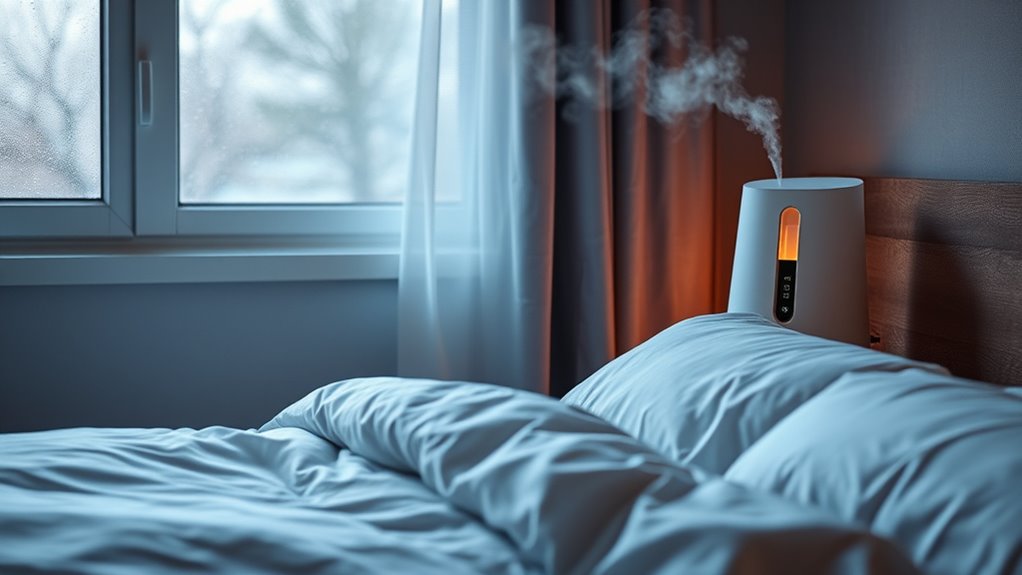
If you wake up with dry skin or chapped lips, your bedroom might be too dry. Frequent nosebleeds and ongoing sinus congestion are also signs that humidity levels are too low. Paying attention to these symptoms can help you determine if your environment needs more moisture. Additionally, a lack of proper humidity levels can negatively affect the quality of your sleep and overall comfort. Properly sizing and load-planning your humidifier or dehumidifier can ensure consistent comfort without wasting energy or increasing maintenance. Incorporating natural pools or other backyard features can help balance outdoor humidity and create a more comfortable sleep environment.
Dry Skin and Lips
Experiencing dry skin and chapped lips can be a clear sign that your bedroom lacks sufficient moisture. When the air is too dry, your skin struggles with proper hydration, leading to roughness and flakiness. Lip moisture diminishes quickly without enough humidity, causing discomfort and cracking. If you notice your skin feels tight or irritated, it’s a sign that you need to boost the moisture levels in your environment. Proper skin hydration depends on balanced humidity, preventing moisture loss throughout the night. Similarly, dry, chapped lips are a direct indicator that your bedroom’s air isn’t providing enough moisture. Addressing these issues by adjusting humidity levels can help improve skin hydration and lip moisture, making your sleeping space more comfortable and healthful. Using a humidifier can be especially effective because it can help maintain ideal humidity levels for overall skin and lip health, similar to how reconditioning batteries promotes water’s healing properties for physical well-being. Ensuring the right indoor moisture balance can prevent skin and lip issues and create a more comfortable sleeping environment. Maintaining proper indoor humidity levels is essential for overall comfort and health.
Frequent Nosebleeds Occur
Dry air in your bedroom can cause more than just dry skin and chapped lips—it may also lead to frequent nosebleeds. When the air is too dry, nasal passages become fragile and prone to cracking, which can trigger bleeding. To prevent this, guarantee proper humidifier maintenance by cleaning it regularly to avoid mold and bacteria buildup. Proper dehumidifier placement is equally important; placing it too close to your bed can dry out the air further, worsening the problem. If you notice frequent nosebleeds, consider increasing humidity levels with a humidifier and adjusting your dehumidifier’s position. Keeping moisture balanced helps maintain nasal tissue health, reducing the likelihood of nosebleeds caused by overly dry air.
Sinus Congestion Persists
Persistent sinus congestion during sleep often signals that your bedroom lacks adequate humidity. When your sinuses stay blocked despite efforts to clear them, it’s a sign your environment may need more moisture. Regular humidifier maintenance is essential to keep the device functioning properly and prevent mold or bacteria buildup, which can worsen congestion. Proper dehumidifier placement is equally important if your room feels damp or mold-prone, as it helps regulate excess moisture. If congestion persists despite using these devices correctly, consider adjusting humidity levels or consulting a healthcare professional. Maintaining balanced humidity not only alleviates sinus issues but also promotes better sleep and overall respiratory health. Addressing these signs promptly can make your sleep environment more comfortable and healthier.
digital hygrometer for indoor humidity
As an affiliate, we earn on qualifying purchases.
As an affiliate, we earn on qualifying purchases.
Indicators That Your Space Is Too Humid

If your space feels damp or smells musty even after cleaning, it’s a sign the humidity might be too high. You might notice mold growing on walls or ceilings, which indicates excess moisture. Additionally, frequent condensation on windows or surfaces is a clear warning that your environment is overly humid.
Musty Odors Linger
Musty odors often reveal that your space has become too humid. When these smells persist, it’s a clear sign that excess moisture affects air quality and comfort. Humidity promotes mold and mildew, which can linger even if you can’t see them. To combat this, focus on air purification and temperature control, which help eliminate odors and reduce moisture. Additionally, understanding the role of AI Ethicist Jobs can provide insights into developing smarter environmental control systems that optimize indoor air quality. Using appropriate humidification and dehumidification devices can further maintain balanced humidity levels, preventing musty smells and improving overall air freshness. Considering the performance of electric dehumidifiers can help select the most effective solution for your space.
Visible Mold Growth
Visible mold growth is a clear sign that your space has become too humid. If you notice fuzzy, discolored patches on walls, ceilings, or furniture, it’s time to act. Mold thrives in damp environments, making moisture control essential for mold prevention. To reduce humidity levels, use a dehumidifier or improve ventilation. Keep an eye on areas prone to excess moisture, like bathrooms and basements. Address leaks promptly and dry out any water damage. Regular cleaning helps prevent mold spores from settling and growing. Remember, controlling moisture is key to maintaining a healthy environment and avoiding the health issues associated with mold exposure. Monitoring humidity levels is crucial for early detection and prevention of mold growth. Staying vigilant about humidity control can help prevent mold from developing in your space. Properly managing indoor moisture also supports the effectiveness of air purifiers in maintaining good air quality. Being aware of dehumidifier usage can further assist in maintaining optimal humidity levels and preventing mold. Stay vigilant, and take swift action if you see mold developing to keep your bedroom safe and comfortable.
Excess Condensation Forms
Excess condensation forms when warm, moist air comes into contact with cooler surfaces, leading to water droplets that appear on windows, walls, and other surfaces. This excess moisture signals that your space may be too humid, which can compromise air quality and promote mold growth. If you notice persistent condensation, it’s a clear indicator to check your humidity levels and consider dehumidification. Proper ventilation and energy-efficient cloud solutions can also help regulate indoor humidity levels by improving air circulation. Signs include: – Water spots on windows and walls – Peeling paint or wallpaper – Musty odors lingering – Visible mold patches Addressing these issues helps prevent mold and maintains better air quality in your bedroom. Monitoring condensation is a simple way to identify if your environment needs adjustments to humidity levels for healthier sleep.
ultrasonic humidifier for dry skin
As an affiliate, we earn on qualifying purchases.
As an affiliate, we earn on qualifying purchases.
Benefits of Using a Humidifier in Your Room
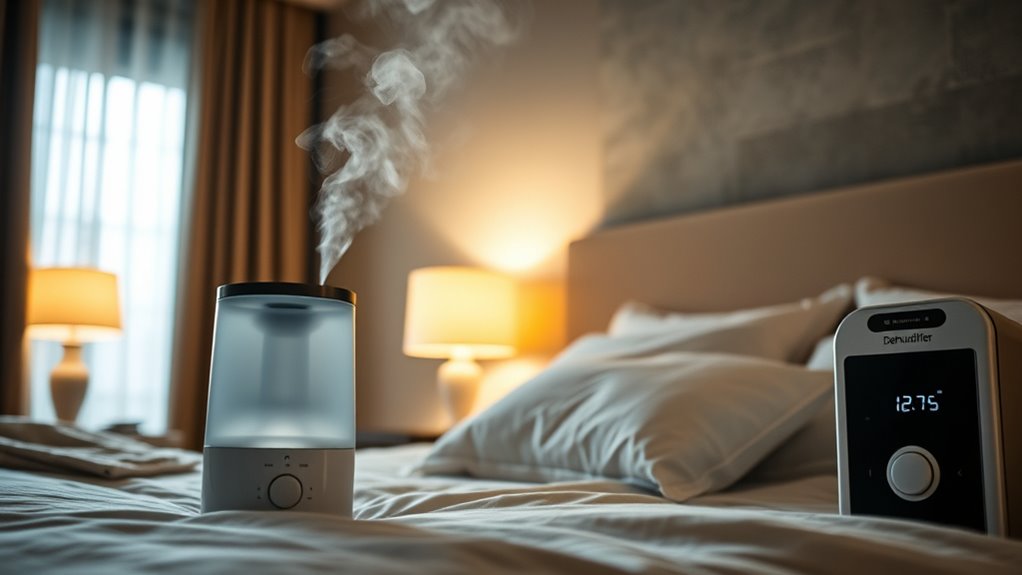
Using a humidifier in your room can considerably improve your sleep quality by maintaining ideal moisture levels in the air. Proper humidity enhances air quality, making it easier to breathe and reducing dryness that can irritate your respiratory system. This helps minimize coughing, sore throats, and nasal congestion that often disrupt sleep. Additionally, a humidifier can provide allergy relief by reducing the presence of airborne allergens like dust and pollen, which thrive in dry environments. When moisture levels are favorable, your nasal passages stay moist, preventing irritation and congestion. Maintaining optimal humidity can also influence sleep environment comfort, leading to fewer awakenings and deeper, more restful sleep. Overall, using a humidifier creates a more comfortable sleeping environment, supporting better breathing and improving your overall sleep quality. Incorporating the right humidity levels can also help Youngster Choice achieve better health and comfort during sleep. Proper humidity levels can also help prevent dry skin and other discomforts often associated with dry indoor air.
When a Dehumidifier Can Improve Your Rest
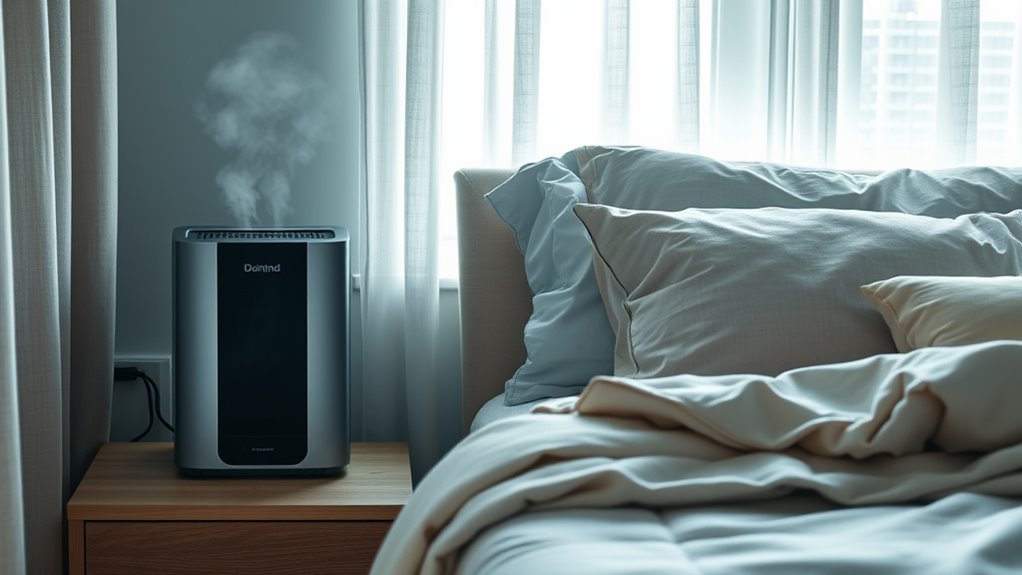
While maintaining proper humidity levels can greatly enhance your sleep, sometimes the air in your room becomes too damp, leading to discomfort and sleep disturbances. A dehumidifier can help by improving air quality and balancing bedroom temperature. When humidity is high, you might notice mold, musty odors, or condensation on windows, all of which can disrupt your rest. Using a dehumidifier reduces excess moisture, creating a more comfortable environment. It also prevents allergens like dust mites and mold from thriving. This leads to clearer breathing and better airflow during sleep. If you often wake up feeling stuffy or notice persistent dampness, a dehumidifier can make a significant difference in your overall sleep quality. It’s especially useful in humid climates or poorly ventilated rooms.
Choosing the Right Device for Your Environment
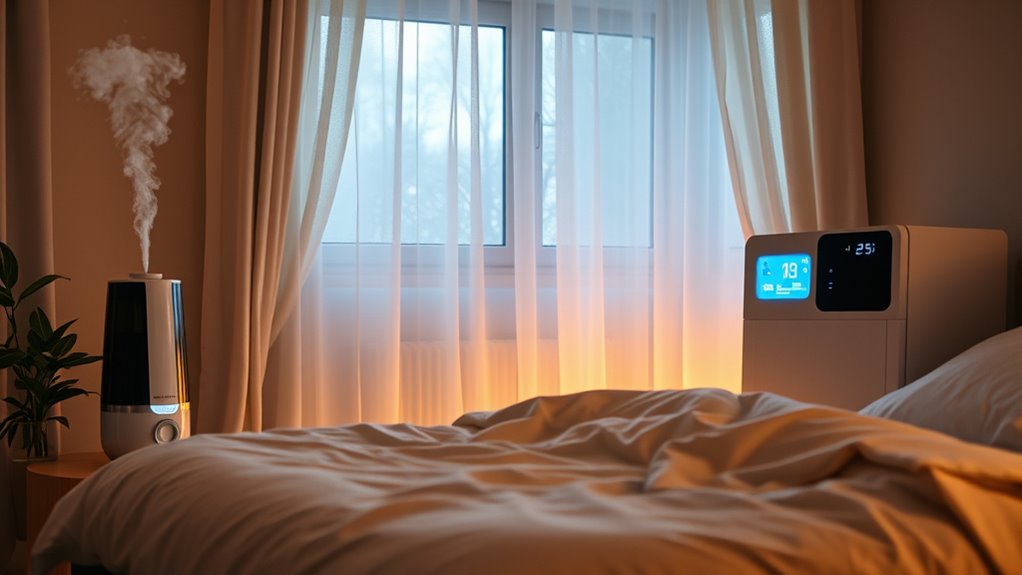
Selecting the right dehumidifier or humidifier depends on factors like room size, humidity levels, and your needs. For larger rooms, choose a device with a higher capacity to effectively control moisture. If noise bothers you, look for models specifically designed to operate quietly. Consider the space where you’ll place the device:
| Room Size | Ideal Device Capacity | Noise Level |
|---|---|---|
| Small (up to 150 sq ft) | Low capacity, quiet models | Low noise, whisper-quiet |
| Medium (150-300 sq ft) | Medium capacity | Moderate noise acceptable |
| Large (over 300 sq ft) | High capacity, possibly dual units | Noise may be noticeable |
Matching device capacity to room size and prioritizing low noise options ensures your environment stays comfortable and conducive to sleep.
Tips for Maintaining Optimal Humidity for Better Sleep

Maintaining the right humidity level in your bedroom is essential for better sleep, as both too much and too little moisture can disrupt rest. Proper humidity improves air quality and helps with temperature regulation, making your sleeping environment more comfortable. To achieve this, consider these tips:
- Use a hygrometer to monitor humidity levels regularly.
- Keep your bedroom well-ventilated to promote fresh air circulation.
- Adjust your humidifier or dehumidifier based on the season and air quality needs.
- Maintain a consistent room temperature to support stable humidity levels.
Frequently Asked Questions
Can Fluctuating Humidity Levels Disrupt Sleep Patterns?
Yes, fluctuating humidity levels can disrupt your sleep patterns. When air quality varies, it may cause discomfort, leading to issues like dry skin, congestion, or allergies that interfere with deep sleep. Maintaining consistent humidity helps stabilize air quality, promoting better sleep quality. Using a humidifier or dehumidifier can regulate humidity, ensuring a comfortable environment that supports restful sleep and reduces disruptions caused by sudden changes in moisture levels.
How Quickly Do Humidifiers and Dehumidifiers Affect Bedroom Humidity?
Humidifiers and dehumidifiers can provide rapid adjustment, often changing your bedroom humidity within 15-30 minutes. However, for steady regulation, it might take a few hours to reach your desired level. You’ll notice the effects quickly if you set the device correctly and monitor the room, ensuring consistent comfort. Regular use and proper placement help maintain stable humidity, promoting better sleep and overall room health.
Are There Health Risks Associated With Improper Use of These Devices?
Yes, improper use of humidifiers or dehumidifiers can pose health risks. If you don’t clean the devices regularly, you might circulate indoor allergens like mold or bacteria, leading to respiratory issues. Also, device malfunction can cause excessive humidity or dryness, worsening asthma or allergies. Always follow manufacturer instructions, monitor humidity levels, and clean your devices to prevent these health concerns and guarantee a safe sleep environment.
Can Pets Benefit From Controlled Humidity in the Bedroom?
Yes, pets can benefit from controlled humidity in the bedroom. Proper humidity regulation supports pet health by reducing dry skin, respiratory issues, and allergies. You should maintain humidity levels between 40-60%, which helps keep their skin and respiratory passages comfortable. Using a humidifier or dehumidifier correctly guarantees your pets stay healthy and comfortable, especially in extreme weather conditions. Regularly monitor humidity to prevent issues like mold or overly dry air.
How Often Should I Clean or Replace My Humidifier or Dehumidifier?
Well, if you enjoy the thrill of mold and bacteria, ignore your device maintenance! Otherwise, clean your humidifier or dehumidifier weekly and follow the replacement schedule recommended by the manufacturer. Typically, you should replace filters every 1-3 months and check the device for buildup or wear. Staying on top of maintenance keeps your air healthy and guarantees your device works efficiently—because nobody wants a funky-smelling room or a broken gadget.
Conclusion
Finding the perfect humidity balance transforms your bedroom into a sanctuary of restful dreams. Like a gentle breeze guiding you into serenity, the right humidifier or dehumidifier tunes your space into a haven of comfort. When you nurture this delicate harmony, each night becomes a soothing lullaby, cradling you softly into deep, restorative sleep. Embrace the power of moisture mastery, and let your dreams flourish in a perfectly balanced oasis of calm.
Fall Picks
fall essentials
As an affiliate, we earn on qualifying purchases.