
To create a relaxing bedtime atmosphere, start by using dimmer switches and warm hues like amber or orange to set a cozy, calming light. Incorporate soothing sounds such as white noise or nature sounds to quiet your mind. Add a diffuser with lavender or chamomile essential oils for gentle aromatherapy that promotes relaxation. Combining these elements helps signal your body it’s time to unwind, and exploring further can help you craft the perfect sleep sanctuary.
Key Takeaways
- Use dimmer switches with warm, soft lighting to create a cozy, relaxing environment signaling bedtime.
- Play calming sounds like white noise or nature sounds to block disturbances and soothe the mind.
- Incorporate essential oils such as lavender or chamomile with diffusers for a calming, aromatic atmosphere.
- Minimize external noise through soundproofing and sound absorption techniques for tranquility.
- Maintain a consistent bedtime routine with gentle lighting, sounds, and scents to reinforce relaxation cues.
Choosing Soothing Lighting for a Calming Environment

To create a calming bedtime environment, selecting the right lighting is essential. Installing dimmer switches allows you to easily adjust the brightness, helping you shift from a busy day to a peaceful night. Opt for warm hues like soft amber or gentle orange, which promote relaxation and signal to your brain that it’s time to wind down. Avoid harsh, bright lights that can stimulate your senses and make it harder to fall asleep. Instead, keep lighting low and soothing as you prepare for bed. This simple change creates a cozy atmosphere and helps your body produce melatonin naturally. Incorporating energy-efficient lighting options can further enhance your sleep environment while reducing energy consumption. Using lighting control systems can make it even easier to set the perfect mood for rest. With dimmer switches and warm hues, you set the perfect mood for a restful night’s sleep.
Incorporating Relaxing Sounds to Ease Your Mind

Incorporating relaxing sounds into your bedtime routine can substantially ease your mind and prepare you for restful sleep. White noise creates a consistent background, blocking out disruptive noises and calming your nervous system. Nature sounds, like flowing water or gentle rain, evoke a peaceful environment that relaxes your body. To enhance your sleep setup, consider these options:
Relaxing sounds like white noise and nature melodies can calm your mind and promote restful sleep.
- Use a white noise machine or app to produce steady, unobtrusive sound.
- Play nature sounds such as ocean waves, forest ambiance, or bird songs.
- Set a timer to turn off sounds gradually, preventing abrupt silence.
- Combine different soundscapes for a personalized, soothing atmosphere.
- Explore soundproofing techniques to further reduce external disturbances and create an optimal sleep environment.
- Explore Free Floating techniques to create a sense of calm and serenity that promotes restful sleep. Additionally, incorporating sound absorption methods can help reduce echoes and background noise, enhancing the overall tranquility of your sleep space. Understanding the principles of Haute Couture craftsmanship can inspire your approach to creating a luxurious and meticulously curated sleep environment, emphasizing attention to detail and quality. These calming sounds help you unwind, reduce anxiety, and establish a tranquil environment for sleep. Moreover, selecting the right sound generators can significantly improve your sleep quality by providing consistent and soothing auditory stimuli.
Using Aromatherapy to Enhance Sleep Quality
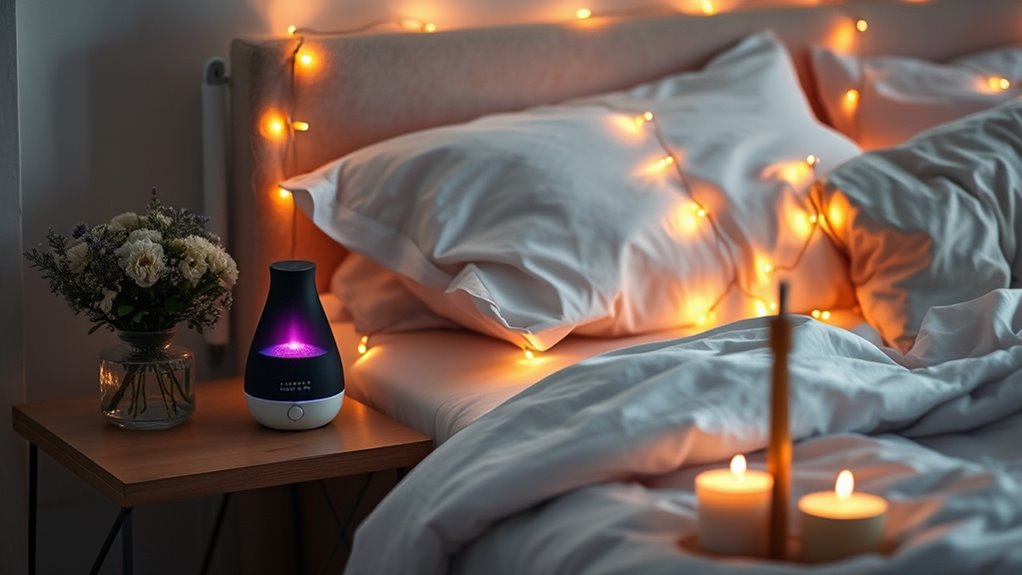
Aromatherapy can substantially improve your sleep quality by creating a calming environment that signals your body it’s time to wind down. Using essential oil blends like lavender, chamomile, or ylang-ylang helps relax your mind and muscles. Diffuser techniques are key; placing a diffuser in your bedroom allows the scent to fill the space evenly. To maximize effectiveness, use the table below for diffuser tips:
| Tip | Explanation |
|---|---|
| Use calming blends | Combine lavender and chamomile for relaxation |
| Set a timer | Avoid overpowering scents by diffusing for 30-60 mins |
| Adjust scent strength | Start with a few drops, increase as needed |
| Proper placement | Position diffuser away from your face |
| Maintain cleanliness | Regularly clean diffuser to prevent buildup |
Additionally, selecting the right essential oil diffuser can enhance the distribution and longevity of the scent in your space. Incorporating aromatherapy techniques can further optimize your sleep environment and promote overall relaxation. Implementing consistent sleep routines can also reinforce the calming effects created by aromatherapy. Incorporating knowledge of the Gold IRA markets can help you make informed investment decisions for your financial future.
Frequently Asked Questions
Can Specific Colors of Light Influence Sleep Quality?
Yes, specific colors of light can influence your sleep quality. Using warm, dim colors like red or amber aligns with color psychology, signaling relaxation and preparing your body for sleep. Light therapy with cool or blue tones, however, can disrupt melatonin production, making it harder to fall asleep. By choosing calming colors and avoiding blue light before bed, you help improve your sleep quality naturally.
Are There Sound Frequencies That Promote Faster Sleep?
Sound therapy often uses sleep frequencies that gently lull you into rest, making it easier to drift off faster. You might find that low, rhythmic sound frequencies—like calming tones or binaural beats—encourage your mind to relax and shift seamlessly into sleep. Incorporating these sleep frequencies into your bedtime routine can create a soothing atmosphere, helping you unwind more quickly and enjoy a more restful night.
Which Essential Oils Are Safest for Nighttime Aromatherapy?
You should choose lavender essential oil for nighttime aromatherapy, as it’s generally safe when used properly and has relaxing properties. However, avoid overusing peppermint oil, since it can cause risks like breathing issues or irritation, especially if applied directly to the skin or in high doses. Always dilute essential oils, and consult guidelines or a professional to guarantee safety for your sleep environment.
How Long Should I Use Calming Sounds Before Falling Asleep?
You should use calming sounds for about 30 to 60 minutes before falling asleep. Maintaining timing consistency helps your body associate the sounds with bedtime, making it easier to relax. Keep the ambient volume at a gentle level so it soothes without disturbing you. If you find yourself drifting off sooner, don’t worry—your body will naturally adjust to the calming environment, helping you fall asleep faster over time.
Can Scent Combinations Enhance Relaxation More Than Single Scents?
You might find that scent combinations in an aromatherapy blend can enhance relaxation more than single scents, especially through scent layering. When you layer calming scents like lavender and chamomile, the complex aroma can evoke deeper tranquility. This coincidence of complementary fragrances creates a richer sensory experience, helping you unwind faster. So, try blending scents intentionally to boost your relaxation, rather than relying solely on one aroma.
Conclusion
By crafting a bedtime atmosphere with gentle lights, calming sounds, and soothing scents, you set the stage for restful sleep. Think of your bedroom as a sanctuary where every element whispers tranquility, guiding your mind to a peaceful retreat. When these elements harmonize, they create a symphony of relaxation that lulls you into a deep, restorative slumber. Embrace these simple changes, and watch your nights transform into journeys of pure serenity.