
A dark room boosts melatonin production, helping you fall asleep faster and stay asleep longer. Light pollution from outside or electronic devices can interfere with your circadian rhythm, reducing sleep quality. To achieve total darkness, use blackout curtains, seal window gaps, and switch off or limit screens before bed. Creating the right environment supports restorative sleep and overall health. Keep exploring to discover how you can optimize your sleep even further.
Key Takeaways
- Darkness triggers melatonin production, essential for regulating sleep cycles and ensuring restorative rest.
- Minimizing light exposure reduces sleep disruptions caused by light pollution and electronic devices.
- Using blackout curtains, window films, and sealing gaps creates a completely dark sleep environment.
- Wearing comfortable sleep masks blocks residual light, supporting hormonal balance and sleep quality.
- A dark room enhances sleep depth, improves overall health, and promotes long-term well-being.
The Science Behind Darkness and Sleep Hormones

Darkness plays a crucial role in regulating your sleep hormones, especially melatonin. When light pollution from streetlights, screens, or nearby buildings spills into your room, it disrupts your circadian rhythm—the internal clock that guides your sleep-wake cycle. Exposure to artificial light during nighttime signals your brain that it’s still daytime, suppressing melatonin production. This interference can delay sleep onset and reduce sleep quality. Your body relies on darkness to trigger the release of melatonin, helping you feel sleepy and maintain a healthy sleep pattern. Without enough darkness, your natural hormonal balance falters, making restful sleep harder to achieve. Ensuring a dark environment supports your circadian rhythm, allowing your body to produce melatonin naturally and promoting better sleep overall.
How Light Interferes With Melatonin Production

Light exposure at night directly impacts your body’s ability to produce melatonin, the hormone that signals sleepiness. When you’re exposed to artificial light, especially from screens or outdoor light pollution, it can cause circadian disruption, throwing off your internal clock. This disruption reduces melatonin production, making it harder to fall asleep and stay asleep. Light pollution from streetlights, electronic devices, and even nearby buildings can seep into your bedroom, undermining your sleep quality. The more light you’re exposed to during nighttime hours, the less melatonin your body releases. Additionally, European cloud innovation emphasizes the importance of sustainable technologies that can help reduce energy consumption and light pollution from data centers and urban infrastructure. Implementing light pollution mitigation strategies in urban planning can further improve night-time environments and sleep quality. The interference not only delays sleep onset but also affects sleep depth and overall restfulness. To optimize melatonin levels, minimizing light exposure is essential for achieving truly restorative sleep. Proper light control can significantly enhance your sleep quality and overall well-being, as research shows that light pollution can also contribute to broader health issues beyond sleep disturbances. Increasing awareness and adoption of dark sky-friendly lighting practices can further protect nighttime environments and promote healthier sleep patterns.
Identifying Common Light Sources in Your Bedroom

Many common sources of light in your bedroom can subtly disrupt your sleep without you realizing it. To achieve total darkness, identify where light sneaks in. Street lighting outside might shine through windows, while night security lights can cast unwanted glow. Even small electronic indicators or glowing clocks can interfere. Use this table to pinpoint typical light sources:
| Light Source | Location | How to Minimize |
|---|---|---|
| Street lighting | Outside windows | Install blackout curtains |
| Night security lights | Near windows | Use window covers or shades |
| Electronic devices | On bedside tables | Turn off or cover indicator lights |
| Window gaps | Around frames | Seal with draft stoppers |
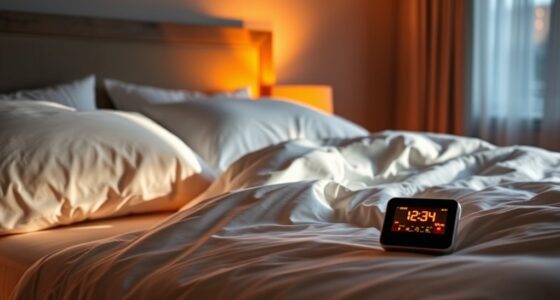
| Clocks or alarms | Near your bed | Cover or remove them |
Additionally, reducing ambient light can improve your sleep quality, especially since light pollution can interfere with your circadian rhythms.
The Impact of Electronic Devices on Sleep Quality

Electronic devices in your bedroom can considerably disrupt your sleep quality, even if they’re turned off or in standby mode. The main issue is blue light, which these devices emit and can interfere with your circadian rhythm. Exposure to blue light suppresses melatonin production, making it harder to fall asleep and reducing sleep quality. Device interference also occurs from notifications, sounds, or vibrations, which can wake you or prevent deep rest. Even screens that appear off may emit enough light to impact your sleep hormones. To protect your sleep environment, keep electronic devices out of the bedroom or turn off all screens at least an hour before bed. Minimizing device interference helps your body produce melatonin naturally, supporting restful, uninterrupted sleep. Creating calm environments by removing electronic distractions is an effective step toward better sleep health. Additionally, using blue light filters on devices or wearing blue light blocking glasses can further reduce exposure and support your sleep cycle. Ensuring that your bedroom remains a dark, quiet sanctuary can significantly enhance your overall sleep quality and help you wake refreshed. Incorporating sleep-friendly habits can further improve your rest and overall well-being.
Practical Strategies for Blocking Out External Light

Blocking out external light is a practical way to create a darker sleep environment and improve your rest. Light pollution from streetlights, passing cars, and outdoor signage can seep into your room, disrupting your circadian rhythm. To combat this, consider using blackout curtains or heavy drapes that block out even the faintest glow. Seal gaps around windows with weatherstripping or draft stoppers to prevent light leaks. If streetlights shine through, attach a sleep mask to your routine for added darkness. Keep your bedroom free of electronic devices that emit light, and consider repositioning furniture to minimize exposure to outside sources. These strategies help reduce light pollution, allowing your body to produce melatonin naturally and achieve more restorative sleep. Free Floating elements in backyard design can also contribute to a serene sleep environment by creating a peaceful outdoor setting.
Choosing the Right Window Coverings for Total Darkness
Are your current window coverings enough to block out every trace of outside light? If not, consider upgrading to light blocking fabrics designed specifically for darkness. Blackout curtains or shades made from dense, opaque materials can dramatically reduce light seepage. For added effectiveness, look into window film options that adhere directly to glass surfaces, creating a seamless barrier against outside illumination. These films come in various levels of opacity and can be customized to fit your windows perfectly. Combining heavy, light blocking fabrics with window film can ensure total darkness, helping you sleep more soundly. Remember, the goal is to eliminate all outside light sources, so choose coverings that suit your space and sleep needs for ideal results. Incorporating proper ventilation considerations can also improve sleep quality by maintaining fresh air without compromising darkness. Additionally, selecting light blocking window treatments that are easy to operate and maintain can enhance your sleep environment over time. Using properly installed window coverings ensures maximum light blockage and long-term effectiveness. To optimize your sleep environment, consider soundproofing techniques to further minimize disruptions from outside noise. Also, exploring automated window coverings can make it easier to control light levels effortlessly.
Using Night Masks and Sleep Aids Effectively
Even with the best blackout window coverings, some light might still sneak in, making it harder to fall asleep or stay asleep throughout the night. Using night masks and sleep aids effectively can help you block out residual light and improve sleep quality. To maximize their benefits, consider:
- Choosing the best night masks that fit comfortably without pressure
- Experimenting with different sleep aid options like herbal teas or melatonin
- Ensuring your mask is made of breathable, soft materials
- Using sleep aids consistently to establish a routine
- Combining masks with other sleep-friendly habits for ideal results
- Incorporating sleep environment optimization strategies, such as maintaining a cool room temperature and reducing noise, to further enhance sleep quality. Additionally, selecting a sleep-friendly environment can significantly impact the overall effectiveness of your sleep enhancements. Creating a dark room through comprehensive light control measures can also boost the benefits of your sleep accessories. Paying attention to home maintenance tasks like sealing gaps around windows and doors can help prevent light infiltration, making your sleep space even more effective. Regularly checking for and addressing light leaks around your home can ensure a truly dark environment for restful sleep.
Tips for Creating a Consistent Sleep Environment

To create a consistent sleep environment, start by using blackout curtains or blinds to block out light. Limit your exposure to electronic devices before bed, as screens can disrupt your sleep cycle. Also, try to stick to a regular sleep schedule, going to bed and waking up at the same times each day. Incorporating a calming bedtime routine, such as reading or gentle stretching, can further enhance your sleep quality. Additionally, using light therapy devices in the evening to promote melatonin production can help signal your body that it’s time to wind down. Employing connected appliances that adjust lighting or temperature automatically can also contribute to maintaining an optimal sleep environment.
Use Blackout Curtains or Blinds
Blackout curtains or blinds are essential tools for creating a dark, sleep-friendly environment. They block out light pollution that can disrupt your sleep cycle and improve window insulation, helping keep your room cooler or warmer. By reducing external light, you’ll fall asleep faster and enjoy more restful sleep. Consider these benefits:
- Effectively block streetlights and early dawn light
- Improve room temperature regulation
- Minimize noise infiltration for a quieter sleep
- Prevent glare from passing cars or lamps
- Enhance overall sleep consistency and quality
Choosing the right blackout curtains or blinds ensures your sleep space remains dark regardless of outside conditions. This simple addition makes a significant difference in maintaining a consistent sleep environment, helping you wake feeling more refreshed and rested.
Limit Electronic Device Exposure
Limiting electronic device exposure before bedtime is essential for creating a consistent sleep environment. The blue light emitted by screens contributes to light pollution, disrupting your circadian rhythm and making it harder to fall asleep. To reduce bedroom illumination from electronic devices, turn off your phone, tablet, and computer at least an hour before bed. Consider using night mode settings if you must use devices earlier in the evening. Excess light from screens can trick your brain into thinking it’s daytime, hindering melatonin production. By minimizing device use, you create a darker, more sleep-friendly environment. This not only helps your body prepare for rest but also fosters a consistent sleep routine, improving overall sleep quality.
Keep a Consistent Sleep Schedule
Establishing a consistent sleep schedule helps your body recognize when it’s time to wind down and wake up, making it easier to fall asleep and wake refreshed. When your sleep cycle aligns with your circadian rhythm, you experience better rest and improved overall health. To maintain this rhythm, consider these tips:
- Go to bed and wake up at the same time every day, even on weekends
- Avoid napping late in the afternoon or evening
- Limit caffeine intake after mid-afternoon
- Develop a relaxing pre-sleep routine to signal your body it’s time to wind down
- Keep your sleep environment consistent to reinforce your body’s internal clock
Additional Tips for Enhancing Sleep Beyond Darkness

To improve your sleep quality even further, pay attention to your room temperature—keeping it cool can make a big difference. Limiting screen time before bed helps your mind relax and prepares you for rest. Additionally, establishing a consistent bedtime trains your body to recognize when it’s time to sleep, making it easier to fall asleep each night.
Optimal Room Temperature
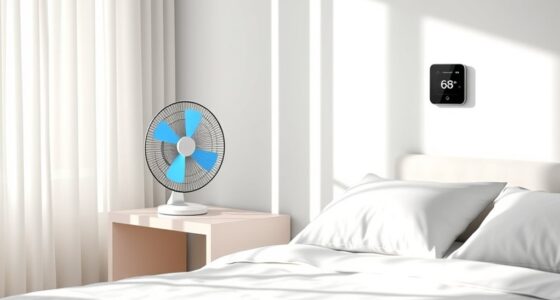
Have you ever wondered why your sleep quality improves when your room temperature is just right? The perfect sleep environment relies on maintaining an optimum room temperature, typically between 60-67°F (15-19°C). When it’s too hot or cold, your body struggles to regulate its core temperature, disrupting sleep cycles. To enhance your sleep, consider these tips:
- Keep your bedroom cool and well-ventilated
- Use a fan or air conditioner if needed
- Opt for breathable bedding materials
- Avoid heavy blankets that trap heat
- Adjust the thermostat to maintain a consistent temperature
Creating an ideal sleep environment with the right room temperature helps you fall asleep faster and enjoy deeper, more restorative sleep. Prioritizing this simple factor can considerably improve your overall sleep quality.
Limit Screen Time Before
Since screens emit blue light that can interfere with your body’s production of melatonin, it’s important to cut back on screen time before bed. Excessive screen time, especially in the hour before sleep, exposes you to blue light that suppresses melatonin, making it harder to fall asleep and reducing sleep quality. To improve your sleep, establish a cutoff time for devices like smartphones, tablets, and computers. Consider replacing screen use with relaxing activities such as reading a book or practicing gentle stretches. Limiting blue light exposure helps your body naturally prepare for sleep, making it easier to fall asleep faster and enjoy more restorative rest. Reducing screen time before bed is a simple yet effective step toward achieving deeper, more restful sleep.
Establish Consistent Bedtime
Setting a consistent bedtime helps your body build a reliable sleep routine, making it easier to fall asleep and wake up refreshed. When you stick to the same schedule, your sleep environment becomes more predictable, signaling to your body when to wind down. To strengthen your bedtime routines, try these tips:
- Go to bed at the same time every night, even on weekends
- Avoid caffeine or large meals close to bedtime
- Wind down with relaxing activities, like reading or gentle stretching
- Limit stimulating conversations or activities before sleep
- Keep your sleep environment consistent—dim lights, comfortable temperature, and total darkness
Long-Term Benefits of Sleeping in a Completely Dark Room

Sleeping in a completely dark room offers significant long-term benefits for your health and well-being. When your environment is free of light, your circadian rhythms stay properly aligned, helping regulate your internal clock. This synchronization enhances your sleep quality, making your rest more restorative and consistent over time. Better sleep can reduce risks of chronic conditions like heart disease, diabetes, and depression. Darkness also boosts melatonin production, which supports immune function and antioxidant activity. Over the long term, maintaining a dark sleeping environment strengthens your overall health, improves mood, and increases daytime alertness. By prioritizing total darkness, you set the foundation for sustained, high-quality sleep that benefits your body and mind every day.
Frequently Asked Questions
Can Total Darkness Improve Sleep Quality for Shift Workers?
Yes, total darkness can improve your sleep quality as a shift worker. It helps regulate your circadian rhythms and boosts melatonin production, making it easier to fall asleep and stay asleep during daylight hours. By blocking out light, you signal your body that it’s time to rest, even when it’s daytime outside. This consistent darkness supports better sleep patterns, ultimately improving your overall rest and daytime alertness.
What Are the Best Materials for Blackout Curtains?
You should choose blackout curtains made from tightly woven fabrics like polyester or a polyester blend, which block light effectively. For better results, opt for curtains with a thermal or blackout lining. When installing, guarantee the curtains hang close to the ceiling and extend beyond the window frame to prevent light leaks. Use hooks or curtain rods that allow for a snug fit, maximizing darkness and improving your sleep quality.
How Does Darkness Affect Sleep Cycles in Different Age Groups?
Darkness vitally impacts your sleep cycles across all age groups by boosting melatonin production and helping align your circadian rhythm. When you sleep in a dark room, your body naturally produces more melatonin, making it easier to fall asleep and stay asleep. This effect is especially essential for children and older adults, as it supports healthy development and aging. Consistently dark environments promote restorative sleep for everyone.
Is Sleeping in Complete Darkness Safe for Everyone?
Sleeping in complete darkness is generally safe for most people, but you should be cautious if you have certain health conditions or sleep disorders. Darkness reduces light pollution, which boosts melatonin production and improves sleep quality. However, if you feel anxious or have trouble orienting yourself in your space, consider using a dim nightlight. Always listen to your body and consult a healthcare professional if you experience issues related to darkness during sleep.
Can Blackout Solutions Help With Insomnia Caused by Anxiety?
Blackout solutions can help with insomnia caused by anxiety, but they’re not a magic fix. You might try light therapy or sleep masks to create a calming, dark environment that signals your body it’s time to rest. Yet, anxiety often runs deeper, so combining blackout options with relaxation techniques can be more effective. Don’t underestimate the power of a consistent routine to truly ease your mind and improve your sleep.
Conclusion
Creating a dark room helps your body produce melatonin, improve sleep quality, and wake up refreshed. It’s about setting the stage for restful nights, blocking out distractions, and embracing consistency. When you prioritize darkness, you foster relaxation, support your health, and enjoy deeper, more restorative sleep. So, turn off the lights, close the blinds, and create an environment where your body can rest, recover, and wake up ready to face each new day.