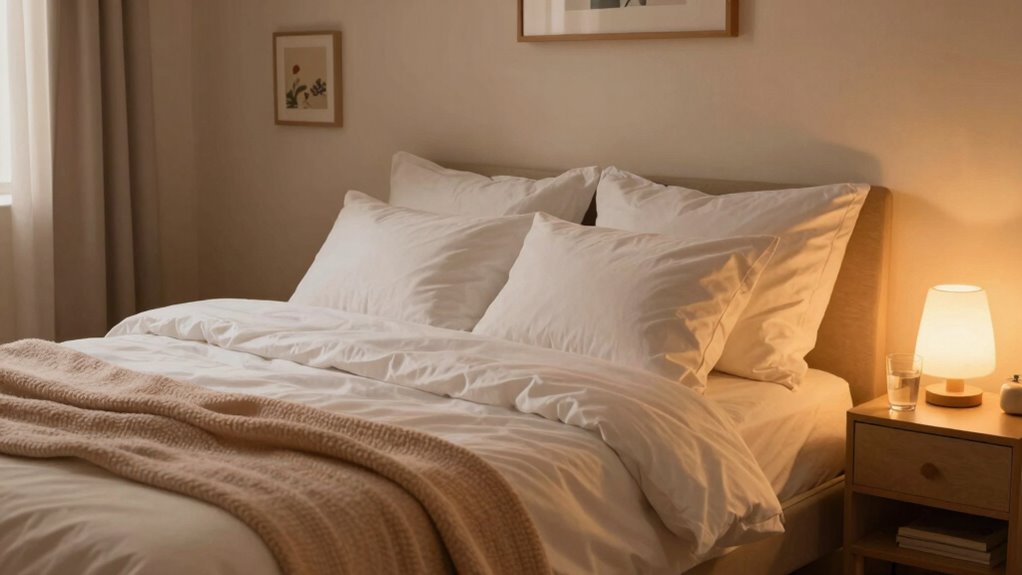
Good sleep support at home means creating a relaxing, clutter-free environment with a comfortable mattress, blackout curtains, and a cool, quiet room. Establishing a consistent bedtime routine—like dimming lights and avoiding screens—helps signal your body to wind down. Limiting caffeine and alcohol, ensuring good air quality, and making small adjustments to your space can make a big difference. Keep up these habits to enjoy more restful nights, and you’ll find it easier to wake refreshed.
Listen free for 30 days with Audible
Thousands of audiobooks and originals — cancel anytime.
As an affiliate, we earn on qualifying purchases.
Key Takeaways
- Creating a consistent bedtime routine that includes relaxing activities and screen-free time before sleep.
- Ensuring the bedroom is dark, quiet, and kept at a comfortable temperature around 65°F (18°C).
- Using quality mattresses, pillows, and proper ventilation to enhance comfort and air quality.
- Removing clutter and electronic devices to minimize distractions and promote a calming environment.
- Limiting caffeine and alcohol intake, especially close to bedtime, to support better sleep quality.
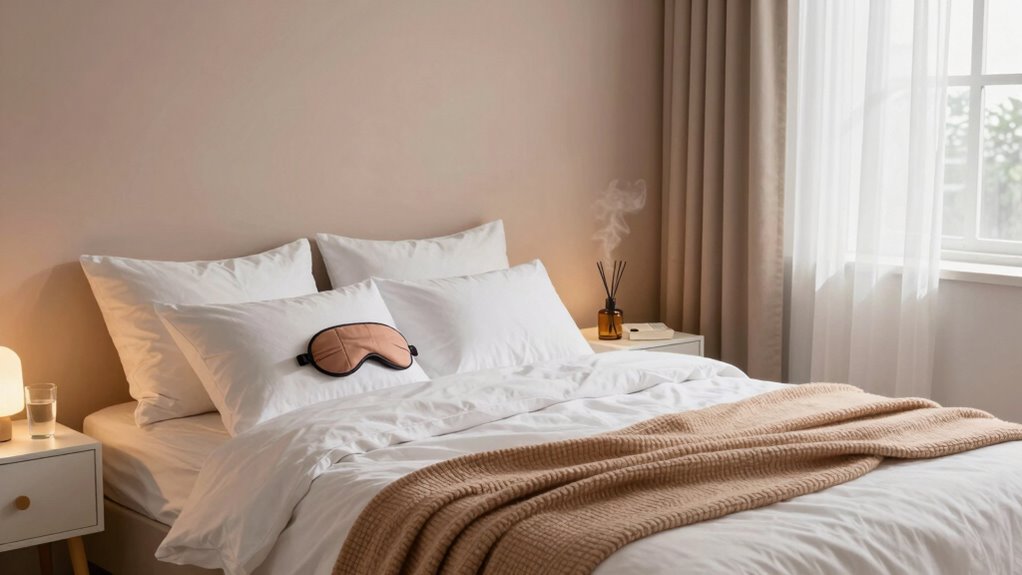
Getting a good night’s sleep at home can be challenging, but there are simple steps you can take to improve your sleep environment and habits. One of the most effective ways to support better sleep is establishing consistent nighttime routines. When you follow a set sequence of relaxing activities before bed, your body learns to wind down, signaling that it’s time to rest. This could mean dimming the lights, turning off screens at least an hour before bed, and engaging in calming activities like reading or gentle stretching. By sticking to the same routine each night, you help regulate your internal clock, making it easier to fall asleep and wake up feeling refreshed.
Establish calming bedtime routines to help your body wind down and improve sleep quality.
Your sleep environment plays an essential role in the quality of your rest. A comfortable, quiet, and dark space minimizes disruptions and promotes deeper sleep. Invest in a good-quality mattress and pillows that support your preferred sleeping position. Keep your bedroom cool—around 65°F (18°C) is generally ideal—since a lower temperature can help you fall asleep faster and stay asleep longer. Darkness is vital; use blackout curtains or an eye mask to block out streetlights or electronic glow. Reducing noise with earplugs or a white noise machine can also create a more peaceful setting, preventing sleep interruptions caused by sudden sounds. Additionally, understanding indoor air quality and how it affects sleep can help you make more informed choices about your sleep space. Incorporating proper ventilation and air purification can further reduce pollutants and allergens that may disturb your rest. Improving air circulation can also enhance your overall sleep quality. Ensuring optimal air quality can help prevent allergies or respiratory issues that might interfere with your sleep.
Beyond physical adjustments, paying attention to your sleep environment means making it a sanctuary for rest. Remove clutter and electronic devices that might distract or tempt you to stay awake longer. Consider adding calming scents like lavender, which can promote relaxation. Limiting caffeine and alcohol intake, especially in the hours leading up to bedtime, can further improve sleep quality by reducing disruptions during the night. Additionally, understanding the caffeine science behind stimulant effects can help you better manage your intake.
Consistency is vital when it comes to nighttime routines and your sleep environment. Going to bed and waking up at the same time every day helps set your body’s internal clock, making sleep more predictable and restorative. Avoiding stimulating activities and screens before bed prevents your mind from becoming overactive, which can delay sleep onset. Creating a routine and environment that support relaxation helps your body associate your bedroom with rest rather than stress or activity. Proper ventilation and maintaining good air quality can also influence how quickly you settle into sleep and how restful it is. Regularly checking and maintaining your sleep setup ensures these conditions remain optimal over time. Developing awareness of sleep hygiene practices can further enhance your ability to fall asleep and stay asleep throughout the night.
In short, good sleep support at home involves building calming routines and optimizing your sleep environment. Small, intentional changes—like dimming lights, maintaining a cool, dark room, and sticking to a regular schedule—can make a significant difference in how well you sleep. Over time, these habits reinforce each other, leading to more restful nights and energized mornings.
best memory foam mattress for sleep
As an affiliate, we earn on qualifying purchases.
As an affiliate, we earn on qualifying purchases.
Frequently Asked Questions
How Long Does It Typically Take to See Sleep Improvements at Home?
You can usually see sleep improvements within a week or two when you focus on good sleep hygiene and consistent bedtime routines. It takes time for your body to adjust, so sticking to a regular schedule, avoiding screens before bed, and creating a calming environment accelerate progress. Be patient and persistent; most people notice better sleep quality and easier nights within this timeframe, especially when these habits become routine.
Can Sleep Support Techniques Be Used for Children or Teenagers?
Absolutely, sleep support techniques work well for children and teenagers. You can create consistent sleep routines and calming bedtime routines to cultivate healthier sleep habits. By establishing a soothing sleep schedule, you help young ones settle down and stay asleep longer. Remember, patience is key; gradual adjustments create a safe sleep sanctuary, helping your children or teens develop restful, reliable sleep routines that support their growth and well-being.
Are There Specific Sleep Aids Recommended for Home Use?
Yes, there are specific sleep aids recommended for home use, especially natural remedies like herbal teas or melatonin supplements. You should also focus on creating a restful sleep environment—keep the room cool, dark, and quiet. Establish a consistent bedtime routine and limit screen time before bed. These strategies work together to support better sleep naturally, helping you fall asleep faster and enjoy more restorative rest.
How Do I Handle Sleep Disruptions Caused by Stress or Anxiety?
When stress or anxiety disrupts your sleep, try relaxation techniques like deep breathing or meditation before bed. Create a calming sleep environment by dimming lights, reducing noise, and keeping your room cool. These adjustments help signal your body it’s time to wind down. Consistently practicing relaxation and maintaining a peaceful sleep environment can considerably improve your ability to fall asleep and stay asleep, even when stress tries to interfere.
What Are Common Mistakes to Avoid When Trying to Improve Sleep at Home?
Avoid turning your bedroom into a battlefield of distractions—stick to a calming sleep environment. Don’t skip consistent bedtime routines; they’re your anchor in a sea of chaos. Resist the urge to use screens before bed, as they’re like bright spotlights disrupting your melatonin. Also, don’t overschedule your evenings—aim for a peaceful wind-down, so your mind can drift smoothly into restful sleep instead of racing through the day’s chaos.
As an affiliate, we earn on qualifying purchases.
Conclusion
When you prioritize good sleep support at home, you’re not just creating a routine—you’re laying the foundation for a healthier, more vibrant life. Think of your sleep environment as a sanctuary, whispering promises of restful nights and energized days. By making small, consistent changes, you’re cultivating a sleep haven that nurtures your well-being. Remember, a good night’s sleep isn’t just a dream; it’s the key to accessing your best self.
As an affiliate, we earn on qualifying purchases.
As an affiliate, we earn on qualifying purchases.
NFL season / tailgating Picks
team gear
As an affiliate, we earn on qualifying purchases.