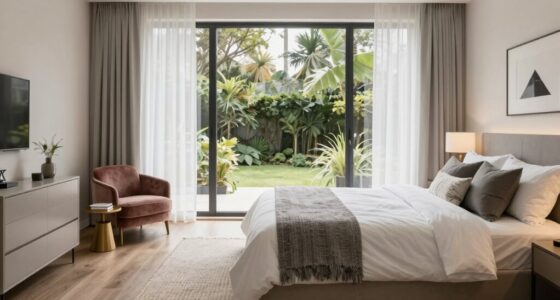
You prioritize rest in home design because you understand that a calming environment boosts sleep quality, mental clarity, and overall health. Creating cozy, clutter-free spaces with soft lighting and natural elements helps you unwind and reduces stress. Designating relaxation zones and soundproofing your home can improve your well-being and daily mood. If you want to learn how to make your home a true sanctuary for rest, there’s much more to discover beyond the basics.

Get health and wellness essentials delivered free with Prime
- Fast, free delivery on millions of items
- Prime Video, Amazon Music and more included
- Member-only deals all year
Key Takeaways
- Increased awareness of the link between quality sleep and overall health has made rest a central home design focus.
- Designing calming environments and relaxation zones helps reduce stress and promote mental well-being.
- Modern lifestyles emphasize work-life balance, prompting homes to prioritize restorative spaces for recovery.
- Advances in home technology and lighting allow for customized environments that support better sleep and relaxation.
- The recognition of mental health importance has driven home designs that foster tranquility and emotional rejuvenation.
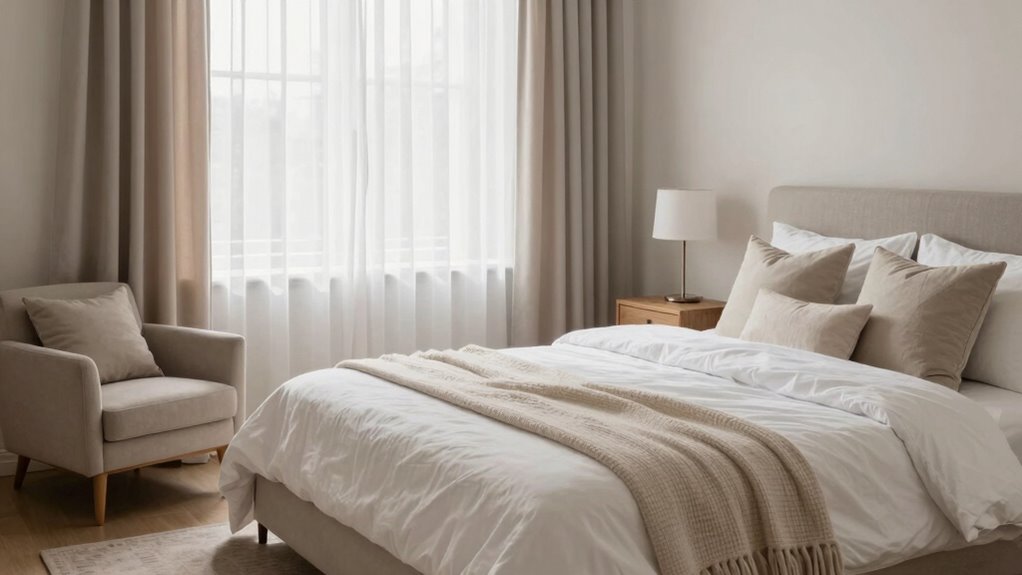
In today’s fast-paced world, prioritizing rest in your home design is more important than ever. As life becomes busier and more stressful, your home should serve as a sanctuary where quality sleep and relaxation are at the forefront. Creating spaces that focus on sleep quality means choosing the right mattress, blackout curtains, and calming color palettes to promote a peaceful environment. When your bedroom is optimized for rest, it’s easier to unwind and get the restorative sleep your body needs, which impacts your mood, energy, and overall health.
Prioritize restful design with cozy spaces, calming colors, and optimal sleep essentials for better mood and overall well-being
But rest isn’t just about the bedroom. It’s about designing relaxation zones throughout your home that encourage downtime and mental reset. These zones could be a cozy reading nook, a meditation corner, or a quiet lounge area. The goal is to craft spaces that invite you to pause, breathe, and disconnect from daily stressors. Incorporate comfortable seating, soft lighting, and natural elements like plants or water features to deepen the sense of tranquility. When these relaxation zones are thoughtfully integrated into your home, they become essential retreats that support your mental and emotional well-being. A calming environment can significantly enhance your ability to relax and recharge.
You might also consider how the layout and flow of your home influence your ability to unwind. An open, clutter-free space reduces visual chaos and promotes calmness. Using noise-canceling elements like rugs, curtains, or acoustic panels can further enhance sleep quality and relaxation. These details help create an environment where it’s easy to detach from screens, work pressures, and daily worries, making rest a natural part of your routine. Incorporating soundproofing techniques can be especially beneficial in achieving a peaceful atmosphere. Additionally, understanding how weather-related disruptions impact your home environment can help you better prepare for maintaining a tranquil space during unexpected weather events.
Lighting plays a crucial role in establishing a restful atmosphere. Soft, warm lights in your relaxation zones and dimmable fixtures in your bedroom signal to your brain that it’s time to wind down. Avoid harsh or bright lights before bed, as they interfere with melatonin production and disrupt sleep. Instead, opt for ambient lighting that soothes your senses and encourages a peaceful state of mind. Incorporating natural elements into your space can further enhance feelings of calm and connection to the environment. Understanding how lighting quality affects your sleep can help you make better choices in your home setup.
Ultimately, prioritizing rest through home design isn’t just about adding a few cozy elements; it’s about intentionally shaping your environment to support your well-being. When you focus on sleep quality and create dedicated relaxation zones, you set yourself up for more restorative nights and more rejuvenating days. Your home becomes a true refuge—where rest isn’t an afterthought but a central, celebrated part of your daily life.
As an affiliate, we earn on qualifying purchases.
Frequently Asked Questions
How Does Natural Light Influence Rest-Focused Home Design?
Natural light influences your rest-focused home design by enhancing mood and promoting relaxation. Sunlight therapy helps regulate your sleep cycle, making mornings brighter and evenings calmer. Proper window placement guarantees you maximize sunlight exposure without glare or heat issues, creating a soothing environment. You’ll find that well-designed spaces with strategic windows allow gentle, natural illumination, supporting your rest and overall well-being throughout the day and night.
What Materials Promote Better Sleep and Relaxation?
Imagine sinking into a bed where sleep-enhancing fabrics like soft, breathable cotton or silk cocoon you in comfort, contrasting sharp, stiff materials that disturb your rest. You’ll find that natural materials promote relaxation, especially when paired with aromatherapy integration—lavender or chamomile scents soothe your mind. These thoughtful choices help create a sanctuary, turning your home into a peaceful retreat where restful sleep feels effortlessly within reach.
How Can Technology Be Integrated Without Disrupting Rest?
You can integrate technology seamlessly by choosing smart lighting that adjusts to your sleep cycle, creating a calming environment without disruption. Use noise reduction features, like soundproofing or white noise machines, to keep your space quiet and peaceful. Keep devices away from your bed or switch them to night mode to prevent light and sound from interfering with your rest. This way, technology enhances relaxation rather than disrupting it.
What Color Schemes Are Most Effective for Calming Spaces?
Soft blues and gentle greens evoke calm, like a peaceful lake or lush meadow, making them ideal for calming spaces. These colors, rooted in color psychology, enhance mood and foster relaxation. Pale neutrals and muted earth tones also work well, creating a soothing atmosphere. By choosing these hues, you activate mood enhancement, turning your space into a sanctuary where stress melts away and restful energy flows effortlessly.
How Does Clutter Impact Rest and Overall Home Harmony?
Clutter stress can considerably disrupt your sleep and overall home harmony. When your space is filled with unnecessary items, it creates visual chaos that makes it harder to relax. This disorganization can lead to heightened anxiety and difficulty unwinding at the end of the day. Clearing clutter helps create a peaceful environment, promoting restful sleep and fostering a sense of calm, making your home a true sanctuary for rest.
As an affiliate, we earn on qualifying purchases.
Conclusion
Prioritizing rest in your home design isn’t just about comfort—it’s creating a sanctuary where your mind can breathe and your body can heal. Think of your space as a gentle oasis amid life’s chaos, a place where relaxation flows as naturally as a peaceful river. When you design with rest in mind, you’re not just decorating a house; you’re crafting a haven that nurtures your well-being and recharges your spirit every day.
As an affiliate, we earn on qualifying purchases.
natural material relaxation cushions
As an affiliate, we earn on qualifying purchases.
As an affiliate, we earn on qualifying purchases.
Fall Picks
fall essentials
As an affiliate, we earn on qualifying purchases.