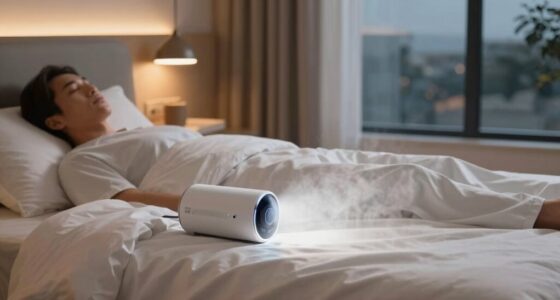
Your bedroom temperature directly affects how easily you fall asleep and stay asleep. When it’s too hot or cold, your body struggles to regulate its temperature, which can lead to restless nights and disrupted sleep cycles. Experts recommend keeping your room between 60-67°F to support natural temperature regulation and improve sleep quality. Small adjustments to your environment can make a big difference. Keep going to discover more ways to optimize your sleep environment.
Listen free for 30 days with Audible
Thousands of audiobooks and originals — cancel anytime.
As an affiliate, we earn on qualifying purchases.
Key Takeaways
- Incorrect bedroom temperatures disrupt the body’s natural temperature regulation, making it harder to fall and stay asleep.
- Staying within the recommended 60-67°F (15.5-19.5°C) supports smooth sleep cycle transitions and improves sleep quality.
- Excessive heat or cold interferes with sleep stages, leading to restless nights and decreased restfulness.
- Small environmental adjustments, like thermostat changes or bedding, can significantly enhance sleep comfort.
- Proper temperature regulation promotes overall health, mood, and cognitive function by ensuring restorative sleep.

Your bedroom temperature plays an essential role in how well you sleep. When the temperature isn’t just right, it can throw off your entire sleep cycle, making it harder to fall asleep, stay asleep, or wake feeling refreshed. Your body naturally works to regulate its temperature during sleep, a process known as temperature regulation. If your environment is too hot or too cold, it interferes with this process, disrupting your sleep cycle and leading to restless nights.
During sleep, your body temperature drops slightly, signaling that it’s time to rest. If your bedroom is too warm, your body struggles to lower its temperature effectively. This can cause you to toss and turn, preventing you from reaching the deeper stages of sleep that are essential for physical and mental recovery. Conversely, if the room is too cold, your body might activate its heating mechanisms, which can also disturb your sleep. Maintaining a comfortable temperature helps your body carry out its natural temperature regulation process smoothly, ensuring you move seamlessly through the sleep stages.
The ideal bedroom temperature varies from person to person, but most sleep experts recommend keeping it between 60 and 67 degrees Fahrenheit (about 15.5 to 19.5 degrees Celsius). This range supports your body’s ability to regulate temperature without extra effort, allowing your sleep cycle to progress uninterrupted. When your environment aligns with your body’s natural rhythms, it’s easier to fall asleep quickly and stay in restorative sleep stages longer. This not only improves sleep quality but also enhances overall health, mood, and cognitive function.
You might not realize it, but small changes in your room temperature can have a significant impact. For example, turning down the thermostat slightly or adjusting your bedding can make a big difference in how comfortably you sleep. Using fans, space heaters, or air conditioning helps fine-tune the temperature to suit your needs. Paying attention to your body’s signals—such as feeling cold or overheated—can guide you toward the perfect environment. Additionally, proper indoor air quality and thermal comfort play crucial roles in creating an optimal sleep environment. Being mindful of temperature regulation techniques can further optimize your sleep environment and improve your overall rest.
As an affiliate, we earn on qualifying purchases.
Frequently Asked Questions
Can Temperature Changes Disrupt Sleep Patterns Overnight?
Yes, temperature changes can disrupt your sleep patterns overnight. Your body relies on efficient temperature regulation to maintain your sleep cycle, and fluctuations can cause awakenings or lighter sleep. When the room gets too hot or cold, your body struggles to stay in the deep sleep stages, leading to fragmented sleep and difficulty waking up refreshed. Maintaining a consistent, comfortable temperature helps support your sleep cycle and overall sleep quality.
How Does Humidity Interact With Bedroom Temperature to Affect Sleep?
Think of your bedroom as a delicate dance between temperature and humidity, where each step influences your sleep comfort. High humidity can turn your room into a steamy sauna, disrupting your sleep, while low humidity dries you out. Humidity control keeps this balance in check, helping you breathe easier and fall asleep faster. When temperature and humidity work together, they create a cozy haven that promotes restful, uninterrupted sleep.
Is It Better to Cool or Warm the Bedroom Before Sleeping?
It’s better to cool your sleep environment before sleeping, as temperature regulation helps you fall asleep faster and stay asleep longer. A cooler bedroom, around 60-67°F, promotes ideal sleep by aiding your body’s natural temperature drop. Warming the room might feel cozy but can hinder sleep quality. Prioritize a comfortably cool environment to enhance your sleep environment and enjoy more restorative rest.
Do Different Age Groups Require Different Bedroom Temperatures?
Yes, different age groups need tailored bedroom temperatures due to age-specific comfort and developmental needs. Babies and young children often require slightly warmer environments to support their growth, while teenagers and adults tend to sleep better in cooler settings. Seniors may prefer warmer temperatures to ease joint pain and improve comfort. Adjusting your bedroom temperature to match these needs helps promote restful sleep and overall well-being at any age.
How Quickly Does Temperature Adjustment Improve Sleep Quality?
Adjusting your bedroom temperature can boost sleep quality within just a few nights. Studies show that a consistent, cool environment enhances sleep regulation, leading to quicker sleep onset and fewer awakenings. For ideal sleep, aim for about 65°F (18°C). Temperature regulation is essential for sleep enhancement, and small changes can make a big difference in how rested you feel. So, experiment with your environment to find what works best for you.
As an affiliate, we earn on qualifying purchases.
Conclusion
You might think that a warm or cool room doesn’t make much difference, but research shows it truly impacts your sleep quality. Keeping your bedroom within the ideal temperature range helps your body regulate its temperature naturally, leading to deeper, more restful sleep. Don’t underestimate the power of a comfortable environment—it’s a simple change that can markedly improve your nights. So, trust the science and tweak your thermostat tonight for better rest tomorrow.
As an affiliate, we earn on qualifying purchases.
bedding for temperature regulation
As an affiliate, we earn on qualifying purchases.
As an affiliate, we earn on qualifying purchases.
Flea & tick season Picks
flea and tick prevention
As an affiliate, we earn on qualifying purchases.