To soundproof your bedroom for a peaceful sleep, start by sealing gaps around windows, doors, and outlets with acoustic sealants to prevent noise leaks. Upgrade to double or triple-glazed windows and add heavy curtains. Incorporate wall panels, rugs, and soft furniture to absorb sound. Position furniture strategically to block noise, and consider adding soundproofing materials like resilient channels and insulated drywall. For deeper tips, explore more ways to create your perfect quiet space.

Get health and wellness essentials delivered free — and shop member deals
- Fast, free delivery on millions of items
- Access to Prime Big Deal Days deals on October 6–7
- Prime Video, Amazon Music and more included
Key Takeaways
- Seal gaps around doors, windows, and outlets with acoustic sealants and weatherstripping to block external noise entry.
- Upgrade to double or triple-glazed windows and add soundproof curtains to reduce sound transmission.
- Incorporate sound-absorbing materials like acoustic panels, rugs, and heavy drapes to dampen internal and external noise.
- Use furniture strategically—placing large, soft items against walls and away from noise sources to absorb sound.
- Enhance wall insulation with soundproofing layers, resilient channels, and decoupled drywall for maximum noise reduction.
soundproof bedroom window inserts
As an affiliate, we earn on qualifying purchases.
As an affiliate, we earn on qualifying purchases.
Seal Gaps and Cracks to Block Out Noise
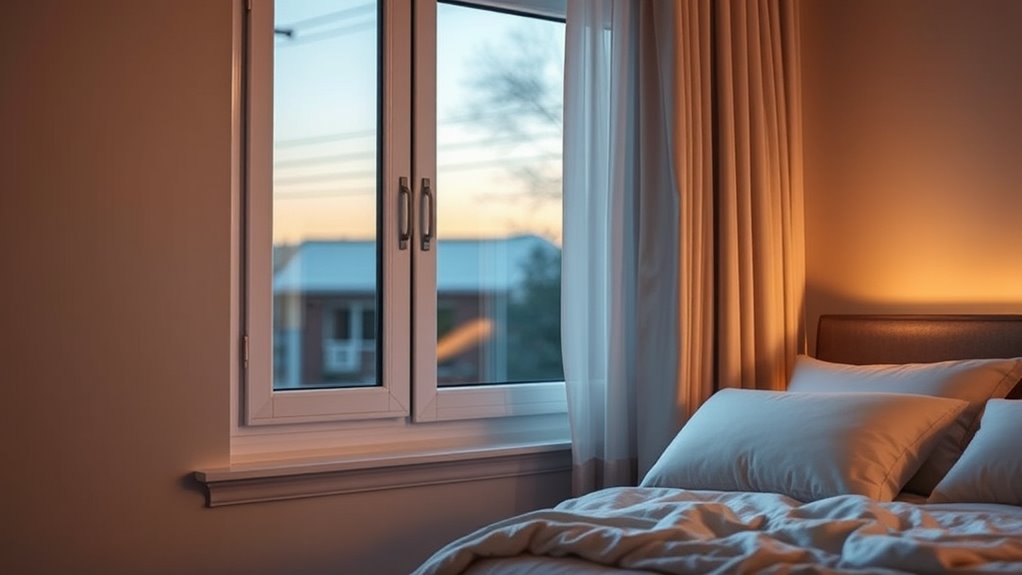
Sealing gaps and cracks is one of the simplest yet most effective ways to reduce noise entering your bedroom. Start by inspecting your doors and windows for any small openings. Installing door seals can create a tight barrier, preventing sound from seeping in around the edges. You can also use draft stoppers at the bottom of your doors; these block gaps that let noise through and improve insulation. Don’t forget to check for cracks in the door frame or walls near electrical outlets and vents. Filling these tiny openings with sealant or weatherstripping can make a significant difference. Using soundproofing techniques like adding mass-loaded vinyl or acoustic panels can further enhance noise reduction. Additionally, selecting soundproofing materials with high absorption qualities can help dampen sound transmission throughout your room. Properly sealing these areas is essential for creating an effective sound barrier and ensuring a quiet, restful environment. Incorporating soundproofing methods like decoupling walls or adding resilient channels can also improve overall soundproofing performance. For optimal results, consider combining sealing with other soundproofing strategies such as installing heavy curtains or window inserts. By sealing these gaps, you’ll create a quieter environment, making it easier to fall asleep and stay asleep without disruptions from outside noise.
As an affiliate, we earn on qualifying purchases.
Enhance Windows and Doors for Better Soundproofing

Enhancing your windows and doors is a crucial step in soundproofing your bedroom. Upgrading your windows with double or triple glazing can markedly reduce outside noise. Consider installing window inserts or weatherstripping to improve insulation and block sound leaks. For doors, door insulation kits help seal gaps around the frame, preventing sound from slipping through. Visualize a sturdy door with a solid core, topped with a sweep that seals the bottom. Adding heavy curtains or acoustic drapes over windows can further dampen noise. Stronger window upgrades and effective door insulation work together to create a quieter, more peaceful sleep environment. These improvements make a noticeable difference by minimizing the transfer of noise from outside or adjacent rooms. Soundproofing techniques can further optimize your efforts for a restful night’s sleep. Incorporating sound transmission reduction methods into your upgrade plan can significantly enhance overall effectiveness, especially when combined with building insulation strategies to block noise pathways. Additionally, selecting soundproofing materials specifically designed for acoustic performance can further improve results. Using acoustic sealants to fill tiny gaps around window frames and door jambs can also provide an extra layer of soundproofing.
As an affiliate, we earn on qualifying purchases.
Use Acoustic Treatments and Soft Furnishings
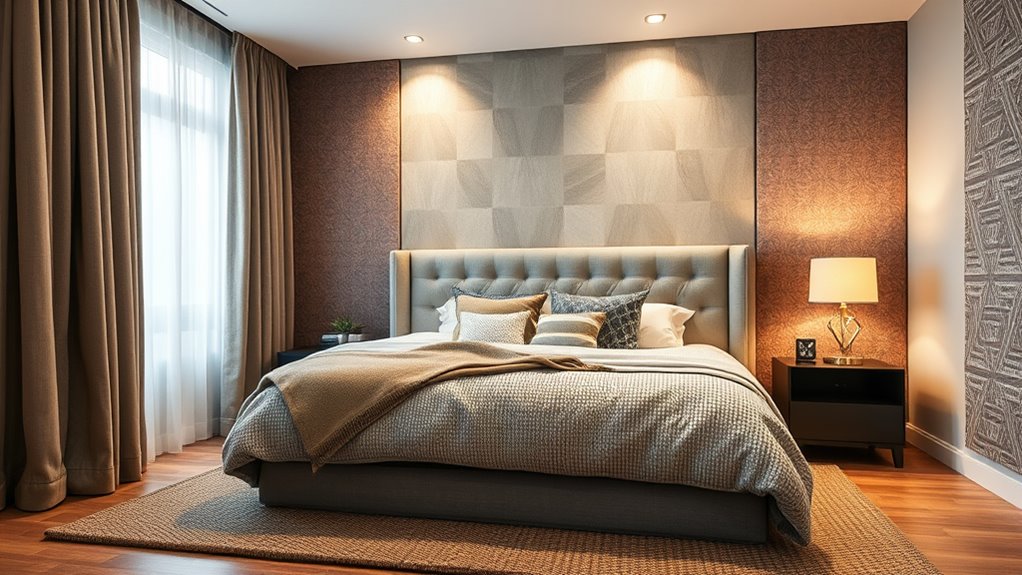
To effectively reduce sound reflections and absorb unwanted noise, incorporating acoustic treatments and soft furnishings into your bedroom is essential. Wall panels are a great way to dampen sound waves, preventing echoes and improving overall acoustics. Choose panels made from sound-absorbing materials and position them strategically on your walls to maximize their effectiveness. Acoustic curtains are also highly effective; they not only block outside noise but also absorb sound within the room. Hang these heavy, dense curtains over windows and even on walls to further minimize sound transmission. Adding soft furnishings like plush rugs, upholstered headboards, and thick bedding can help absorb residual noise, creating a quieter, more peaceful environment for sleep. Utilizing acoustic optimization techniques, such as proper placement and material selection, can further enhance your bedroom’s soundproofing. Incorporating soundproofing materials specifically designed for interior use can significantly increase the overall effectiveness of your soundproofing efforts. Additionally, understanding the sound absorption properties of various materials will enable you to choose the most effective options for your space. For example, selecting materials with high sound absorption coefficients can optimize your soundproofing results. Exploring innovative soundproofing techniques can also provide additional benefits for improving sleep quality.
As an affiliate, we earn on qualifying purchases.
Arrange Furniture Strategically to Absorb Sound

Strategically arranging your bedroom furniture can considerably reduce sound reflections and improve overall acoustics. Positioning large pieces like beds and dressers against walls helps block noise from entering or escaping the room. Incorporate decorative wall panels to absorb sound waves and minimize echoes. Place area rugs on the floor to dampen footsteps and airborne sound. Use tall bookshelves or fabric-covered furniture to further diffuse sound energy. Arranging furniture away from shared walls or windows reduces external noise infiltration. Consider placing a soft armchair or upholstered headboard to absorb reflections near your sleeping area. Additionally, utilizing vintage acoustic treatments inspired by retro design can enhance sound absorption and add character to your space. Understanding the principles of soundproofing can guide you in selecting the most effective strategies for your room. Learning about sound absorption can help you choose the best materials and arrangements for a quieter environment. Implementing soundproofing techniques, such as sealing gaps and adding insulation, can further improve room acoustics. Being aware of room acoustics and how different elements influence sound can help you fine-tune your setup for optimal quietness. By thoughtfully organizing your furniture with these elements, you’ll create a calmer, quieter environment conducive to peaceful sleep.
Implement Additional Soundproofing Solutions for Maximum Quiet
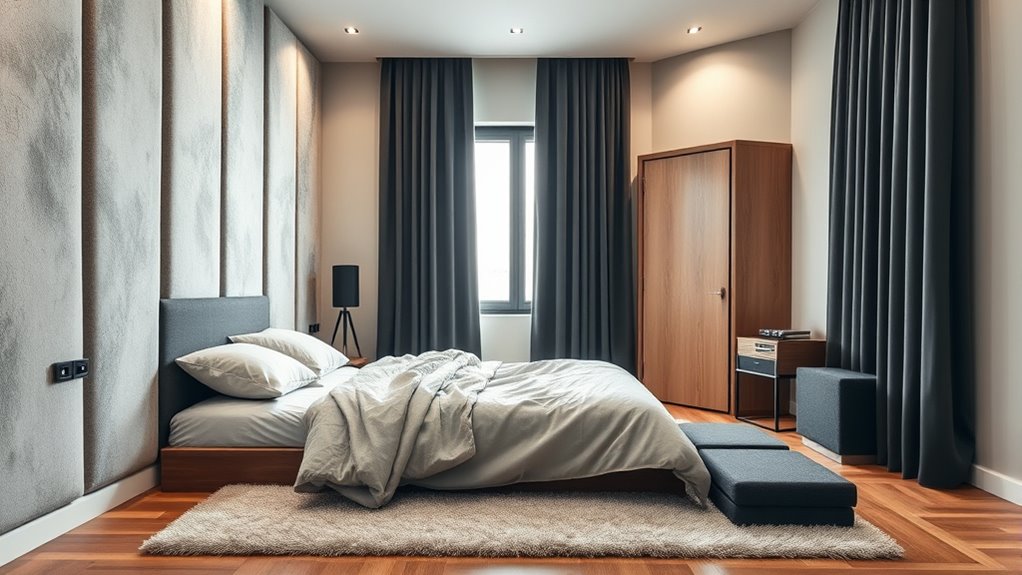
After arranging your furniture to absorb sound, you can further boost your bedroom’s quietness by adding specialized soundproofing solutions. Installing soundproof curtains is an effective way to block external noise and prevent sound from escaping your room. Choose thick, dense curtains designed for sound insulation, and hang them close to the window frame for maximum effect. Additionally, improving wall insulation can notably reduce noise transmission through your walls. Consider adding acoustic panels or upgrading to insulated drywall if possible. These enhancements work together to create a barrier that keeps outside noise out and internal sounds contained. For an even more comprehensive approach, integrating soundproofing techniques such as sealing gaps and using mass-loaded vinyl can significantly enhance the overall soundproofing effort. Effective insulation can also help dampen sound vibrations within your walls, further improving the quietness of your space. Incorporating soundproofing materials into your wall construction can further improve noise reduction. Utilizing soundproofing strategies such as resilient channels or decoupling drywall layers can additionally minimize sound transfer. Combining soundproof curtains with improved wall insulation gives your bedroom a more peaceful environment, ensuring you enjoy a quieter, more restful night’s sleep.
Frequently Asked Questions
How Much Does Professional Soundproofing Typically Cost?
Professional soundproofing costs typically range from $1,000 to $10,000, depending on the room size and materials used. You should consider your budget considerations carefully, as higher-end solutions offer better noise reduction but come at a higher price. Getting detailed cost estimates from specialists helps you plan effectively. Remember, investing in quality soundproofing can markedly improve your sleep quality and overall comfort.
Can Soundproofing Materials Affect Indoor Air Quality?
Soundproofing materials can impact indoor air quality if they contain volatile organic compounds (VOCs) or other chemicals. You should prioritize material safety and choose low-VOC or non-toxic options to minimize air quality concerns. Always check product labels and manufacturer info, and guarantee proper ventilation during and after installation. This way, you protect your health while creating a quieter, more peaceful sleeping environment.
Are There Temporary Soundproofing Options for Renters?
Yes, as a renter, you can use rental soundproofing options like temporary barriers and portable curtains to reduce noise. You might hang heavy blankets or quilted tapestries on walls or use foam panels that attach with removable hooks. Consider placing furniture strategically or using draft stoppers under doors. These rental soundproofing methods are easy to install and remove, helping you enjoy a quieter, more peaceful sleep without risking your security deposit.
What Are Eco-Friendly Soundproofing Alternatives?
Did you know that eco-friendly soundproofing options can reduce noise pollution by up to 50%? You can choose recyclable materials like cork panels or recycled denim insulation, which are effective and sustainable. Natural insulation such as sheep’s wool or cellulose made from recycled paper offers excellent sound absorption without harmful chemicals. These alternatives not only protect the environment but also create a healthier, quieter space for your restful sleep.
How Long Does DIY Soundproofing Usually Take to Install?
Diy soundproofing typically takes anywhere from a few hours to several days, depending on the installation timeline and project complexity. If you’re doing a simple job like adding weatherstripping or sealing gaps, expect it to take just a few hours. For more complex projects, like installing acoustic panels or insulating walls, allocate a weekend or more. Planning ahead helps make sure you stay on track and complete the project efficiently.
Conclusion
By sealing gaps, upgrading your windows, adding soft furnishings, and arranging furniture thoughtfully, you create a cozy fortress against noise. Imagine slipping into a peaceful sanctuary where the world’s sounds fade away, replaced by a gentle hush that soothes your mind. With these simple steps, your bedroom transforms into a quiet retreat, inviting restful nights and serene mornings. Embrace the calm, and let your space become the peaceful haven you deserve.
Fall Picks
fall essentials
As an affiliate, we earn on qualifying purchases.