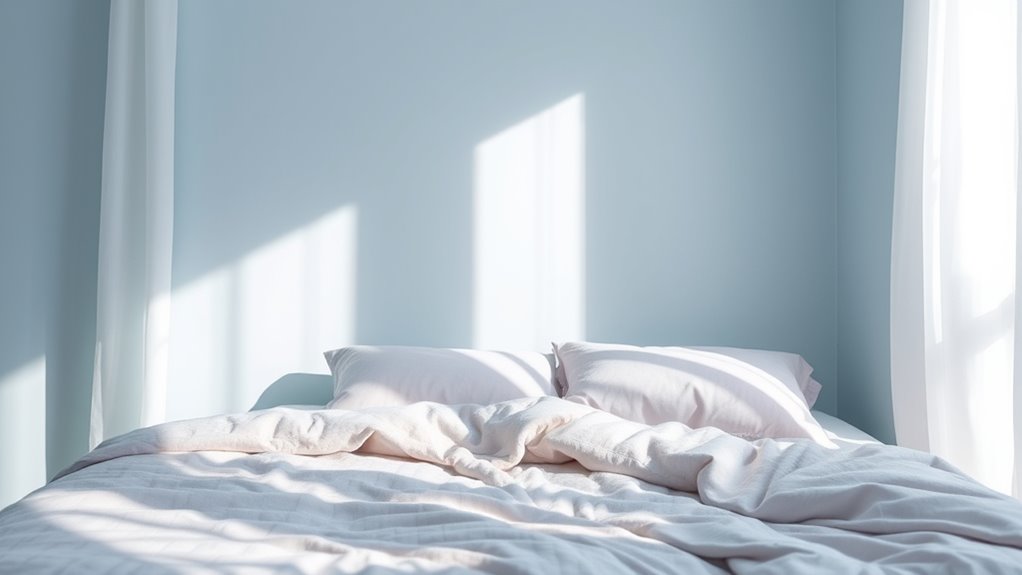

Your wall paint color can influence your sleep quality by creating a calming and relaxing environment. Soft, muted hues like blues, greens, and lavenders help lower your heart rate and promote tranquility. Choosing matte or eggshell finishes enhances this restful atmosphere, while darker shades may feel cozy but could also feel enclosed. The way your paint looks varies with lighting, so testing colors in your space is wise. Keep exploring to discover how specific colors can transform your sleep experience.
Key Takeaways
- Soft, muted hues like blue, green, and lavender promote relaxation and improve sleep quality.
- Calm colors influence mood and help create a restful, stress-free bedroom environment.
- Matte or eggshell finishes reduce glare and enhance the soothing effect of calming wall colors.
- Proper lighting interaction with paint colors can either enhance or hinder a tranquil sleep setting.
- Thoughtfully choosing color psychology and finishes supports better sleep and overall bedroom comfort.
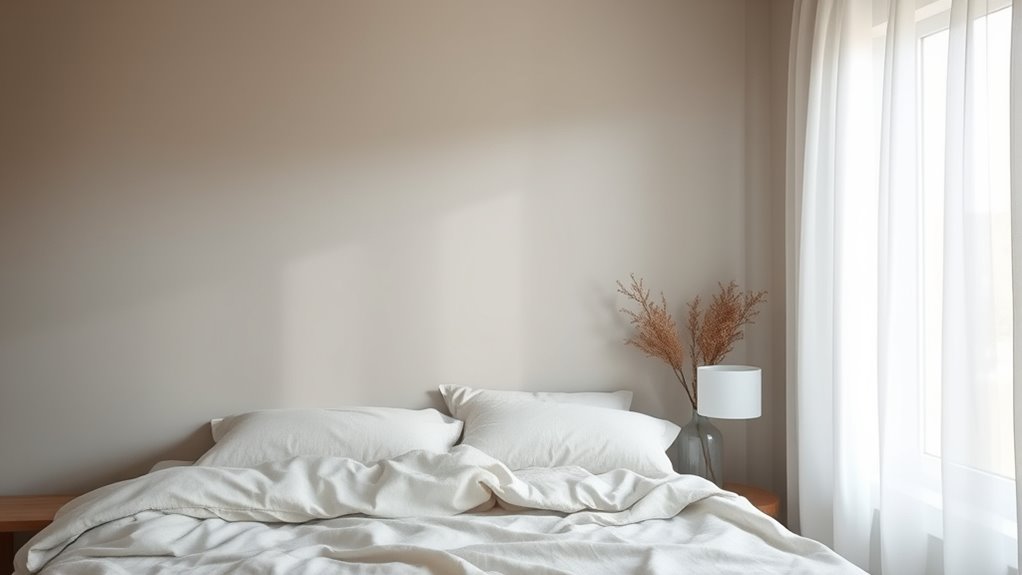
Your choice of wall paint color can considerably influence your sleep quality. The colors you select for your bedroom aren’t just about aesthetics—they can directly impact your mood and relaxation levels, making it easier or harder to drift off at night. When exploring options, it’s essential to understand how color psychology plays a role in creating a calming environment. Soft, muted hues like blues, greens, and lavenders are often recommended because they evoke feelings of tranquility and restfulness. Blue, in particular, has been linked to lowering blood pressure and heart rate, which helps your body prepare for sleep. Green is associated with balance and harmony, fostering a peaceful atmosphere, while lavender combines the calming properties of purple with a soothing effect that promotes relaxation.
Choosing calming wall colors like blue, green, or lavender can enhance relaxation and improve sleep quality.
In addition to color choice, the paint finish you opt for can influence how a room affects your sleep. A matte or eggshell finish tends to absorb light and minimize glare, creating a softer, more subdued ambiance that encourages rest. On the other hand, high-gloss or semi-gloss finishes reflect more light, which can be stimulating and visually distracting, potentially interfering with your ability to wind down. Choosing the right paint finish is essential because it complements your color scheme and enhances the overall calming effect you want to achieve. For bedrooms intended for sleep, sticking to matte or eggshell finishes helps maintain a cozy, restful environment free from harsh reflections. Additionally, considering the visual impact of paint finishes can help you select options that promote a more restful atmosphere.
It’s also worth considering how the paint’s color interacts with natural and artificial lighting in your room. Lighter shades of calming colors reflect more light, making your space feel open and airy without feeling overstimulating. Darker shades, while cozy, can sometimes make a room feel smaller or more enclosed, which may not be ideal if you’re trying to promote relaxation. When painting your bedroom, test small patches of your chosen color and observe how they look at different times of the day, paying attention to how the paint finish influences the visual effect. This way, you can make an informed decision that aligns with your sleep needs.
Ultimately, your bedroom’s color palette should foster a sense of peace and comfort, helping you unwind after a long day. By understanding the principles of color psychology and selecting a suitable paint finish, you create a space that naturally encourages restful sleep. Remember, the goal is to design a calming retreat where your mind and body can relax fully, and the right wall paint color plays a fundamental role in achieving that.
Frequently Asked Questions
Can Wall Paint Color Impact Sleep Quality Long-Term?
Your wall paint color can impact your sleep quality long-term through its psychological impact and the effects of color therapy. Calming hues like soft blues or greens promote relaxation and reduce stress, helping you fall asleep faster and enjoy deeper rest. Over time, consistently surrounding yourself with soothing colors can positively influence your sleep patterns, making it easier to unwind at night and wake up feeling refreshed.
Do Different Lighting Conditions Change Paint Color Effects on Sleep?
Like the changing phases of the moon, different lighting conditions influence how paint colors appear and affect your sleep. When you adjust light temperature—warm or cool—you alter the paint’s hue perception, impacting relaxation. A glossy sheen reflects more light, making colors seem brighter and potentially more stimulating, while matte finishes absorb light, promoting calmness. So, consider both light temperature and paint sheen to create a sleep-friendly environment.
Are There Specific Paint Finishes That Promote Better Sleep?
You should choose matte or eggshell finish paints for a sleep-friendly bedroom. These paint finish options create a soft, non-reflective surface that minimizes glare, helping you relax better. Avoid high-sheen finishes like satin or semi-gloss, which can reflect light and disturb your sleep. Matte finishes promote a calming atmosphere, making it easier to unwind at night and enjoy restful sleep.
How Does Wall Color Influence Sleep in Children Versus Adults?
You might notice that wall color influences sleep differently for children and adults due to color psychology. For children, soft, calming hues create a soothing sleep environment, helping them settle down. Adults may prefer muted tones that promote relaxation and reduce stress. By choosing colors thoughtfully, you can tailor your sleep environment to suit everyone’s needs, making bedtime more peaceful and improving overall sleep quality for both age groups.
Can Seasonal Changes Affect the Calming Effects of Wall Colors?
Seasonal changes can influence how calming your wall colors feel, as your seasonal mood shifts and natural light varies. You might find certain hues less soothing during darker months, so consider repainting with more resilient, durable paint to refresh your space. This helps maintain a calming environment year-round, ensuring your bedroom stays inviting and conducive to restful sleep despite seasonal changes.
Conclusion
Choosing calming wall paint colors can create a serene environment, promote relaxation, and improve your sleep quality. By selecting soothing hues, you set the mood, reduce stress, and foster tranquility. The right color influences your mood, enhances your comfort, and encourages restful nights. So, when you pick your bedroom paint, remember: your color choice shapes your sleep, your mood, and your well-being. Make your walls a sanctuary, a retreat, and a restful haven.