
Sleeping on the floor can improve your sleep and posture by offering a firmer surface that better aligns your spine and reduces pressure points. It supports natural sleeping positions, helping to decrease back pain and musculoskeletal issues over time. Many cultures have used ground sleeping for its health benefits. If you want to understand how you can make this change comfortably and safely, there’s more to discover below.
Get ready for Prime Big Deal Days — try Prime free
Exclusive member deals on October 6–7, plus fast free delivery. Cancel anytime.
As an affiliate, we earn on qualifying purchases.
Key Takeaways
- Sleeping on a firm surface like the floor can better align the spine and reduce back pain.
- It promotes natural sleep posture, potentially preventing musculoskeletal issues over time.
- Ground sleeping distributes body weight evenly, decreasing pressure points and enhancing sleep quality.
- Cultural traditions show that floor sleeping supports simplicity and discipline, with health benefits.
- Transitioning gradually with minimal padding allows the body to adapt and may improve posture and rest.
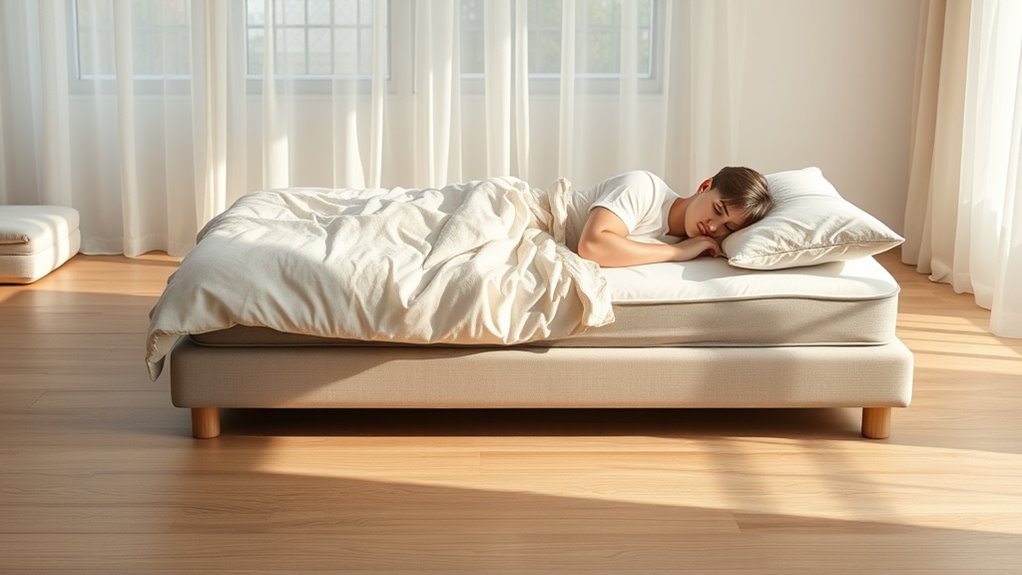
Have you ever considered sleeping on the floor? It might seem unusual at first, but many people find it offers surprising benefits. One of the main reasons some choose this practice is the potential orthopedic benefits. Sleeping on a firm surface can help align your spine, reduce pressure on joints, and minimize back pain. Unlike soft mattresses that can cause your body to sink and misalign, the floor provides a stable support that encourages proper posture during sleep. This can be especially helpful if you suffer from chronic back issues or discomfort caused by poor sleeping positions. Additionally, sleeping on the floor encourages you to maintain a natural posture, which may prevent the development of certain musculoskeletal problems over time. Some research even suggests that firm sleeping surfaces can promote better spinal health and reduce the likelihood of developing chronic pain conditions.
Furthermore, health benefits, cultural practices also influence why many individuals sleep on the floor. In various parts of the world, especially in Asia, Africa, and some Mediterranean countries, sleeping on the ground is a tradition passed down through generations. These cultures often view sleeping on a firm surface as a way to stay connected with tradition, promote simplicity, or improve overall health. In Japan, for example, it’s common to sleep on tatami mats, which are soft yet firm, fostering a sense of minimalism and discipline. Similarly, in parts of Africa, sleeping on the ground is customary and integrated into daily life, often accompanied by specific bedding arrangements that enhance comfort and posture. These cultural practices demonstrate that sleeping on the floor isn’t just a modern health trend but a long-standing tradition rooted in cultural beliefs and lifestyles.
Choosing to sleep on the floor can also influence your sleep quality. Some people report feeling more rested, with fewer aches and pains in the morning. The firm surface can help distribute your body weight more evenly, reducing pressure points that develop on softer mattresses. Furthermore, sleeping on the floor might contribute to better sleep posture, which in turn can decrease the likelihood of developing chronic discomfort. If you’re considering this change, it’s important to start gradually, perhaps with a thin mat or blanket for added comfort, and see how your body responds. Over time, your body can adapt, and you may notice improvements not just in sleep quality, but in overall posture and well-being.
As an affiliate, we earn on qualifying purchases.
Frequently Asked Questions
Can Sleeping on the Floor Help With Chronic Back Pain?
Sleeping on the floor can help with chronic back pain by providing better spinal alignment and reducing pressure points. The floor sleeping benefits include firm support that encourages proper posture, which may alleviate discomfort over time. You might find relief if your current mattress is too soft or sagging. However, it is crucial to listen to your body and consult a healthcare professional before making significant changes to your sleep routine.
Is Sleeping on the Floor Suitable for Elderly Individuals?
Sleeping on the floor isn’t always suitable for elderly individuals, as it may affect comfort and floor accessibility. You should prioritize elderly comfort by choosing softer, supportive surfaces or adding padding. If you decide to try it, verify the area is easily accessible, with minimal risk of falls or injuries. Always consult a healthcare professional first, especially if mobility or joint issues are present, to determine if floor sleeping benefits or harms you.
What Are the Best Floor Surfaces for Sleeping?
You’ll want a surface that balances firmness and comfort. Opt for a firm yet cushioned floor, like a padded yoga mat or tatami mat, which provides support without being too hard. Avoid overly hard surfaces like concrete, and steer clear of overly soft carpets that lack support. The best floor surfaces for sleeping give you enough firmness to support your spine while offering enough comfort to prevent pressure points.
How Long Does It Take to Adapt to Floor Sleeping?
It generally takes about one to two weeks for you to adapt to floor sleeping, but your adjustment period may vary based on your comfort level and previous sleep habits. During this time, your body gets used to the firmer surface, and discomfort usually decreases. To ease the progression, start gradually and listen to your body’s signals. With patience, you’ll likely find your comfort level improves, making sleep more restful.
Are There Any Risks Associated With Sleeping on the Floor?
Imagine lying softly on the cool, hard surface of the floor, but be aware of potential risks involved. You might experience discomfort, joint pain, or exacerbate existing issues if you don’t consider safety considerations. For some, sleeping on the floor can cause soreness or worsen back problems. Always listen to your body, start gradually, and consult a healthcare professional to minimize risks involved and guarantee safe adaptation.
As an affiliate, we earn on qualifying purchases.
Conclusion
Sleeping on the floor can feel like a reset button for your body, offering potential benefits for posture and sleep quality. However, it’s not a one-size-fits-all solution, and comfort varies from person to person. Think of it as trying on a new pair of shoes—you might find it suits you perfectly or need to adjust. Ultimately, listen to your body and weigh the pros and cons before making the switch.
As an affiliate, we earn on qualifying purchases.
As an affiliate, we earn on qualifying purchases.
Fall Picks
fall essentials
As an affiliate, we earn on qualifying purchases.