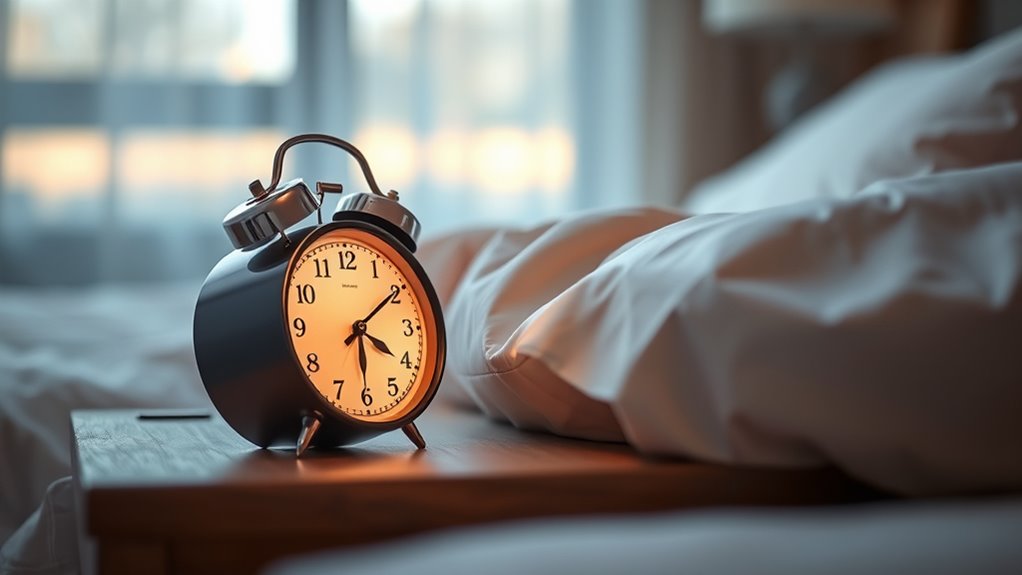

If you want a gentler wake-up, a sunrise alarm clock that gradually increases light is more suitable. It mimics natural dawn, helping you wake smoothly without sudden disruptions. Traditional sound alarms tend to jolt you awake with loud noises, which can cause stress and grogginess. Choosing between light and sound depends on how sensitive you are to abrupt noises or light. To discover which method suits you best and more tips, keep exploring your options further.

Get health and wellness essentials delivered free with Prime
- Fast, free delivery on millions of items
- Prime Video, Amazon Music and more included
- Member-only deals all year
Key Takeaways
- Light alarms simulate sunrise, providing a gradual, natural wake-up that reduces stress and grogginess.
- Sound alarms produce abrupt noises, often causing sudden awakenings and potential sleep disruption.
- Gentle light alarms support better sleep quality and leave you feeling more refreshed in the morning.
- Sound alarms can trigger stress responses, heart rate spikes, and feelings of irritation.
- Personal preferences and sleep needs influence whether light or sound alarms result in a gentler waking experience.

When it comes to waking up in the morning, choosing between an alarm clock light and sound can make a significant difference in how you start your day. Your morning routines set the tone for the hours ahead, and the way you wake up plays a pivotal role in that process. If you’re someone who struggles with grogginess or finds abrupt alarms jarring, exploring the gentler options might improve your overall sleep quality. Both alarm clock lights and traditional sound alarms aim to rouse you from sleep, but they do so in fundamentally different ways, affecting how smoothly you shift from rest to wakefulness.
Alarm clock lights simulate sunrise, gradually increasing in brightness to wake you naturally. This method aligns more with your body’s circadian rhythms, so instead of a sudden jolt, you wake up feeling more refreshed and alert. When your wake-up process is smooth, it can positively influence your entire morning routine. You might notice that you don’t hit the snooze button repeatedly or feel as groggy during your first hours of the day. This gentle awakening can help improve your sleep quality over time because your body isn’t subjected to abrupt disruptions that can fragment your sleep cycles. As a result, you might find yourself waking up more energized and ready to face the day.
Gentle sunrise alarms improve sleep quality by preventing abrupt disruptions and helping you wake more refreshed.
On the other hand, traditional alarm sounds—whether beeping, ringing, or buzzing—are designed to catch your attention immediately. While effective for some, they often trigger a stress response, especially if the sound is loud or startling. This sudden awakening can spike your heart rate and leave you feeling disoriented or irritated, which may interfere with your sleep quality over time. If you’re prone to waking up feeling anxious or anxious about your alarm, switching to a light-based alarm could help you wake up more peacefully. Additionally, many alarm clock lights come with customizable brightness levels and natural sound options, allowing you to tailor your wake-up experience to suit your preferences and make it feel less invasive.
Furthermore, research shows that contrast ratio plays a crucial role in how clearly images are perceived, which is also relevant when considering the visual clarity of alarm clock displays. Ultimately, choosing between a light or sound alarm depends on your personal sleep patterns and how you want to start your mornings. If you value a gradual, calming wake-up that supports your sleep quality, a sunrise alarm clock might be the better choice. If you need a more immediate alert or find that light alarms don’t do the trick, a traditional sound alarm could suffice—though it’s worth considering whether a gentler, light-based approach might improve your morning routines and overall well-being. Whichever you choose, the key is to find a method that helps you wake up feeling rested, energized, and ready to take on the day.
sunrise alarm clock with gradual light
As an affiliate, we earn on qualifying purchases.
As an affiliate, we earn on qualifying purchases.
Frequently Asked Questions
Do Light Alarms Help With Seasonal Affective Disorder?
Yes, light alarms can help with seasonal affective disorder by mimicking natural sunlight through light therapy. This method can boost your mood and energy levels, especially during darker months. When you wake up to gentle light, it gradually stimulates your body’s internal clock, leading to mood improvement and a more comfortable start to your day. Incorporating a light alarm can be a simple, effective way to combat seasonal depression.
Can Sound Alarms Cause Sleep Inertia?
Sound alarms can cause sleep inertia, especially if you’re sensitive to sound or your sleep cycle gets disrupted. When loud or abrupt noises wake you, you might feel groggy and disoriented for a while. If you’re prone to sound sensitivity, opting for a gentle, gradual alarm can minimize sleep cycle disruption. This helps you wake up more naturally, reducing the chances of feeling sluggish or groggy in the morning.
Are Light Alarms Suitable for Heavy Sleepers?
Light alarms can be suitable for heavy sleepers if they’re designed with bright, gradually increasing light levels, improving sleep comfort. However, their reliability varies, so you might need to test different models. If you prefer a consistent wake-up, combining light alarms with sound might be better. Ultimately, choose a device that guarantees you wake up gently without disrupting your sleep quality or feeling overly dependent on the alarm.
How Do Alarm Clock Lights Impact Sleep Quality?
Alarm clock lights can subtly influence your sleep quality. While they gently wake you, they may suppress melatonin if too bright, disrupting your sleep cycle. Unlike sound alarms, light might cause less abrupt awakenings, but improper brightness levels can still interfere with restorative sleep. You need to find a balance—using dim, gradual light to wake more naturally without compromising your overall sleep quality.
Are There Health Risks Associated With Bright Wake-Up Lights?
Bright wake-up lights can pose health risks like melatonin suppression and circadian disruption if used improperly. You might find that overexposure to intense light in the morning reduces melatonin, making it harder to fall asleep at night. To minimize risks, use dimmer settings or gradual light increases, and avoid exposure to bright lights during late evening hours. This way, you support your natural sleep cycle and reduce potential health issues.
gentle sound alarm clock for sensitive sleepers
As an affiliate, we earn on qualifying purchases.
As an affiliate, we earn on qualifying purchases.
Conclusion
Choosing between a light or sound alarm might seem simple, but isn’t it funny how your mornings often depend on the little details? Sometimes, it’s the gentle glow of a wake-up light that nudges you peacefully into the day, just as a soft sound might surprise you awake. It’s almost like your alarm choice aligns with your mood—quietly setting the tone. So, next morning, maybe trust that coincidence and wake up exactly how you want.
alarm clock with natural wake-up light
As an affiliate, we earn on qualifying purchases.
As an affiliate, we earn on qualifying purchases.
alarm clock with customizable brightness and sound
As an affiliate, we earn on qualifying purchases.
As an affiliate, we earn on qualifying purchases.
Fall Picks
fall essentials
As an affiliate, we earn on qualifying purchases.