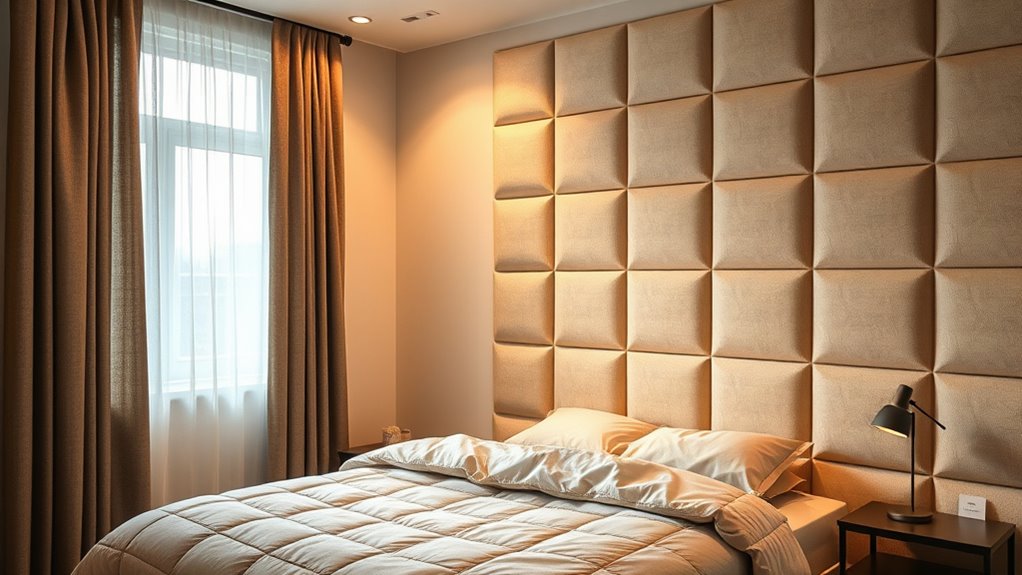
Padding walls with sound-absorbing materials can indeed help reduce noise from snoring and improve your sleep quality. Using thick, dense curtains, adding fabric-covered furniture, or placing acoustic panels on shared walls can absorb sound waves and prevent them from bouncing around your space. Combining these with other adjustments like ceiling insulation and rugs creates a layered approach that boosts noise reduction. Keep exploring to discover more ways to create a quieter, more restful environment.
Key Takeaways
- Adding fabric-covered furniture or bookshelves on shared walls absorbs sound and reduces noise transmission from snoring.
- Installing padded wall panels or acoustic wall treatments can effectively dampen sound waves and limit noise spread.
- Using thick curtains or wall hangings enhances sound absorption, especially when combined with other room modifications.
- Layering soundproofing methods, like wall padding and ceiling insulation, provides a more comprehensive noise reduction.
- Practical adjustments, such as wall padding and furniture placement, significantly improve sleep comfort by muffling snoring noise.

Snoring can disrupt your sleep and your partner’s, but adjusting your room setup might help reduce the noise. One effective way to do this is by adding soundproof curtains. These thick, dense curtains can absorb and block out some of the noise caused by snoring, especially if you hang them over windows or doorways. They act as a barrier, preventing sound waves from bouncing around the room and reaching your ears. When shopping for soundproof curtains, look for those made with heavy materials like velvet or specially designed acoustic fabrics. Installing these curtains can be a quick, non-intrusive step to make your sleeping environment quieter without extensive renovations.
Adding soundproof curtains can help block snoring noise and create a quieter sleeping environment.
Another key element to contemplate is ceiling insulation. While it might sound more involved than hanging curtains, ceiling insulation plays a substantial role in reducing noise transmission between floors. If your bedroom is directly below your partner’s sleeping area, adding insulation to the ceiling can markedly dampen the sound of snoring. Proper insulation materials, such as mineral wool or fiberglass batts, absorb sound waves and prevent them from traveling through the ceiling. This can be especially effective in older homes with less soundproofing between floors. Installing ceiling insulation might require some effort or professional help, but the result is a quieter, more peaceful sleep environment for both of you. Additionally, understanding soundproofing techniques can help you make more informed decisions about your room setup.
In addition to soundproof curtains and ceiling insulation, you should think about your room’s overall setup. Placement of furniture can influence how sound travels; for example, placing bookshelves or fabric-covered furniture on shared walls can help absorb noise. Rugs and carpets on the floor also dampen sound reflections, making the room less echoey. These small adjustments collectively contribute to muffling snoring sounds.
While completely eliminating snoring might not be feasible through room setup alone, these steps can greatly reduce the disturbance. Combining soundproof curtains with ceiling insulation creates a layered approach to soundproofing, which is more effective than relying on just one method. It’s about creating a space where noise doesn’t bounce freely, allowing you both to enjoy more restful sleep. Remember, a quieter room benefits everyone, and simple modifications like these can make a noticeable difference without extensive remodeling. By focusing on these acoustic-friendly changes, you’re taking practical steps toward a more peaceful night’s sleep for you and your partner.
Frequently Asked Questions
Can Wall Padding Completely Eliminate Snoring Sounds?
Wall padding can’t completely eliminate snoring sounds, but it can markedly improve soundproofing effectiveness. You’ll want to focus on proper padding installation tips, like covering all wall surfaces and sealing gaps around edges, to maximize noise reduction. Keep in mind that combining wall padding with other soundproofing methods, such as door seals or ceiling treatments, will yield better results. While it won’t stop every sound, it’s a helpful step toward quieter nights.
Are There Specific Materials Best for Soundproofing Walls?
You should consider using acoustic panels and soundproof paint to effectively reduce noise. Acoustic panels absorb sound waves, minimizing snoring sounds, while soundproof paint adds an extra layer of sound insulation to your walls. Combining these materials offers a practical solution for muffling snoring. Make sure to install the panels properly and choose quality soundproof paint for the best results in creating a quieter, more restful environment.
How Expensive Is Wall Padding for Noise Reduction?
Wall padding for noise reduction can range from a few hundred to several thousand dollars, depending on size and material quality. It’s surprisingly affordable compared to soundproofing a whole room! The installation process is straightforward, often involving attaching panels directly to your walls, making it a manageable DIY project or quick professional job. For an efficient cost comparison, consider your desired soundproofing level and budget to choose the best option.
Will Padding Walls Affect Room Ventilation or Temperature?
Padding walls can impact your room’s ventilation and temperature regulation. You might notice reduced airflow if the padding is thick or dense, which can make the space feel stuffy or harder to cool. To minimize this, choose breathable padding materials and ensure proper airflow around the padded areas. This way, you’ll reduce noise without considerably affecting your room’s overall ventilation or temperature control.
How Long Does It Take to See Results After Installing Wall Padding?
You’ll start noticing quieter nights within a few days after wall padding installation. While some soundproofing myths suggest instant results, real changes depend on room size and padding quality. Typically, it takes about 2 to 4 weeks for soundproofing benefits to become apparent. Wall padding reduces noise by absorbing sound waves, so patience is key. Keep in mind, consistent installation ensures you see the best results over time.
Conclusion
By adjusting your room setup with padded walls, you can markedly reduce snoring noise and create a quieter space. It’s an easy, effective solution that doesn’t require complex equipment. Imagine waking up refreshed and not disturbed by your partner’s snoring—sounds ideal, right? So, why not give padded walls a try and see how much calmer your nights can become? Isn’t a peaceful sleep worth a simple room upgrade?