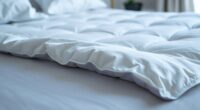
For healthy sleep, you should wash your sheets at least once a week. Regular cleaning removes dust mites, skin flakes, and allergens that can cause allergies or skin irritation. Use hot water and a gentle detergent for better allergen removal, then dry thoroughly in sunlight or high heat. Keeping up with this routine creates a cleaner, more comfortable sleep environment. If you want to learn more about maintaining bedding hygiene, keep exploring these simple tips.
Listen free for 30 days with Audible
Thousands of audiobooks and originals — cancel anytime.
As an affiliate, we earn on qualifying purchases.
Key Takeaways
- Wash sheets at least once a week to remove dust mites and skin flakes.
- Use hot water (at least 130°F/54°C) for effective allergen elimination.
- Dry bedding thoroughly in sunlight or high-heat dryers to prevent mold and bacteria.
- Choose hypoallergenic detergents to reduce skin irritation and allergens.
- Regularly shake out sheets and vacuum mattresses to maintain a clean sleep environment.

Good bedding hygiene is vital for a healthy, comfortable sleep environment. When you think about your sleep setup, it’s easy to overlook how much dust mites and skin flakes accumulate over time. Dust mites thrive in bedding because they feed on tiny skin flakes that you shed daily. These microscopic creatures are invisible to the naked eye, but their presence can cause allergies, asthma, and skin irritation, disrupting your restful sleep. That’s why maintaining a clean sleeping space isn’t just about comfort; it’s about protecting your health. Regularly inspecting and replacing bedding as needed can further reduce allergen buildup and promote better sleep quality.
Maintaining clean bedding reduces dust mites and skin flakes, promoting healthier, more restful sleep.
You should wash your sheets at least once a week to keep dust mites and skin flakes under control. Regular laundry removes these allergens, preventing them from building up and aggravating respiratory issues or skin problems. When you don’t wash your bedding frequently, dust mites find a cozy environment to multiply, and skin flakes become a food source, creating a cycle that worsens allergy symptoms. By sticking to a weekly washing schedule, you reduce the risk of allergens lingering and improve the overall quality of your sleep.
Opt for hot water when washing your sheets—aim for at least 130°F (54°C)—to effectively kill dust mites and remove skin flakes. Hot water is essential because dust mites are resistant to lower temperatures, and washing in cold water often isn’t enough to eliminate them. Using a gentle, hypoallergenic detergent can help remove allergens without irritating your skin or causing allergic reactions. If you’re sensitive, consider adding an allergen spray or using allergen-proof covers on your pillows and mattress, which act as barriers to dust mites and skin flakes.
Dry your bedding thoroughly after washing, either in the sun or in a dryer on high heat. Sunlight helps eliminate remaining dust mites and germs, while heat from the dryer ensures moisture doesn’t linger, which could promote mold or bacteria growth. Avoid overloading your washing machine, as this can prevent thorough cleaning, and always follow the care instructions on your bedding labels to avoid damage. Incorporating natural cleaning methods can further enhance your bedding hygiene and reduce chemical exposure.
In addition to regular washing, adopting good habits like shaking out your sheets outside, regularly vacuuming your mattress, and washing pillows and comforters periodically can further reduce dust mites and skin flakes. These steps work together to create an environment where allergens are minimized, and your sleep remains peaceful and healthful. By prioritizing bedding hygiene and sticking to a consistent cleaning routine, you’re taking a proactive approach to better sleep and overall well-being.
As an affiliate, we earn on qualifying purchases.
Frequently Asked Questions
Can Washing Sheets Too Often Damage the Fabric?
Washing your sheets too often can cause fabric wear over time, reducing their lifespan. While regular washing is essential for hygiene, excessive washing may weaken fibers and fade colors. To balance cleanliness and fabric health, follow recommended washing frequency, typically once a week, and use gentle cycles. This approach keeps your sheets fresh without risking unnecessary damage, helping them stay comfortable and durable longer.
What’s the Best Way to Remove Stains From Bedding?
To remove stains from your bedding, act quickly—don’t wait, or the stain sets. Use a gentle stain removal method with a mix of water and mild detergent or a stain remover designed for fabric protection. Dab gently, don’t rub, to avoid damaging the fabric. For tough stains, consider a mixture of baking soda and vinegar, but always test first to keep your bedding looking fresh and pristine.
Are There Eco-Friendly Detergents for Bedding Hygiene?
Yes, there are eco-friendly detergents for bedding hygiene. You can choose plant-based detergents, which use natural ingredients and are gentle on your skin. Biodegradable cleaning products break down easily, reducing environmental impact. These options effectively clean your sheets while being safe for the planet. Look for certifications like USDA Organic or EPA Safer Choice to guarantee you’re selecting truly eco-friendly products that support healthy sleep and a healthier environment.
How Do Allergies Influence Washing Frequency?
If you have allergies, you should wash your sheets more frequently to reduce dust mites and pollen buildup. Aim for weekly washing, especially if you suffer from dust mite or pollen allergies, as these allergens can trigger symptoms overnight. Using hot water helps eliminate allergens effectively, and consider hypoallergenic detergents to minimize irritation. Regular washing creates a cleaner sleeping environment, helping you breathe easier and sleep more comfortably.
Should Pillowcases Be Washed More Frequently Than Sheets?
Yes, pillowcases should be washed more frequently than sheets. Pillowcase maintenance is essential because they come into direct contact with your face and hair, trapping oils, dirt, and bacteria. For proper bed linen care, wash pillowcases at least once a week, especially if you have allergies or sensitive skin. This habit helps reduce breakouts, skin irritation, and allergy symptoms, ensuring a healthier, more comfortable sleep environment.
As an affiliate, we earn on qualifying purchases.
Conclusion
Remember, cleanliness is next to godliness, especially when it comes to your bedding. Washing your sheets weekly helps prevent germs, dust mites, and allergies, ensuring you enjoy a healthier sleep environment. Don’t wait until mess and odors pile up—stay consistent for better rest and overall well-being. By maintaining good bedding hygiene, you’re investing in your health, proving that sometimes, a small effort makes a world of difference. Sleep well, and let your habits reflect your care.
As an affiliate, we earn on qualifying purchases.
As an affiliate, we earn on qualifying purchases.
Flea & tick season Picks
flea and tick prevention
As an affiliate, we earn on qualifying purchases.