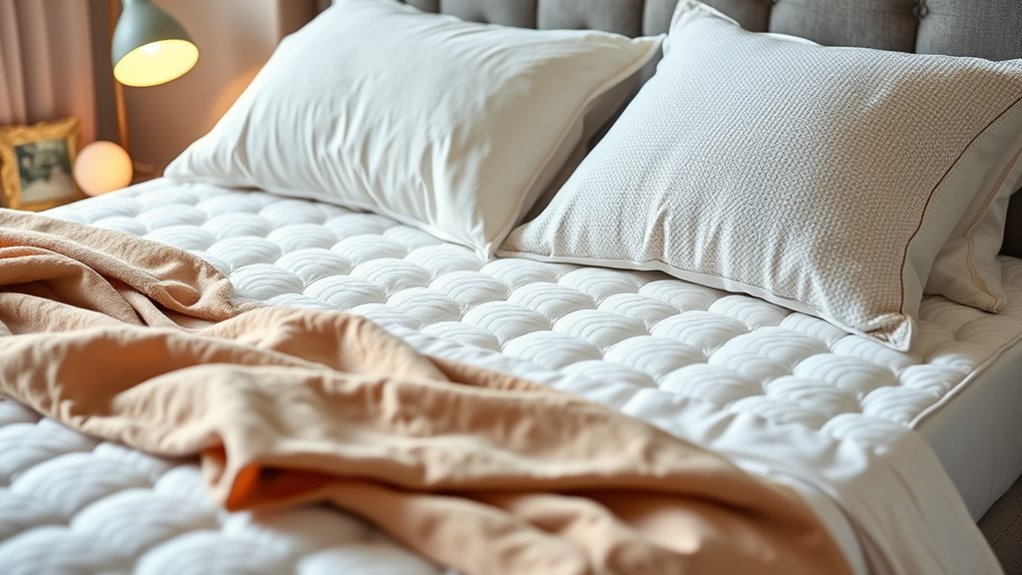

To make your bed more comfortable, start by adding a thick mattress topper like memory foam or down-alternative to distribute your weight evenly and support your body. Use a high-quality, breathable sheet set to regulate temperature and wicks moisture. Layer with a lightweight quilt or blanket for easy temperature adjustment. Don’t forget a supportive pillow that aligns your neck and spine. These simple changes can substantially improve your sleep, and there are more easy hacks to explore below.
Key Takeaways
- Add a memory foam or down mattress topper to distribute weight evenly and increase softness.
- Layer breathable, moisture-wicking sheets and blankets for temperature regulation and comfort.
- Use a supportive pillow suited to your sleep position to maintain proper neck and spine alignment.
- Incorporate a mattress protector and fitted sheet to create a clean, stable base for added comfort.
- Arrange your bed ergonomically to support spinal alignment and reduce pressure points for better sleep quality.

A comfortable bed starts with simple upgrades that make a big difference. When it comes to enhancing your sleep experience, focusing on sleep ergonomics is key. This means arranging your bed in a way that supports proper spinal alignment and reduces pressure points. To achieve this, consider the bedding materials you choose. High-quality sheets made from breathable fabrics like cotton or linen help regulate your body temperature and wick away moisture, ensuring you stay comfortable all night. Investing in good bedding materials isn’t just about luxury; it’s about creating a foundation for restful sleep.
Adding a mattress topper can substantially boost your bed’s comfort level. Toppers distribute your weight evenly and soften the surface, making even a firm mattress feel plush and inviting. Memory foam toppers conform to your body’s shape, providing targeted support where you need it most. Alternatively, down or down-alternative pads add a cozy layer that enhances the softness without sacrificing support. When selecting a topper, think about your sleep ergonomics—aim for something that maintains proper spinal alignment while adding just enough cushioning to prevent pressure points. This small change can improve sleep quality and reduce aches in the morning.
A mattress topper enhances comfort, supports spinal alignment, and reduces morning aches.
Another easy hack to make your bed more inviting is to layer your bedding thoughtfully. Use a fitted sheet that stays in place, then add a flat sheet for comfort and versatility. Consider using a mattress protector if you want to prolong the life of your bedding and keep it clean. Layering with a lightweight quilt or comforter allows you to adjust your warmth level easily. When choosing bedding materials, opt for those that breathe and wick moisture, especially if you tend to sleep hot or cold. The right materials can make a noticeable difference in how comfortable and restful your sleep feels.
Finally, don’t overlook the importance of pillow selection. Pillows should support your head and neck in alignment with your spine, which ties back to sleep ergonomics. Choose a pillow that matches your sleep position—firm for back sleepers, softer for side sleepers—and consider filling materials like memory foam, latex, or buckwheat hulls. Regularly replacing pillows and maintaining proper pillow height can prevent neck pain and improve your overall sleep quality. Additionally, using well-ventilated bedding helps prevent heat buildup and keeps you cooler throughout the night.
Frequently Asked Questions
Can Mattress Toppers Cause Allergies or Skin Irritation?
Yes, mattress toppers can cause allergies or skin irritation, especially if they’re made from materials that trigger sensitivities. To avoid this, choose toppers made from hypoallergenic materials like natural latex or organic cotton. Always check for chemical sensitivities, as some toppers contain chemicals or treatments that may irritate your skin or worsen allergies. Regularly washing your topper also helps reduce dust mites and allergens, keeping your sleep environment healthier.
How Often Should I Replace My Bed Padding or Topper?
You should replace your bed padding or topper every 1-2 years, or when it starts to feel less cozy and more like sleeping on a rock! Over time, materials lose their plushness and longevity, turning your sweet dreams into restless nights. An annual replacement schedule keeps your sleep experience fresh and cushy, ensuring you’re always snuggling into that perfect, supportive surface. Don’t wait too long—your back will thank you!
Are There Specific Toppers for Back Pain Relief?
Yes, there are specific toppers designed for back pain relief. Look for memory foam toppers that contour to your body, providing targeted orthopedic support. These toppers help align your spine and reduce pressure points, easing discomfort. When choosing one, consider firmness and thickness to match your needs. Using a memory foam topper with proper orthopedic support can markedly improve your sleep quality and alleviate back pain.
Can I Use Multiple Pads or Toppers Together?
Did you know that layering comfort can improve sleep quality by up to 20%? Yes, you can use multiple pads or toppers together, but it’s important to take into account topper compatibility. Make sure each layer is designed to work with the next to avoid discomfort or instability. Test different combinations to find what feels best, and always check that layered toppers don’t compromise your mattress support.
What Is the Best Maintenance Routine for Bed Accessories?
To maintain your bed accessories, you should regularly check for stains and wash them according to manufacturer instructions to guarantee good bed hygiene. Use a gentle cycle and mild detergent to prevent wear, and air dry or tumble dry on low heat. Rotate or flip your toppers and pads periodically to promote even wear, which extends accessory longevity. Keep your bedding clean and fresh for a more comfortable, hygienic sleeping environment.
Conclusion
Now that you know how to upgrade your bed with toppers, pads, and simple hacks, why settle for a restless night? With just a few tweaks, you can transform your bed into a cozy retreat you’ll love sinking into every night. Isn’t it worth a little effort for better sleep and more comfort? Start customizing your bed today—your perfect night’s sleep is just a few easy steps away!