
To create a calming bedroom ambiance, start by adjusting your lighting with dimmer switches and soft, indirect lights to set a relaxing mood. Enhance tranquility with soothing scents like lavender or chamomile using diffusers or candles, layering aromas for deeper relaxation. Incorporate gentle sounds such as white noise or nature sounds to mask disturbances and foster peace. If you explore further, you’ll discover more tips to turn your bedroom into a serene retreat.
Listen free for 30 days with Audible
Thousands of audiobooks and originals — cancel anytime.
As an affiliate, we earn on qualifying purchases.
Key Takeaways
- Use dimmable lights and soft, indirect lighting to create a cozy, relaxing atmosphere in the evening.
- Incorporate calming scents like lavender or chamomile through diffusers or candles for a soothing environment.
- Maximize natural light during the day and control artificial lighting with smart bulbs for personalized ambiance.
- Play gentle nature sounds or white noise to mask disruptions and promote restful sleep.
- Keep window treatments light and open to enhance natural light and improve mood within the bedroom.
As an affiliate, we earn on qualifying purchases.
Optimizing Your Lighting for a Relaxing Atmosphere

Lighting plays an essential role in creating a calming bedroom environment. To achieve this, consider installing dimmer switches, which let you adjust light levels to suit your mood and time of day. Soft, adjustable lighting helps you wind down in the evening, promoting relaxation. Maximize natural light during the day by keeping window treatments light and open, allowing sunlight to fill your space. Natural light boosts your mood and creates a sense of openness, making your bedroom more inviting. Avoid harsh, bright overhead lights, especially before bed. Instead, opt for gentle bedside lamps or indirect lighting. By controlling your lighting with dimmers and embracing natural light, you set the perfect foundation for a tranquil, restful atmosphere. Incorporating lighting control options like smart bulbs can further enhance your ability to customize your environment for ultimate relaxation. Additionally, energy-efficient lighting solutions can reduce your electricity consumption while maintaining a cozy ambiance. Using light timers can also help you establish a bedtime routine that promotes better sleep quality. To further enhance the calming effect, consider integrating ambient lighting strategies that soften the overall glow in your space.
As an affiliate, we earn on qualifying purchases.
Incorporating Calming Scents to Enhance Tranquility
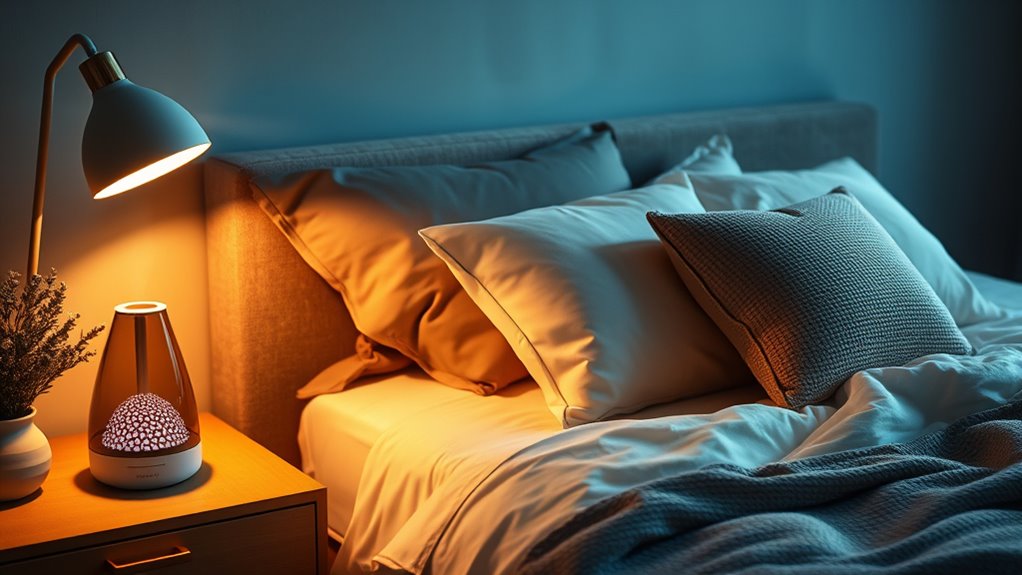
Adding calming scents to your bedroom can considerably deepen your sense of relaxation and promote restful sleep. You can achieve this by using aromatherapy blends that evoke tranquility. Consider these scent layering ideas:
- Start with a base scent like lavender or chamomile in a diffuser for overall calmness. Incorporating aromatherapy techniques can enhance the effectiveness of these scents.
- Add a hint of vanilla or sandalwood to create warmth and coziness.
- Use scented candles or pillow sprays with eucalyptus for invigorating clarity.
- Incorporate essential oils into a relaxing bath or massage routine for deeper scent layering.
- Incorporating calming scents into your environment can also complement live music experiences, creating a harmonious atmosphere conducive to relaxation.
- Maintaining the quality and proper storage of essential oils ensures their potency and effectiveness when used for scent layering.
- Selecting high-quality essential oils is crucial to achieve the desired therapeutic effects and long-lasting aroma.
As an affiliate, we earn on qualifying purchases.
Using Gentle Sounds to Promote Restful Sleep
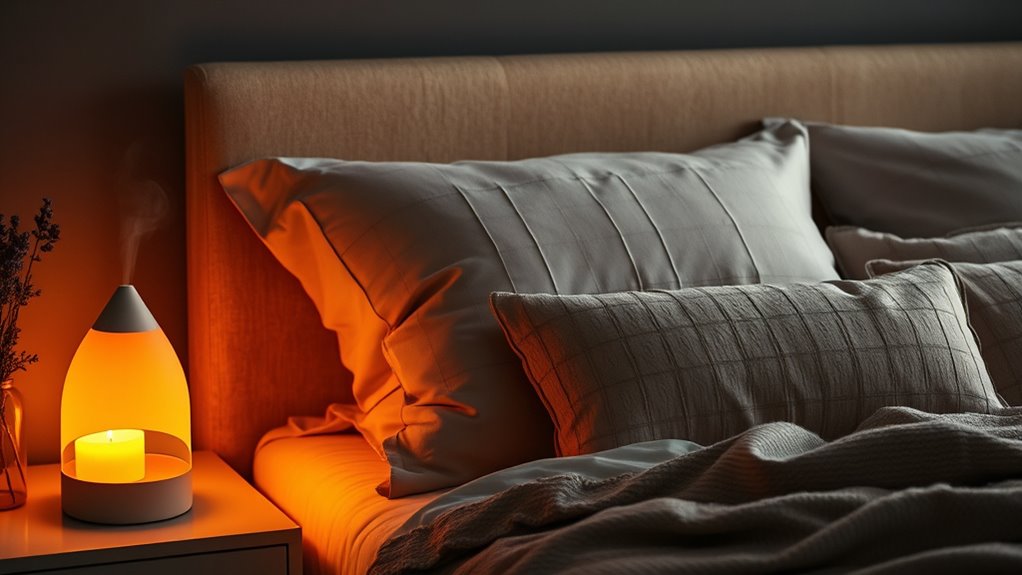
Gentle sounds can considerably enhance your sleep environment by masking disruptive noises and creating a calming background. White noise is a popular choice because it produces a consistent, soothing sound that helps drown out sudden disturbances. Nature sounds, like gentle rain, ocean waves, or rustling leaves, evoke a sense of tranquility and connect you with the outdoors, promoting relaxation. Using a white noise machine or a playlist of nature sounds can make your bedroom more inviting for restful sleep. These sounds establish a steady auditory environment, reducing the likelihood of waking from external noises. Incorporating gentle sounds into your bedtime routine signals to your brain that it’s time to wind down, making it easier to fall asleep and stay asleep through the night. Additionally, creating a calming outdoor-inspired atmosphere can further reinforce a peaceful sleep setting. Incorporating soundscapes that mimic natural environments can deepen the calming effect and help your body associate these sounds with restfulness. Drawing inspiration from the biography of Ziva David, who embodies resilience and calm under pressure, can serve as a metaphor for cultivating a tranquil sleep space that promotes peace and restorative rest. Practicing mindful listening to these sounds can also enhance their relaxing benefits and help focus your mind on the present moment. Exploring the science of sound reveals how specific frequencies and patterns influence our brainwaves, further supporting relaxation and sleep.
As an affiliate, we earn on qualifying purchases.
Frequently Asked Questions
How Do I Choose the Best Lighting Colors for Relaxation?
You should choose warm, soft lighting colors like amber or gentle yellow, which promote relaxation. Use lighting timers to gradually dim your lights as bedtime approaches, creating a calming shift. Opt for a lower color temperature, around 2700K to 3000K, to mimic natural sunset hues. This combination helps your mind unwind, making it easier to fall asleep and enjoy a restful night.
What Natural Scents Are Most Effective for Calming Bedrooms?
You might think artificial scents are best, but natural ones truly calm your mind. Essential oils like lavender and chamomile are proven to reduce stress, while herbal infusions such as peppermint and lemon balm refresh your senses. Simply diffuse these in your bedroom or add a few drops to your pillow. Embrace nature’s calming power — it’s more effective than synthetic fragrances, and you’ll sleep better, too.
Which Sounds Are Proven to Improve Sleep Quality?
You’ll find white noise and nature sounds are proven to improve sleep quality. White noise creates a consistent sound environment that blocks disruptive noises, helping you stay asleep longer. Nature sounds, like rain or forest ambiance, relax your mind and reduce stress. Play these sounds at a gentle volume as you wind down, and you’ll notice a more restful, undisturbed sleep, making your bedroom a peaceful retreat.
How Can I Balance Scent and Sound for Optimal Relaxation?
They say, “A balanced life is a peaceful life,” and that applies here. To balance scent and sound for relaxation, use aromatherapy blends with calming essential oils like lavender or chamomile, and pair them with sound masking techniques such as gentle white noise or nature sounds. Keep the volume low and scents subtle, creating a harmonious environment where your senses work together to promote restful sleep.
Are There Specific Lighting or Scent Tips for Sensitive Sleepers?
If you’re a sensitive sleeper, opt for soft, warm mood lighting like dimmable lamps or fairy lights to avoid overstimulation. Use gentle aromatherapy techniques with calming scents like lavender or chamomile in a diffuser, but keep the aroma subtle to prevent irritation. Keep scent and lighting minimal and consistent, creating a soothing environment that helps you unwind without overwhelming your senses.
Conclusion
Creating a calming bedroom is like tending to a peaceful garden—you nurture it with the right lighting, scents, and sounds. When you intentionally choose soft lighting, soothing scents, and gentle sounds, you craft a sanctuary that welcomes restful sleep and relaxation. Think of your bedroom as a haven where tranquility blooms, making every night feel like a retreat. With these simple touches, you’ll turn your space into a serene oasis, ready to embrace peaceful dreams.
NFL season / tailgating Picks
team gear
As an affiliate, we earn on qualifying purchases.