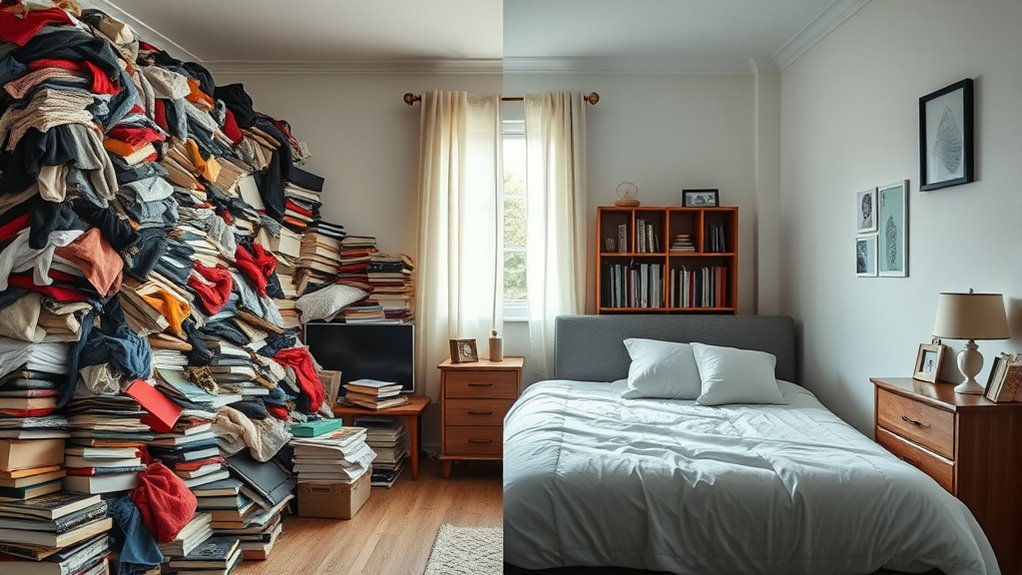

A cluttered bedroom can substantially hurt your sleep quality by causing mental distraction, increasing stress, and making it harder to relax at night. When your space is messy, visual noise hampers your ability to unwind, leading to restless nights. Maintaining a calm, organized environment signals your brain it’s time to rest and helps improve overall sleep. Staying tidy encourages better habits and long-term health—keep exploring to discover simple steps to create your peaceful retreat.
Key Takeaways
- Cluttered bedrooms increase visual noise, hindering relaxation and making it harder to fall asleep.
- A tidy space promotes mental clarity, reducing stress that can disrupt sleep patterns.
- Consistent organization habits create a calming environment conducive to better sleep quality.
- Minimalist bedrooms with fewer possessions reduce distractions, enhancing sleep readiness.
- An organized bedroom signals a designated space for rest, supporting healthier sleep routines.

Have you ever noticed how a cluttered space can drain your energy, while a calm environment helps you feel more focused and relaxed? Your bedroom is your sanctuary, yet if it’s filled with piles of clothes, scattered belongings, and chaos, it can negatively impact your sleep quality. Developing good organizing habits plays an essential role in transforming your space into a restful retreat. When you consistently tidy up and create designated spots for your belongings, you reduce visual noise and mental clutter. This straightforward practice not only makes your room look tidy but also signals to your brain that it’s time to unwind. Over time, these habits become second nature, making it easier to maintain a peaceful environment. Establishing simple routines can help reinforce these habits and make organization feel less overwhelming. One of the key advantages of adopting better organizing habits is experiencing the minimalism benefits. Minimalism isn’t just about having fewer possessions; it’s about intentionally choosing what adds value and purpose to your life. When your bedroom is free of unnecessary clutter, you gain more space for relaxation and sleep. The simplicity of a minimalist room reduces distractions, allowing your mind to settle more easily at night. Plus, less clutter means less stress when you’re searching for your pajamas or trying to get ready for bed. Minimalism also encourages you to prioritize quality over quantity, which can lead to investing in comfortable, calming bedding and furniture that promote better sleep.
A tidy space reduces mental clutter and signals your brain to relax.
Creating a clutter-free environment doesn’t have to be overwhelming. Start small by tackling one area at a time, such as your nightstand or closet. Keep only what you truly need or love, and donate or discard the rest. This process reinforces positive organizing habits that can extend to other parts of your home and daily routine. The benefits are cumulative: a more serene space, less mental distraction, and ultimately, improved sleep. When your bedroom is a haven of calm, your body and mind can relax more fully, making it easier to fall asleep and stay asleep through the night. Remember that organizing systems can be tailored to fit your lifestyle, making it easier to maintain long-term order. In the end, your bedroom’s state of order directly influences your sleep quality. Embracing organizing habits and the principles of minimalism can create a peaceful environment conducive to restorative rest. When you eliminate clutter, you’re not just tidying up your space—you’re nurturing your well-being. A calm, orderly bedroom isn’t just visually appealing; it’s a fundamental part of a healthy sleep routine. So, take a moment to declutter, adopt better habits, and experience the soothing benefits of a serene sleeping sanctuary.
Frequently Asked Questions
How Does Bedroom Clutter Affect Sleep Quality?
Bedroom clutter disrupts your sleep hygiene by creating visual chaos that makes relaxation harder. It can increase stress and make it difficult to unwind. Following feng shui principles, a tidy space promotes positive energy flow and calmness, improving your sleep quality. When your bedroom is organized, you’ll find it easier to fall asleep and stay asleep, waking up feeling more rested and refreshed. Keep your space clean for better rest.
Can Decluttering Improve Mental Health?
Sure, decluttering can boost your mental health benefits, making you feel more in control and less overwhelmed. By establishing decluttering routines, you give your mind a break from chaos, which is priceless in today’s cluttered world. It’s like giving your brain a mini-vacation. So, yes, tidy spaces aren’t just pretty—they’re a secret weapon against stress, anxiety, and mental fatigue. Who knew organization could be so therapeutic?
What Are Quick Ways to Organize a Messy Bedroom?
You can quickly organize your messy bedroom by using smart storage solutions like bins, baskets, or under-bed storage to clear clutter fast. Rearrange your furniture to create more space and improve flow, making it easier to put things away. Keep surfaces clear by setting aside a few minutes daily to tidy up. These simple steps help transform your room into a calmer, more organized space, promoting better sleep and mental clarity.
How Often Should I Clean and Declutter My Bedroom?
Think of your bedroom as a sanctuary that needs regular tending. You should clean and declutter at least once a week to keep it feeling fresh and inviting. Use effective storage solutions to tame chaos and maintain a calming atmosphere. Creating a consistent cleaning schedule helps prevent clutter from creeping back in, ensuring your space stays a peaceful retreat—so you can sleep soundly and wake up refreshed every day.
Are There Specific Colors That Promote Calmness in Bedrooms?
Light, muted colors like soft blues, gentle greens, and neutral tones promote calmness in bedrooms. According to color psychology, these hues help reduce stress and create a relaxing atmosphere, enhancing your bedroom aesthetics. You should choose colors that soothe your mind and make you feel comfortable, making it easier to unwind and sleep peacefully. Avoid bright or overly dark shades to maintain a serene environment conducive to restful sleep.
Conclusion
So, next time you step into your bedroom, ask yourself: is that clutter really worth sacrificing your sleep? Because what if the chaos is secretly stealing your rest, your energy, your peace? You have the power to change it— but will you? The choice is yours. Clear the clutter, create calm, and maybe, just maybe, unfasten the restful nights you’ve been missing. Are you ready to take that first step?