To keep a sleepwalker safe at night, clear clutter from hallways and secure windows and doors to prevent wandering outside. Install safety gates on stairs and use alarms or door sensors to detect movement. Maintain a consistent sleep routine and create a calming environment to reduce episodes. Address any underlying sleep issues in consultation with a healthcare professional. Stay attentive—there’s more you can do to guarantee their safety and peace of mind.
Key Takeaways
- Remove hazards like sharp objects and clutter from the home environment to prevent injuries during episodes.
- Install safety gates, window locks, and alarms to prevent wandering outside or falling down stairs.
- Maintain a consistent sleep routine and good sleep hygiene to reduce the frequency of sleepwalking episodes.
- Address underlying sleep disorders or medical issues with professional guidance to improve safety and reduce risks.
- Seek medical help if episodes increase in frequency or severity to ensure proper management and safety measures.
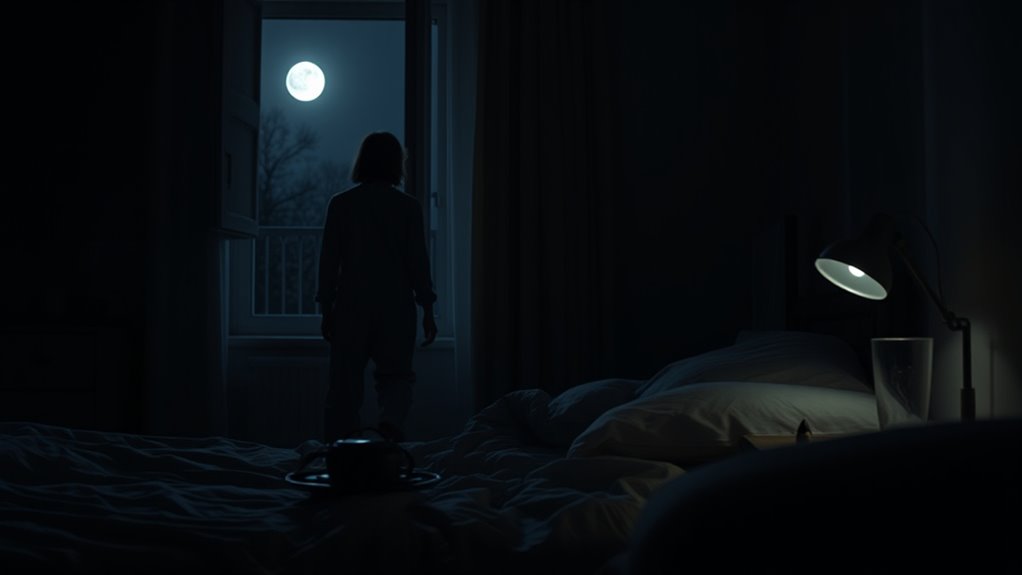
Have you ever wondered how dangerous sleepwalking can be? It might seem like a harmless quirk, but as a common sleep disorder, sleepwalking can pose serious risks if not properly managed. During a sleepwalking episode, you’re not fully conscious, which means you might not recognize hazards around you. This lack of awareness makes nighttime safety a top priority for anyone with this condition. Without proper precautions, a sleepwalker could stumble into danger—falling down stairs, wandering outside, or knocking over sharp objects—leading to injuries or more severe accidents. Understanding these risks is essential for keeping yourself or loved ones safe.
Since sleepwalking occurs during non-REM sleep, it’s often unpredictable and can happen at any time during the night. Even if you’ve experienced episodes before without incident, the danger remains. That’s why creating a safe environment is indispensable. Remove clutter from hallways, secure windows and doors, and install safety gates at the top of stairs. These simple steps minimize the chance of injuries if you or someone else gets up and moves around while still asleep. It’s also wise to think about using alarms or door sensors that alert you when someone leaves the bedroom. These devices serve as an extra layer of nighttime safety, giving you precious seconds to respond before potential harm occurs.
Another essential aspect of managing sleepwalking is establishing a consistent sleep routine. Poor sleep or irregular schedules can increase the frequency of episodes, heightening the risk of accidents. Prioritize good sleep hygiene by sticking to regular bedtimes, avoiding caffeine or alcohol before bed, and creating a calming sleep environment. Additionally, understanding the nature of sleep disorders can help you better address underlying causes that contribute to sleepwalking episodes. If sleepwalking episodes become more frequent or dangerous, consulting a healthcare professional is indispensable. They might recommend medication or behavioral strategies to reduce episodes and improve overall sleep quality.
Frequently Asked Questions
Can Sleepwalking Be Triggered by Stress or Anxiety?
Yes, stress triggers and anxiety links can definitely cause sleepwalking. When you’re stressed or anxious, your brain remains more active during sleep, increasing the chances of sleepwalking episodes. Managing your stress through relaxation techniques, regular sleep routines, and addressing anxiety can help reduce these episodes. If sleepwalking persists, consider consulting a healthcare professional to explore underlying causes and develop an effective plan to keep you safe.
Are There Specific Age Groups More Prone to Sleepwalking?
Sure, if you’re hoping to escape the sleepwalking bandwagon, think again. Kids and teens are most prone, thanks to developmental patterns and genetic factors that turn bedtime into an adventure. As your body matures, sleepwalking usually fades, but in some cases, genetics keep the night-time escapades alive. So, if you’re a parent, prepare for some midnight wanderings—your little sleepwalker’s got a genetic ticket to the show.
How Does Sleepwalking Affect Overall Sleep Quality?
Sleepwalking can disrupt your overall sleep quality by causing sleep disruptions and interfering with REM sleep. When you sleepwalk, your sleep cycle is interrupted, leading to fragmented rest and less restorative sleep. This can leave you feeling tired and less alert during the day. To improve your sleep quality, guarantee a safe environment, establish a relaxing bedtime routine, and seek medical advice if sleepwalking persists.
Can Sleepwalking Be a Sign of Underlying Health Issues?
Ever wonder if your sleepwalking points to something more serious? It can be a sign of underlying health issues, especially if it’s linked to a sleep disorder or a genetic predisposition. Sleepwalking isn’t always just benign; it might signal problems like sleep apnea or neurological conditions. You should consider consulting a healthcare professional to explore potential causes, ensuring your safety and well-being.
What Are the Long-Term Risks of Chronic Sleepwalking?
Chronic sleepwalking may increase your risk of brain damage or cognitive decline over time. As you continue to sleepwalk, you might experience repeated episodes that strain your brain, potentially leading to memory issues or impaired decision-making. It’s important to address these risks by seeking medical advice, managing stress, and improving sleep hygiene. Taking action now can help protect your brain health and reduce long-term complications associated with persistent sleepwalking.
Conclusion
To keep a sleepwalker safe, stay alert, stay calm, and stay nearby. Remove hazards, secure doors and windows, and create a safe environment. Watch for signs, listen for cues, and respond calmly. By staying vigilant, by acting quickly, and by providing reassurance, you protect your loved one and prevent harm. Remember, safety starts with awareness, safety continues with preparation, and safety ends with compassion. Stay vigilant, stay caring, and keep them safe through the night.