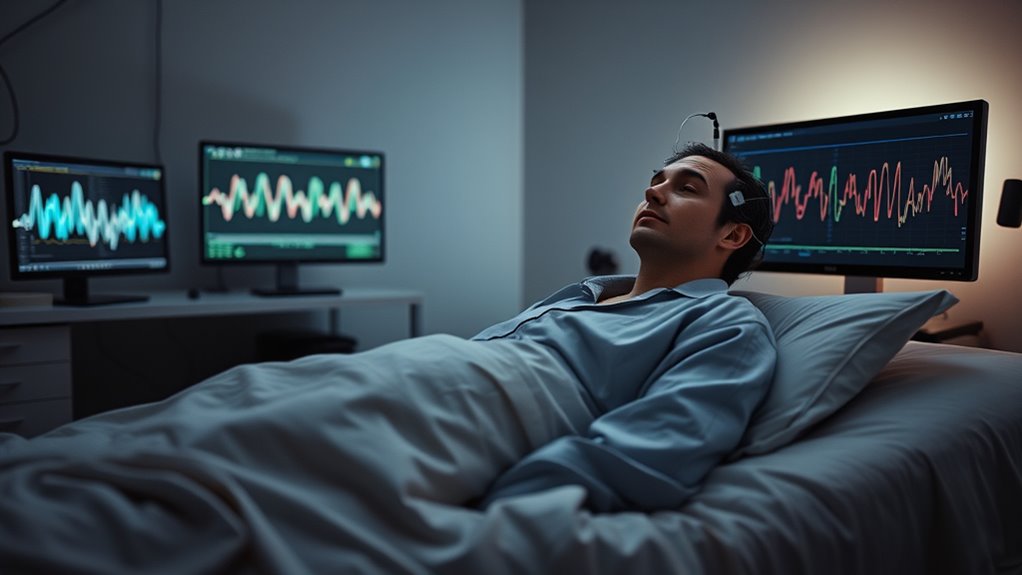

At an overnight sleep clinic, you’ll relax in a comfortable environment that mimics your home. Sensors will be attached to monitor your brain, heart, eyes, breathing, and muscles while you sleep naturally. Staff will guide you through the process and watch remotely to guarantee comfort. The goal is to detect sleep issues like apnea or insomnia. If you’re curious about how it all works, keep going to learn more about this helpful experience.
Key Takeaways
- You’ll stay in a comfortable environment designed to mimic your home sleep setting, with minimal disruptions.
- Sensors will be attached to monitor brain activity, eye movements, breathing, heart rate, and muscle activity throughout the night.
- The staff will guide you on staying comfortable and will monitor remotely to ensure accurate data collection.
- The study helps detect sleep disorders like sleep apnea, restless legs, and narcolepsy by analyzing your sleep patterns.
- After the session, sensors are removed, and a sleep specialist reviews the data to provide diagnosis and treatment recommendations.
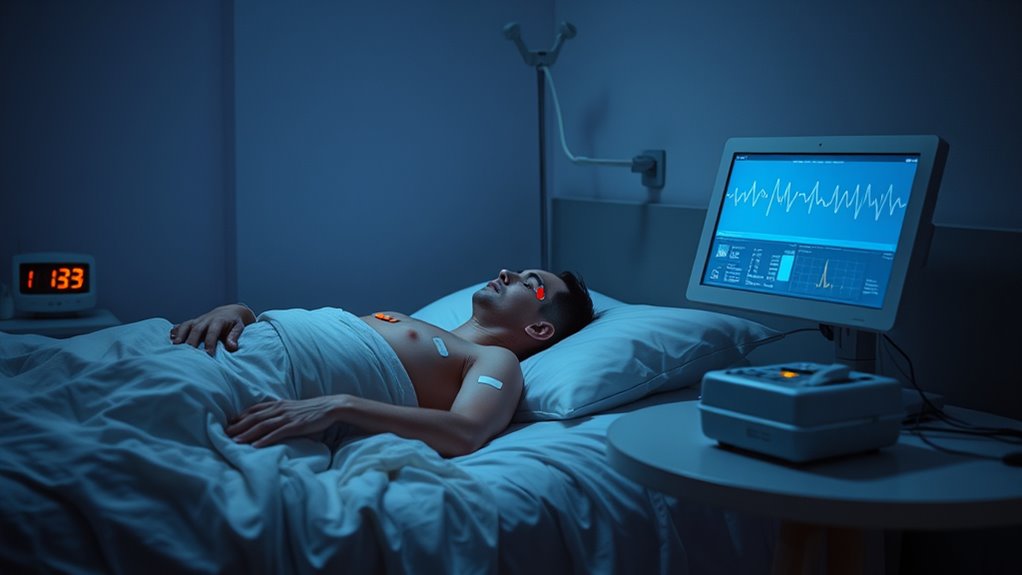
A sleep study is a diagnostic test that helps identify sleep disorders by monitoring your sleep patterns and bodily functions overnight. When you arrive at the sleep clinic, you’ll notice that the environment is carefully designed to mimic your home sleep environment, providing a comfortable, quiet, and dim setting to help you relax. This setup is essential because a proper sleep environment reduces potential disruptions, allowing the clinicians to observe your natural sleep behaviors. The room will typically have a comfortable bed, soft lighting, and minimal noise, all aimed at making you feel as at ease as possible during the study.
During the test, you’ll be connected to various sensors that track your brain activity, eye movements, heart rate, breathing patterns, oxygen levels, and muscle activity. These measurements help doctors understand your sleep architecture and identify any irregularities, such as interruptions or abnormal breathing patterns. You’ll be instructed to go to bed as you normally would, which guarantees that the data collected reflects your typical sleep habits. It’s important to communicate any concerns about your sleep environment or comfort so adjustments can be made, like adding extra pillows or adjusting the room temperature. Additionally, understanding the sleep environment plays a vital role in ensuring accurate results, as external factors can influence your sleep quality.
Connected sensors monitor sleep patterns to identify irregularities and ensure comfort during your usual sleep routine.
Understanding sleep disorder types plays a vital role in the process because different conditions present distinct symptoms and patterns. For example, if you have sleep apnea, your breathing will periodically stop and start, which the sensors will detect as irregular breathing events. If you suffer from restless legs syndrome or periodic limb movement disorder, increased leg movements will be recorded. Other common sleep disorders like insomnia or narcolepsy also have specific markers that the sleep study aims to identify. Knowing what type of sleep disorder you might have helps the clinicians focus on relevant measurements and tailor recommendations afterward.
Throughout the night, you may feel a bit strange with all the wires attached, but the staff will guide you on how to stay comfortable. They’ll monitor your data remotely, so you’re not alone during the process. Afterward, you’ll be encouraged to relax and remove the sensors, and a sleep specialist will review the results. The insights gained from analyzing your sleep environment and the data on sleep disorder types will help determine the best treatment plan moving forward. Remember, the goal of the sleep study isn’t just to diagnose but to improve your overall sleep quality, so don’t hesitate to ask questions or share any discomforts you experience during the process.
Frequently Asked Questions
How Long Does a Typical Sleep Study Last?
A typical sleep study lasts about 7 to 8 hours, matching your usual sleep duration. During this time, you’ll be in a comfortable sleep environment designed to mimic your home. The study duration covers your entire sleep cycle, allowing the technicians to monitor your breathing, brain activity, and movements. This all-inclusive approach helps identify sleep disorders accurately, ensuring you get the right treatment afterward.
Can I Wear My Own Pajamas During the Test?
Yes, you can wear your own pajamas during the sleep study. Most clinics allow you to choose sleepwear that aligns with your comfort considerations and personal sleepwear preferences. Just make sure your sleepwear is loose-fitting, easy to remove if needed, and free of any metal or restrictive accessories. Prioritize what makes you feel most comfortable, as a relaxed environment can help you sleep better during the test.
Are There Any Risks Involved With Sleep Studies?
Sleep study safety is generally very high, with minimal potential risks involved. While most people experience no issues, some might have minor discomfort from sensors or skin irritation. Rarely, individuals with certain health conditions could face complications. You’re closely monitored throughout, and medical staff are prepared to address any concerns quickly. Overall, sleep studies are safe, providing valuable insights into your sleep without significant risks.
Will I Be Able to Drive Afterward?
After your sleep study, you might feel drowsy, so it’s best to arrange post-study transportation. Drowsiness management is important, and you shouldn’t drive until you’re fully alert. The clinic staff usually recommends having someone pick you up or using alternative transportation options. Always follow your healthcare provider’s advice about when it’s safe to drive again, ensuring your safety and that of others on the road.
How Soon Will I Get My Sleep Study Results?
Think of your sleep study results as a key, opening understanding of your night’s journey. Typically, you’ll get your results within a week or two, depending on sleep study scheduling and the complexity of result interpretation. Your doctor will review the data, translating it into insights about your sleep health. Stay patient—this process helps make certain you receive the most accurate diagnosis and personalized treatment plan.
Conclusion
Now that you know what to expect during an overnight sleep study, you’ll feel more prepared and relaxed, like a traveler ready for a smooth journey. Remember, the process might seem a bit intimidating at first, but it’s all about helping you get better sleep. Trust the team to guide you through it, and soon you’ll be on your way to nights filled with restful, rejuvenating sleep—like waking up refreshed after a peaceful nap.