
TL;DR

Get health and wellness essentials delivered free with Prime
- Fast, free delivery on millions of items
- Prime Video, Amazon Music and more included
- Member-only deals all year
A Sixty and Me report argues that stiffness after 60 is not always explained by age: prolonged sitting and repeatedly moving in only a few directions may also play a role. The report’s Pilates instructor says gentle movement can ease some stiffness, but the article does not establish that this applies to everyone or replace medical assessment.
A Sixty and Me report says stiffness people experience after 60 may reflect not only age but also long periods of sitting and limited movement in everyday routines. The report’s author, a Pilates instructor who says she has taught women over 55 for more than 10 years, describes clients feeling less stiff after they begin moving, while acknowledging that movement does not ease every case.
The instructor says stiffness is commonly attributed to getting older, but she sees it frequently among people who have been sitting for extended periods, such as after a long drive, a weekend of reading or extra computer work. In her experience, some stiffness eases once people start moving. This is an observation from her teaching, not a finding from a clinical study cited in the report.
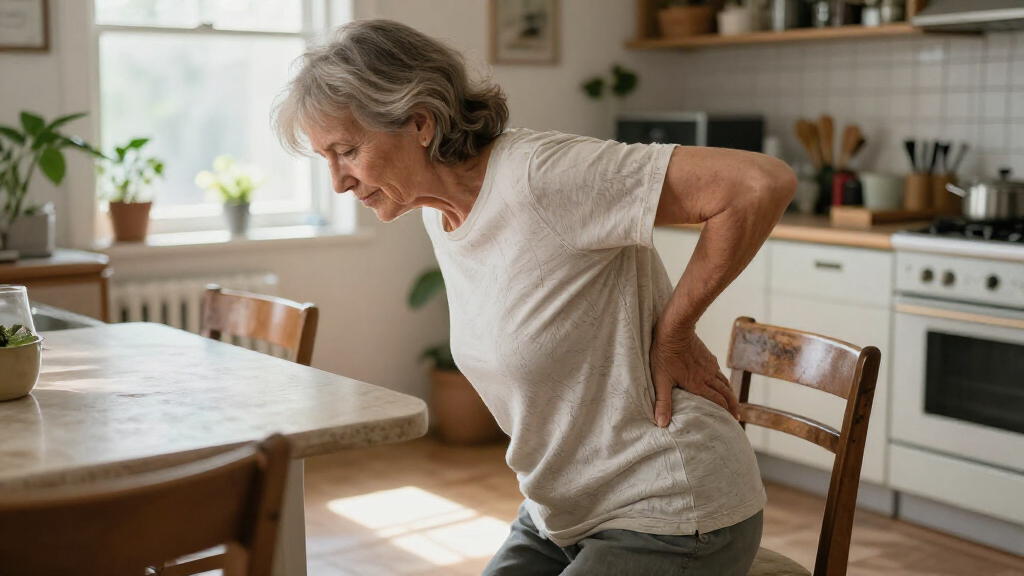
The report links everyday routines to a narrow range of movement: sitting to eat or watch television, driving, walking forward and reaching for nearby objects. The instructor says people may rarely reach overhead or lean sideways. She identifies the neck, shoulders, upper back, hips and spine as areas where readers may notice stiffness during ordinary tasks, including turning to check a blind spot, reaching a high shelf or bending to tie shoes.
For her Pilates classes, the instructor describes a sequence of slow, easy movement, followed by work on stability and then strength. She says students often report feeling looser after class and notice a difference when they miss a week. The report also offers brief seated movements, including neck turns, shoulder rolls, a seated cat-cow motion and alternating knee lifts. It advises moving comfortably, not pushing into pain, and checking with a doctor before trying new exercises if a person has an injury or health condition.
How Daily Movement May Matter
The report matters because it offers readers an alternative to treating every episode of stiffness as an unavoidable consequence of aging. If stiffness tends to follow long periods of sitting, noticing that pattern may help people consider whether changing position or moving gently affects how they feel. The instructor’s account suggests that movement habits are one possible factor readers can observe.
That account should not be taken as proof that sitting is the cause of an individual’s stiffness or that a short routine will resolve it. The source provides no study data or medical assessment supporting a general effect size. Stiffness can have different causes, and the report itself notes that some of it remains even after movement. Its practical value is a modest one: it encourages attention to routine and comfortable movement without claiming age or health conditions are irrelevant.
seated stretching exercise for seniors
As an affiliate, we earn on qualifying purchases.
As an affiliate, we earn on qualifying purchases.
The Instructor’s Pilates Approach
The report is a first-person account by a Pilates instructor writing for Sixty and Me. She says she has taught women over 55 for more than a decade and presents her observations from classes, rather than reporting a new research finding or public health guideline. Her explanation centers on the idea that bodies become accustomed to frequently used positions while less-used movements may feel less familiar.
Her suggested order—gentle movement, stability work and then strength—is presented as the approach used in her classes. She also promotes a free five-day mobility program, with sessions described as lasting under 15 minutes. That offer is part of the original report; it is not independent evidence that the program is effective.
As an affiliate, we earn on qualifying purchases.
What the Report Cannot Establish
The report does not cite research establishing how often stiffness after 60 is caused by sitting, how much movement changes symptoms or which routine would suit different people. Its examples come from one instructor’s experience, and individual causes remain unknown without details about a person’s symptoms and health.
It is also unclear from the source how long any reported improvement lasts or whether it applies to people with injuries, chronic conditions or other causes of stiffness. The article advises readers with a specific injury or health condition to consult a doctor before starting something new. It does not offer a diagnosis or claim that its exercises treat a medical condition.
posture and mobility aids for seniors
As an affiliate, we earn on qualifying purchases.
As an affiliate, we earn on qualifying purchases.
Notice Patterns Before Adding Movement
The report encourages readers to notice when stiffness appears, including whether it follows a long stretch of sitting, and to try a few minutes of comfortable movement. Its suggested chair-based sequence takes about five minutes, but the source does not report a formal test of the routine or promise a particular result. Readers should stop rather than push through pain and follow the report’s advice to consult a doctor before starting new exercises if they have an injury or health condition.
No research release, medical guidance update or follow-up finding is identified in the supplied material. The next step for readers seeking a medical explanation is to discuss persistent or concerning stiffness with a qualified health professional; the report’s personal observations cannot determine its cause.
pilates equipment for older adults
As an affiliate, we earn on qualifying purchases.
As an affiliate, we earn on qualifying purchases.
Key Questions
Does stiffness after 60 always come from aging?
No. The report argues that age is not the only possible factor and points to sitting and limited movement as contributors in the instructor’s experience. It does not establish the cause of stiffness for any individual.
Can sitting make a person feel stiffer?
The instructor says she often sees greater stiffness among clients after long periods of sitting and that some stiffness eases when they move. This is an observation in the report, not proof that sitting causes every person’s symptoms.
What movements does the report suggest?
It describes slow neck turns, shoulder rolls, seated cat-cow movements and alternating seated knee lifts. The report says to stay within a comfortable range and not push into pain.
Should someone with an injury try the routine?
The report advises people with a specific injury or health condition to check with a doctor before starting something new. Its routine is not presented as a substitute for medical advice or assessment.
Source: rss
Halloween Picks
halloween
As an affiliate, we earn on qualifying purchases.