
TL;DR
Researchers from Virginia Commonwealth University and Emory University deployed HomePal, a home sensor system, in the homes of 70 adults aged 65 and older for three months. The team is comparing sensor data with regular loneliness assessments; the system is being studied for possible use in spotting patterns that merit follow-up, not for diagnosing loneliness.
Researchers from Virginia Commonwealth University and Emory University have tested a home sensor system called HomePal with 70 adults aged 65 and older, collecting data for three months to study whether daily behavior may be associated with loneliness. The team is comparing those readings with participants’ loneliness assessments, but the system’s accuracy has not yet been established and it is not designed to diagnose loneliness.

Get health and wellness essentials delivered free with Prime
- Fast, free delivery on millions of items
- Prime Video, Amazon Music and more included
- Member-only deals all year
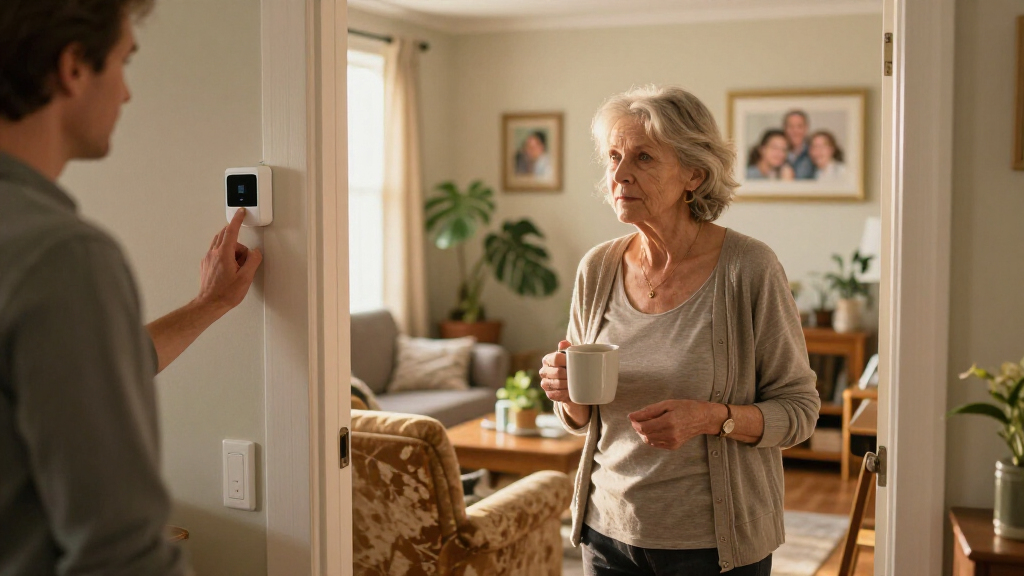
HomePal combines commercially available and custom sensors to monitor activity inside participants’ homes. The system records information about movement, sleep, television use and phone activity; smart speakers are also part of the setup. Motion and door sensors can register movement, while smart plugs estimate television use. Phone-call patterns are intended to provide one measure of social contact.
The researchers are using an AI model to examine which recorded behaviors, if any, are associated with participants’ reported feelings of loneliness. Loneliness assessments are being conducted every two weeks, providing a comparison for the sensor data. The study, published in the journal Assessment, describes development of the remote assessment system; the supplied report does not give model performance results or establish that particular behaviors reliably identify loneliness.
Lead author Mohamed Kamel, a computer science doctoral student at VCU, said the aim is to find out whether ordinary home behavior can offer early indications of loneliness or social withdrawal. Researcher Nadeem said the team plans to check how well its models match the traditional survey approach. For now, the project remains in development, with researchers continuing to analyze the collected data and refine the sensors.
How Home Monitoring Could Aid Follow-Up
Loneliness can be difficult to identify during a clinic visit, and a person’s daily routine may change in ways that are not apparent in occasional appointments. If later testing shows that HomePal can reliably flag meaningful changes, a trend in activity could give a caregiver or health professional a reason to check in. That would make the system a possible prompt for follow-up, rather than a substitute for conversations or clinical judgment.
The potential use is particularly relevant to older adults living independently, the group involved in this trial. The researchers envision a future version that could provide a daily score or longer-term trend for a patient, family member or care team. That is a proposed application, not a capability demonstrated by the study results described so far. No evidence in the supplied report shows that HomePal improves health outcomes or that acting on its readings reduces loneliness.
Products Worth Considering

Levoit Core 400S-P Smart Air Purifier for Large Rooms

Levoit Vital 200S-P Smart Air Purifier for Large Rooms (up to 1875 ft²)

Oura Ring 5 Smart Ring, Silver, Size 8
As an affiliate, we earn on qualifying purchases.
From Home Sensors to Loneliness Assessments
The project brings together researchers in computer science and nursing to compare observed behavior with how participants say they feel. The home system collects data passively, while the biweekly assessments provide a direct measure of reported loneliness for the team’s analysis. Matching the two is central to determining whether sensor patterns are meaningful.
HomePal currently includes smart speakers and smart television plugs, alongside other sensors. The researchers say the setup could be adapted to use sensors that operate and store information on local networks. They have also described possible limits on what information is shared with caregivers. These are privacy options under consideration; the report does not specify a finalized commercial design or data policy.
“The main idea is to see whether everyday behavior at home can give early signs that an older adult may be experiencing loneliness or social withdrawal.”
— Mohamed Kamel, lead author and VCU computer science doctoral student
Accuracy, Privacy and Use Remain Open
The reported study does not state how accurately the AI model can identify loneliness, which behaviors are most informative, or whether the model performs consistently across different participants. Those questions remain under study as researchers compare sensor records with the biweekly assessments. A detected change could have many explanations, and the report does not show that a sensor reading alone can establish why someone’s routine changed.
It is also unclear what a finished system would share, who would be able to view its information, or how the data would be secured in a commercial product. Researchers say local storage and limits on caregiver access could be options, but HomePal’s privacy configuration is not described as finalized. The system’s cost, availability and timeline for wider use are also not provided.
Researchers Continue Model Testing
The research team plans to continue analyzing the HomePal data, building and checking AI models against participants’ loneliness assessments, and adjusting the sensors as it identifies useful patterns. The next meaningful step is evidence about model accuracy and validation; the supplied report gives no date for those results.
The researchers hope that future work could support a product installed in homes, with information available to older adults or caregivers according to privacy choices. That remains a longer-term goal, not a confirmed launch. Until testing shows what the system can reliably detect, its intended role is limited to exploring patterns that could warrant a human follow-up.
Key Questions
What is HomePal?
HomePal is a research system that uses home sensors and connected devices to collect information about behaviors such as movement, sleep, television use and phone activity. Researchers are studying whether those patterns relate to reported loneliness.
How many people took part in the study?
The prototype was deployed for three months in the homes of 70 adults aged 65 and older who were living independently in the Atlanta metropolitan area.
Can HomePal diagnose loneliness?
No. Lead author Mohamed Kamel said the goal is not to diagnose loneliness, but to identify behavior patterns that may be related to it and could merit follow-up. The model is still being evaluated against participant assessments.
How will researchers check whether the system works?
The team is comparing sensor data with loneliness assessments conducted every two weeks. The report does not provide accuracy results or say when a completed validation will be available.
What is known about privacy protections?
The researchers say HomePal could be adapted to store data locally and give patients control over what is shared with caregivers. The report does not set out a final data-sharing policy or describe a commercial product’s security arrangements.
Source: rss