
TL;DR

Get health and wellness essentials delivered free — and shop member deals
- Fast, free delivery on millions of items
- Access to Prime Big Deal Days deals on October 6–7
- Prime Video, Amazon Music and more included
Austrian company Med-El launched the TICI Unico, which it describes as the first commercially available cochlear implant with every component beneath the skin. European regulatory approval is in place and four commercial implantations took place on launch day. The device is not yet available in the United States, and evidence about its performance and long-term battery life remains limited.
Austrian hearing-device maker Med-El launched the TICI Unico, a cochlear implant with its microphone, processor and rechargeable battery implanted beneath the skin, and says the first four commercial implantations took place on launch day. The device has European regulatory approval, but is not yet available in the United States, according to the company.
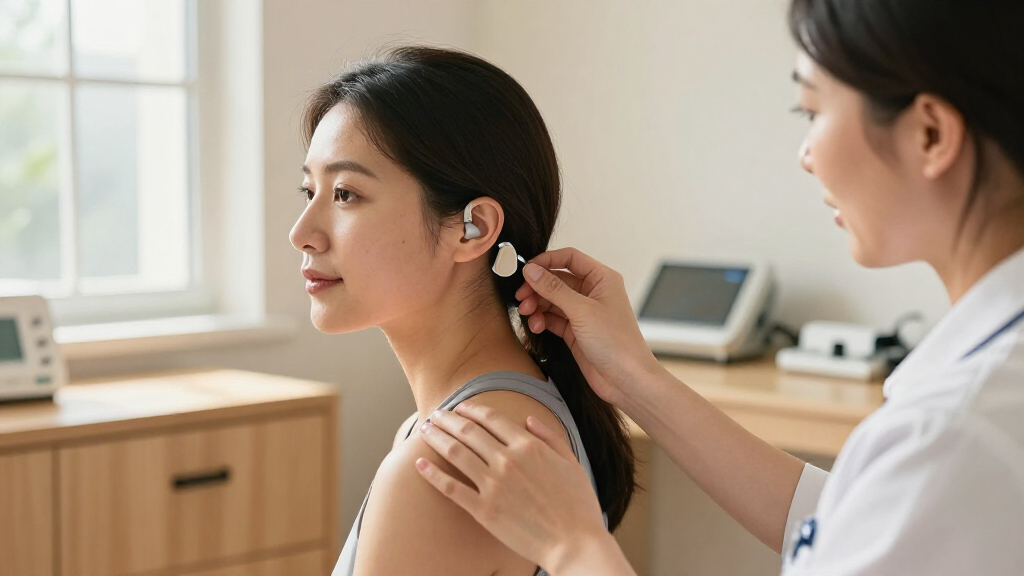
Conventional cochlear implants use an external unit worn behind the ear. It contains a microphone, sound processor and battery, and sends signals through the scalp to an electrode array in the inner ear. The TICI Unico moves those functions under the skin. Med-El says this lets users hear without removing an external processor for activities such as sleeping or swimming.
The implant weighs 20 grams and has four connected components, including a microphone placed about six millimeters beneath the scalp and a stimulator containing processing hardware and a rechargeable lithium-ion battery. Users recharge it through the skin with a small magnetic device called a GoPod. Med-El says a charge takes about one to 1.5 hours and can provide up to 40 hours of use. The company says performance data indicate the battery should provide at least 24 hours per charge for 15 years; that is a company projection, not a reported 15-year observation.
Med-El says a 30-patient clinical trial found hearing performance comparable to its conventional implants. Philippe Lefebvre, an ear, nose and throat department head at University Hospital of Liège who led a six-patient feasibility study, also said early results suggested comparable performance. The source reports that other study results cited by Med-El were still awaiting peer review.
Hearing Without an External Processor
The launch addresses a practical limitation of conventional implants: users must manage a visible external processor that can press, slip or be lost, and generally has to be removed for some activities. A device worn entirely under the skin could make hearing available during sleep and water-based activities, while changing the daily routine for implant users.
Early users and researchers have emphasized different potential benefits. Lefebvre said participants in his study cited around-the-clock hearing as more important than the device’s invisibility. Diana Grosser, who received the implant in 2024 as part of the clinical trial, described being able to swim and ride a motorcycle without worrying about an external processor. Those accounts describe individual experiences; they do not establish how broadly patients will benefit or whether the implanted system suits all cochlear implant candidates.
The product also introduces a different trade-off: its battery is implanted and cannot be replaced. Its long-term performance and the effects of relying on an internal rechargeable system will matter to prospective patients and clinicians as more people use the device.
As an affiliate, we earn on qualifying purchases.
From External Hardware to Implant
Cochlear implants have been used since the 1980s to bypass damaged parts of the ear in people with severe-to-profound hearing loss. An electrode array in the cochlea stimulates the auditory system, while conventional devices keep the microphone and processing hardware outside the body.
Med-El CEO Ingeborg Hochmair said the goal of a fully implanted device dates to the 1970s, but microphone and battery technology delayed it. The company says the TICI Unico took more than 15 years of development. Bringing the microphone beneath the scalp was a particular engineering challenge because sound behaves differently as it travels through tissue, project leader Gerhard Mark said. He did not disclose the technical details of the solution.
The launch marks a commercial step for a concept that had previously been studied in feasibility work. Med-El is an Austrian company, and the reported launch approval covers Europe; the source says the implant had not received U.S. availability at the time of the announcement.
“For the first time, all components of a cochlear implant, including the microphone, are implanted beneath the skin.”
— Ingeborg Hochmair, Med-El CEO
As an affiliate, we earn on qualifying purchases.
Evidence and Access Still Developing
The source does not identify the launch date by calendar day, the four recipients, or where their procedures took place. It also gives no U.S. approval timeline or information on pricing, insurance coverage, or wider rollout. Those details remain unreported.
The reported 30-patient trial result is a company account, and the source does not provide detailed outcome measures or follow-up duration. Other results mentioned by Med-El were awaiting peer review. The battery’s 15-year minimum-use projection is based on company performance data, not 15 years of observed use. The available information does not establish how the implant performs across a broad patient population over the long term.
As an affiliate, we earn on qualifying purchases.
Follow-Up and U.S. Availability
Further clinical reporting and peer-reviewed results can clarify how hearing outcomes compare with conventional implants, how users manage recharging, and how the device performs over time. Med-El has not given a U.S. availability date in the source report. Patients and clinicians there will need further information on regulatory status and access before the device can be considered locally.
Med-El’s launch may also draw a response from other implant makers, though no competing product or timetable is identified in the source. For now, the next evidence to watch is broader patient experience and longer-term performance data.
As an affiliate, we earn on qualifying purchases.
Key Questions
What is the TICI Unico?
It is Med-El’s fully implanted cochlear implant, with its microphone, processing hardware, battery and other components beneath the skin. An electrode array in the cochlea delivers signals to the auditory system.
Has the implant reached patients?
Yes. Med-El says the first four commercial implantations took place on the morning of the launch announcement. A trial participant, Diana Grosser, received the device in 2024.
How long does the battery last?
Med-El says the rechargeable battery can provide up to 40 hours per charge, which takes about one to 1.5 hours. The company says performance data suggest at least 24 hours per charge for 15 years, a projection that has not been confirmed by 15 years of observed use.
Is it available in the United States?
No U.S. availability was reported at launch. The source says the device had European regulatory approval but was not yet available in the United States; it gives no U.S. timeline.
Source: hn
Halloween Picks
halloween
As an affiliate, we earn on qualifying purchases.